
4 Habits of a Pure Buddhist That Anyone Can Apply Right Now
Old habits won’t open new doors.
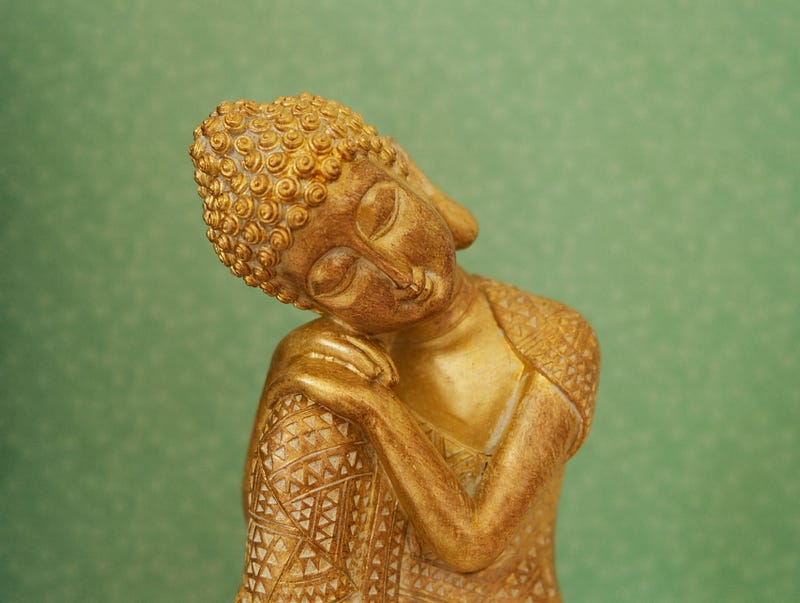
If you ever have to name religion by its colors, here’s what it looks like:
- Hinduism: Vital red and saffron
- Judaism: Blue
- Christianity: Gold
- Buddhism: Orange
Ever thought about why?
Each color represents an untold history of religion.
The color orange represents fire. Hindu Buddhists believe that orange burns impurities. Buddhists wear orange robes & kesa(s) as part of their modest clothing.
The essence of Buddhism is in the way they follow their doctrine and practice today.
535 million people practice Buddhism today.
The other leftover, 7.445 billion, knows only two ways to live a life:
- The busy social media way
- Buddhist calm way
If you look closely, none has benefited from the first option. So you see, there is a whole new, different option we never discovered. But Buddhism offers a calm and truthful way to achieve tranquility through its codes and rules.
So, below are 4 Buddhist rules to improve your life.
Let’s get started.
1. Feed your belly with the right
Ok. Buddhism believes that a person can directly or indirectly be connected to violence.
How?
- By hunting animals
- By eating the meat of hunted animals
Buddha advised monks to feed their bellies with nature’s gift. For self-respect, Buddhists:
- Avoid: Human flesh, elephants, horses, dogs, snakes, lions, tigers, bears, hyenas, garlic, eggs, poultry, and fish.
However, there are certain foods that Buddhists eat daily. Many fall under the plant-based diet umbrella:
- Prefer: Lacto vegetarian diet, fruits, vegetables, nuts, seeds, whole grains, legumes, beans, and some animal products.
Many Buddhists follow a plant-based diet.
Buddhists remain low in body fat while munching on all possible nutrients they need.
However, Buddhists are also known to fast from noon till the dawn of the same day to regain self-control. This process is also widely known as intermittent fasting.
Also, Buddhists refrain from drinking alcohol as they believe it clouds their mind and judgment.
How can you apply?
The Buddhist diet is rich in vitamins, minerals, and fibers. You can start with dirty nuts and fruits, celebrate noon with vegetables and end your day with legumes or grains.
- Once you start following a Buddhist diet, you will have various options.
- Most of the time, you can repeat it every day or as fast as you like.
- You can limit eating to once or twice per day.
2. Meditation for every problem
Buddha spent years becoming a meditation master.
Some foods allowed Buddha to remain calm and focused on meditation. Because most Buddhist meditation revolves around focus and calmness, many Buddhists feel free to skip meals and consume honey or fresh vegetables instead.
According to Mindah-Lee Kumar, the following types of Buddhist meditations are:
For concentration:
- Samantha: This practice includes watching our breath or an object during meditation.
- Walk: Take breaks from your seated meditations and walk for at least 30 minutes.
For insight and engagement:
- Koans: A phrase that you repeatedly bring to your mind while meditating. e.g. ('what was your original face before you were born?’)
- Vipassana: Pay attention to sensations in your body, such as breathing.
On developing love and compassion:
- Metta: Look at objects that remind you of someone. Use those objects to lower hatred for others.
- Empathy: Analyzing yourself in someone else’s shoes.
Buddhists must focus on their breathing techniques to meditate correctly. They were fully fed and never seated more than extra to avoid bloating or irritation.
Sometimes, Buddhists sat under the tree. (Bodhi tree)
How to apply?
Buddha meditation techniques provide solutions for every problem. We must conquer our minds to remain calm and focused. Though it may take years to achieve concentration, practicing meditation is not something one regrets.
3. Forbidden acts for your safety
- Buddhism is all about enlightenment.
However, evil acts may catch you in the crosshairs and stop your insightful growth.
For that reason, Buddhists follow a five-precept doctrine to abide by a few things, which include:
- Killing living beings: Includes hurting fellow human beings for their good.
- Stealing: Thieving is associated with lying and becoming angry.
- Sexual misdeed: Buddhists refrain from touching women or someone from the opposite gender.
- Lying: Fibbing intentionally makes it a habit that becomes hard to quit.
- Intoxication: Wine, beer, and alcohol is prohibited as they may cause cloudy thinking.
The same Buddhist forbidden rules apply to the Buddha female, also known as (Tara.)
However, there are a few things Buddhists may/ or may not choose to follow. This depends from case to case:
- Shaking hands of other fellows
- Wearing robes all the time
- Marrying
- Divorce and re-marriage
- Tattoos
Since the world is evolving, many Buddhists still find a perfect balance between marriage and developing concentration.
For some people, it might be tricky.
Traditional Buddhism thickened on giving away pleasures to focus on the eternal.
How to apply?
You do not need to wear robes to be a Buddhist. This means you can practice Buddhist teachings anytime.
4. The mendable/non-mendable concept
Buddha believes that humans can never escape worldly troubles. But humans can realize their worth and choose to step away.
For example, Buddhists believe in three marks, known as
- Suffering (anicca)
- Dissatitification (dhukka)
- Not self (anatta)
The Buddha says everything ends.
We think some things are essential for us, but everything is momentary. Nothing can satisfy your time on this earth because life would end at one time.
We have (different) mental and physical qualities. There are no habits a human cannot change.
The three marks of existence allow Buddhists to accept life’s true significance. Suffering and pain are all bitter truths. But no one can do anything about it.
Instead, we people can search inside us and look for things that easily mend, for example:
We can control our:
- Greed
- Hatred
- Delusion
How to apply?
Often, we look for non-mendable things. Instead, find your raw spots and try to understand them. Find a fault, such as greed or hatred, and start fighting it with meditation.
Final thoughts:
- Anyone can become a Buddhist.
If it feels like a burden and a responsibility, understand there’s no harm in adapting to Buddhist living habits.
We all need to control our suffering because our suffering can outlive us (as far as we know.)
Join 1,100+ writers and get your next writing inspiration right now.
Or join Medium with my referral link.


