
4 effective strategies to estimate time for your design projects
And do not make the deadline your ultimate inspiration
“Hey, could you give us an idea of how long you think the design work might take?»
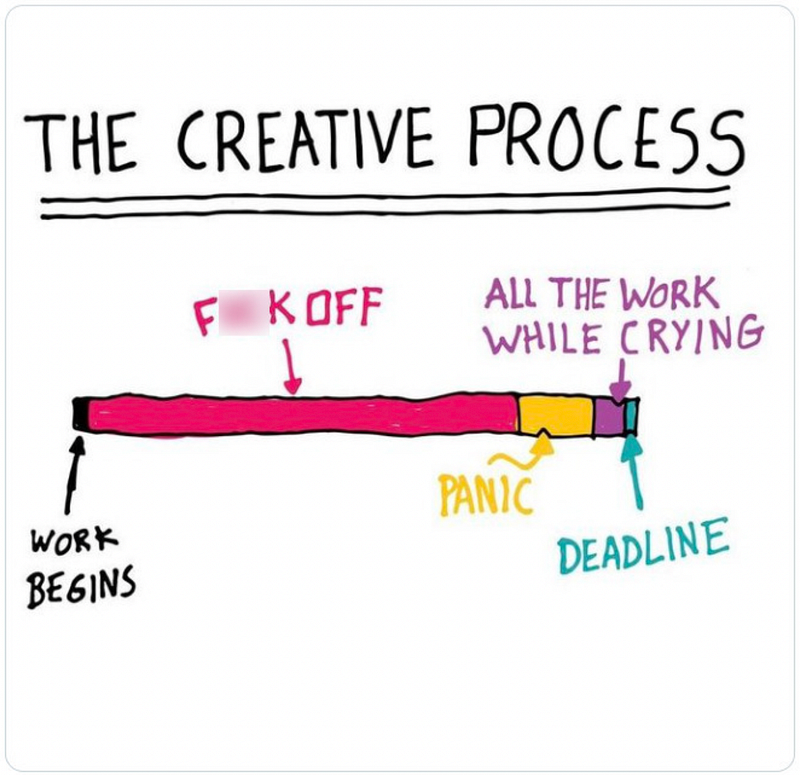
This innocent question can later transform into a horror movie for the designer who failed to estimate the time needed to complete the work.
This is a question that every designer faces.
This a question that requires us to be optimistic enough not to afraid a client and pragmatic enough not to spend the last nights before the deadline trying to finish the unfinished.
Let’s define the aspects you might take into consideration before announcing your roadmap to the client and see why it could be challenging.
Understand the Project Scope
Your first goal is to gather the maximum information about the project and the stakeholders' vision of the future product. It can be tricky as projects often start with vague requirements that will be refined during the user research phase.
Besides that, projects often evolve or expand beyond their initial scope, and additional features or changes can extend the timeline unexpectedly.
Good news — to prevent such cases, there is a document created by a Product Owner during the project’s initial phases, called Product Requirements Document (PRD) or Functional Specification Document.
If the Product Owner does their job well, you will have a clear list of requirements that will serve as a reference point for all stakeholders — including designers, developers, and clients.
This will allow you to estimate the time and resources needed for the project more accurately.
Break down the project into key phases.
In my experience as a UX/UI designer, not every project required every step of the classical design thinking process upon my arrival.
Sometimes, a part of the tool was already developed, and my work started with the audit and improvement of the existing part; sometimes, the user research phase was done, and only prototypes were needed; sometimes, I conducted the whole process of design from the initial phases of discovery to the delivering of the prototypes ready to devs.
At the very start of your work, you need to identify which phases are required for your project to be able to define the needed time for each of them and build a realistic roadmap for the project.
For the remainder, the basic phases of the typical design process are:
- Research - User Personas - Wireframes - Mockups - Prototypes - User testing - Final iterations - Hand-off to development
The duration of each phase depends significantly on the project's complexity — whether it is a simple website layout or a complex app interface with multiple user paths.
Also, the time will vary depending on personal productivity — the more experienced you are, the more quickly you find a set of right solutions, and the more efficient you are operationally.
The best way to define the time needed for you personally — is to dedicate some effort to time track your work. You can do it with the free tools like TMetric, TimeCamp, Clockify, and Toggl Track.
By breaking down the project into phases and tracking your time for each of them after, let’s say, five projects, you’ll have enough data to analyze and determine the average time required for each phase.
This helps you estimate the duration not only in days or weeks but also as a percentage of the total project time. For instance, you may find that research takes up around 10% of the whole project time.
It also works the other way around — when a client comes with a specific deadline and budget, you will be able to allocate estimated hours for each phase and determine the best proposition you can offer the client for his budget.
The timeframe provided below is an average for the industry that, of course, may differ from your estimate.
User research: 1–2 weeks Creating User Personas: 2–3 days Designing wireframes: 1–3 weeks Developing mockups: 2–4 weeks Creating interactive prototypes: 1–3 weeks User testing and feedback: 1–2 weeks Final design iterations: 1–2 weeks Hand-off to development: 3–5 days
These are approximate estimations and should be adjusted based on your specific project details.
Moreover, some of these phases might overlap or be conducted in parallel, especially in an agile environment.
You have to adapt these estimates to the specifics of your project and team dynamics. Clear communication with the team and stakeholders can help to set realistic expectations and adjust timelines as needed.
Factors in additional time considerations
Not everything is predictable, but let’s do our best to anticipate potential outcomes.
What you have to keep in mind:
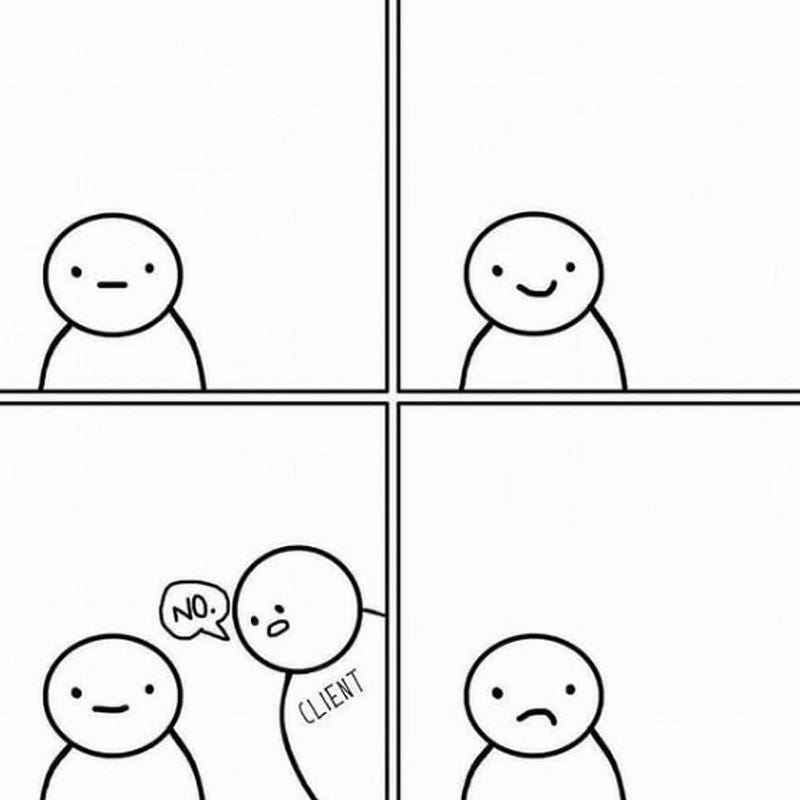
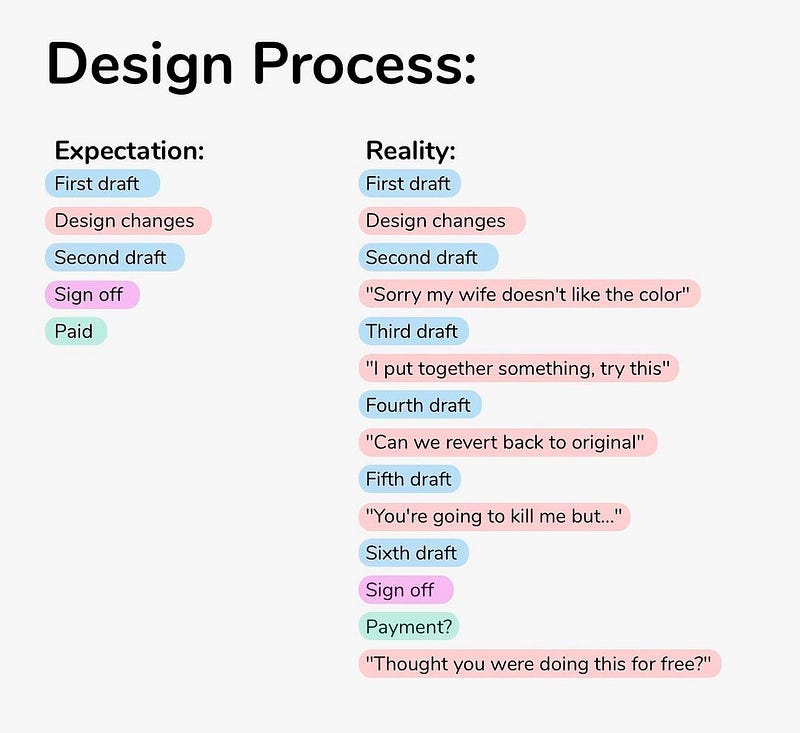
- Revision and iterations: the design process is highly iterative. After each phase, you may have a list of modifications and revisions to do, and it will be challenging to predict how many iterations will be needed, so add time for unexpected revisions.
- Client or stakeholder feedback: the time it takes to receive and incorporate feedback from clients or stakeholders can be unpredictable. Often, the right people are not available at the needed time; this can significantly delay the design process and extend the timeline. You have to account for all the time spent in meetings and discussions.
- User testing result: the outcomes of user testing can add a lot of work and sometimes require rethinking the whole process, which significantly alters the direction of a design project and the time needed to complete it.
In addition, unexpected delays happen. Think of including a buffer time (10–20%) for unforeseen issues.
Sequence and schedule tasks
For each project, I create a roadmap that visually represents the steps I need to complete and the time required for their completion.
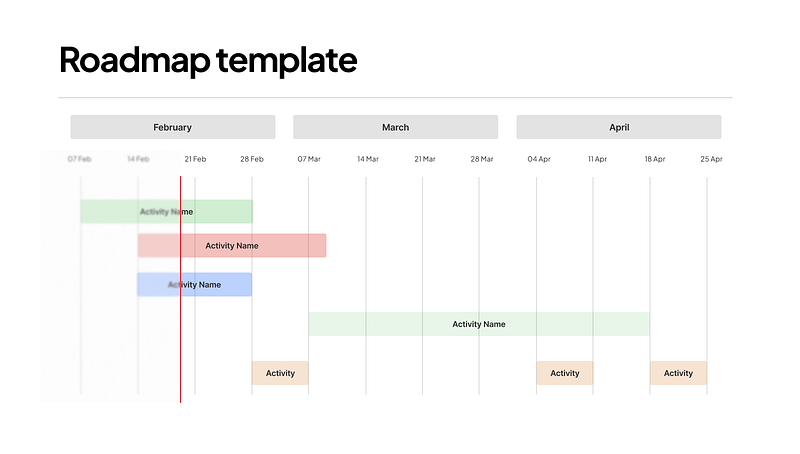
That allows me to determine the order of tasks, schedule meetings with stakeholders in advance, set deadlines, and plan my workflow efficiently.
The visual representation of the phases helps to remind the priorities and anticipate how additional requirements may affect workflow, which may be quite helpful in discussions with stakeholders.
Finally, it’s important to analyze how past projects have gone and check your estimations with the actual time spent to refine your approach for future projects.
If you liked this article, please follow my profile so you don’t miss any upcoming articles!
🙋♀️ Have any questions or inquiries? Reach out to me at Linkedin & DM me


