
4 Benefits of Reading to Your Kids
Start as early as you can
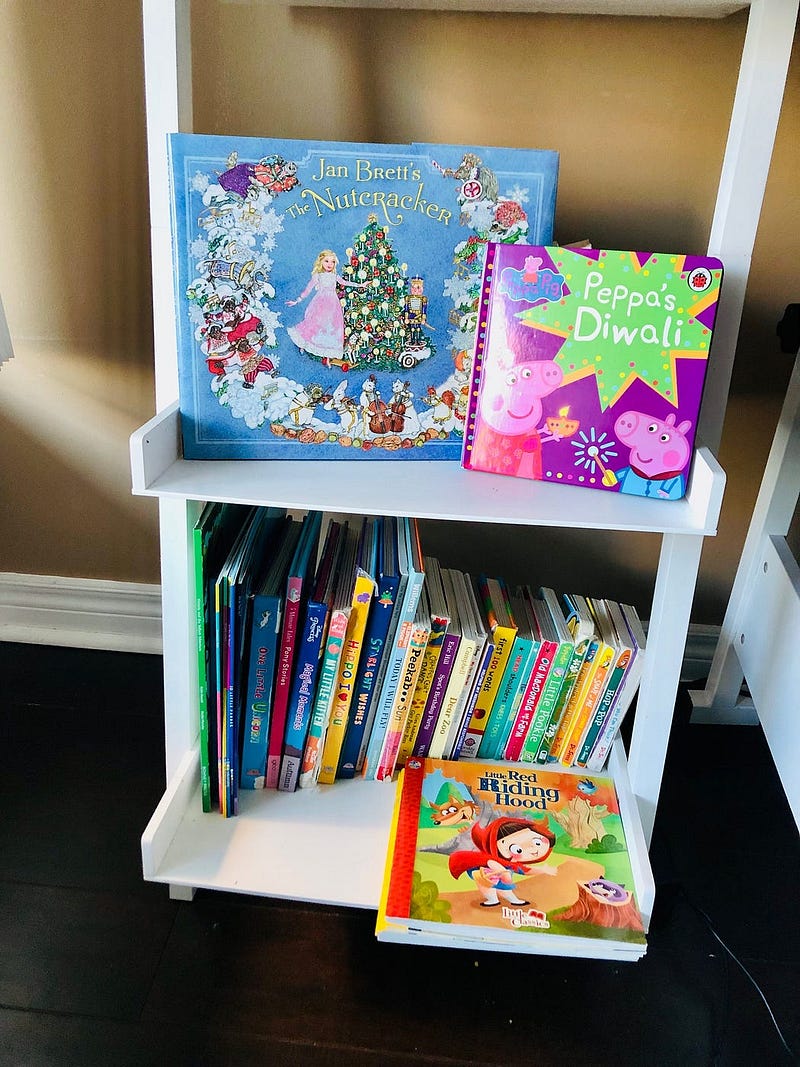
I created a bookshelf for my daughter when she was less than 6 months old.
As an immigrant parent, I often worry if we do the most important job of a parent well.
What adds to our anxiety is unlike parents living in their home countries, we cannot simply follow our parents’ and friends’ advice from back home. It may not apply to our new environment.
I was a nervous wreck in my first 6 months as a mom. Not sure if I was doing anything right or even taking care of the basics.
2 years later, I am glad I started reading to my daughter soon after she was born.
A Personal Account
2-year-old has read over 30 books? Did you know you could read to newborn babies?
Medical research has shown it supports brain development, especially language and emotional development. Some parents even read to babies in the womb.
What you see in the picture above is my most prized possession- my daughter’s bookshelf.
It’s far more important to me than the luxury handbags and single malt whiskeys I collected in my 20s.
“Books are one of the rare things which do not have any side-effects.”
When I first told my mother-in-law about reading to my daughter, she laughed at me. No fault of hers.
In her time, people thought babies were blobs who understood nothing. Then she saw videos of my daughter looking into her books from the age of 2 months (picture below).
She realized what we meant and accepted her bias. The understanding of children’s capabilities used to be so low a few years ago.
There was one time when Mireya picked up her father’s book ‘The Pyramid Principle’ by Barbara Minto. We had a tough time convincing her she needed to wait a few years to read it. (Picture below)
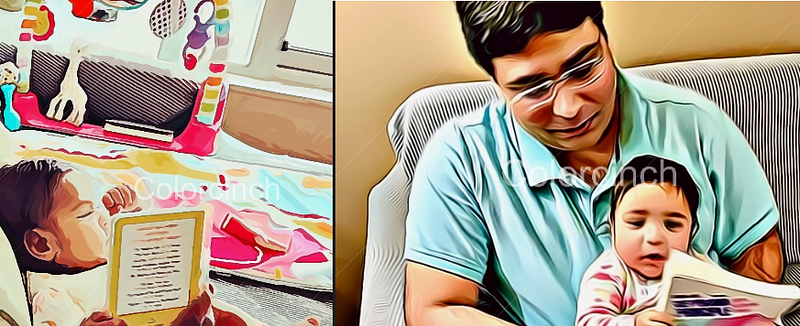
All kidding aside, babies respond to your reading.
The first time I saw a month-old Mireya look at me was when I said: ‘Hop on pop’. I was referring to one of her first books by Dr. Seuss. She found it funny.
4 Reasons to Read Early
Besides the known benefits of reading, the ones I have experienced in my life as an expat are:
1. Give exposure to different cultures
Parents often stress kids don’t understand their home cultures well. This is a fun way to introduce it early.
She likes to read about Christmas in The Nutcracker as much as she enjoys Peppa’s Diwali. We can choose what to take from each culture to provide exposure to their kids.
2. Make it easier to focus
Parents know how hard it is to make them concentrate on an activity for a few minutes.
Introducing books early helps immensely.
3. Enhance creativity and curiosity
Seth Godin talks about problem-solving in the book Linchpin. He describes it as one of the most important drivers of success. The reality is children don’t learn this skill in school.
Books develop curiosity and creative thinking. They teach you how to ask the right questions and make inferences to solve problems.
It’s amazing when Mireya correlates what she reads with real life. Like spotting a bus or naming body parts.
4. Avoid screen time
UNICEF recommends against giving children any screen time before they are 2 years old.
Many of us are fighting our own addictions to screen, and often find it hard to stop our kids.
Books have helped us keep Mireya away from the screen.
Conclusion
All babies are special. As parents, we want to do our best for our kids. We want to give them what we couldn’t get.
Someone told me once it’s important to realize we are not perfect and will miss something.
If there’s one thing you don’t want to miss, it’s developing an early reading habit in your kids.
I see my daughter reading, and it fills me with pride. She reads for fun, not as a task. It’s the way I’d like her to continue if she decides.
Try it! I bet you’ll see the difference.
More Stories by the Author :


