We Are Doing Space Colonization Wrong
But will we listen?
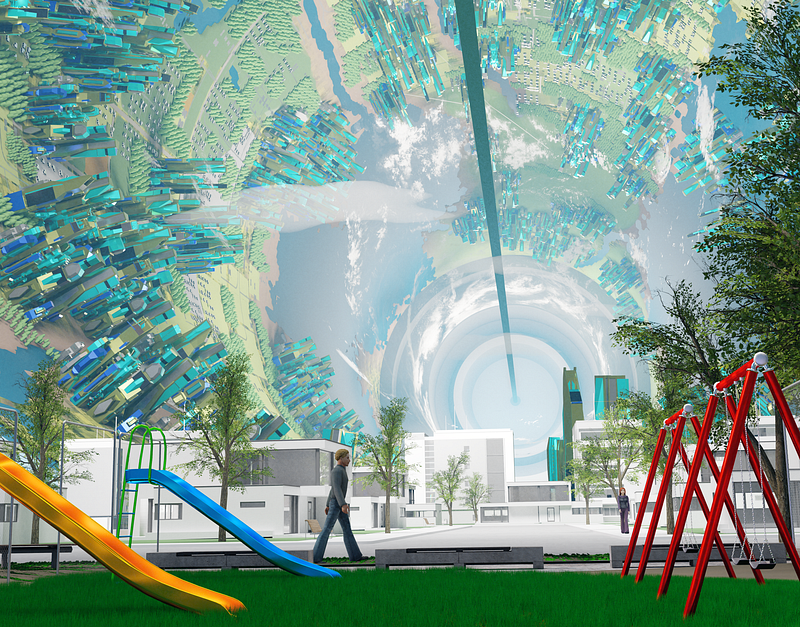
Imagine being inside a spaceship, similar to an airliner’s first-class cabin. With Earth’s gravity over twenty-four hours behind, the velcro spots on the wide comfortable seats and along the carpet prevent passengers from drifting out of control. A few adults struggle to keep floating toys within their excited children’s reach.
Passengers can now glance at their final destination through the viewports. Nakṣatra: a cylindrical megastructure nearly eight miles in diameter by thirty-one miles long. Ultra-high efficiency, latest generation solar panels, capable of powering New York City many times over, blanket the outer wall.
Upon arrival, visitors are dazzled by metropolitan areas surrounded by suburbia, arching across the cylindrical sky. It feels odd to watch rivers graced by forests following the curved inner wall or lakes hanging upside down without falling over their heads.
Perfect Earth-like conditions allow a population of over twenty million to feel right at home. Carefully controlled weather ensures a comfortable temperature of 70 degrees Fahrenheit. Sixteen hours of daytime, followed by eight hours of nighttime, make summer last all year without daylight savings. They’ve never experienced a storm, a volcano, an earthquake, a landslide, or any other natural disaster.
More than enough food to satisfy the local population is grown in microgravity along the rotation axis. Vertical farms with aeroponic irrigation grow genetically enhanced crops. A wide variety of animal products — including meat, fish, and dairy — are grown in vitro without raising and sacrificing living beings.
“The serrated knife cut through with little resistance. Seared to perfection, the crispy outside had a smoky, rich flavor, and the meat was juicy inside, slow-cooked, and well-seasoned in the Southern style. What blew Luke away was the flavor and tenderness. It was, hands down, the best steak he’d ever had.” — Excerpt from my novel K3+
The lavish energy abundance that powers the colony helps sustain an opulent post-scarcity lifestyle for the entire population of this small nation. They dedicate their lives to the arts, science, philosophy, sports, politics, and many other activities of their liking.
The foundation
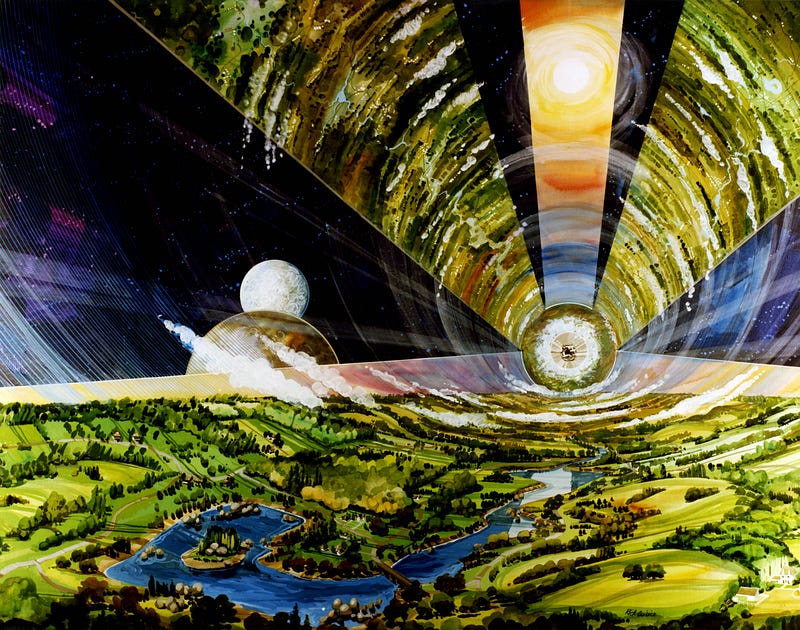
It might come as a surprise that the idea for emulating gravity inside a spinning structure was first conceived by the father of the rocket equation, schoolmaster and physicist Konstantin Tsiolkovsky, in the late 19th century.
Just as Çatalhöyük became the first proto-city, this tiny colony will become the first human settlement in space
The next breakthrough came along nearly fifty years ago, when American physicist Gerard O’Neill asked his students at Princeton University: “Is a planetary surface the right place for an expanding technological civilization?” Their research convinced him the answer was a resounding no.
This inspired his groundbreaking work designing rotating habitats, cylindrical space-bound megastructures that replicate Earth’s gravity, requiring no adaptations to the human body.
Unfortunately, his book The High Frontier wasn’t a bestseller. The vast majority of the public never heard of rotating habitats, or how they would allow us to conquer space without submitting ourselves to the ravages of alien planetary environments.
Building the first space colony
In the 1970s, O’Neill determined that we already had the capabilities to build such structures. He made the analogy of building a house on top of a mountain. Rather than dragging wood and rocks from the base, we find them right on the summit itself — commonly referred to as in-situ resources. By the same token, space offers vast quantities of construction materials — along with the energy to build and run our colonies.
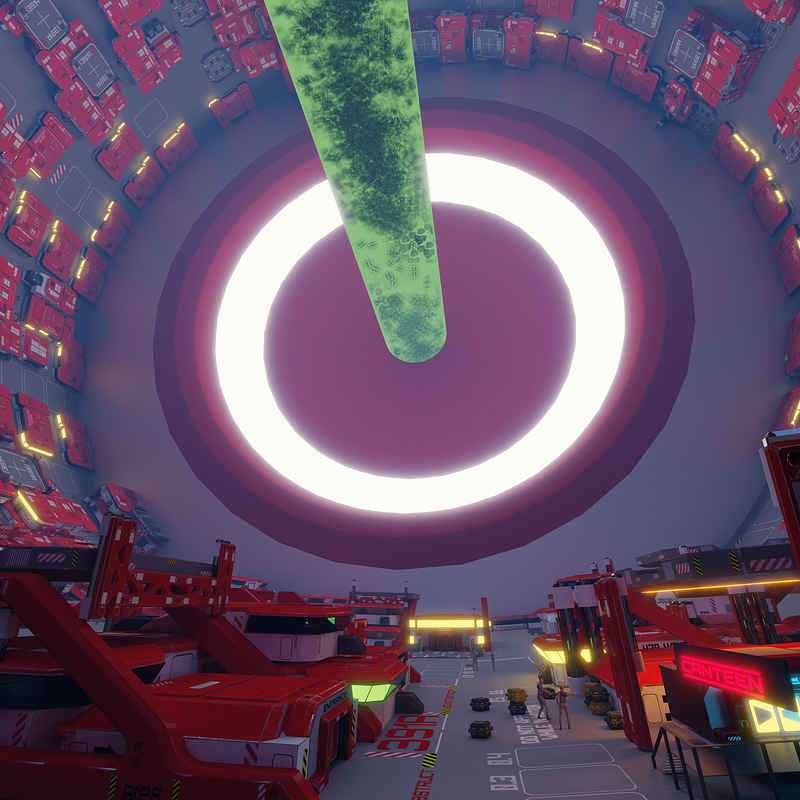
Although we can’t build an O’Neill cylinder yet, due to the lack of infrastructure, a far smaller rotating habitat — capable of permanently housing close to a thousand people — is possible by mining Near-Earth Asteroids.
Just as Çatalhöyük became the first proto-city, this tiny colony will become the first human settlement in space. It will allow us to research, develop, and test new technologies to build larger rotating habitats.
The medium-term impact of zero-gravity on our physiology is well understood, but the long-term effects of low-gravity remain uncertain
It will also serve as a launchpad for a mining operation of a bigger target, Mercury. The planet’s proximity to the sun, its low gravity, and metal-rich composition make it the ideal source of raw materials for constructing thousands of O’Neill cylinders. In a previous article, I explained how to kickstart the exploitation of space resources.
It will take at least a century to build the first multi-million-people colony like Nakṣatra. But with a space-bound infrastructure in place, a continuous influx of construction materials from Mercury, and new technologies developed in space, the construction of subsequent O’Neill cylinders will be much expedited.
This uncompromising planetary bias creates a huge blind spot to the amazing possibilities of rotating habitats.
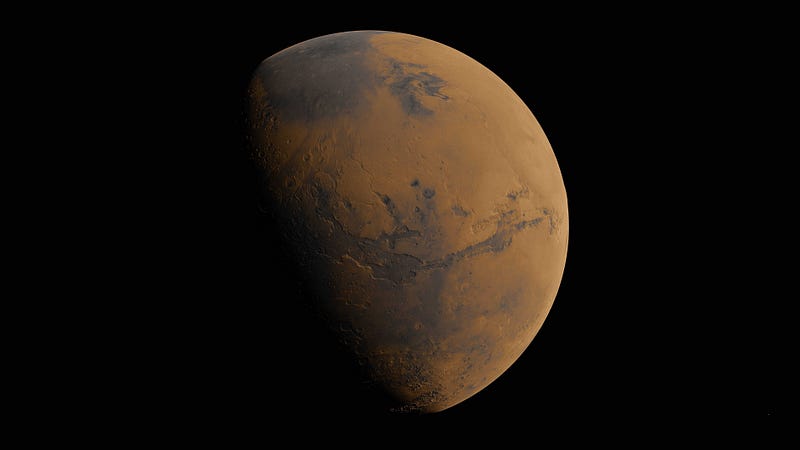
Why not colonize Mars instead?
Despite being an alien environment, harder to tame than depicted in The Expanse series, the land is already there. Nevertheless, it will be decades before first dome is ready while colonists live inside underground lava tubes made of perchlorate-rich soil. Yet there are daunting challenges ahead.
The red planet receives less than half the solar energy we are accustomed to here on Earth. With no fossil fuels and other energy sources like fusion still decades away, this is a crucial challenge that must be addressed before the first colonists arrive.
The medium-term impact of zero-gravity on our physiology is well understood, but the long-term effects of low-gravity remain uncertain — to say the least. The human body is a very complex machine, and unforeseen effects from exposure to Mars’ gravity will likely emerge after a decades. Although we are quite an adaptable species, Mars could become a trap for those unable to return to Earth.
Planets are the incubators of life, a womb for technologically advanced civilizations to mature
Our love affair with planets
The great Isaac Asimov coined the term Planetary Chauvinism in 1975 — although he later credited Carl Sagan with the idea. During a joint TV interview with Gerard O’Neill, carried by WNET’s Round Table in New York, he exposed our bias against living in rotating habitats. Born and raised on Earth, inhabiting another spherical body is deeply ingrained into people’s psyche.
Human preconceptions feed into an echo chamber, one that becomes harder to escape as we continue to build upon them. This uncompromising planetary bias creates a huge blind spot to the incredible possibilities of rotating habitats. And so, we continue to plow our way towards Mars despite its crushing limitations and daunting challenges.
Planets are the incubators of life, a womb for technologically advanced civilizations to mature. We must emerge from ours to continue our evolution towards a spacefaring civilization.
More people inside rotating habitats around the sun than on all habitable planets in the Milky Way galaxy
Our bright future among the stars
As the human population grows, Earth’s resources become increasingly scarce. Even if somehow we manage to stay below eight billion, the environmental impact of extracting resources to maintain our lifestyle will become catastrophic — perhaps within decades.
“An economy is an exchange system designed to manage and distribute limited resources across a population. But if a civilization has free access to more energy and raw materials than it can use, those resources will be virtually unlimited. Would such society still need an economy to satisfy the needs of its population, or will economics become an extinct science? I’m not talking about an upper-middle-class lifestyle; even if new currencies and exchanges emerged in such a utopia, everybody would be rich!” — Excerpt from my novel K3+
The European colonists brought tools and technology to the New World, but the construction materials were obtained in situ. Although the high frontier is far more challenging, the rewards are beyond our dreams. We have the technology to replicate Earth’s conditions in space and, with virtually unlimited resources in the inner solar system, will be able to sustain more people inside rotating habitats around the sun than on all habitable planets in the Milky Way galaxy.
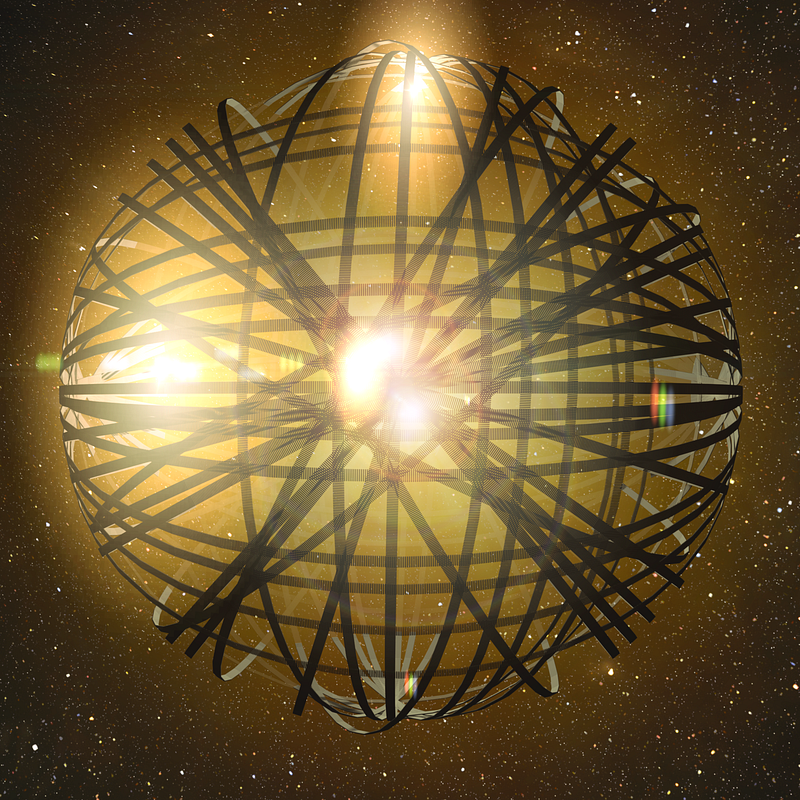
And when the space around the sun is exhausted, there are plenty of stars that we can travel to and surround with rotating habitats. Our next door neighbor, Alpha Centauri, is a triple star.
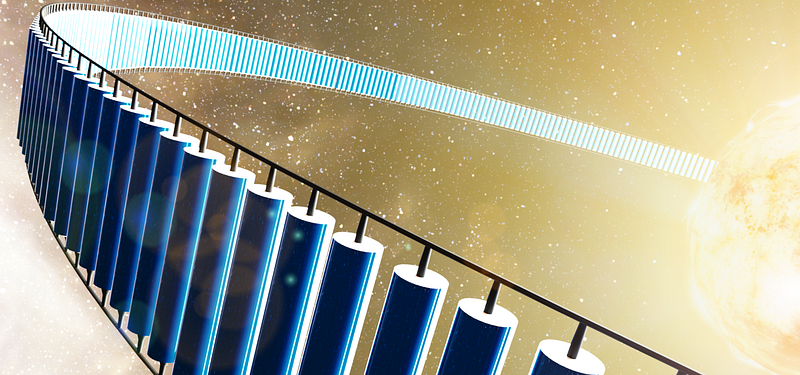
With virtually unlimited energy from our sun, we can deploy massive laser arrays to accelerate starships to a fraction of light-speed — without burning fuel. This will allow us to reach neighboring stars within decades.
Hundreds of generations ago, those who ventured to the ocean had no idea what was on the other side. But our descendants will have a clear view of what awaits them at the end of their long interstellar journey.
The path of innovation is never-ending. Descendants from our cave-dwelling ancestors began building proto-city settlements like Çatalhöyük, about 9,000 years ago. It’s our turn to take the next step and create these floating oases around the stars. But we must have the wisdom and courage to look outside the box, to stand up to the challenges we face here on Earth.
What does the future of humanity hold?
My new dystopian novel K3+ is the story of Earth’s demise and humanity’s rise to become an intergalactic empire. From colonizing space to saving humanity, the science-grounded story interweaves cutting-edge technologies and spellbinding fiction.


