Can We Actually Build a Dyson Swarm?
It’s far easier than most people believe
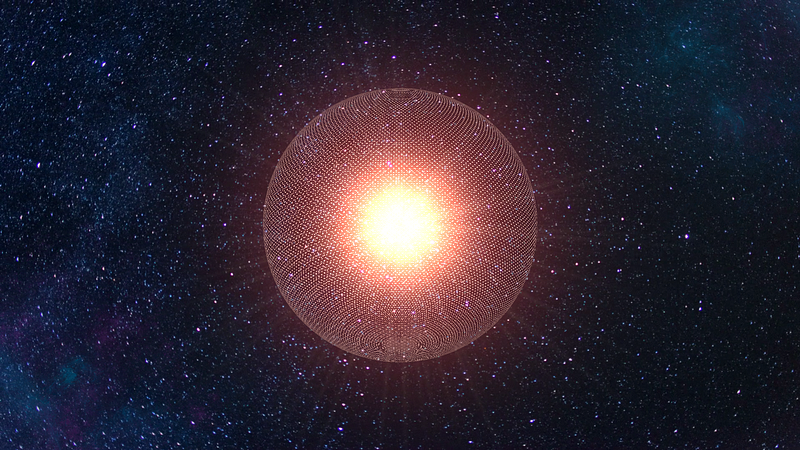
Imagine how an airplane or a skyscraper would look to a Neanderthal, whose kind had not even discovered the wheel. In the 60s, Sir Arthur Clarke wrote in Profiles of the Future, “Any sufficiently advanced technology is indistinguishable from magic.” It inspired the expression Clarketech: a technology so astounding and prodigious it would allow a civilization to achieve feats beyond our imagination.
When we hear Dyson swarm, Clarketech immediately comes to mind. Yet this collective of space colonies delivers all the benefits of a Dyson sphere and is within the modest means of humankind.
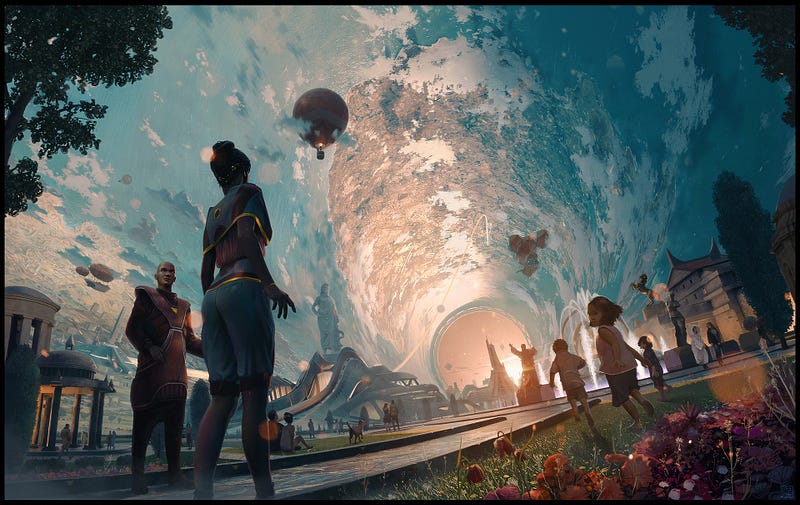
Rather than designing a strong enough material to cope with the stress of a gigantic shell around our star, we build individual island-size rotating habitats. After a few millennia, we’ll have enough of these colonies to capture the Sun’s entire energy output and house billions of times our current population in upper-middle-class living conditions.
New technologies and materials developed in zero gravity (and with easy access to vacuum) will enable the construction of continent-sized habitats that can house billions
Colonizing the high frontier
Six hundred million years of multicellular life evolution made every organ, system, and tissue in our bodies dependent on Earth’s gravity. A space colony is a cylindrical megastructure that rotates to emulate 1g. Air and water inside these closed-loop ecosystems are fully recycled, and solar panels in space harvest tens of times more electricity than on the surface of our planet — providing for the needs of millions living inside.
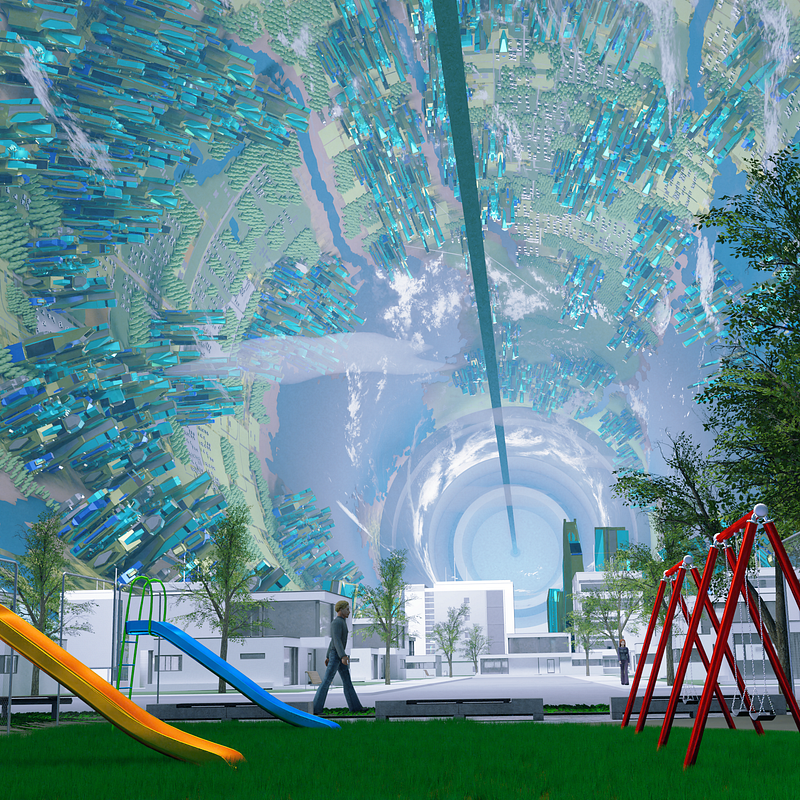
“That’s the food production area; it’s how we feed the millions living in this colony. By growing our food far away from populated areas — in the microgravity zone — we can maximize the use of the drum for human habitation. Production is fully automated and runs 24/7.” — Excerpt from my novel K3+
Without space-bound infrastructure, a single one of these colonies will take centuries. The basic construction and manufacturing framework will require decades and thousands of rocket launches to deliver specialized components — which will be manufactured on our planet for hundreds of years until factories and heavy industry exist in space.
Resources in the inner solar system are virtually unlimited but extremely hard to reach. Like building a campfire, we start small by mining the Moon and near-Earth asteroids. As the human footprint in space increases, larger caches of raw materials — like the planet Mercury — will become accessible.
After the first space colony, progress will speed up. New technologies and materials developed in zero gravity (and with easy access to vacuum) will enable the construction of continent-sized habitats that can house billions.
The Milky Way is home to 200 billion stars. With giant lasers in space, we can propel colony ships to a fraction of light speed, reaching neighboring stars in decades
Thou shalt not disassemble planets
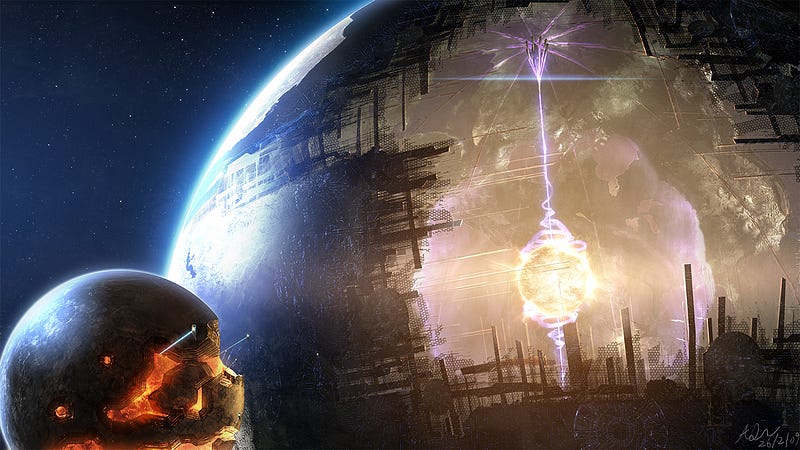
I truly enjoyed how the engineers of Larry Niven’s Ringworld disassembled all planets in their system to build a titanic ring around their star. But the raw materials for a Dyson megastructure will not come from breaking apart planetary bodies. The technology for such unfathomable achievement is Clarketech — not to mention that a noticeable reduction of a planet’s mass will cause it to drift outward to a more distant orbit. Fortunately, a far better solution exists: mining the Sun.
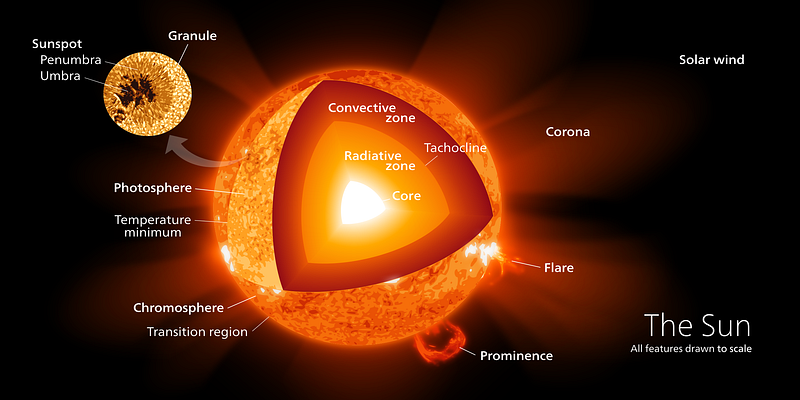
Our star generates humanity’s annual energy consumption 500,000 times every second; it also contains thousands of times the mass of Earth in elements we can use as raw materials. These are individual atoms swirling around the corona carried by the convective process. They must be captured, sorted, and assembled into usable chunks for construction — akin to how we mine gold on Earth.
But isn’t this Clarketech too? The answer is a resounding NO. The energy for this massive undertaking will come from the Sun itself. No process is too inefficient if there is a virtually unlimited power surplus to run it. Star lifting is a concept that takes advantage of this fact to extract raw materials from the highly energetic convective zone.
The size of the required infrastructure is such that it will take centuries to build. The planet Mercury is ideal because of its composition (70 percent metals, 30 percent silicates) and proximity to the star. The low gravity will allow a Mass Driver to launch components into the Sun’s orbit and deliver mineral ores to Earth’s orbit — to build the first space colonies.
“True that reaching Mercury is very hard…from Earth. But in space, we don’t need all that fuel to break off our planet’s gravity well! From Terminus, the amount of propellant to reach Mercury and land is minuscule in comparison. Besides, Mercury is the leftover rocky core of a past collision that stripped the planet’s mantle away, which means we won’t have to dig very deep to reach the ores we need.” — Excerpt from my novel K3+
After many centuries of building space colonies, we will run out of space around the Sun. But the Milky Way is home to 200 billion stars. With giant lasers in space, we can propel colony ships to a fraction of light speed, reaching neighboring stars in decades.
Earth is humanity’s womb; becoming a spacefaring civilization will sever the umbilical cord. That’s why other planetary bodies can’t become our home
Luxury chateaux in space
Born on Earth, we suffer from a deeply ingrained planetary bias. But our little blue marble has a limited carrying capacity, and the low gravity of Mars might prove the ultimate barrier. Rotating habitats around the Sun are the surefire way to sustain a population of quadrillions in perfect Earth conditions and lavish lifestyles.
Back in the 70s, American physicist Gerard O’Neill established that we possess the capabilities to create such structures. He proposed an analogy to building a house on a mountaintop; rather than dragging wood and rocks up from the base, we find them right at the mountain itself — commonly referred to as in-situ resources.
Although we can’t construct an O’Neill cylinder yet, a far smaller colony (capable of housing close to 1,000 people) is possible within decades. Just as Çatalhöyük became the first proto-city, this tiny colony will become the first human settlement in space. It will allow us to work on research, development, and testing of capabilities to manufacture multi-million people colonies.
“…we’ve reduced the time it takes to build an O’Neill cylinder to ten years. And, although the trend will continue, growing demand has finally caught up. I’m afraid the era of pioneers is over; we now face a waiting period of weeks that will continue to increase as more people want to come to space.”— Excerpt from my novel K3+
Completing a Dyson swarm will take a millennium. It will require a different economic paradigm with more generational thinking and less instant gratification. But we must do it because Earth cannot sustain the growth of our burgeoning civilization much longer. Even if we curb consumption, shrink our economies, level our population, and decarbonize the atmosphere, we’ll only postpone the inevitable.
O’Neill once asked his students at Princeton University, “Is a planetary surface the right place for an expanding technological civilization?” Their answers led him to design the first rotating colonies. Earth is humanity’s womb; becoming a spacefaring civilization will sever the umbilical cord. That’s why other planetary bodies can’t become our home. Our ancestors lived in caves; our descendants will live in these floating oases among the stars.
What does the future hold?
My dystopian novel K3+ is the story of civilization’s collapse due to climate change and economic inequality, followed by the rise of humanity to an intergalactic empire. A roadmap to survive our current predicaments, colonize space, and save the planet; the science-ground story interweaves cutting-edge technologies with spellbinding fiction.


