
365 Days of Climate Awareness 258 — Introduction to Bolivia
Bolivia, along with Paraguay, is one of two landlocked countries in South America.
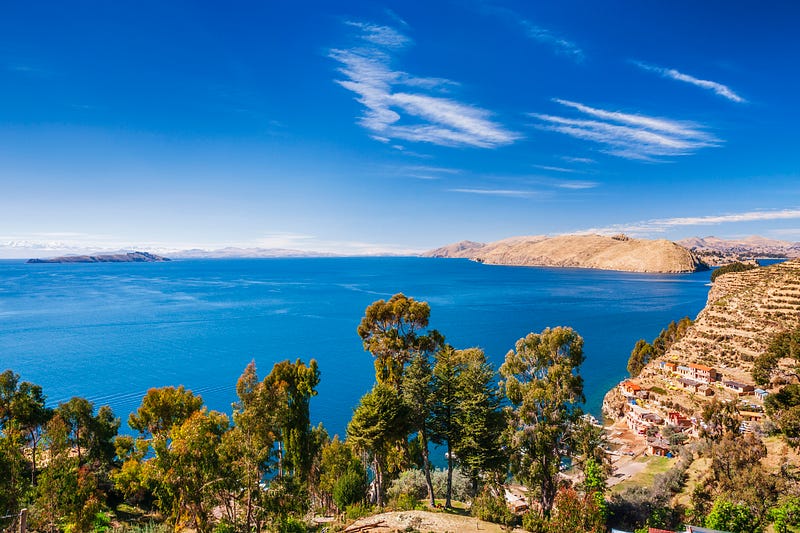
Bolivia, along with Paraguay, is one of two landlocked countries in South America. It sits between Brazil, Paraguay, Argentina, Chile and Peru, and while only 42 km/ 25.2 mi from the Pacific Ocean at its closest point, this is across the Andes Mountains, as strong a natural barrier as anywhere on earth, physically as well as climatically. Bolivia covers 1,098,581 km2/424,164 mi2 and has approximately 11 million people, featuring groups of indigenous, European, Asian and African descent–a highly mixed population. Its capital is the city of Sucre.
It remained under Spanish control until the 1800’s, when a series of rebellions not only in Bolivia but elsewhere in South America disrupted Spanish control and set many of the local populations against each other. Independence fighters in Bolivia fought several wars not only against the Spanish but against local powers in Peru, Chile and elsewhere, losing quite a bit of territory, especially throughout the 20th century This most especially included a 400 km/250 mile stretch of Pacific coast taken by Chile. Bolivia’s governance has been quite turbulent, and included a US-backed military junta formed in the 60’s. In 1993 Bolivia returned to democracy, if at times highly unstable.
Bolivia is in the central region of South America, between 57°26’–69°38’W and 9°38’–22°53’S, making it entirely tropical, though its western Andean elevations include cold regions quite different from the Amazon basin rainforest in the northeast. The mountainous region, 28% of the country’s territory, is composed of two chains, the Cordillera Occidental and the Cordillera Central, between which is the Altiplano and the salt flats which are a commercially important source of lithium. South America’s largest lake, Titicaca, is in the Cordillera Central. East of the mountains is the Sub-Andean region, 13% of the country’s territory, a temperate zone featuring a large amount of agriculture. The remaining 59% to the east and north is the tropical, forested Llanos region.
Tomorrow: Bolivia and climate change.
Be brave, and be well.
Sources
Read more Climate Awareness posts from The Good Men Project:
Join Medium for just $5 a month. Not only will you get unlimited access to articles, you’ll help support The Good Men Project and our mission to shine a spotlight on parenting, one of the most crucial roles in the world.
This post was previously published on Dailykos.com and The Good Men Project.
About Michael Sutherland
Family man, scientist, singer, writer, dancer, and all-around lover of life.