avatarThe Good Men Project

Free AI web copilot to create summaries, insights and extended knowledge, download it at here

2046

Abstract

estimated that La Niña events, with their associated increase in wind and surface current activity, increase global downward transport of heat in the ocean by as much as 30%. In this way La Niña is a prime mechanism for oceanic storage of the heat gained through global warming.</p><p id="80c1">By every indicator — satellite, ship-based, and drift buoy measurements — the oceans are warming rapidly, at nearly all depths. The energy content of the heat is on a staggering scale: the increases are in zettajoules (Zj), 1021 J (one thousand billion billion joules). One Aetajoule is roughly 18 times the annual energy consumption of the human race.</p><p id="c1e5">Tomorrow: oceanic salinity changes.</p><p id="22a3">Be brave, and be well.</p><p id="2d73"><i>If you enjoyed this article, consider <a href="https://goodmenproject.medium.com/membership">joining Medium</a> for just $5 a month! You’ll get unlimited access to our articles along with thousands of other writers</i></p><div id="733b" class="link-block"> <a href="https://goodmenproject.medium.com/membership"> <div> <div> <h2>Join Medium with my referral link — The Good Men Project</h2> <div><h3>As a Medium member, a portion of your membership fee goes to writers you read, and you get full access to every story…</h3></div> <div><p>goodmenproject.medium.com</p></div> </div> <div> <div style="background-image: url(https://miro.readmedium.com/v2/resize:fit:320/0*yclyJzEshQLc5Kco)"></div> </div> </div> </a> </div><p id="722c"><b><i>Read more from The Good Men Project on Medium:</i></b></p><div id="801a" class="link-block"> <a href="https://readmedium.com/what-the-coronavirus-can-teach-us-all-about-sex-love-and-survival-408b62022f31"> <div> <div> <h2>What the Coronavirus Can Teach Us All About Sex, Love, and Survival</h2> <div><h3>When w

Options

e confront the reality of what we are facing in the world, it is easy to become overwhelmed.</h3></div> <div><p>medium.com</p></div> </div> <div> <div style="background-image: url(https://miro.readmedium.com/v2/resize:fit:320/0*U6QS2yhiU9m_Gbe2.jpg)"></div> </div> </div> </a> </div><div id="6078" class="link-block"> <a href="https://readmedium.com/but-you-say-im-just-a-friend-82ffd26fac54"> <div> <div> <h2>But You Say I’m Just a Friend</h2> <div><h3>Why the friend zone is where you should be.</h3></div> <div><p>medium.com</p></div> </div> <div> <div style="background-image: url(https://miro.readmedium.com/v2/resize:fit:320/1*ABHDPXn1PKbScsz9K-AEMA.jpeg)"></div> </div> </div> </a> </div><div id="27b3" class="link-block"> <a href="https://readmedium.com/5-signs-it-isnt-love-even-though-they-say-i-love-you-bf844d6eed1f"> <div> <div> <h2>5 Signs It Isn’t Love, Even Though They Say, ‘I Love You’</h2> <div><h3>Have you been burned by ‘love’? Thomas Fiffer identifies five red flags you’re not likely to be looking for at the…</h3></div> <div><p>medium.com</p></div> </div> <div> <div style="background-image: url(https://miro.readmedium.com/v2/resize:fit:320/1*JYhplw1GU3P32ZFi_NLGnA.jpeg)"></div> </div> </div> </a> </div><p id="ee94"><i>The story was <a href="https://goodmenproject.com/featured-content/365-days-of-climate-awareness-183-changes-in-oceanic-heat-content/">previously published on The Good Men Project.</a></i></p><h2 id="57ce">About Michael Sutherland</h2><p id="c93b"><i>Family man, scientist, singer, writer, dancer, and all-around lover of life.</i></p></article></body>

365 Days of Climate Awareness 183 — Changes in Oceanic Heat Content

It is estimated that the ocean stores roughly 90% of the heat added to the biosphere due to increased greenhouse gases in the atmosphere.
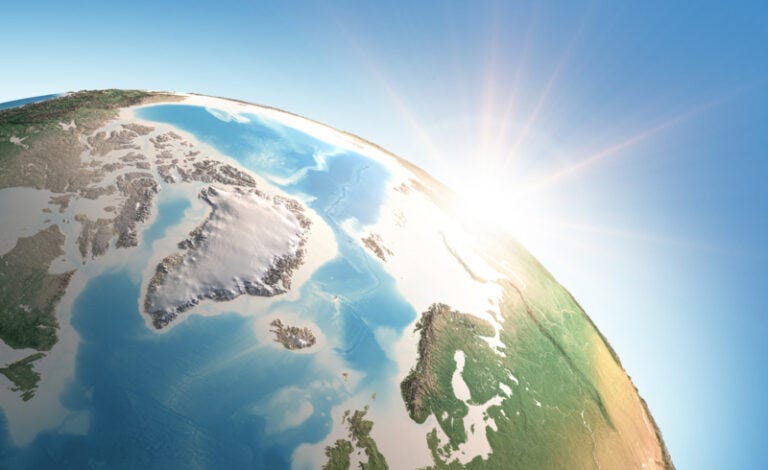
Photo credit: Shutterstock

By Michael Sutherland

It is estimated that the ocean stores roughly 90% of the heat added to the biosphere due to increased greenhouse gases in the atmosphere. Because ocean water stores roughly 800 times as much heat by volume as air, the majority of heat on the planet’s surface is both stored and circulated by the ocean. For that reason scientists in recent decades have devoted increasing effort to measuring temperatures, and their changes over time, at greater ocean depths.

In recent decades the technology has existed for a fleet of over 3,000 “Argo” floats, among other designs, to float freely in the water at various depths (as a function of density) recording data such as temperature and salinity. The floats periodically float to the surface, broadcast their position and the data they have gathered, and then descend back to depth. Passive drifters like these have helped researchers gain tremendous understanding of the dynamics and heat content of the intermediate (500–1000 m/1780–3560 ft) and deeper (>1000 m) ocean.

The bulk, but far from all, of the ocean’s heat is in the shallow and intermediate zone, due to direct influx of energy from the sun. Given that much of the ocean (outside of the polar regions) is stratified, events which transport heat to intermediate and deep depths tend to be episodic. ENSO is perhaps the dominant global example. It is estimated that La Niña events, with their associated increase in wind and surface current activity, increase global downward transport of heat in the ocean by as much as 30%. In this way La Niña is a prime mechanism for oceanic storage of the heat gained through global warming.

By every indicator — satellite, ship-based, and drift buoy measurements — the oceans are warming rapidly, at nearly all depths. The energy content of the heat is on a staggering scale: the increases are in zettajoules (Zj), 1021 J (one thousand billion billion joules). One Aetajoule is roughly 18 times the annual energy consumption of the human race.

Tomorrow: oceanic salinity changes.

Be brave, and be well.

If you enjoyed this article, consider joining Medium for just $5 a month! You’ll get unlimited access to our articles along with thousands of other writers

Read more from The Good Men Project on Medium:

The story was previously published on The Good Men Project.

About Michael Sutherland

Family man, scientist, singer, writer, dancer, and all-around lover of life.

Environment
World
Climate Change
Oceans
Climate Crisis
Recommended from ReadMedium