
3 Things You Might Not Know About the Human Uterus
And more reasons why I want absolute control over mine
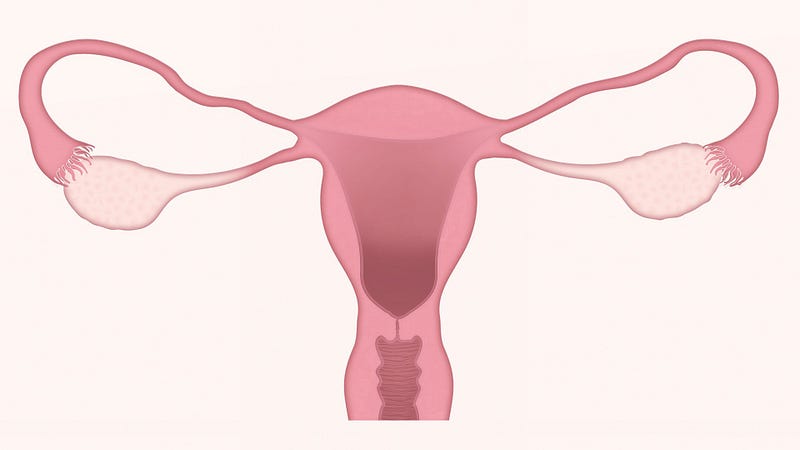
Once again, in the U.S. people with a uterus are up against government regulation and legislation of that very organ called the uterus. Once again, we are all arguing about who owns the uterus, that organ held within the pelvis of an individual person’s body. Once again, legislation is being made telling those of us who have a uterus what we can and cannot do with this personal organ.
It sounds crazy but it is true.
What is the uterus?
And so what is the uterus, otherwise known as the womb? What exactly is this organ in our bodies that we have been speaking of?
The uterus is small. Science writer Natalie Angier describes it as the size of a small fist in its nonpregnant state and able to become quite large when it is engaged in creating new life. It is located in the pelvis between the bladder and intestine. It assumes different positions depending on how a person is positioned, so it rotates one way when standing and one way when lying down.
The uterus has three layers. First is: the endometrium, the inner layer, and uterine lining. This inner layer also has three layers; two of which are mucous sheaths shed during menstruation. The monthly bleeding is a result of the cyclical growing and shedding of these endometrial layers.
The second part of the uterus is the myometrium. The middle layer. In pregnancy the myometrium gets stimulated by estrogen to divide and enlarge, allowing the uterus to grow with the developing fetus.
Then there is the uterine wall, the outside, or third layer of the uterus.
The uterus is the organ within which a fertilized egg cell is implanted and may or may not be allowed to take nine months to progress into a human baby. That is what the legislation is about, whether or not the person inside whose pelvis this organ is housed may choose to terminate this process for a multitude of reasons.
But the uterus has three other qualities you may want to know about. These three other qualities are further reasons why this uterus-bearing-human (meaning I) wants absolute control over mine.
1. The psychoactive uterus
As I was researching for a book I wanted to write about the connection between spiritual enlightenment and the womb in the early aughts, I jotted down, “the psychedelic womb?” in my journal. I wondered if I could find a scientific basis for a positive answer to this question. Was there any information that would prove the womb itself to be a factor in enlightenment, illumination, oneness with the universe and ultimate ecstasy — bliss? Was there anything to support this?
It was in Natalie Angier’s book, Woman: An Intimate Geography, that I found my answer. Yes, the uterus is in fact a psychoactive cauldron.
Angier writes that the uterus:
“Fabricates drugs that in other contexts would be illegal. It synthesizes and secretes beta-endorphins and dynorphins, two of the body’s natural opiates and chemical cousins to morphine and heroin. It makes anandamide, a molecule almost identical to the active ingredient in marijuana”(111).
Don’t let anyone try to convince you that the uterus is a passive organ merely taking cues from other organ’s promptings; a passive host for a growing embryo. No. It is active, operating in complex relationship to the body as a whole. Science is only beginning to understand this vastly under-researched organ — especially its positive effect on the rest of a woman’s body, even after menopause.
For example, they are only now discovering that the prostaglandins (compounds that trigger contractions, cause menstrual cramping, and regulate blood flow) the uterus secretes regularly may have a beneficial effect on blood vessels and vascular health. This could be part of the reason why women who undergo a hysterectomy sometimes develop heart disease.
Angier continues,
“The uterus produces at least as much opiate material as neural tissue does, and it makes ten times more of the cannabis equivalent than any other organ of the body does”(111).
After I read this I wrote a statement in my notebook: A woman’s body is hard wired for bliss.
The bliss molecule
Anandamide is a molecule produced by our bodies that is similar in chemical makeup to the molecule in marijuana that makes us high — THC. A large portion of it, the bulk of it in the human body, is made by the uterus. Anandamide and THC use the same receptors to produce the desired effect — a feeling of bliss.
Anandamide is also important in memory, emotion and pain perception. It was identified in 1992 by Israeli scientist Dr. Raphael Mechoulam who named it anandamide after the Sanskrit word for bliss — ananda. It exists in highest concentration in the body in the uterus just before embryo implantation.
Anandamide is commonly called “the bliss molecule.” Anandamide receptors, of which there are many in the uterus, are called bliss receptors.
I wonder if anandamide is something the uterus might produce and secrete at orgasm, during uterine massage, at birth and conception, at ovulation? Very little is understood as of yet about the specific functions of the anandamide created by the uterus.
I began to question how we as women, and other uterus bearing humans, access and use this bliss fabrication process that appears to lie at our creative cores?
When we feel blissful, is the uterus mediating our experience? Have we somehow encouraged it to? Does this mean that women, and other uterus bearing humans, have an extra storehouse, a secret stash of anandamide and wouldn’t we need it and don’t we deserve it?
We do know that anandamide has been implicated in the famous ‘runner’s high’ that people report experiencing at a certain point in their long distance runs. A test done on runners and bikers showed an 80% increase in levels of anandamide in the blood after a 40 minute bike ride and 80 minute run which corresponded with reports of feelings of relaxation, regulated mood, and euphoria.
Other people report a similar state to be elicited when involved with creative projects. It is described as a state where time stops, one feels in touch with universal energies, receives inspiration and even information. Could this too be anandamide? Was Einstein high on anandamide when he received his startling insights into e=mc2 and the expanding universe?
There is research showing that anandamide helps the fledgling embryo to thrive and may have therapeutic effects in diseases which involve failure to thrive including anorexia. It is also implicated in appetite, making us want to eat and though this means it is being studied in a frenzied hurry for diet aids it makes me think of large sensuous women who are happy.
If the uterus is creating all these psychedelic molecules, does that mean these same people legislating whether or not I can make a choice about my uterus can also legislate about the molecules my uterus generates? Can they mess with my right to my own bliss which seems to be moderated by my uterus?
As for me, I don’t want anyone messing with or legislating my rights to my own bliss. Further reason why a government has no right to tell me what I can and cannot do with an organ inside my own body.
2. The orgasmic uterus
Until I began to research the womb, I did not understand the role of the uterus in orgasm. I had felt the shuddering and fluttering within, the spasms, but I didn’t understand that this was the uterus having contractions. I didn’t recognize that it was my womb I was feeling. I didn’t appreciate that what I felt, what sent waves of heat and energetic streams throughout my body was my uterus.
When I asked around most of my friends didn’t either.
These are the facts: When a person with a uterus has an orgasm, their womb has a series of contractions. These contractions contribute to and greatly create/enhance the experience of orgasm.
And yet I didn’t know that.
I didn’t understand that my uterus is intricately tied up with my experience of sexual pleasure and climax. I thought all the other parts of my genitalia handled that and the uterus was there in case I got pregnant. Again, I was up against my persistent wrong thinking, the thinking that the uterus exists only for the purpose of growing a baby.
Apparently I am not the only one who lives in this state of ignorance. Women’s neglect or disconnect from their own wombs is supported by the scientific and medical establishment in general.
It is not necessary to have a uterus to experience orgasm, and other factors are involved, but the uterus can play a huge part. During orgasm “feel good” chemicals are produced by the uterus and released into the bloodstream, anandamide included. This is a gift that the uterus bestows to a person with a uterus all their life, not only the child-bearing years. It’s time to recognize the important role the uterus plays in orgasm.
So, once again, if the government can legislate and make laws around what I can and cannot do with my uterus, does it also have a right to begin legislating my right to my own orgasms? Yet another reason why I want absolute control over my own uterus.
3. The triple spiral at the womb
In the womb there are three spiral arteries which are now known to be responsible for the cyclic bleeding, who orchestrate it through their constrictions, their coiling and uncoiling, and who are also instrumental in bringing life giving blood to the fetus.
Do you hear this: in the womb there are three spiral arteries, the only spiral arteries in the human body, in the uterus.
The uterus has three spiral (spiralic) arteries which go into the endometrium and through their spiraling actions feed the placenta with blood, the fetus, feeding the spiral form of new life.
Angier says that most of us are ill-informed about the mechanisms of a human uterus’s monthly cycle of bleeding.
“The first relevant mechanism is a specialized type of artery. Feeding into the two superficial layers of the endometrium, the ones that are disposed of each month, are three spiral arteries, so named because they look like corkscrews. During pregnancy, the spiral arteries serve as important conduits of blood for the placenta. Yet their purpose extends beyond fetal feeding. Several days before a woman’s period begins, the tips of the spirals grow longer and more tightly coiled, like a slinky that’s being pulled and twisted at the same time. Circulation to the endometrium grows sluggish — the calm that presages calamity. Twenty-four hours before the onset of bleeding, the spirals constrict sharply. The faucets are twisted off, the blood flow ceases. It is a heart attack of the uterus. Deprived of blood and therefore of oxygen, the endometrial tissue dies”(100).
The absolute truth is that scientists do not know why we bleed. They are beginning to better understand the mechanisms of how we bleed, but the why of a menstrual cycle every month, the purpose of the blood flow, the need to shed the endometrial lining at menstruation and estrus is still a question.
The new findings about the spiralic arteries tells a different story than the passive, “oh the uterus just fluffs off the lining it grew and it grew it in case pregnancy took place.” Instead it has changed to the story of an active expulsion. Why?
Some say it is a costly endeavor for the body to shed this elaborate, rich lining it has grown every month; to lose blood, precious blood, and iron. Others say it is actually more efficient and less costly overall than maintaining an endometrial lining all the time. Yet others think it is a cleansing for the uterus every month from the pathogens that can ride in on ‘the backs of sperm;’ that sex is risky for women, inviting foreign objects in their body, but this is all just speculation.
Many sculptures of the female form unearthed from the Neolithic period in Europe have spirals incised over the womb space. Some have one on the back of each hip, where the ovaries are located, others have one spiral over the exact womb space in the front. It is as though ancient people understood that spiraling action is necessary for the generation of new life, and that this energy was held within the human uterus.
A triple spiral is the ultimate spiral. Three of anything, according to the ancients is the ultimate. A triple spiral is the height of the creative form. The triple spiral arteries show that the ultimate form of creativity lives at the wombs of women. This is not only available for women to make babies. Indeed women, and other people with uteri, bleed in the cycles when they are not pregnant, which means each month they grow the spirals longer, experience this coiling and uncoiling, carry this creativity within all the time.
And what are the spiral arteries up to when a woman or person with a uterus no longer bleeds? It means that uterus bearing humans are continually spiraling with creativity at their cores.
That creativity belongs to and is the ultimate sovereign property of the person within whose body it is located. I want access to and control over the creative center at my core. Always. I don’t want anyone else telling me what to do with it.
© Theresa C. Dintino 2022
Works Cited:
Angier, Natalie. Woman: An Intimate Geography. New York, Houghton Mifflin, 1999.