
3 Things Geniuses Do That You Should Be Doing
Einstein and Newton did this instinctively. So did Paulie.

I was six when the boy next door — a kid my mother said was “trouble” — taught me my first lesson about creativity. “Wanna see me turn something into something else?” Paulie asked after drawing a rectangle on a piece of paper.
“Uh … yeah,” I said, expecting a magic trick.
He drew some lines on the rectangle. “Now it’s a sheet of paper,” he said.
I shrugged, unimpressed.
“Wait,” said Paulie. He drew an inverted “Y” underneath the rectangle and held it out to me. “See. It’s a music stand.”
“Okay.”
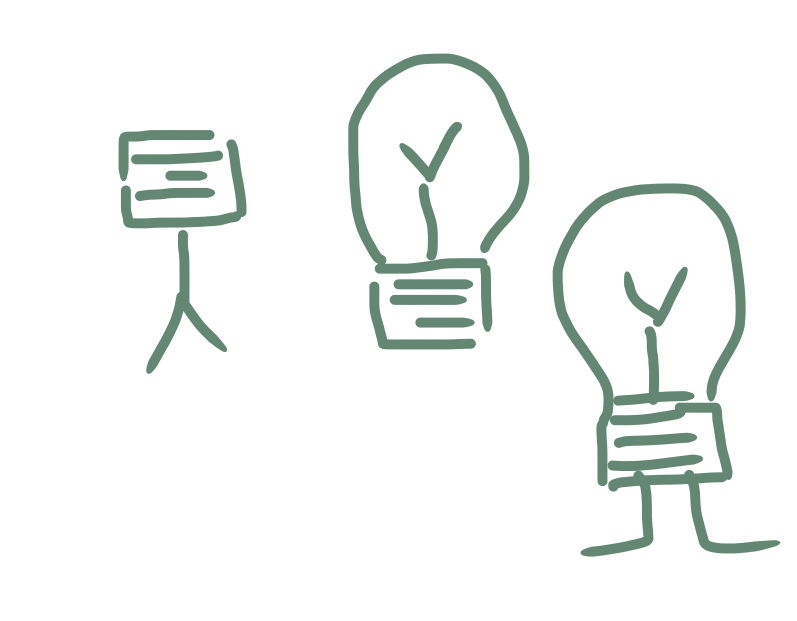
“Watch,” he said. He flipped the paper upside down and curved a line above the music stand’s legs. “Now it’s a light bulb!”
Then, grinning, our local bad boy added two quick lines underneath, and proudly announced:
“Now it’s my mama pulling up her girdle!”
I gasped and giggled — just the reaction he was looking for. But I was impressed. Something could become something else if you really studied it? Considered it from other angles? I had no word for that, but I knew it was cool.
What Do Creative Geniuses Do Differently?

Isaac Newton discovered the universal law of gravity — “frameshifted the whole scientific view of the Universe,” as Lenka Otap puts it— while in quarantine! (That makes MY pandemic output look pathetic.) Albert Einstein figured out that gravity can actually bend time — that’s also (ahem) “relatively” brilliant.
Creative geniuses share common traits. (Creative thinking consultant Dr. Robert Alan Black lists all 52 here.) Many are inter-related. They could be clustered into three distinct ways of approaching life’s challenges. My “bad boy” neighbor Paulie had mastered #1:
1. To Be Like a Genius, SEE Like a Genius
Creative people are OBSERVANT. They study their “rectangles” (= problems / challenges) from a variety of angles, searching out possibilities. Could this thing ALSO be a music stand? A light bulb? My mama’s “behind”?
Creativity — examining things sideways, upside down, and inside out — takes time. Hurry up and make a decision, says that voice in my head. Maybe Newton had 18 months to contemplate his navel but you’ve got places to go and people to see. An article to publish. A product to push out the door.
The temptation to get back to “business as usual” is huge. Geniuses persist. Einstein himself said, “It’s not that I’m so smart, it’s just that I stay with problems longer.”
“It’s not that I’m so smart, it’s just that I stay with problems longer.” — Albert Einstein
Staying with a problem doesn’t mean hours and hours spent thinking harder and harder. It means consciously considering possibilities beyond the obvious ones (i.e., “divergent thinking”) — and then taking breaks so our subconscious mind can do its thing. Einstein crystallized his ideas while on long walks. Newton’s “aha” moment came to him while sitting in the shade of an apple tree. Archimedes had his Eureka moment in the bathtub.
After you’ve studied your challenge from unusual angles, GOOF OFF so your subconscious can step up. Or sleep on the problem. Tell that voice in your head you’ve done your part. You’ve fed in the data. Now you want an insight when you next wake up. Your subconscious may deliver the “aha” solution right on cue. Why didn’t you think of that? Hey. You just did!
2. CONNECT the Unconnected
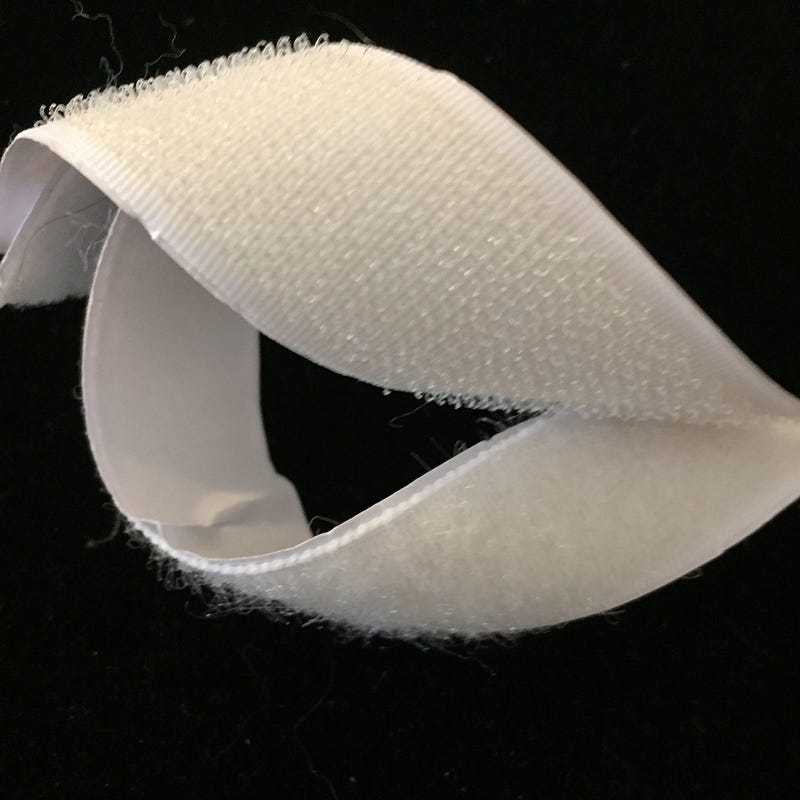
Think you’re stuck? Consider Velcro. Nothing sticks like those two fabric strips, one covered in tiny hooks and the other in tiny loops. Swedish engineer George de Mestral came up with the ingenious item we now call Velcro after studying burrs stuck on his pants.
Synthesizing — connecting different elements (e.g., hooks and loops) — can create surprisingly useful results.
Creativity comes from connecting the unconnected.
Geniuses are open to playing mix and match with the universe. But the universe offers gazillions of things to connect. Adding some constraints can actually help us uncover fresh, unusual connections.
I’ve published more than one hundred recorded song lyrics with the help of rhyming dictionaries. Rhyme is a perfect constraint. I don’t ever want to settle on the first rhyme that pops into my head. The random, unrelated options in a rhyming dictionary carry my mind off in directions I’d never have thought of on my own.
To come up with something new, get out of your mental lane — BUT limit your exploration to another defined area. If you usually read business publications, maybe take a peek at pop culture. Or some atypical-for-you topic here on Illumination. Try pairing a random item that catches your interest (e.g., a recent news story, a new word, a unique object) with the current problem on your plate.
How might these two things relate? Connecting the unconnected can lead to surprising breakthroughs. You might even come up with an idea to carry your family or your business out of this current pandemic pickle.
Connecting previously unconnected people works too. Want to kickstart creativity on a stalled work project? Shuffle in more diverse team members. People from other divisions, races, genders and age brackets.
How about your own social circle? Is everyone a lot like you? Expanding your circle can not only enrich your life, it can help you problem-solve too. Einstein used his friend Michele Besso as a sounding board to talk through tricky problems. Get creative by connecting with another kind of mind.
3. PLAY Like a Genius
A grad student once thought he caught a mistake in an equation Einstein had written on the blackboard. Einstein is said to have studied the equation for awhile, then replied, “You’re right. Oh well, I’m no Einstein.”
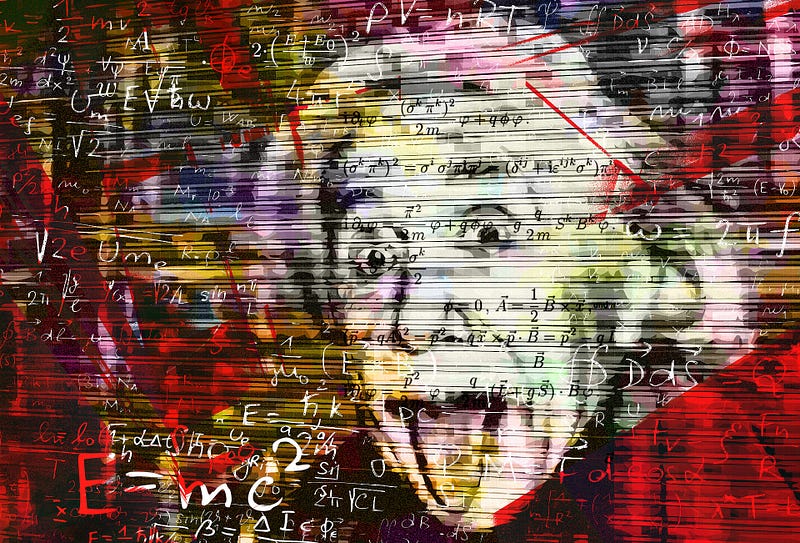
Now that’s funny! If a genius like Einstein can laugh at himself and his work, we don’t need to take ourselves or what we do so seriously. A journalist who interviewed the genius said he was most surprised by his playfulness. Once when a photographer tried to persuade him to smile for the camera, Einstein stuck out his tongue!
If you’re not having fun — if your workdays feel like work — you may be playing in the wrong sandbox. But even if you’re stuck there for the short term, consciously treating what you do more playfully can make the day fly by like it did for you and me (and for that brat, Paulie) when we were kids.
Follow the fun. Better yet — BRING IT! Bring the kid in you to play in your particular sandbox.
You’re not Einstein — but he’s not YOU, either. You bring an utterly unique combination of life experience, personality and passion to your work and your life. So DO what only you can do. But do it choosing to SEE like a genius, CONNECT like a genius, and PLAY like a genius. Who knows what you’ll create!
Key Takeaways:
- Geniuses take the time to see problems from all sorts of angles. Then they let the subconscious sort it out.
- Geniuses connect unalike elements to create something new. That works with people too!
- Geniuses are playful. They have fun while getting the job done. Do you?
“We all have genius within us, never doubt that fact.” — Catherine Pulsifer


