
3 Simple Steps to Mindfulness at Work
The key to increasing efficiency and reducing stress
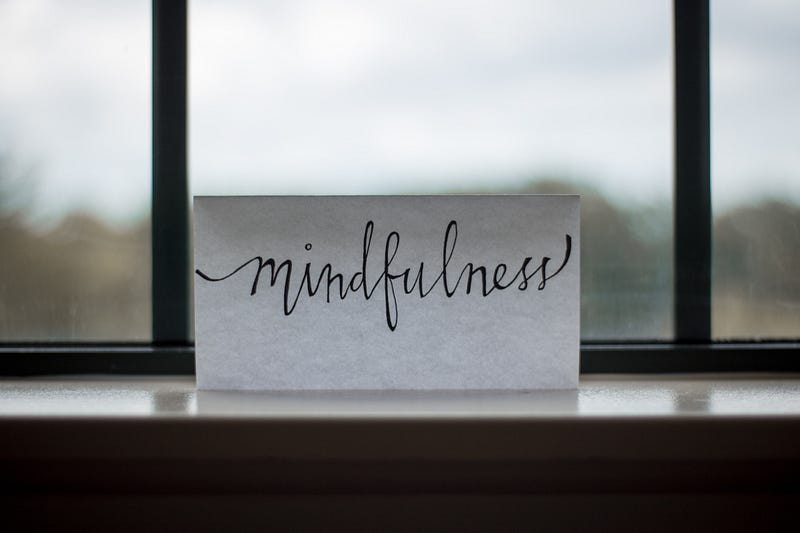
‘Mindfulness at Work? What’s that about then? Sitting staring at your navel all day won’t get the job done!’
I can hear my dad’s voice saying that.
But sitting on a yoga mat on the floor in front of your desk isn’t what I had in mind.
What I mean by mindfulness at work is concentrating on one task at a time, breaking it down into steps, and clearing your mind of everything else.
I discovered this trick years ago after a massive row with my ex-husband. I don’t even remember the argument, but the next day at work I was still in shock.
As usual, I had a long list of tasks to get through, and I had to get the jobs off my list as we were about to go on holiday.
Instead of working in my usual mode of getting wound up over things that annoyed me, procrastinating about tasks I didn’t want to do, and getting emotional, I did something different.
I worked through each task from beginning to end without attaching emotion to each step.
After all, my emotions were otherwise engaged, they were being shocked and horrified at the massive disagreement with my ex.
Amazingly, I cracked through my work faster than ever before.
What I did was this:
Step One: Pick a task
Make a list of your tasks, prioritize them, and pick one.
Avoid thinking about everything else you have to do that day. Just think about your task.
Step Two: Break the task into steps
Any task can be broken down into tiny steps.
You can either write a list of the steps or get them straight in your head, depending on your task.
And when I say tiny steps, I mean the smallest step possible.
Step Three: Concentrate on each step without attaching any emotion or opinion to it
Now, complete each task step, thinking only of what you are doing.
I find it helps to recite what I’m doing in my head.
“I’m typing in the email addresses. The first email is to Mr X, the second to Mrs Y. Now Miz Z and Mr Q.”
It’s like pretending to be a robot — either narrating my tasks or pretending I’m getting instructions wired straight to my brain about each step. Either way works for me.
I’m no expert on mindfulness, but I assume repeating what I’m doing or creating imaginary orders in my head blocks my mind from troublesome thoughts.
Summary
I don’t recommend doing this all the time. Being a robot 24/7 isn’t appealing in the least. But I employ this method when I’ve got a lot to do and feel overwhelmed.
It also works at home.
If I’m putting away the washing, I think, “Hang up my blouse in the wardrobe,” then “Pick up the socks and put them in the drawer.”
It’s much more peaceful than getting worked up about all the jobs I have to do before tea time.
That first time, after the row with my ex, it just happened when my emotions were hijacked.
Subsequently, I’ve consciously gone into mindfulness mode to get things done when I’ve felt overwhelmed.
The trick is to take the emotion out of each task.
No opinions about whether the task is hard or easy, fun or boring. No judgment about the people I have to talk to are easy to deal with.
Full disclosure: it doesn’t always work, and sometimes you’d be better off going for a lie down and a cup of tea, but I’ve found it a helpful tool.
Want to learn more? Click here to subscribe to my free weekly newsletter to get all my latest leadership & training articles plus a free e-Book, The New Leader’s Starter Kit.