
3 Simple Reasons Why Friends’ Circles Shrink Over Time
There’s a need to curate a reliable inner circle still out of the larger pool.
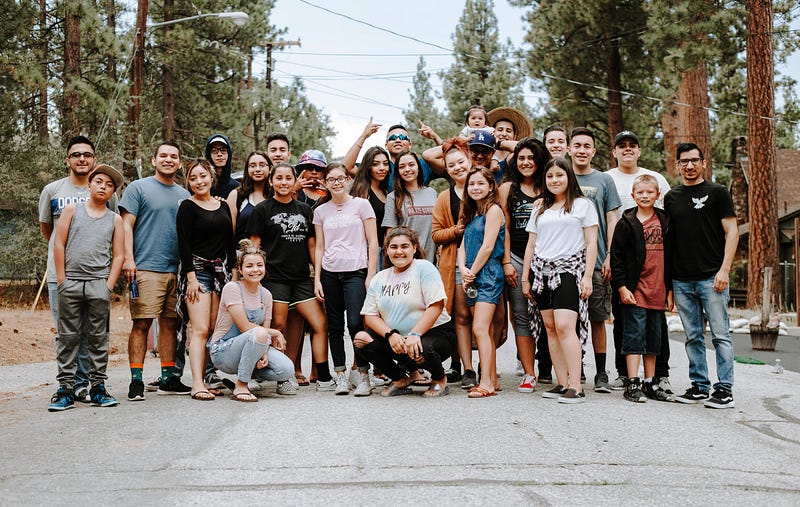
When you are younger you can have a wide circle of “friends”. Almost anyone can join because the criteria are loose and we are also led to believe that the wider our circles the better. It showed we were popular, connected, and well-liked.
Although apart from the desires for popularity and connection, research shows that the width of our circles could also depend on other factors like our personality types, our individual circumstances, or socioeconomic conditions.
Why do our circles shrink?
As we progress in life the circles naturally get smaller. It happens mainly because:
- as we evolve as individuals some of those friends will no longer fit in with us because they too have grown in a different direction;
- there are some who, unfortunately, do not grow; and
- as we get older we will also get wiser. Wise enough to cut off those extremely tasking, low-value, high maintenance, one-sided friendships. After weeding these friendships out of the friends’ pool there will naturally, be fewer left.
“Friendship is not about whom you know the longest. It’s about who came and never left.” –Paulo Coelho.
What is an inner circle of friends and how many friends should be in it?

Ideally, an inner circle is one that contains an exclusive group of people who are not only very close to us but we accept, understand, trust, and are truly committed to them as they are to us.
One theory states our brains are wired to hold no more than 150 meaningful connections. It is also a layered arrangement. With an innermost layer (the inner circle) where the bond is the deepest holding about 5 people. As we move to the outer layers the intensity of the bond decreases.
As a side note, the 150 limit (Dunbar’s number) has been called into question by researchers who believe we could have a far higher number of friends if we put our minds to it. But I digress.
Why an inner circle is needs to be small
“It’s important to consider the 5 people who are in your inner circle, because they are going to deeply and profoundly influence you.” -Darrah Brustein, 4x founder, author and coach
Maintaining that level of intimate friendship level requires a great deal of time, commitment, and sacrifice. So naturally the fewer candidates the more effectively you will be able to manage it. If you spread yourself too thin it will be hard to maintain a significant level for everyone.
Having a small inner circle helps to avoid being pulled in many different directions all at once because they are going to, in more ways than one, exert considerable influence on your life, and to some extent, your thoughts.
The focus here is also not a circle of minions or yes men but the circle of friends of stature relative to you.
“One of life’s greatest favors are friends who can stand to tell you unfavorable truths to your face, for your own good despite your discomfort. If life blesses you with such people, keep them close.”
Who should be in your inner circle

The prime candidates are obviously those true friends whose level of commitment to you is not diminished by time or distance. Friends who will enable your growth and are not threatened by your success.
An inner circle should consist of people who give you a sense of community with them. A community where you feel safe and comfortable enough to be yourself even though you will be differing views. In fact, especially that.
More importantly, your inner circle should consist of people who can hold you accountable and tell you uncomfortable truths, not to spite, but for your own good.
“Only your real friends will tell you your face is dirty.” –Sicilian proverb.
The advantages of having a small inner circle.
- It is easier to maintain a higher level of confidence, trust, and commitment with a small group. A large group will not only be stressful but will invariably leave some people feeling excluded for not getting the level of attention they feel they deserve. This will engender feelings that are detrimental to the purpose of the circle.
- The bonds will be more intimate and members will be more comfortable and relaxed to be themselves without any pressure for pretenses as to who they really are, their views, or expectations.
- As you have more available time to cultivate deeper bonds with a small group, so also you will have more time for yourself and loved ones without unreasonable demands on your time or other resources by people you don't really know.
- Even though there may be disagreements because you are individuals, the acceptance, understanding, and trust that exists will ensure there is far more congeniality and far less drama.
“The less people you chill with, the less b.s. you deal with.”
Takeaways
- A shrinking circle of friends is natural because people grow and not always in the same way
- The ideal inner circle should contain no more than 5 people.
- There are several advantages to a small, trusted circle of friends.
- Maintaining a high level of trust and confidence takes time, effort, and sacrifice so the smaller the circle the better.
- A circle should not be so large as to take time away from yourself and your loved ones.
- You should feel no need for pretenses with your trusted inner circle.
- An inner circle should consist of friends that can stand up to you when necessary.