
3 Reasons Why My Summer in Japan Completely Humbled Me
And why I now have more compassion for non-natives in any country
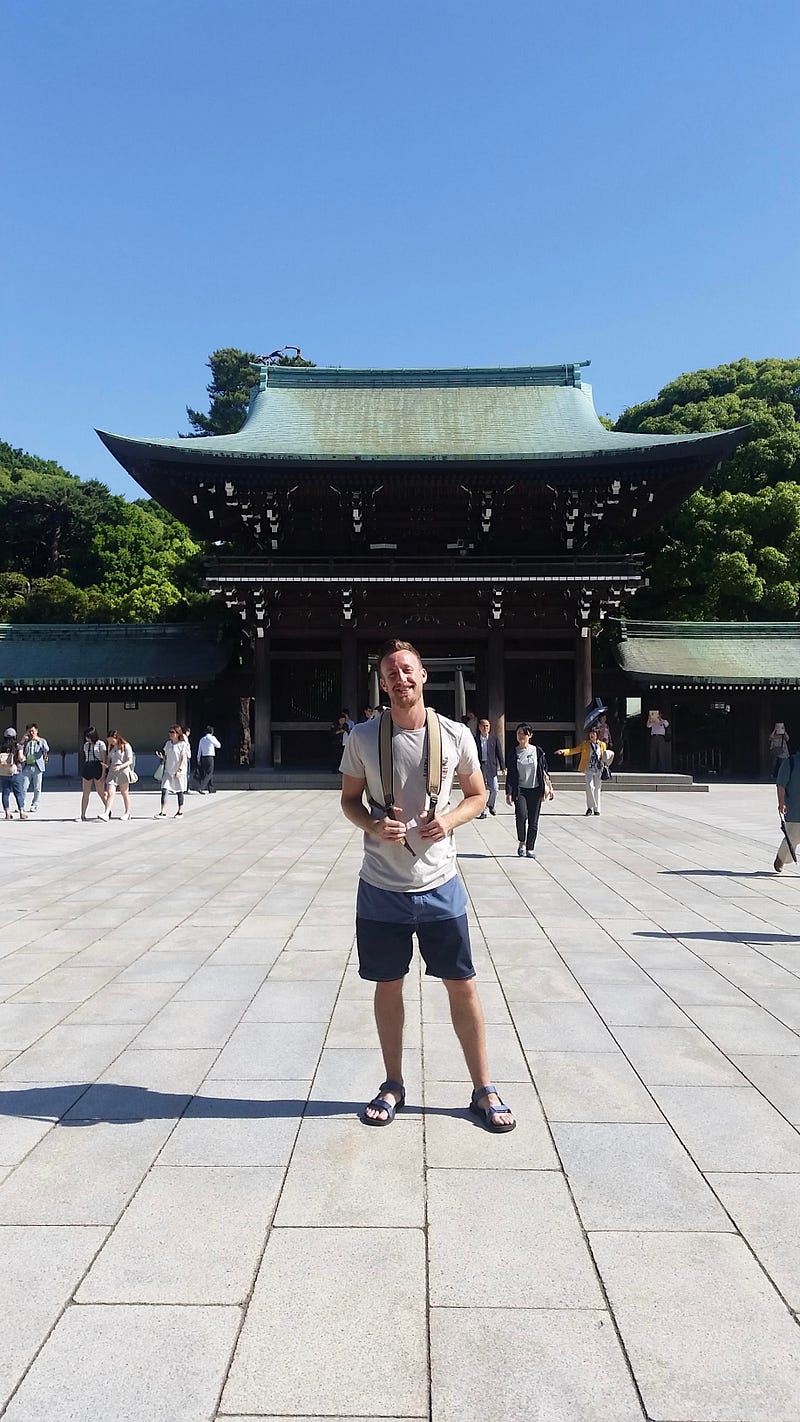
In 2015, after graduating college, I spent two months in Tokyo, Japan as part of an internship.
Though it was a fun experience, it was an incredibly lonely one. The language barrier coupled with some difficult emotional battles I was dealing with at the time, made me feel like I was on a complete island, literally and figuratively.
How I ended up in Japan
I’ve always been fascinated with Japanese culture, ever since I was a kid. I was into all the typical things growing up like manga and anime, (and still am).
In college, I did the not-so-typical thing and minored in Japanese language. It was incredibly difficult and there were many times I asked myself, “Why didn’t I just take French or Spanish like all my friends?” But I’m glad I stuck with it.
I graduated in 2015 and the opportunity came up to do a ministry internship for a church in Tokyo, something I was interested in at the time.
Long story short, the church I was a part of in Tucson, Arizona had a relationship with another church in Tokyo, Japan. They sent a student to Tucson for a year as part of an internship while he was studying abroad in the US. This was all before I went there, but this guy ended up being my roommate for the year he stayed in the US.
When I ended up going to Japan, he was my one connection.
With some context in hand, let’s talk about my experience abroad.
1| It’s hard to be taken seriously as a non-native speaker in another country
I got to see both sides of this and it really helped me to understand what foreigners or immigrants go through from a cultural perspective.
When my Japanese friend was living with me, he always came off as such a goofball. He had a decent comprehension of the English language but was far from fluent.
He would stumble through his sentences at times and say things incorrectly. One common example I used to poke fun at him for is he would say, “Let’s do,” instead of “Let’s do it.”
I don’t know why, but we sometimes have this unconscious bias that makes us look at people as less intelligent than us when they don’t speak our language fluently.
When I was in Japan, I experienced the complete other side of this. I was also worse at Japanese than my friend was at English.
Though I knew enough of the language to get around on my own and even hold a surface-level conversation with a local, I could tell I was always looked at with amusement.
I would get stuff wrong like saying “Who is the bathroom?” instead of “Where is the bathroom?” at a restaurant and the waiters would giggle at me in this way that said, “How cute — but I know what you’re trying to say.” Admittedly, that is a pretty funny thing to say on accident.
There are also not many white people in Japan outside of Shibuya which added to me being somewhat of a novelty. I spent a lot of time outside of Shibuya and 99.9% of the time I was the only non-Japanese person around.
In contrast, my Japanese friend was this completely confident A-type personality when he was in his native land. He became a completely different person in my mind and it was obvious that he was well respected, smart, and again, confident. He no longer came off as the goofy guy that unintentionally made you laugh.
I realized that language creates a lot of biases we don’t always realize and it gave me enormous compassion for non-native language speakers.
It also taught me to laugh at myself more. I went there completely ready to make a fool of myself and learn, and that made a big difference.
2| Language barriers can be incredibly isolating
I mentioned at the beginning of the story that I went through some tough emotional stuff during this period.
I won’t go into great detail, but the girl I was dating at the time, my now wife of 4 years, separated from me while I was on the trip. This happened rather early on.
This was very painful and hard to deal with, especially when you’re on the other side of the planet from all your closest friends and in a country that is not your own.
It was tough to get a hold of my friends in the US due to the 16-hour time difference. They were also very busy. We’d find pockets of time here and there, but talking to someone virtually is never the same as being there in person with them, something that became painfully real for all of us in 2020.
I would try to talk to a couple of people I’d developed relationships with in Japan, but I learned that it’s very difficult to express deep emotional thoughts in a language you’re not fluent in. It was difficult for me to explain what I was feeling in Japanese beyond, “I feel sad,” and “I feel lonely.” Likewise, it was difficult for them to understand what I was saying and to respond thoughtfully if we spoke in English.
The inability to be understood or to communicate adequately is incredibly isolating.
Many times I just felt completely alone to deal with what I was going through. This was all amplified by being in a new and strange place that I was not yet fully comfortable in.
3| Being in a completely new place is uncomfortable
This should not be underestimated.
When you go through heartache or loss at home, in the place you’re used to, you have your usual comforts to turn to.
You can go to your favorite park or restaurant, go for a drive, talk to friends, or just lean into your usual daily routine; something that you’re familiar with.
When you’re in a new country with a new language, you’re denied all of that.
“Culture shock” is real. Everything is new so everything is uncomfortable.
I should note that this newness is actually very good for us. It stretches us and broadens our perspective.
But when you’re going through pain and loss, that discomfort just adds fuel to the flame and makes the whole thing that much more difficult.
I had a few small comforts I’d take refuge in; the church rooftop, journaling, prayer, and playing guitar, (yes, I brought my guitar).
I gravitated towards these because they were “comforts” that weren’t bound to a location, other than the rooftop. This was a painful period, but these things really helped me to get through it.
The experience taught me that we often take our normal day-to-day experiences for granted when we’re home.
Overall, my time in Japan was one of the greatest experiences of my life. Looking back, the trials actually helped me to appreciate it more.
I and the girl I was dating who is now my wife wouldn’t start seeing each other again until months after I got back to the US, but my trip overseas still ended positively thanks to some of the relationships I had made while there.
Though humbling, the experience changed me for the better. I would not have developed as much compassion as I now have for foreigners if not for the stuff I went through in Japan. It made for a rich experience and overall, I’m incredibly grateful.
So next time you’re interacting with a non-native, be kind to them. It’s probably not easy being in their shoes :)

Follow The Orange Journal so you don’t miss a post. Do you love to write about self-improvement and personal development? Learn how to be added as a writer here. 🍊