
3 More Reasons Why I’m Not Buying Your Self-Published Book
Sort these mistakes and you might find people start buying it
It’s easier to get someone to buy you beer than to get them to part with 99p for a copy of your book.
Andy Weir originally published his first novel, The Martian, as a free serial on his website. Some readers requested he make it available on Amazon Kindle. He did and he sold it for 99 cents.
The novel made it to the Kindle bestsellers list. Weir was then approached by a literary agent who sold the rights to Crown Publishing Group.
Today, The Martian has 165k positive reviews on Amazon and has been made into a film starring Matt Damon.
Andy Weir has gone on to write more bestsellers and has an estimated net worth of $55 million.
Self-Publishing
I’m no Andy Weir.
Five years after self-publishing my books I average about £100 per month.
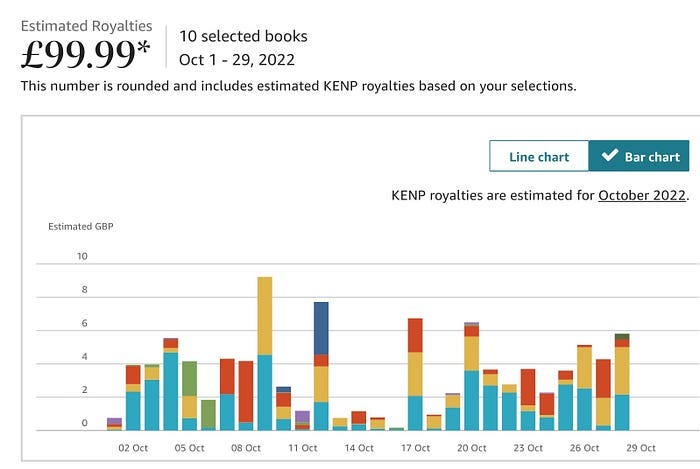
It isn’t much. However, of the 42,000 traditionally published books in 2001, 15% sold less than 12 copies. My £100 per month doesn’t seem so bad in comparison.
Self-publishing can be a sensible option. Even if I had made nothing, it would have worked out a damn sight better than choosing a vanity publisher.
My friend wrote a book. He couldn’t get an agent (didn’t try very hard) so he paid £2,000 to a vanity publisher who printed off 200 copies of his book and stuck him on their website with all the other mugs they had taken in.
When I last visited him, I sat on a chair fashioned from his 199 unsold books. Yes, I bought one, read it, and gave him a good review.
Thanks to platforms like Amazon, self-publishing is much easier than it once was. Many more authors are choosing, or have no other options but, to go down that route. But with easier accessibility comes greater competition.
How much money do you think you will make from self-publishing your book?
We all, me included, think the money will pour in. Month after month. Year after deluded year. The reality is often desperately disappointing. A few icy flakes of interest, then tumbleweed.
It is difficult to assess how many books self-published authors sell and there is even less information on how much they earn. It’s a common complaint from self-published authors that they earn next to nothing.
I see many self-published authors get disheartened by their lack of sales. After slogging away, day after day, pouring their heart out they deserve recompense. So they price their book high.
Readers don’t know how much effort writers put into their work. They have no concept of the time involved in writing a book. And they don’t care. They want value for their money. That’s one reason people won’t buy.
Here are three more —
You are wearing an invisibility cloak
I didn’t know you had written a book. I’ve never seen it anywhere. I’ve never even heard of you.
It’s as if you found a bookshop in Timbuktu and hid your book under the floorboard somewhere in the back of their attic. How on earth am I going to find it? I’m not even sure where Timbuktu is.
Too many self-published authors pay scant attention to marketing their books. You can’t expect people to find you on their own. Introduce yourself first. Ask them on a date and wine and dine them.
About six months into your relationship, only if it is appropriate, you can take them by the hand and show them your work, “What do you think?”
It’s a slow, gentle but persistent process.
Once you have given a dozen copies away to your family and taken your closest friends by the scruff of the neck to an attic in a bookshop in Timbuktu, who else are you going to sell your book to?
It’s a question few budding authors ask themselves.
Readers will not come just because you wrote it. You have to make it happen, and it is harder than it looks.
Market yourself before you market your book. You need social currency. Choose the social media that suits you and get to work. Build a community. Once you publish, steal ideas from other writers.
Learn what works and what doesn’t. We are all different and some methods will suit you and not me. I have a presence on Quora, here on Medium and I occasionally post on the X-twittery thing. I could and should do more.
Amazon is keen to promote your KDP books with Amazon Ads. You set your campaign budget and only pay when a shopper clicks your ad.
Note: A click is not a sale. I discovered that paying for Amazon ads meant all the profits went to Amazon.
Marketing yourself doesn’t make us buy your book right away. It takes time for people to figure out that their investment in your book will be worth their time and money.
First impressions count
When I finished the third edit of my first book and (wrongly) thought I was ready to go. I did what most naive first-timers do and tried to create a cover using Amazon’s cover formatting resources.
Don’t do it.
It’s a little complicated. It’s a lot of time and effort. And, the results are decidedly amateurish. Their generic covers look terrible. Even the fonts they use scream UGH!
If you can’t do it yourself, pay someone to do it. Getting an engaging cover is worth the money. I got one of my boys to do my covers.
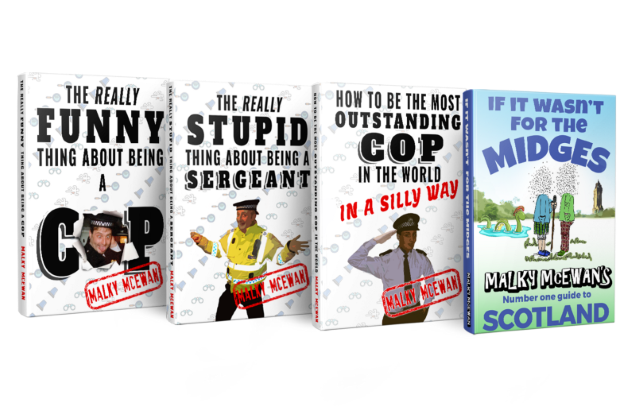
Are they the best?
In hindsight, probably not. Do they do the job? Yes. Anyone looking at the cop books is going to know what they are getting — funny stories from a lifetime in the Scottish police, with a little wisdom thrown in.
A tidy book is a tidier earner
Google estimates that there are around 129,864,880 published books in the world at this moment. Self-publishing has added to that flooded market. That’s a whole lot of books you have to differentiate from.
If your marketing has worked and someone has liked your cover enough to open it up, what do they see?
Without going into topic, spelling, grammar, or style, the first thing a reader spots is the formatting. Books have to look readable. There is only so much poor formatting an average reader will take.
Justify your text.
When you justify text, you give your text straight edges on both sides of the paragraph. Justifying extends each line of your text to the left and right margins, except for the last line.
On Medium, the text is justified to the left but not to the right. That’s fine for a blogging platform. Walk into any bookshop and see how long you take to find a book that doesn’t have justified text — I’m waiting.
Also, note the text does not reach the margins. Leave a little space. Choose a readable font, Janson, Caslon, or Garamond are popular. Make it a comfortable read. Font size matters.
Indent new paragraphs, otherwise, your text appears as a dense block. Some writers use a blank line to divide paragraphs. Again, this is fine for scrolling through a blog post, but for a novel, it’s preferable to signify new paragraphs by indenting the first line.
Start each new chapter on a new page. You don’t need to indent the very first paragraph in a new chapter. If it is a scene break, mark it with a blank line.
Now all you have to do is woo your reader with your sparkling story and unputdownable writing.