
3 Books For Understanding China
If you want to understand a country, listen to its women.
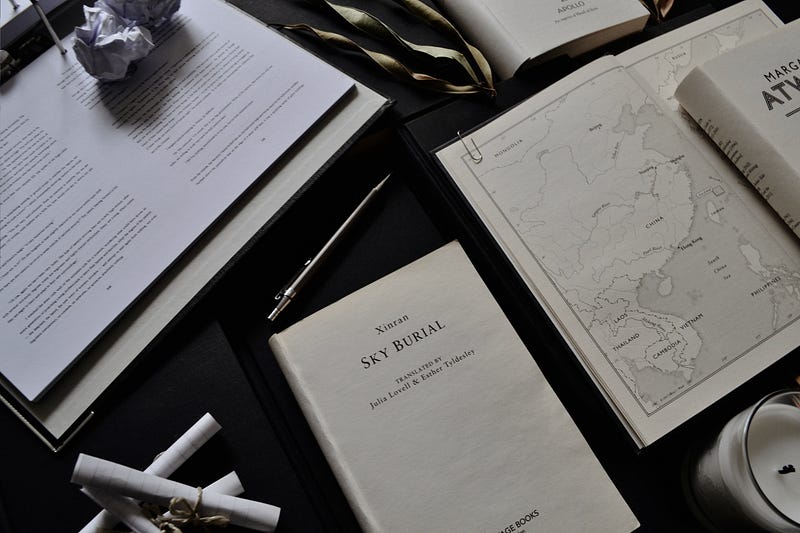
After an entire childhood stuck firmly within the trappings of the English Canon, I read my first Chinese author a few months before my sixteenth birthday. Her name was Jung Chang and reading her literally changed my life.
For the next decade, I read nothing but Chinese women's literature. I spent my evenings locked in with their lives, dreams and sometimes deaths. I lived in a world not dominated by the rhythm of election campaigns, but by the inevitable to-and-fro of front lines and civil war.
Having spent the better half of a decade among the country's writers, I made an immigrant of myself and moved to China.
Of course, the reality of life in China defied much of what has been published beyond its borders. Many of the writers I came of age with lived in de facto exile in England or the United States and hadn't been home in years. Their books and ideas were not only left unreflected in the modern, fast-paced China I found myself confronted with, but were also banned from existing there.
Though I would find no Jung Chang on the bookshelves of Chinese friends and colleagues, the writers I did find were just as captivating. This list reflects the China that was, for Jung Chang and her peers, as well as the China that is, for women still living in the People's Republic.
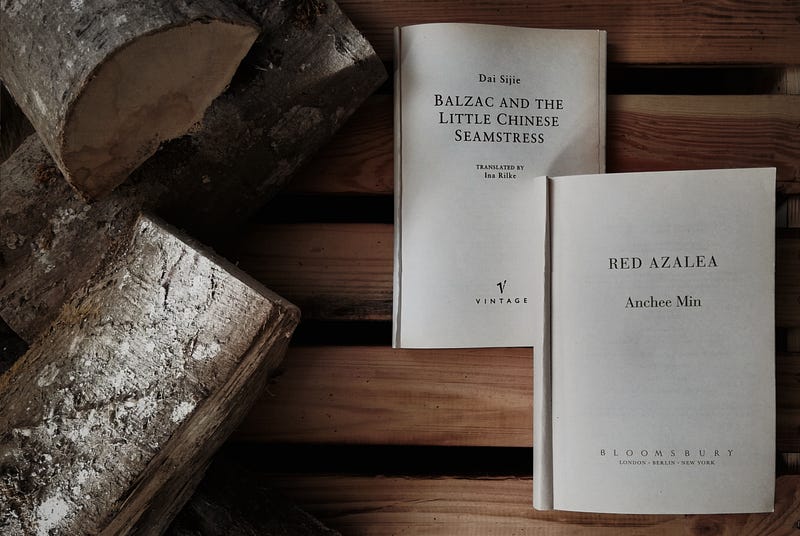
1 | Red Azalea by Anchee Min
Having survived the Japanese holocaust and civil war, it is somewhat unsurprising to see the new Chinese nation struggle to reassert itself under Mao Zedong.
Many western commentators write about Mao’s Zedong’s ‘Great Leap Forward’, the subsequent famine and the oppression of intellectuals during the ‘Hundred Flowers’ campaign — all juicy fuel for the anti-communist fires of McCarthy Era America and Cold War Europe.
Far more interesting, however, is the upheaval of the Cultural Revolution, from which an entire generation of hugely diverse memoir and fiction has emerged. Though Jung Chang’s Wild Swans is often hailed as the archetype of this genre — and my personal first — hers is only one voice among so many that do not focus only on the oppression experience under Mao.
The beauty of Chinese-authored Cultural Revolution generation literature is that physical hardship and totalitarian repression are often the backdrops to incredible stories, rather than the entire plot. Where western commentators centralise oppression, Anchee Min explores her sexuality, love and friendship. Oppression is a side-note, a fact of life, but not the only fact of life.
Rather than oppression-porn, which makes up much of the western fascination with Jung Chang’s memoirs and (heavily personalised) non-fiction, Anchee Min offers nuanced, complicated female and gender-ambiguous characters who happen to live under the totalitarian grip of Mao’s China. As much as I love Jung Chang unconditionally, Anchee Min is a far better starting point for understanding the intellectuals of the Cultural Revolution generation.
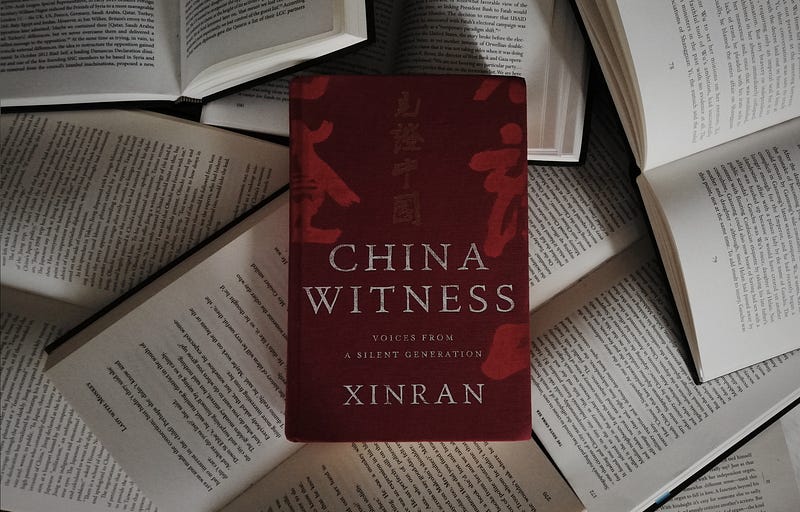
2 | China Witness by Xinran
Flash forward to China after Mao and we’re looking at an entirely different organism, in many ways better but in others utterly unchanged.
Xinran used to work for a state radio broadcaster and became renowned for travelling around China collecting and telling the stories of ordinary women. These stories cut to the heart of what it means to be Chinese in the 21st Century. Though the stories themselves are utterly captivating for their diversity, Xinran’s writing makes for a hypnotic reading experience.
Across all her work, Xinran paints a portrait of a China preoccupied with, well, everything. Xinran’s China is diverse and complex, simultaneously defined by the basest and most lofty of desires. Xinran deals in love and loss, cultural clashes and inter-ethnic solidarity, excruciating poverty and extreme wealth co-existing within the same family. The China Xinran describes is as contradictory as it is fascinating.
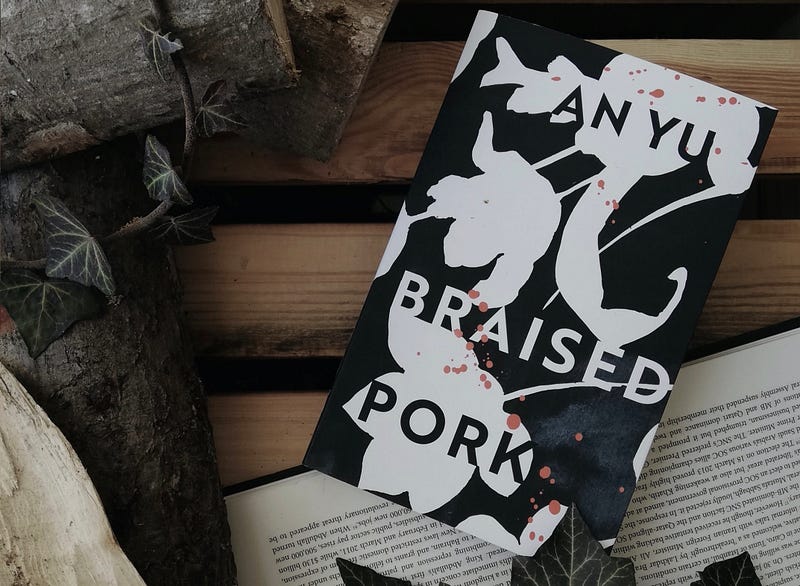
3 | Braised Pork by An Yu
Set in Beijing, Braised Pork follows Jia Jia in the weeks and months after her husband’s bizarre suicide — face down, ass up, drowned in his own bathwater. The strangeness of her husband’s death kicks off what feels almost like a murder-mystery novel, but in the place of a murderer, we have only a crude drawing of a strange fish man. Determined to rationalise and find a cause for her husband’s death, Jia Jia retraces his last trip to Tibet.
We hear a lot about Tibet when discussing China from outside China. The images we associate with the entire region are coloured by the public relations work of the Dalai Lama, as well as Beijing’s own counter-narrative. The Tibet we hold in our minds is an over-simplified, exotic ideal of peaceful Buddhism and colourful prayer flags trapped under the thumb of an oppressive communist dictator. We don’t allow Tibet the cultural space to be anything other than Buddhist and peace-loving; we don’t allow Tibet to be complex or diverse.
What we don’t realise is that Tibet occupies a similarly strange space within the Han Chinese imagination. It is a place of peace and spirituality, where the borders of the real world blend and melt into the unknown and unknowable. But at the same time, it’s a foreign place, a dangerous place, where the unwitting interloper, or invader, must proceed with caution despite the warm and open hospitality of the plateau’s people. An Yu plays on the vivid imagery of Tibet and draws on the region’s spirituality in order to legitimise her magical realism.
Novels like Braised Pork — and, if it interests you, Xinran’s Sky Burial — help to situate Tibet within the Han Chinese perspective which dictates its politics. It helps us to understand that, although Tibet’s existence is dominated by a religious fervour imposed on it by both the West and Beijing, the people who exist there are governed by many conflicting interests.
What these books have in common is that they serve to complicate how we see China.
The accepted narrative worldwide would have us believe China under Mao equals unending misery and little time to think of anything else, Anchee Min shows us a world in which characters are permitted to exist within a context of oppression, without being entirely defined by it.
Similarly, our media would have us see the China of today as a continuation of Mao’s oppressive, totalitarian world. However, Xinran — herself a Party member and employee of the state — shows us what continuation and change actually mean to the real people of China. Finally, where we see Tibet as a simple equation of Religion + Communism = 1984, novels written by Han Chinese looking into this foreign space within their own nation tell a complicated and nuanced story of solidarity between peoples, if not governments.
China is a complicated creation, manipulated by those within and without its borders. Its writers allow us to side-step this dynamic for a moment, to reach beyond the outdated Cold War rhetoric of Them and Us, and simply listen.


