
I Moved to the Other Side of the World Because of a Book
It forced me out of my comfort zone and onto a plane bound for China.
There is a phrase in Chinese which means something between groping blindly in the dark and continuing on faith, even when your destination is uncertain or unseen. This sense of following some unknowable and potentially very unwise path, ming xing mang suo, is a fairly accurate description of how I ended up in China two weeks after graduating.
In the years that followed, I somehow became the first foreign woman to ever work for the Chinese government, a self-employed consultant at 25, a home-owner by 26, and, at 28, I’ve just been offered a Ph.D. position at one of Europe’s most prestigious universities. It would not have been possible without China.
The journey towards abandoning my country began, however, far earlier.
Teenage dreams and filtered teaching
I was a disillusioned teenager struggling to balance ambition and reason. Objectively, I knew I was unlikely to get into a Russell Group university — the British version of the Ivy League — and, even if I did, I wouldn’t be able to afford it without some serious help.
I’d spent some time working on sailboats down on the south coast and had been offered a job as a deck-hand on a superyacht. It seemed like a far more viable option than chasing after graduation gowns and mortarboards.
I wanted to write, but I knew I needed to eat first.
The spring after I turned sixteen was spent sitting exams and fighting with myself about what I wanted.
I didn’t have many options, I’d spent the last five years of my life at one of the worst comprehensive schools in the area. The books were barely bound and came covered in phallic line-drawings, the police were called preemptively on the last day of term to escort us off the premises and most of us would drop out that year.
But without this school, I’d never have made it to China.
Specifically, I would never have made it without one teacher.
The British education system is, unsurprisingly, designed to reinforce patriotism and downplay the country’s historic crimes. As such, history class covered the two World Wars extensively (when we were the good guys), the Suffragette Movement (celebrating our benevolent patriarchy) and the American Civil Rights Movement (because we clearly don’t have that nasty racism stuff over here). Slavery was given cursory mention, though only to hammer home how great we were for deciding to end it.
For sixteen years, I had been shown the world through a carefully-crafted filter of Great Britishness and denialism.
So when my history teacher wrote the making of modern China into our syllabus, it was something special — something wholly unexpected.
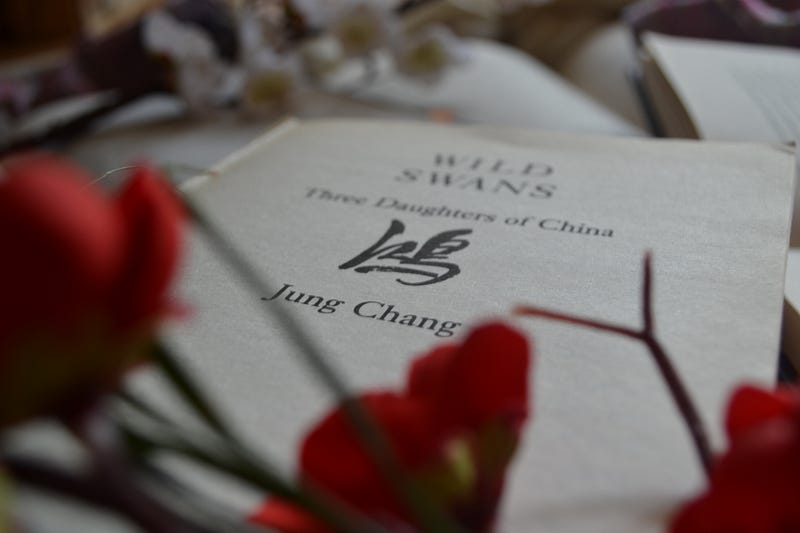
Even more surprising, the first book he recommended reading at the start of term was Wild Swans by Jung Chang. Not only was Wild Swans very definitely not a textbook, but it also wasn’t even required reading for the course, according to the exam board. I devoured it in one sitting.
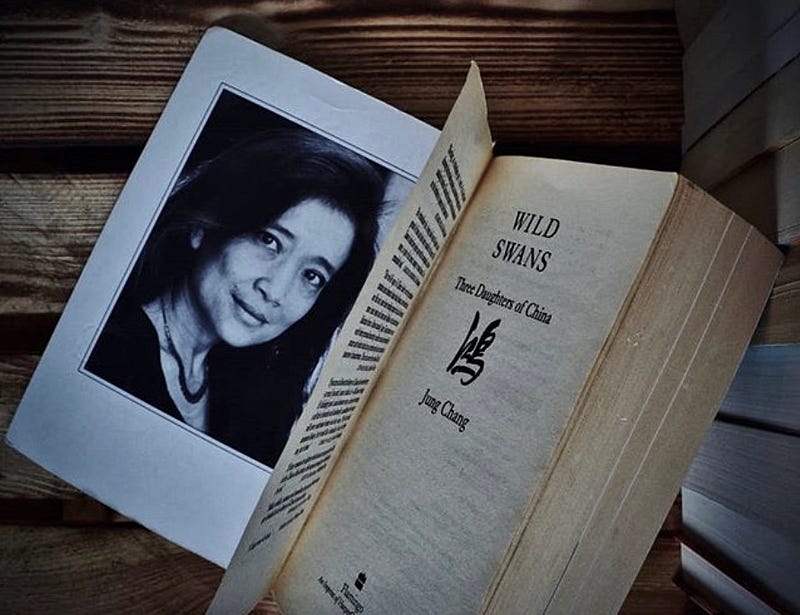
Part family history, part memoir, Wild Swans follows the story of three women — grandmother, mother, and daughter — as they navigate China’s long and turbulent 20th Century. Though elements of the story were likely embellished for editorial and entertainment purposes, it remains an important historical resource for understanding the human side of China’s recent history.
For me, it showed just how much I didn’t know about the world, and how desperately I wanted to know more.
Women of iron and steel
I didn’t just make it into the Russell Group, I thrived there. I took world history and Chinese politics, studied Meiji Japan and colonial Australia. I sought to make my world as big as possible, as quickly as I could.
And, after four years of eating my way through every Chinese-authored memoir I could find — which were far harder to come by in the late 2000s — I traveled to China for the first time. And then a second.
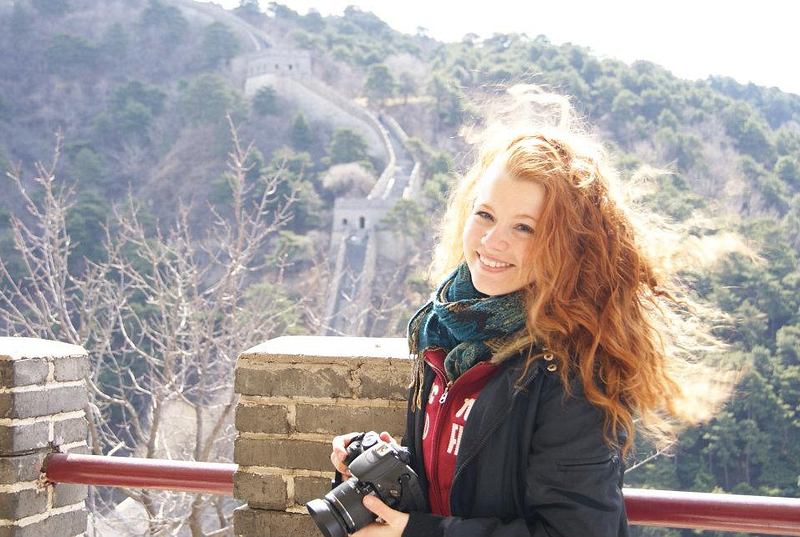
I’d won an international scholarship to take part in a study program at the prestigious Zhejiang University, but I would travel first to Beijing to see some of the country I’d so blindly fallen in love with.
You can never sit still in China. She will never submit to giving you a moment of quiet or a day without challenge. Nor will she let you get complacent; every question answered raises eight more. China demands attention and holds it fast.
I realized that I needed to contextualize the stories I’d spent the last four years of reading. I wanted to interview women like Jung Chang, women who had come of age in the tumult of the Cultural Revolution. Even as I gorged myself on the stories of women forced into exile by the excesses of this country and its government — Jung Chang, Anhua Gao, Anchee Min — I grew more obsessed with it by the day.
Through a friend at Zheijiang University, I found two ‘iron girls’ (tie gu niang) to interview for my undergraduate thesis. It meant leaving the beautiful, easy-to-navigate city of Hangzhou for the wild countryside of Anhui Province. Alone.
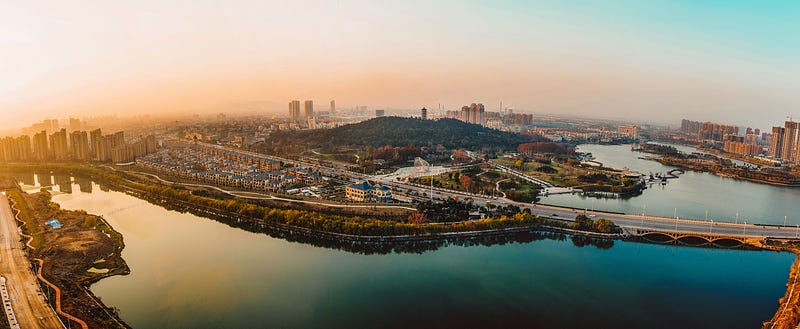
I searched Bengbu train station for my friend’s face among the masses, painfully aware of how very tall and ginger I was. It wasn’t long before she found me. We took the bus to visit her great aunt who, in turn, walked us down to the Dragon Lake Park to meet her friend and fellow iron girl, Ms. Rong.
The best China advice I could possibly give is to go in with no expectations.
It is not, however, advice that I have always followed myself.
After all, I’d read about China from the women whose books graced my shelves — stories of oppression and hardship — I had expected these iron girls, despite their name, to be similarly cowed and cautious in speaking to me.
Within five minutes of meeting her, Ms. Rong had put down her shopping bag and pulled her ankle up to ear level. She felt stiff, she said.
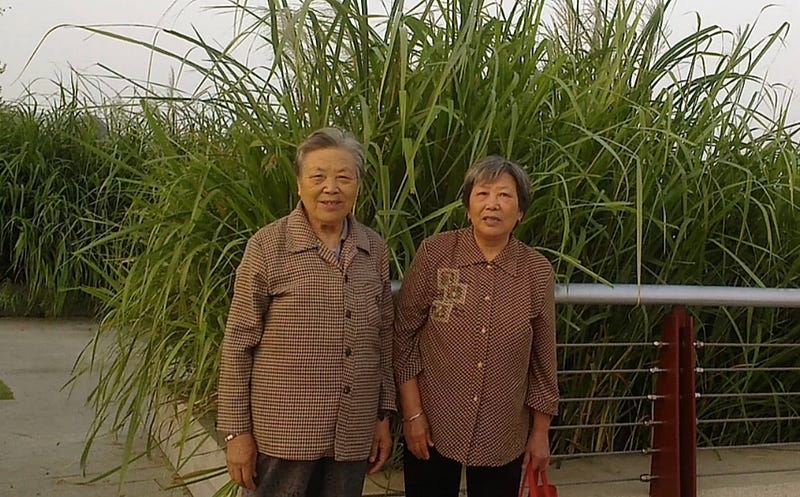
By the end of our conversation, we had discussed everything from how many bails of corn Ms. Wong could lift to the vaginal health of working women. Both women made fun of their dead husbands and criticized the current leadership.
Laughing at my shock and awe, Ms. Rong explained why they felt at ease being so open about pain and politics and everything that comes in between.
“People in the city struggle with politics, people in the country struggle with living. Poor people can’t have a relationship with politics.”
— Rong Yuzhen
As different as they were, the women I’d read up until that point were all urban and educated. Jung Chang’s grandmother was married to a warlord, her mother was a revolutionary intellectual, she herself studied English and moved abroad.
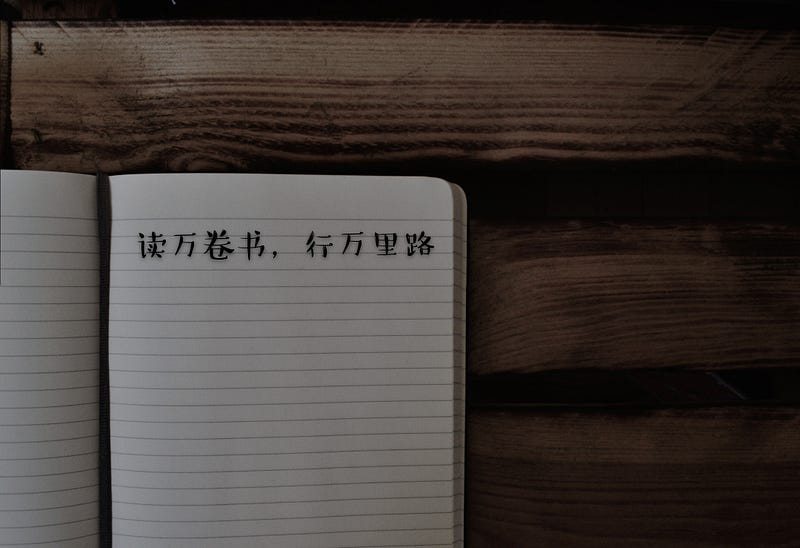
Another Chinese saying seems uncannily apt for describing this somewhat obvious moment of realization. It is not enough to read ten thousand books, we must also travel ten thousand miles: du wan juan shu, xing wan li lu.
My journey started with a book, but it could only continue by foot.
Breaking away from Britain and her education system
My journey may have started with Wild Swans, but it has come so far since then.
Where the British education system failed to push me beyond the borders of our narrow little islands, listening to the voices of women halfway across the world proved to be my salvation. Jung Chang showed how much I hadn’t be taught about the world, shone a spotlight on the intensity of my indoctrination.
I was forced to ask questions which fell between the lines of my “comprehensive” education. What about the Asia Pacific theatre of the two World Wars? Why did the international community fail to punish the colonial crimes of Japan? Are colonial crimes not crimes against humanity? Which powers wrote the declaration of human rights?
It took asking these questions to realize I simply could not spend my life ignoring half the world and gazing only inwards at the tiny island I call home.
A year and a half after I first stepped down onto the tarmac at Beijing Airport, I condensed my entire life into a single suitcase and tied my fate to a one-way ticket back to China.
Three months later, I was offered a job working for the Chinese government, the very system that had forced Jung Chang into self-imposed exile and banned her books from circulation.
Six months later, I met the future father of my child. Our daughter is due literally any day now.
Three years later, I was invited to study at one of Europe’s most prestigious China Studies departments. It took two suitcases this time, but I managed to once again squeeze my life between zippered seams and blindly continue down the now-familiar but ever-unknowable path.
After four years, while studying, I became a self-employed China consultant. I flew on a private jet. I bought a house, a cat, and a robot vacuum cleaner for the cat.
It has been more than ten years since I first cracked the spine (forgive me, I was young and unlearned) of Jung Chang’s writing debut. As I struggle to type around the vast bulge of my very pregnant body, I can’t help but think how different my life would look, had I never picked it up.
It seems ridiculous, but I moved to the other side of the world because of a book.
And I have absolutely no regrets.


