
Modern-Day Art of War: Conquering Our Own Life’s Biggest Obstacles
The military way of living a growth-oriented life.
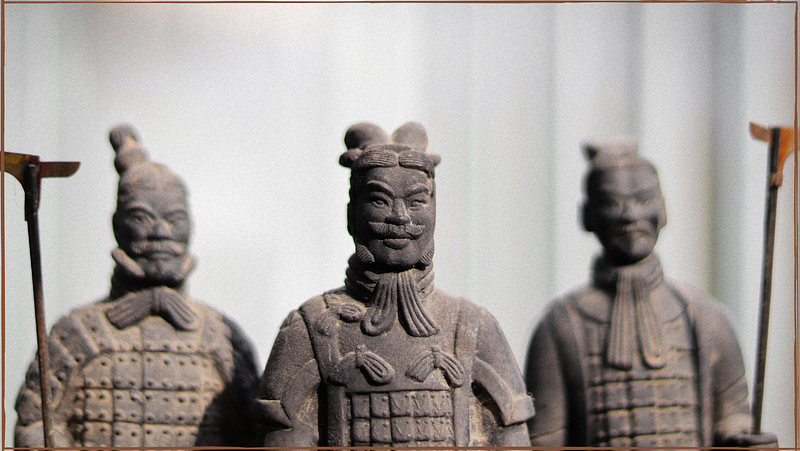
Somewhere between 475 and 221 B.C.E., a Chinese military strategist named Sun Tzu wrote this journal of how he would approach an enemy and how to defeat them with the utmost integrity. Since then, these methods detailed in his book are widely implemented and commonly quoted all the way from Napolean to General Mao Zedong to businessmen/businesswomen of modern society.
When there is an enemy to defeat or a competition, people first think of the Art of War. Because even after more than 1000 years, it still remains true!
Nonetheless, I think the strategies in that book were written for a zero-sum world, where to achieve victory, another has to lose.
We don’t live in that world anymore.
The world we live in today is a positive-sum world, one where we need to focus on win-win situations as opposed to a win-lose scenario.
Because of that, when I read the Art of War, it felt much more applicable to our personal lives rather than fighting a war trying to defeat a ruthless enemy.
For those who are not running billion-dollar empires, here are a few practical lessons from the Art of War to guide your way of thinking.
#1. Choose your battles
All of us want to change the world in some ways. When we see something that doesn’t feel right in the world, whether it’s modern-day slavery, child labour, animal cruelty, pollution, injustice, or even terrorism, we can’t help but feel like we could be doing something to help.
Don’t get me wrong, having a passion and a burning desire to make the world a better place is a beautiful thing. But as an individual, we simply cannot fight every single battle in the world.
Choosing to fight every single battle will amount to having fought none at all.
Similarly, we don’t have to fight every little thing that we don’t like in terms of our personal lives.
For instance, the best way to solve an issue is never to fight it at all. Our emotions are strong, but we cannot let them control us.
In 1998, Jennifer S. Lerner and Julie H. Goldberg decided to take note and document the psychological effects of residual anger and how it really affects us in the long term. This study concluded that when a person is angry, they tend to blame others instead of looking at the picture as a whole. Because of this, the decisions that were made are usually skewed or biased, rendering it a poor one.
So the next time you find yourself feeling angry, catch yourself. Think whether will this fight that you’re about to take on help the bigger picture. If it doesn’t, then there is absolutely no point fighting it. It does not provide any value to the world and will beget more anger in the world. Although letting it go might be tougher, it will be the better choice 99% of the time.
“The supreme Art of War is to subdue the enemy without fighting.”
— Sun Tzu, Art of War
#2. Don’t prolong your fights
No one really benefits from a prolonged conflict. It doesn’t matter if it’s business, investing, or in our personal lives. At a certain point, the reason to keep on fighting turns into less of a need and rather a want to win the fight.
In 2019, a well-known company lost about $1.25 billion in just the three months ended in September. The reason why this happened is that the founder/then-CEO sought to double down on unproven and money-losing business models, thinking that they can eventually drive out all the other competitors. But what actually happened was that the competitors did not budge at all while the CEO kept fighting the reality of it.
This ended up costing the company billions over the next few years and had to rebuild their business model from the ground.
Similarly, when we invest in stocks, there is bound to be that one or two stocks that just wants to go down. In this case, you’ll have two choices, either ride the stock all the way down and risk losing your entire investment or you can choose to let it go and focus your funds on something that will give you more returns (better stocks).
HODL — Hold on for dear life DOES NOT WORK. Please don’t be that person doing that.
Time to let go of these things if you’ve been fighting them for too long:
- Relationships that bring you down
- Bad investment
- A career path that you’re no longer interested in
- Your past, guilts, and regrets
- A business idea that wasn’t as good as you thought
- Perfection
The point is that, although we may have put all of our efforts into something and would be very disheartened to see it all go to waste, sometimes it’s better to just let it go.
“It is okay to be wrong, it is not okay to stay wrong.”
#3. Change is opportunity
I’m sure you’re probably sick of hearing people telling you to “get out of your comfort zone” or “don’t fear change”. I’ll leave the reminding to other writers. Let me tell you how to ACTUALLY do it.
Buffer period
You might be super inspired and eager to make that change after reading this article, but sit tight. Allow yourself some room in between deciding that you want to change and taking action on the change. Not too long, but just enough for you to learn about your surroundings and acclimate to the “new normal”.
Changing your perspective
Unfortunately, I don’t carry with me the secret sauce to instantly change our perspective about change. I actively and consciously shape the way I think about change. Think of it as more of a challenge rather than a threat.
A challenge means that you’ll do whatever it takes to come out on the other side.
A threat means that you’ll do whatever it takes to avoid having to go through it.
We humans have this connatural tendency: fight or flight. Once you’ve decided that change is good, let’s fight till the end, shall we?
Accepting the unknown
Growing up, I’ve always been the weirdo in the corner who is scared that the teacher will call out his name. Sometimes, I would get so nervous that my hands start shaking, so much so that I couldn’t really articulate anything at all. Especially during presentations.
Then one day, I put myself in my peer’s shoes and looked at myself. I saw that nobody really knew if I was a confident person or not beneath my skin. That’s when I decided that I could just act confident and be familiar with literally every single thing possible. Down to every second of what I would say or do.
What ended up happening was that I started hearing compliments and admiration of how confident I was on stage.
Don’t mean to brag, but I was feeling like a rockstar!
Accepting the unknown, to me, means that there is nothing in this world that I can control, except the most important thing of all — Myself.
- If I’ve put in the effort and make sure that I did my absolute best but still didn’t impress, what is there to regret?
- If I’ve acted with the utmost integrity but nobody else could see it, what is there to be sorry?
- If I chose to put myself first but my friends couldn’t understand, what reason is there to stay?
Without change, it is guaranteed that there will be no growth. With change, though it may turn out worse, at least there is still a chance of getting better.
Takeaways
More often than not, the person we really need to overcome is ourselves. We are what’s really holding us back, whether it’s in the form of insecurity, self-doubt, lack of discipline, or holding on to the past. If we want to be better, it starts with us.
- Choose your battles, but don’t be apathetic.
- Fight for what matters to you, but don’t prolong it.
- Find opportunities in change.
Working on and taking care of ourselves should always be a priority. It’s not always about trying to figure out what our competitors are going to do next or how to give them the checkmate.
Sometimes, all we need to do to focus on taking care of our own troops.
Hey, since you’re here, why not join my mailing list for occasional cool stories in your inbox or consider becoming a member to read all my stories! ☺