
FREEDOM, NOT FREEDUMB
SCOTUS v. Grammar and Other Absurdities
Constitutional guarantees and other lies we tell ourselves

“You keep using that word. I do not think it means what you think it means.” ~ Inigo Montoya, “The Princess Bride”
Oops, I did it again: I got into a back and forth with a Libertarian. Will I never learn?
The Right is wrong about rights
From that conversation, here is a common argument made by conservatives and Libertarians as to why certain things should not be put up for a vote:
Whether or not any bill or measure is popular is only relevant if it does not infringe on basic rights as clearly defined in the Constitution.
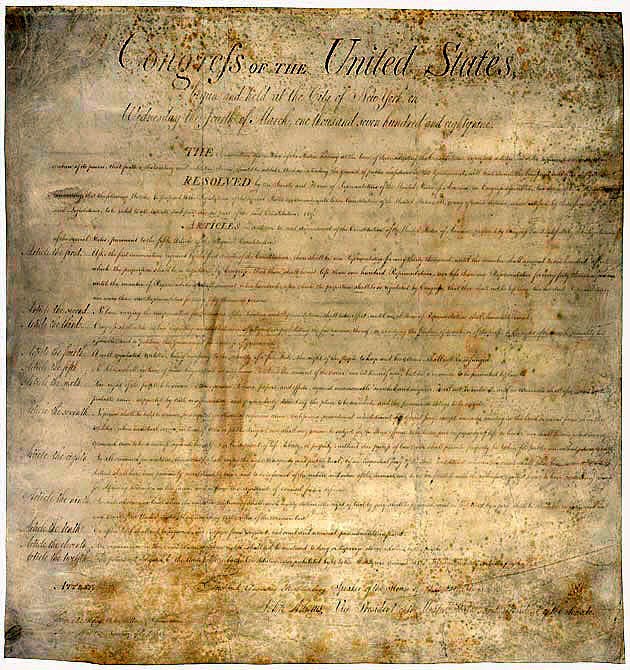
We are off to a rocky start. The challenge is to name a right — any right whatsoever — clearly defined in the Constitution. Go read it. The way we talk about that document bears no resemblance to what’s actually written there. There is no straightforward statement of “you have free speech” or “you can have any gun you want” or any of the other stories we tell ourselves.
The core flaw in the idea of “individual liberty” is there’s no such thing. (See The Holistic Libertarian: Freedom for Grownups. Building a notion of “personal liberty” that actually works.)
We hereby find the English language to be unconstitutional
Consider the Second Amendment and its too goddamn-many commas. What does this even mean?
A well regulated Militia, being necessary to the security of a free State, the right of the people to keep and bear Arms, shall not be infringed.
I read it as “A well-regulated Militia is necessary to the security of a free State, therefore the right of the people to keep and bear Arms shall not be infringed.” The whole point is militias, outside that context the rest is null and void. No militias, no right to keep and bear arms.
That was the linguistically reasonable and generally accepted interpretation until 2008, when the Supreme Court ruled otherwise in SCOTUS v. Grammar (aka District of Columbia v. Heller). Suddenly the amendment applied to private ownership of guns. Turns out “Constitutional literalist” means, “we think the Framers threw in extra words we can ignore.” I can’t put it any better than the DoJ:
The NRA is the only lobbying organization in Washington with half a constitutional amendment emblazoned across the front of its building. The NRA systematically deletes the phrase “A well regulated militia being necessary to the security of a free state,” from the often-quoted second phrase, “the right of the people to keep and bear arms shall not be infringed.”
I don’t want to ban gun ownership myself, but to make decisions based on any document we need to know how to read it.
The dirty secret is we vote on the Constitution every four years
There are a variety of complications. For one, the document itself states the Supreme Court is in charge of interpreting it, so it was never intended to be fixed. Also, none of those rights have ever been taken as absolute — there have always been things you can’t say, guns you can’t own, and so on. Worse yet, justices are appointed by politicians.
The bald truth is that Heller wasn’t a response to an improved understanding of the law. The American Right likes guns and wants the nation to be awash in them, full stop. They’ve had a hard-on to reinterpret the Second Amendment for years and finally got enough activist judges on the Court.
Far from being protected from the popular will, the Constitution is on the ballot every four years disguised as a presidential election.
In summation, our “clearly defined” founding principles are ambiguously worded, riddled with exceptions, and subject to constantly shifting political interpretations. How are we supposed to make any decisions with that?
“We should not allow…” arguments are pointless
Back to the Libertarian:
The Constitution is only meant to protect your most fundamental rights…that’s why we have a constitution, to limit the power of the federal government. We should not allow voters the opportunity to take away the fundamental free speech or gun rights enshrined within the constitution.
This person has a list of things the federal government should and shouldn’t do, and that’s fine. Everyone does, but those lists are all different. So we have three choices: (1) declare absolute rights, (2) somebody gets to choose, or (3) we sort it out amongst ourselves.
Option 1 is a dead letter, so scratch it. If we go with option 3, then the question — the only question — is deciding not what our rights are, but how we’ll define them. There are lines to be drawn, we need to figure out where. Until that’s done, it’s impossible to have a meaningful argument about “rights.” We should stop. There’s no value in even bringing them up.
Option 2? The go-to for conservatives and Libertarians. They either refuse to acknowledge the complicated questions, or go full toddler — scream and stamp your feet and demand WE GET WHAT WE WANT!!! The logic doesn’t hold an ounce of water, and it’s utterly selfish, self-absorbed, and self-serving.
And that, gentle readers, is why I need to stop arguing with these guys.
John Werth is a 12x Top Writer, but on a platform in Canada so you wouldn’t know her. He finds writing more tiring than exercise, so he compensates by not exercising. If by some miracle you have room in your inbox, consider filling it with a subscription to get his stories.