
On International Women’s Day, Let’s Return Women’s Struggle to its Workers’ Rights Roots
Every year, corporations post International Women’s Day sentiments without actually doing the work. We can’t let them.
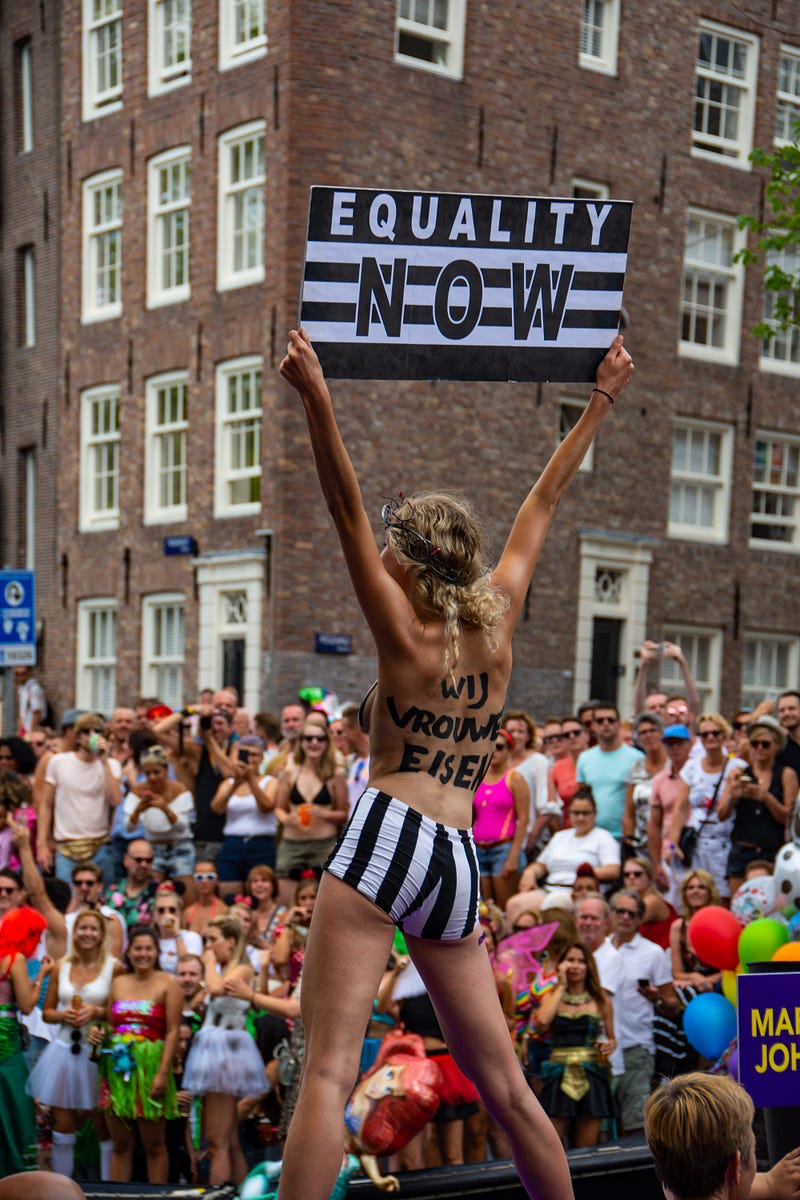
International Women’s Day has always been a mixed day for me. On the one hand, I believe it’s important to honor all the women who fought for rights before me, who emphasized gender as an intersection of oppression. On the other, capitalism has turned the date into a performance of gender equality with absolutely no substance: brands and employers post IWD’s sentiments without actually reflecting on whether they actually support or do anything towards gender equality. There’s nothing stopping a brand who treats their women employees horrifically from invoking the history of IWD for their own gain — but in defiance of these corporate co-optations, we can remind ourselves that International Women’s Day was originally about workers’ rights.
While corporations might work every year to empty IWD of its original meaning, it’s worth remembering that the first National Woman’s Day was organized by the Socialist Party of America — not by a corporation or an employer. On February 28th, 1909 the Socialist Party of America dedicated the first National Women’s Day to the 1908 garment workers’ strike in New York where women protested against harsh working conditions. A few years later, in 1917, women in Russia also protested and went on strike under the slogan “Bread and Peace” — their movement eventually led to the victory of women’s suffrage in Russia.
The contemporary feminist movement must be returned to its original roots. As I’ve written about before, workers’ rights are women’s rights, and women’s rights are workers’ rights. Additionally, a feminist workers’ rights framework must extend to unpaid reproductive work. Reproductive work is the invisible work that keeps the world going — it’s no secret that women work double or sometimes triple shifts out of love for their families, which accounts for much of the gender pay gap. The feminist fight is about supporting better working conditions for all workers — unpaid and paid — not about empty social media posts by corporations who could be paying their employees much more.
This International Women’s Day, we should ask ourselves: how can we support working women in having a better quality of life? How can we take the feminist fight back from the hands of corporations that only use it for exposure? How can we be liberated as women in a world that keeps us domesticated at home and efficient little workers at work? How can our solidarity for other working women extend beyond IWD? How can we return IWD and feminism to its workers’ rights, anti-war roots?
These questions are nothing short of urgent. I am not the only feminist who is tired of watching the movement be used for corporate greed and empty representation. I am only one voice in a sea of feminists — of all genders — who is tired of seeing our movement be weaponized to hurt and oppress others. Let’s take IWD back.