
The Kellogg’s Strike is a Feminist Issue
Worker’s rights are women’s rights, women’s rights are worker’s rights.
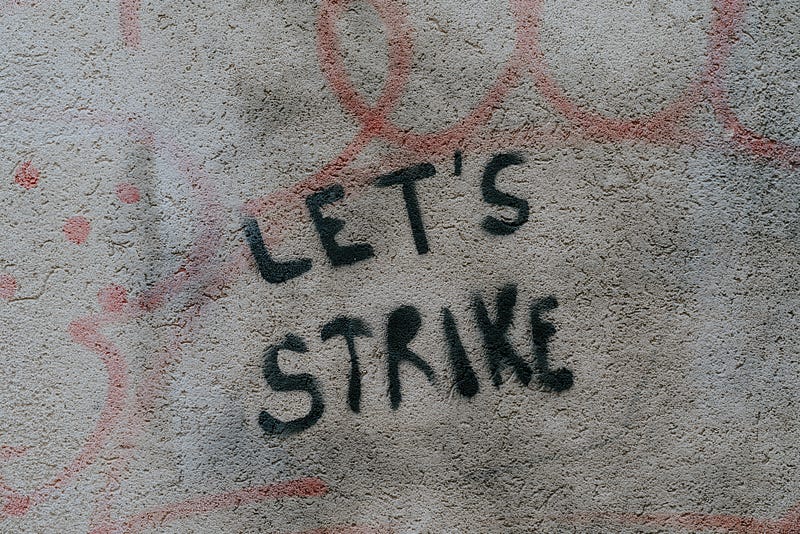
In the beginning of October, around 1,400 workers started striking for better working conditions at Kellogg’s cereal producing plants across the US. The striking workers were seeking better policies regarding health care, holidays, retirement benefits, and vacation time. Kellogg’s rejected their demands and attempted to replace the striking workers for a few weeks, even though the workers were only asking for dignity and a better quality of life for keeping the company going.
In December 2021, the workers actually won after months of striking with a pay raise and a moratorium on plant closures. The victory is stunning, and it teaches us a lesson about workers’ rights. I want to urge feminists to start framing workers’ rights issues as a feminist issue specifically. Marxist feminists already frame strikes in this way, but I think it’s important to emphasize that any strike that seeks better working conditions for workers in the food and service area should automatically be seen as a reproductive labor issue, and therefore, as an extension of the unequal division of labor that constructs society. As such, supporting workers who are seeking better conditions to continue reproducing the world is a feminist issue.
As I’ve written before, reproductive work is the invisible work that keeps the world going. This strike has made this work visible, because only by withholding invisible work can we make reproductive work visible to those who don’t recognize it as such. When reproductive labor happens outside the home as a paid job, it’s more likely to be low paid and physically intensive. Marxist feminists theorize that this can be linked back to the unpaid origins of reproductive labor, which is justified by the construction of the nuclear family. It’s no secret that women work double or sometimes triple shifts, but the Kellogg’s strike is an example of how the construction of this kind of work trickles down into unlivable wages and absurd working conditions — thus accounting for much of the gender pay gap.
It’s essential to ask: who feeds the workforce? Whose job is it to make sure the workforce has enough energy to keep working? Whose work is simultaneously irreplaceable in society but also unbearably underpaid? It’s the people making our cereal, picking fruit, or cooking our lunch, or delivering lunch through a precarious anti-worker app. This is the reality of reproductive work currently: some of it has been outsourced to outside the home and made even more precarious than before. This is why there are connections to be made between this strike and any feminist efforts that tackle the housework and care work crisis— these fights are connected because they keep the world going for little or no pay.
Workers’ rights are women’s rights, and women’s rights are workers’ rights. Supporting the Kellogg’s strike and any other future strikes in the food and service sector isn’t just a leftist issue — it is specifically a feminist issue and it’s about time we recognize it as such.
For more of the good stuff, follow Fourth Wave, where we’re changing the world for the better, one story at a time. Got one of your own? Submit to the Wave!