
2 Quick Writing Tips to Skyrocket Your Writing Career
How to write with your heart and edit with your mind
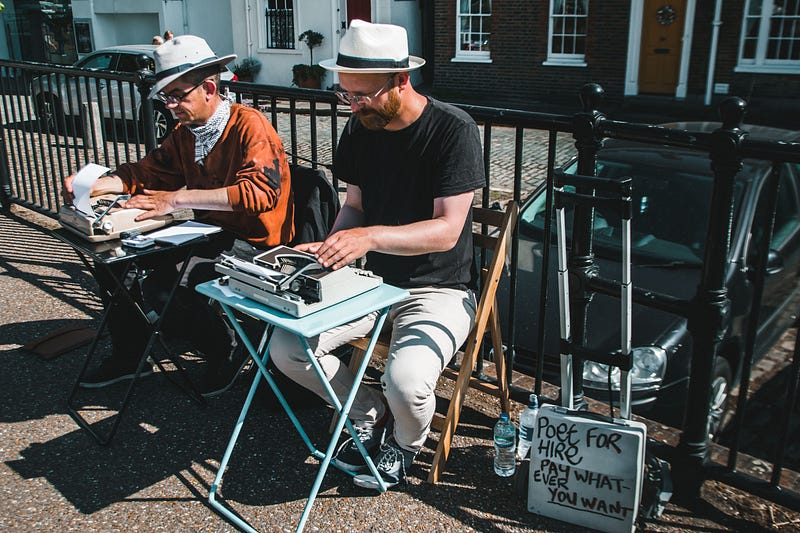
“There is nothing to writing. All you do is sit down at a typewriter and bleed.”
— Ernest Hemingway
I’m a newbie writer.
Two years ago, I transitioned from doing martial arts full-time to start my own event business with just $1000. However, despite the heady roller coaster ride of entrepreneurship, I can’t help but feel like something was missing in my life.
Everything clicked in place when I attended a writing retreat in Bali.
There, thousands of miles from home, amidst silence and words, I realized my life’s goal was to be a professional writer. A great one. I now write 2000 words daily, and my first novel is scheduled to be published next year!
During my short time as a writer, I realized that writing is in fact very much like life. Fairly simple.
It’s the people that make it complicated.
Here are 2 universal writing principles I use to write 2000 words every day, easy.
1. Write Drunk
“Writing is not supposed to bore anybody!” — Charles Bukowski
Don’t write and edit at the same time. Seriously.
It's the number 1 mistake every beginner writer makes — me included! To write your best, you must be bold, unhindered, your ideas allowed to live and breathe, your words free to tell their own tales.
This means there must be no judgment involved in the act of creation.
Write drunk. Write angry. Let your emotions crash and flow, a riptide sculpting the clay of the blank page.
Write for your readers, yes, but don’t forget to also write for yourself! Entertain your inner child. Make him laugh, love, weep!
Leave the kill-joy adult with the critic’s cap at the door.
Judgment kills creativity.
2. Edit Sober
“To write is human. To edit is divine.” — Stephen King
Edit only when you have the bones of a full story. Never before.
And edit the opposite way you write, with a ruthless heart and a surgical eye.
Remember, to edit is to be a robot. Cerebral. Methodical. Leave your emotions out of it.
You must be a cold autocrat wielding a blue pencil. You must “kill your darlings”, as Stephen King so mournfully said.
Trim the fat. Tighten your prose. Polish ceaselessly until what’s left is a shining diamond, devoid of impurities — the perfect representation of your art.
That’s how you leave the best for your reader’s eyes.
The Takeaway
So that’s it!
Write drunk, and edit sober. Not literally, of course, though some writers — like the afore-quoted greats (Hemingway, King, and Bukowski) did so with much zeal and success.
Write with your heart, and edit with your mind.
I look forward to reading your story.


