avatarAshley Cleland, M.Ed.

Free AI web copilot to create summaries, insights and extended knowledge, download it at here

1645

Abstract

says otherwise.</p><p id="b596">Instead of relying on one tiny set of body parts, proficient paddlers bend their knees slightly and relax into the board. They don’t have to grip with their toes because their whole body is responding to the motion of the water underneath the board.</p><p id="fb95">They are free to respond in real time to the fluidity of paddling and life.</p><p id="00d0">Surrender your illusions of control (your toes) to promote balance and resilience.</p><p id="e56b">You can’t control the water underneath you or the windy resistance, but you can control how you respond.</p><blockquote id="4ea0"><p>“To be “well” is not to live in a state of perpetual safety and calm, but to move fluidly from a state of adversity, risk, adventure, or excitement, back to safety and calm, and out again.” — Emily Nagoski, PhD</p></blockquote><p id="c635"><b>Are you hanging on to life with your toes?</b></p><p id="ec64"><b>How can your whole being lean into the fluidity of life?</b></p><figure id="5d7a"><img src="https://cdn-images-1.readmedium.com/v2/resize:fit:800/1*OnaS5th54HYz0YkaLAb5eg.jpeg"><figcaption>Photo by <a href="https://unsplash.com/@benjamingrant?utm_source=unsplash&amp;utm_medium=referral&amp;utm_content=creditCopyText">Benjamin Grant</a> on <a href="https://unsplash.com/s/photos/sup?utm_source=unsplash&amp;utm_medium=referral&amp;utm_content=creditCopyText">Unsplash</a></figcaption></figure><h1 id="a349">Move Before You Stand Up</h1><p id="83e1">Intuition says you should be steady and still before you try to stand up on a paddleboard. Again, this intuition makes sense on the surface but the reality is diff

Options

erent. Like a kid on a bicycle after the push from a parent propels them forward, it is easier to maintain balance when moving.</p><p id="6441">Think of this concept in terms of energy management.</p><p id="c88b"><b>What gives you the energy to stand up to a new challenge?</b></p><p id="7033">Movement is energy. It is more than a physical phenomenon.</p><p id="0e85">Move your mind. Read the work of people who inspire you. Take a virtual workshop. Help others.</p><p id="52f4">Energizing your mind is psychological self-care and promotes resilience. So many writers and creators burn out from trying to stand too soon.</p><p id="4974"><i>Just keep moving.</i> Very few things in nature thrive when stagnant. Including you.</p><p id="6e94"><b>Find your balance by moving first, then trying to stand.</b></p><h1 id="ab9e">Balance is everything — in paddling and in life.</h1><p id="a62c">The only constant in life is change. Lean in with your whole being and keep moving. By doing this, you are preparing your body and mind to adjust to the waves, maintaining your balance even in unprecedented times.</p><p id="c4ce">And if you, like my dear friend, fall into the proverbial lake right now?</p><p id="ffdc">Bonus lesson: Sometimes we learn about the balance we need by falling off.</p><blockquote id="958a"><p>You may have a fresh start any moment you choose, for this thing we call “failure” is not the falling down, but the staying down.” ― Mary Pickford</p></blockquote><p id="5b61"><b>Get back up on the board. Try again.</b></p><p id="6b9f"><b>Balance is a journey, a process, a set of skills, not a destination.</b></p></article></body>

2 Counter-Intuitive Lessons on Balance from Stand Up Paddleboarding

Lesson #2: Move before you stand up.
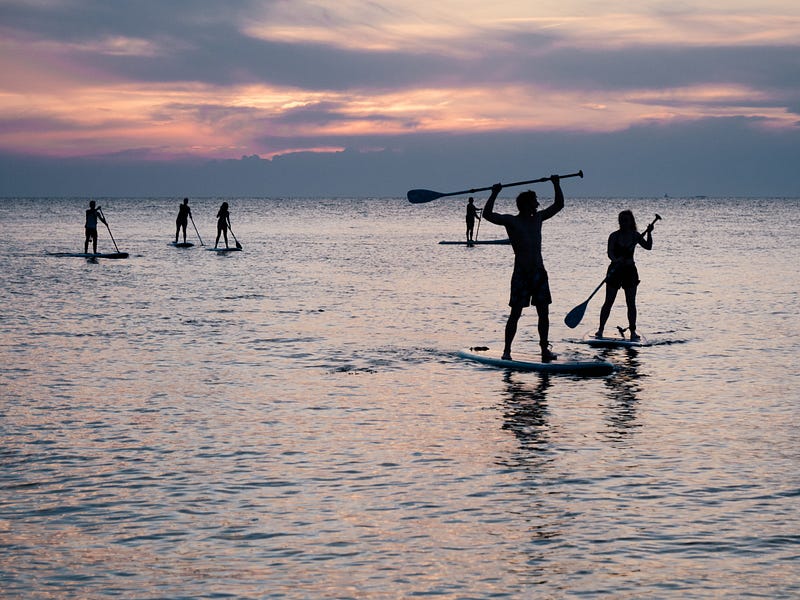
Photo by Krzysztof Kowalik on Unsplash

We began our paddle one serene morning, the water so glassy it mirrored the fluffy clouds and sunshine in our gentle wake.

All was quiet when — SPLASH!

My paddling companion fell from her board with impressive force, spitting out water she inhaled from her surprise collision with the calm lake as she rose to the surface.

The water was calm. We were both confident paddlers. She just lost her balance.

There’s a lot to learn from stand up paddleboarding. Paddling makes me a better leader, a better feminist, and above all, I’ve learned the power of balance by knowing just how easily you can lose it.

Here are 2 SUP Lessons for Balance in Your Life:

Don’t Hang On By Your Toes

Newbie paddlers try to stay on the board by gripping with their toes. Intuition says they’ll stick to the board and be less likely to fall off. Practice says otherwise.

Instead of relying on one tiny set of body parts, proficient paddlers bend their knees slightly and relax into the board. They don’t have to grip with their toes because their whole body is responding to the motion of the water underneath the board.

They are free to respond in real time to the fluidity of paddling and life.

Surrender your illusions of control (your toes) to promote balance and resilience.

You can’t control the water underneath you or the windy resistance, but you can control how you respond.

“To be “well” is not to live in a state of perpetual safety and calm, but to move fluidly from a state of adversity, risk, adventure, or excitement, back to safety and calm, and out again.” — Emily Nagoski, PhD

Are you hanging on to life with your toes?

How can your whole being lean into the fluidity of life?
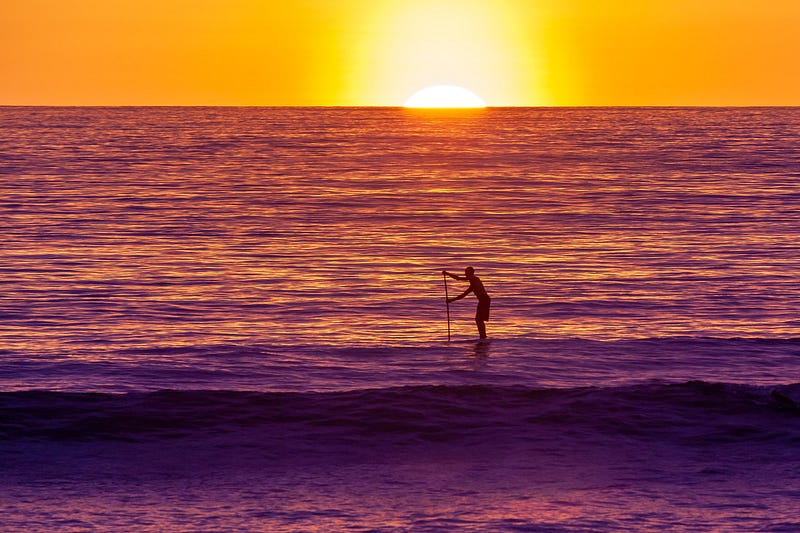
Photo by Benjamin Grant on Unsplash

Move Before You Stand Up

Intuition says you should be steady and still before you try to stand up on a paddleboard. Again, this intuition makes sense on the surface but the reality is different. Like a kid on a bicycle after the push from a parent propels them forward, it is easier to maintain balance when moving.

Think of this concept in terms of energy management.

What gives you the energy to stand up to a new challenge?

Movement is energy. It is more than a physical phenomenon.

Move your mind. Read the work of people who inspire you. Take a virtual workshop. Help others.

Energizing your mind is psychological self-care and promotes resilience. So many writers and creators burn out from trying to stand too soon.

Just keep moving. Very few things in nature thrive when stagnant. Including you.

Find your balance by moving first, then trying to stand.

Balance is everything — in paddling and in life.

The only constant in life is change. Lean in with your whole being and keep moving. By doing this, you are preparing your body and mind to adjust to the waves, maintaining your balance even in unprecedented times.

And if you, like my dear friend, fall into the proverbial lake right now?

Bonus lesson: Sometimes we learn about the balance we need by falling off.

You may have a fresh start any moment you choose, for this thing we call “failure” is not the falling down, but the staying down.” ― Mary Pickford

Get back up on the board. Try again.

Balance is a journey, a process, a set of skills, not a destination.

Life Lessons
Mental Health
Leadership
Inspiration
Wellness
Recommended from ReadMedium