
Stand Up Paddleboarding Made Me a Better Feminist
Lesson #5: Be the dude in the yellow shirt.
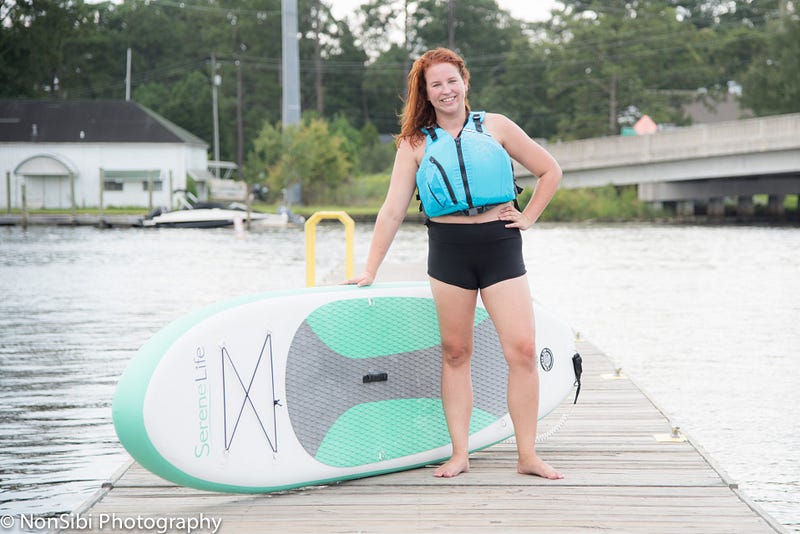
I started stand up paddleboarding (SUP) in a landlocked city in Illinois of all places. At the time, I was navigating trauma and I desperately needed a new way to relate to my body. I was feeling trapped and paddling was the antidote: I was wind blowing in your hair, water beneath your feet, sun on your face, free.
This week is the one year anniversary of my first SUP 5K race, the Carolina Cup, one of the largest race weekends on the East Coast. To be clear, I just searched “stand up paddle race” and “North Carolina” (where I live now) on the internet to find this race. I had no idea how much of a big freaking deal this was — over 900 racers competed in this race in 2016 and they have racers from all over the world.
It truly was baptism by fire and the experience taught me about life and unexpectedly, about feminism.
Lesson #1: Face the waves head-on. (And don’t be afraid to make some.)
This is both a literal lesson and a figurative one. On a SUP, you have more surface area to stay on the board if you face the waves head-on rather than at your side. There is no use trying to paddle away from the waves, you have to lean into the discomfort and keep moving forward.
Frankly, it is easy for someone like me, a white woman with several privileged identities, to sit out of conversations or conflicts because I am afraid to appear unintelligent or be uncomfortable. In SUP and in feminism, I’ve learned that leaning into the discomfort often leads to understanding, learning, and change, making your own waves.
Lesson #2: Surround yourself with people who are more advanced than you are.
Even though the 5K race is the least rigorous race, I was surrounded by more advanced racers. I felt so out of my league that I almost didn’t even compete but I made a personal record because I was challenged by all my fellow racers. Just keeping up with them was the goal and it brought me to another level.
This experience reminded me to surround myself with those who are more advanced in their understanding of feminism — in person, online like through Medium or Everyday Feminism, and through books. (Some of my favorite feminist authors include Brittney Cooper, Liz Plank, Roxane Gay, and bell hooks).
Lesson #3: Lead when you can, draft when you can’t.
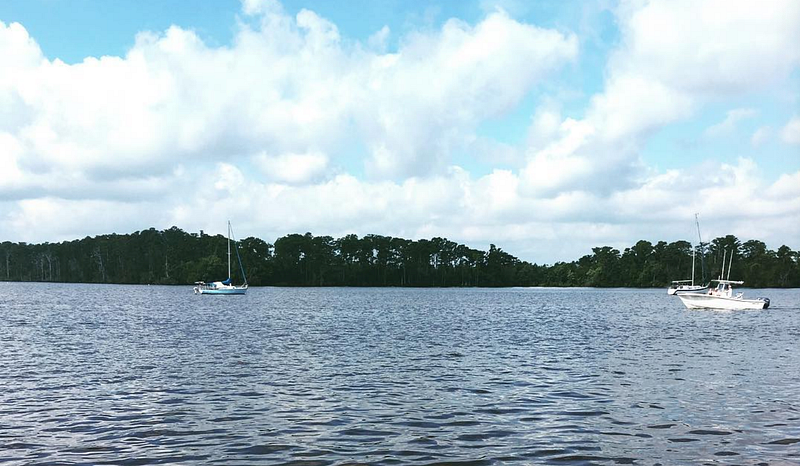
Drafting is a skill used to reserve energy during a SUP race. Like cars tailgating large trucks to get an extra push, this also works on water. Paddlers follow behind a leader and in their wake, resistance is lessened and a pack, commonly referred to as a draft train, can advance more easily and quickly.
As an educator, I have an opportunity to be the leader often, in my wake making it easier for my students to be their truest selves and make positive change. Whenever I can forge ahead and take the heat, I do, but it’s also important to acknowledge that this work is tiring. And even in SUP racing, the leaders of the draft train take turns to reach the final goal.
Who’s in your draft train? Women are often disproportionately impacted by economic downturns and crises. We need to stick together now more than ever. Reflect on the people of marginalized identities for whom you can use your power to part the wake, and the people you’ll trust to lead when you’re tired.
Lesson #4: Equipment (read: privilege) matters.
My board was wide, inflatable, and 11 feet long. A standard racing board is narrow, at least 12'6'’ hardboard. I looked around the beach at the array of fancy racing boards and quickly realized that I had unwittingly brought a knife to a gunfight.
I could be the best SUP athlete in the world and I simply couldn’t make a $300 inflatable SUP compete with a $2500 Flying Fish SUP. I thought: What a powerful illustration of privilege.
For many folks of marginalized identities, they can be the most talented people in the world and structural barriers dictate their given equipment is an inflatable recreation board like mine, working twice as hard just to keep up. I know many women, especially women of color, for whom this is simply a painful, consistent reality.
Lesson #5: Be the dude in the yellow shirt.
There were 15 mph winds on race day, I was dragging my inflatable SUP not built for racing, and I was barely making it around a curve with cross-winds, which make things about 1000 times harder.
Then there was the dude in the yellow shirt. He stood on a dock and yelled to me, “Just around this bridge — that’s when you get the tailwind.” He held a precious sign reading “Go SUP racers!” as he coached the weary racers around the bend. I was so close to giving up when the dude in the yellow shirt yelled out to me, “I see you on the inflatable! This is hard! I’ve been there before! Bend your knees and pull forward! You are almost there.”
Sometimes the most powerful, feminist thing you can do is validate the hard things, share what you’ve survived, and use your voice to empower others to make it through.
The race this year is understandably postponed, but the lessons from SUP continue to inspire me to be a better feminist.
May we all face the waves together, lead when we can, draft when we can’t, and be the dude in the yellow shirt.