
15 Skills No AI Can Steal Ever

We live in an age where artificial intelligence is advancing at an incredible pace. It seems like every day there’s a new headline about how AI is surpassing human abilities
“What can humans do that AI never will?”
The short answer is a lot! Many emotional, creative, and strategic skills make us distinctly human. I’m convinced AI has definite limits. As technology progresses, human skills will only increase in value.
In this article, I’ll explore 15 key abilities AI lacks, and why they give us reason for optimism about the future.
1. Emotional Intelligence

Let’s start with emotional intelligence, or EQ―the ability to understand emotions in yourself and others. AI systems today can mimic emotions, but cannot feel them.
EQ is what allows us to read the room.
There’s also an art to motivating people by understanding their emotions. Picture a robot life coach telling you “I know you can do this!” in a monotone. How inspiring is that?
While AI keeps advancing, that human touch will be priceless. You’ve got real emotional intelligence robots will never match!
2. Creativity
Another unmatched human skill is creativity―the ability to generate novel ideas and solutions. AI can produce art or music that mimics creativity. But it lacks a true creative spirit.
Picasso said,
“Every child is an artist.”
As kids, we expressed ourselves without limits or judgment. When does society stomp out that creative spark?
I’m no Van Gogh, but buying a paint set recently has reminded me how good it feels to play and experiment. No AI can replicate that childlike joy of flinging paint at a canvas just to see what emerges!
So be like Bob Ross and get your creativity flowing, minus the perm. You’re the only one who can view the world through your unique lens.
3. Leadership

Leadership is another skill AI can support, but never fully replace. At its heart, leadership is about inspiring people and bringing out their best. An empathetic human touch is essential.
An AI coach might tell me “You’ve got this!” But it couldn’t provide that gentle nudge at just the right moment or share a story from its own life to reassure me.
Robots may be coming for many jobs, but great leaders will always be in high demand.
4. Critical Thinking

Yes AI is great at analyzing data, but critical thinking requires uniquely human qualities like discernment and nuance.
Consider a study that found algorithms could predict who would repay loans with 90% accuracy. However, they incorrectly judged qualified minority applicants as higher risk. AI lacked the deeper context to evaluate fairness.
True wisdom means understanding not just what to think, but how to think. It’s about seeing the forest for the trees.
Human critical thinking skills become even more crucial as AI influences more decisions. Don’t just accept what the computer tells you―question how it reached those conclusions in the first place!
5. Communication
AI struggles with an underrated skill: communication, especially non-verbal cues. The shoulder squeeze, the smile, the unspoken elements that build rapport.
Communication is a superpower! Have real conversations beyond texts and emojis. Make eye contact. Express empathy. Caring human interactions will thrive despite technological changes.
6. Adaptability
In contrast to humans’ fluid intelligence, AI is brittle. Algorithms follow rules; they don’t “wing it” well when things go off-script.
Humorously, in 2016 Google’s AI Go master AlphaGo was handily defeated by humans after researchers introduced just a few rule tweaks. The algorithm couldn’t adapt on the fly like we do.
Remember when COVID-19 turned life upside down? Humans found creative ways to adapt―everything from Zoom weddings to virtual happy hours. Meanwhile, poor Siri didn’t have a clue how to respond to “How’s the pandemic treating ya?”
7. Cultural Intelligence
Cultural intelligence―understanding different worldviews and perspectives―is also an inherently human trait. AI has no concept of experiences outside its training data.
But an AI system replicates the biases and blind spots of its developers. It lacks the empathy and openness needed to bridge divides.
The world needs people who can communicate across cultures. Immerse yourself in new places, customs, and languages. How we choose to use technology to unite or divide is up to us.
8. Ethics
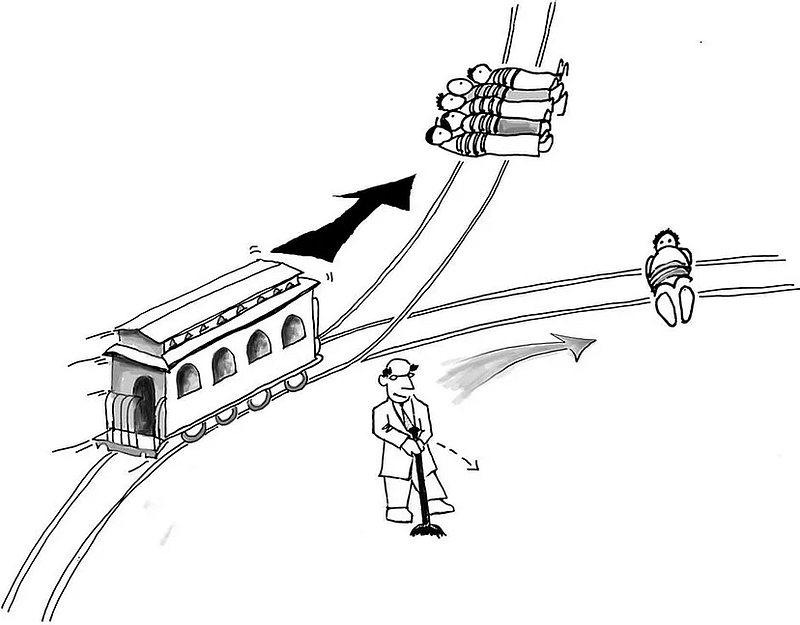
Ethics may be the most important human skill that AI lacks. Our moral reasoning and values are shaped by society and culture―concepts no algorithm can truly grasp.
When forced into a crash, should the car protect passengers or pedestrians?
But what is the greater good? An AI can run calculations, but only a human can weigh complex ethical dilemmas using judgment and philosophy. We must take responsibility for the moral implications of the tech we create.
9. Intuition
Intuition―our inner wisdom beyond facts and figures―is notoriously tricky for AI to emulate. How can you quantify a gut feeling?
The AI matchmaking sites kept recommending incompatible singles based only on our profiles.
There are simply too many intangible factors in life for algorithms alone to guide us. Data is invaluable but must balance with human intuition.
Learn to trust your heart as much as your head! Don’t outsource big decisions entirely to technology.
10. Imagination

Closely related to intuition is imagination―the ability to dream of possibilities beyond our present reality.
“Imagine if gravity stopped working!” or “Pretend you’re an alien on Mars!” AI has no concept of conjuring up these creative hypothetical worlds.
Imagination drives innovation. As Einstein said,
“Logic will get you from A to B, but imagination will take you everywhere.”
Use those imaginative muscles and have a vision to chase.
11. Passion
It’s not hyperbole to say passion is what makes life worth living. Passion is what gets us out of bed in the morning; it’s the yearning to do meaningful work and pursue your purpose. Can AI ever experience such fires in its circuitry?
No algorithm could match that level of self-motivation and tenacity fueled by pure interest and love.
Steve Jobs said,
“Your work is going to fill a large part of your life, and the only way to be truly satisfied is to do what you believe is great work. And the only way to do great work is to love what you do.”
Loving what you do is perhaps the most human quality of all. So I urge you: to follow your passions, even if society tells you it’s impractical. Fill your life with inspiration and meaning that no robot could comprehend.
12. Body Language

Here’s an amusing human ability that mystifies AI: body language! The subtle cues like smiles nods, and eye contact we use to communicate and build rapport.
There’s likely an evolutionary basis to why these social gestures develop. Use your natural body language talents to your advantage! (Introverts am talking to you) Make eye contact, lean in, and smile. The robots won’t get it, but other humans will.
13. Humor & Wit
Can an algorithm ever match that satisfying feeling of delivering the perfect punchline that makes your friends erupt in laughter? I doubt it. Humor is one of those marvelous human qualities too complex for AI.
Comedy requires improvisation, cultural awareness, and a profound understanding of humanity.
Laughter connects us in such an authentically human way.
I asked ChatGPT “Make me laugh by using your funniest joke”
Here’s what it said:
“Why don’t scientists trust atoms?
Because they make up everything!”
Am I supposed to laugh at that?
14. Struggle & Growth

This may seem counterintuitive, but one of humanity’s superpowers is the ability to suffer and grow from hardship. An AI has no concept of enduring pain to achieve a greater goal.
Austrian neurologist Viktor Frankl wrote that
“it’s not suffering itself that defines us, but how we respond to it.”
Next time life throws you a curveball, remember: what doesn’t break you makes you stronger.
15. Awe & Wonder
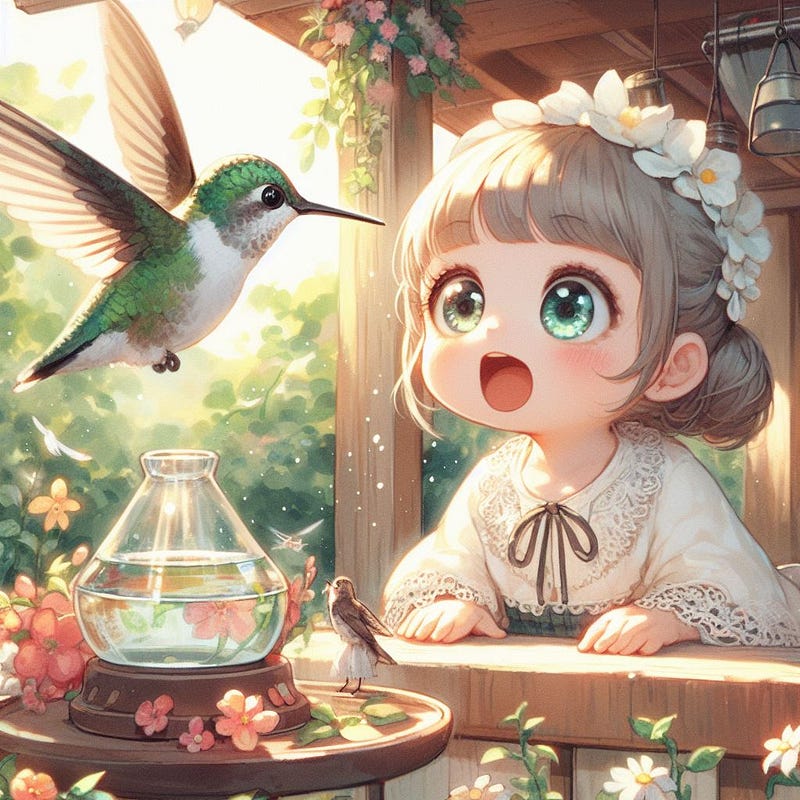
Finally, one of the most profound human experiences AI will never grasp is the feeling of awe―those jaw-dropping moments that stop us in our tracks.
Seeing the Aurora Borealis shimmering in the night sky we would probably respond “What a wonderful sight”; an AI would just compute the light spectrum.
Too often technology distracts us from being present. But try to recapture your childlike sense of astonishment! Look at the stars, watch a hummingbird, enjoy music.
Scrolled this far? You deserve more!
(One of my most popular content)
Hit that follow button for juicy content like this delivered straight to your feed.
Plus, Grab my free Substack newsletter for bonus goodies. You won’t regret it! ✨


