
15 Eye-Opening Images of Holocaust Across Different Countries
True pictorial depiction of Jewish losses: by each country.
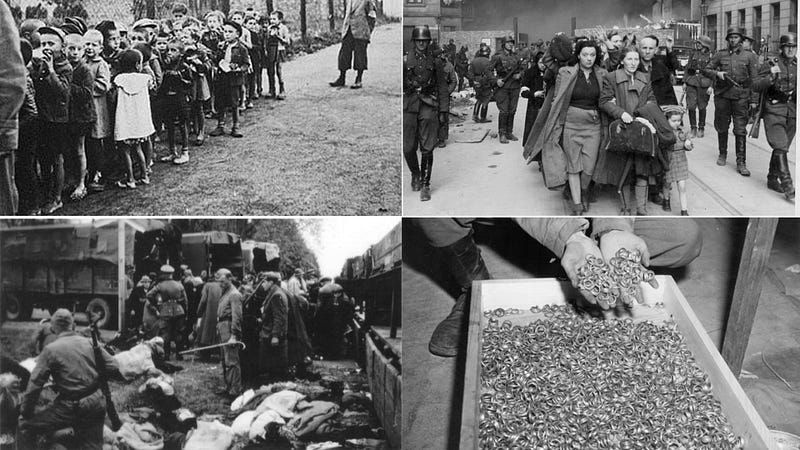
Jews have lived in Europe for more than 2000 years, and the first evidence of Jewish communities dates back to the 4th century.
Then came World War I, in which Germany faced a defeat from Great Britain, France, Russia, and the United States of America — it was after this the problems for the Jews living in Europe began.
German veterans from WWI decided to form a political party of their own which was headed by none other than the architect of this whole atrocity Adolf Hitler and the party was called the infamous Nazi Party.
Using the Great Depression to their advantage, Nazis came into power.
Then began the systematic persecution of the Jews, and more than six million Jews were killed — in a crime that was carried out by Nazi State and its collaborators during the period of 12 years.
In addition to the genocide of Jews, other margenalized groups were persecuted, like homosexuals, disabled, Slavic, Jehovah’s Witnesses, and any political opponent.
The Holocaust was not an accident in history — rather, it was an oraganised choice that promoted and literally licensed loathing, prejudice, and discrimination, which ultimately led to allownce of mass killings.
The Holocaust In Poland
Jews had been living in Poland for more than 800 hundred years before the Nazi occupation began.
It is estimated that around 3.3 million Jews lived in Poland on the eve of occupation — which was more than any other country in Europe.
The Holocaust in Poland was a part of the Europe-wide Holocaust, which was organized by the Nazis in German-occupied Poland.
As the dust of war settled, which really did take long — around 3 million people were killed, and a bit over 350,000 Jews survived.
Jews were murdered mostly in the Ghettos and six massive death camps, which were located on different sites.
Half of all the Jews murdered during the period of the Holocaust were Polish Jews.
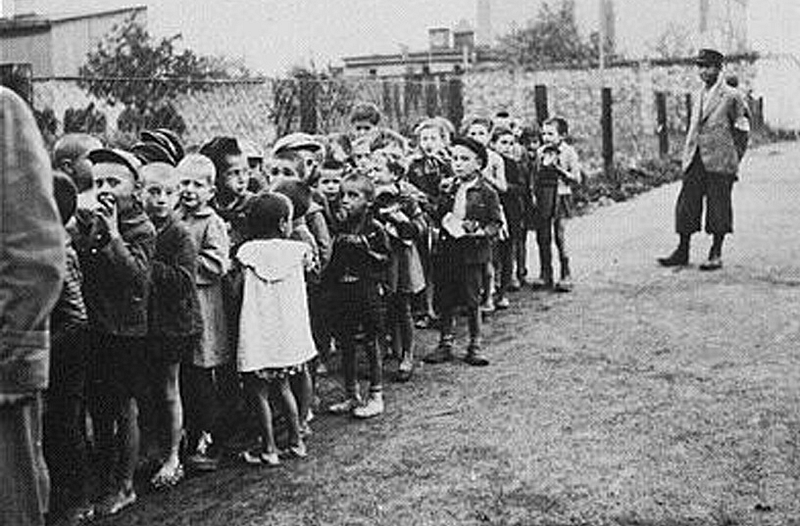
Ghetto in Litzmannstadt, children, being rounded up for deportation to Chelmno, a nearby death camp, in September of 1942.
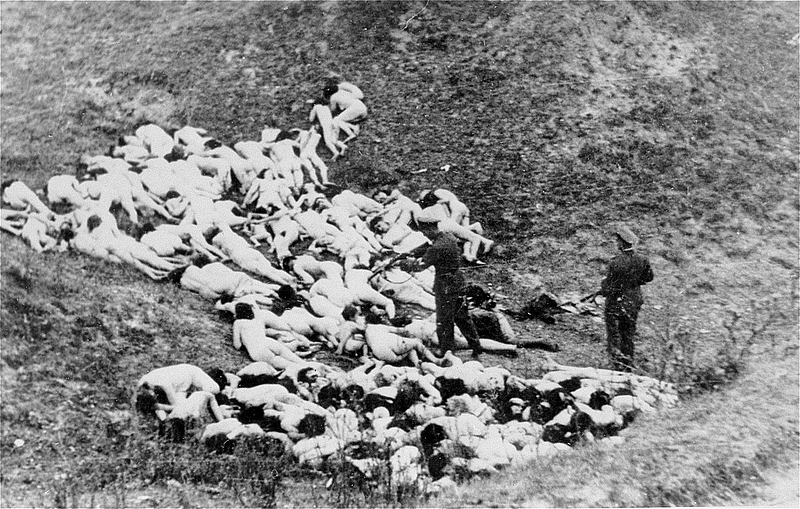
Mass shootings were common site during the days of the Holocaust — the image above shows a German police officer shooting a Jewish woman who is still alive after a mass execution of Jews took place in Mizocz Ghetto in October of 1942.
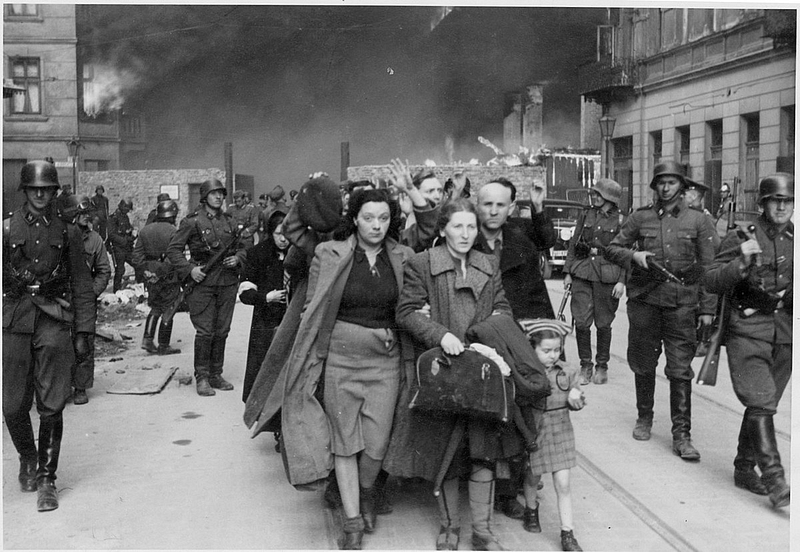
Warsaw Ghetto Uprising — captured Jews led by German SS soldiers to an assembly point to be deported to different concentration camps either to be executed or for forced labor.
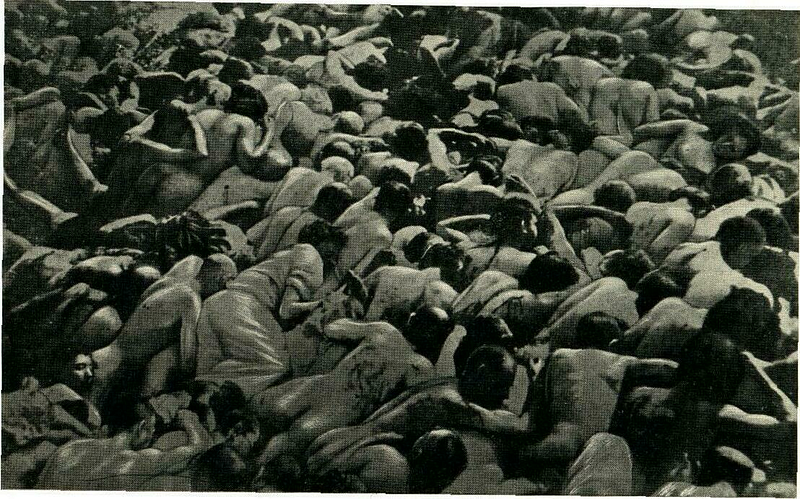
A pit full of dead Jewish Men and Women killed by bullets during the Holocaust by bullets in Zloczow — killed by a bullet was the initial stage of the Holocaust.
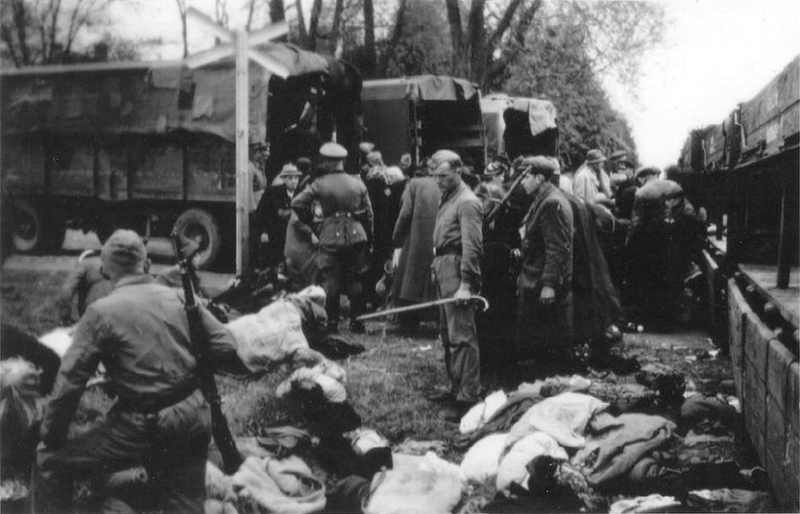
Jews being sent to the Chelmno Extermination Camp were forced to leave their belongings before being loaded into a locomotive, the same transport that later delivered their dead bodies.
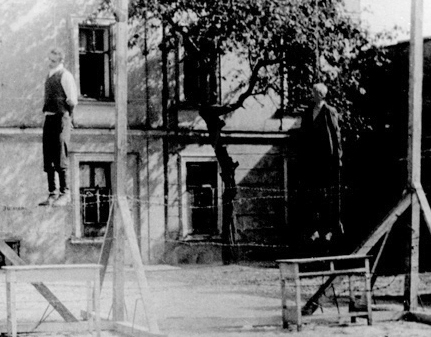
Anyone who helped Jews was executed by hanging publically — the image above shows Michal Kruk, a man who was hanged publicly because allegedly he gave Jews a hiding place.
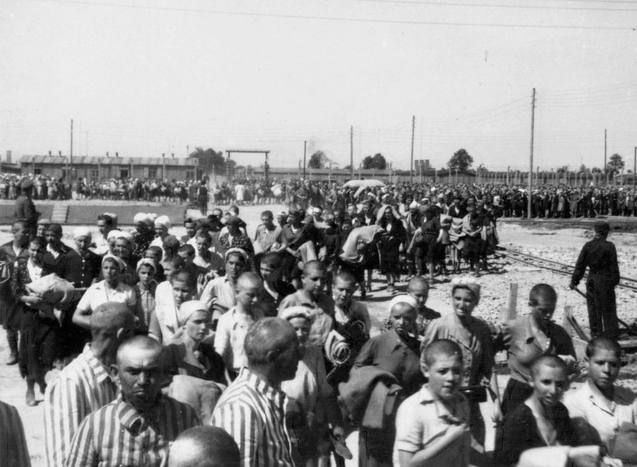
Jews inmates at the Auschwitz-Birkenau extermination camp — Men were always separated from their families, often for forced labor, and women were often raped and abused before being sent to Gas Chambers for execution.
The Holocaust In Ukraine
The Holocaust in Ukraine is often regarded as the first phase of the Holocaust — it is also known as the Holocaust by bullets.
It is named the Holocaust of Bullets because most of the killing was made by bullets, and according to some historians.
It is believed more than a million were shot to death at close range either in open fields, forests or ravines.
Holocaust in Ukraine is known for a couple of things one: the Death Squad, and second: the Lviv Pogrom.
The two years of the death squad were the worse of all — the only job they had was to kill anyone who would dare oppose or could be a security risk.
We all know what they did — people were often killed for the sake of killing, and the mass killing of jews was not limited to anything men, women, and children all were killed at random whether they be Jews or Romani none were left.
Total civilian loss in Ukraine during this time is estimated at around 4 million.
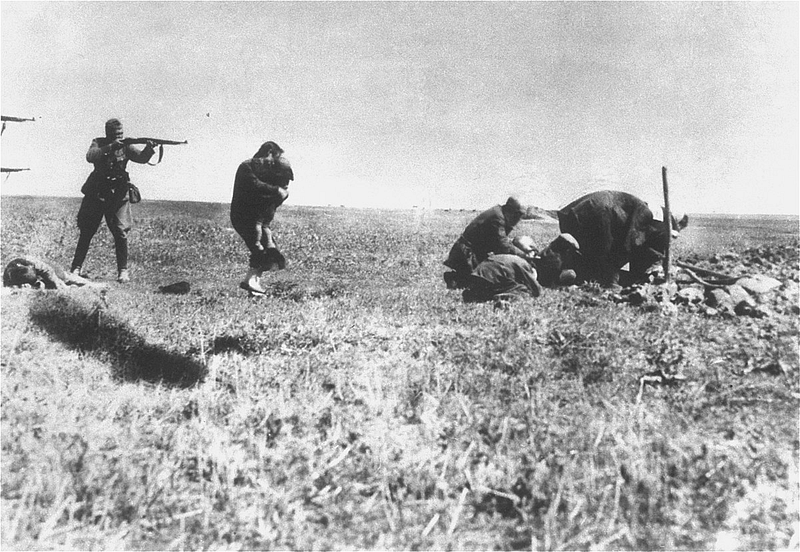
SS soldier shooting at a Jewish woman while she is holding a baby while the pick and shovel suggest the victims were forced to dig their own graves, 1942.
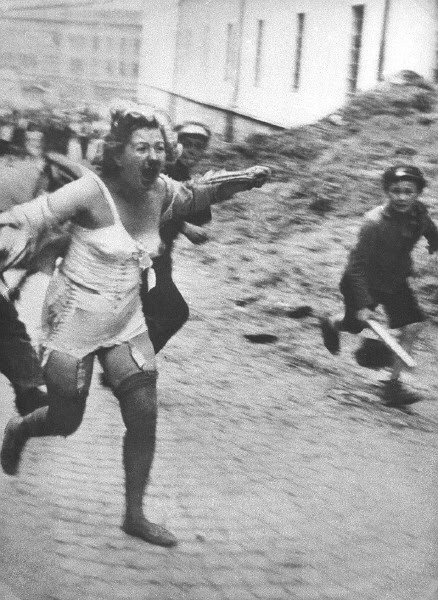
Lviv Progrom was basically an official license to kill any Jew — it is estimated around 7000 jews were killed by Ukraine nationalists in the first 20 days of the permit.
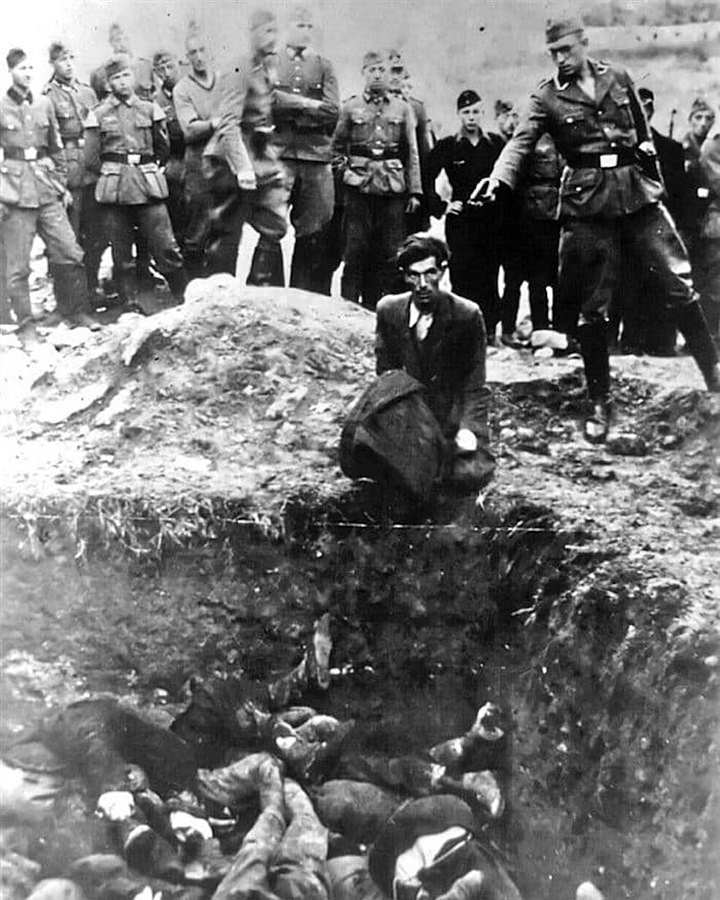
This is an iconic photograph that shows the execution of Jews by the Death Squad of Nazi SS in Vinnytsia — the photograph is often known as The Last Jew in Vinnytsia, Ukraine, 1941.
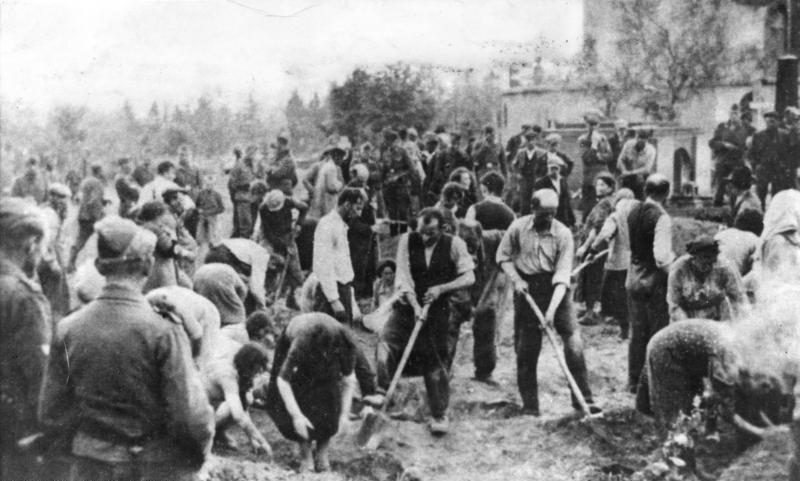
Jews were digging their own graves in Zboriv, Ukraine, in 1941.
The Holocaust In Germany
Germany, the place where this oppression began — After the Nazi party came into power, an oragnized, delibrate, state-sponsored persecution began.
People who loved and sacrificed their lives for the country were blamed and killed for the crime that they never committed.
The exact number of death that occurred during the Holocaust is still not exactly known.
There are some who say more than 11 million were killed, and there are those who say 6 million is a more accurate number; we will leave that to you to decide.
However, what we know for sure is in both cases, there is a massive amount of death that occurred.
The mass killing was carried out by bullets at first, then in extermination camps and the infamous Gas Chambers.
When it all started, there were a bit over 520,000 Jews living in Germany, but soon after the atrocious campaign against the Jews began, more than 300,000 Jews left the country in order to find shelter — among the remaining, more than 180,000 Jews were killed.
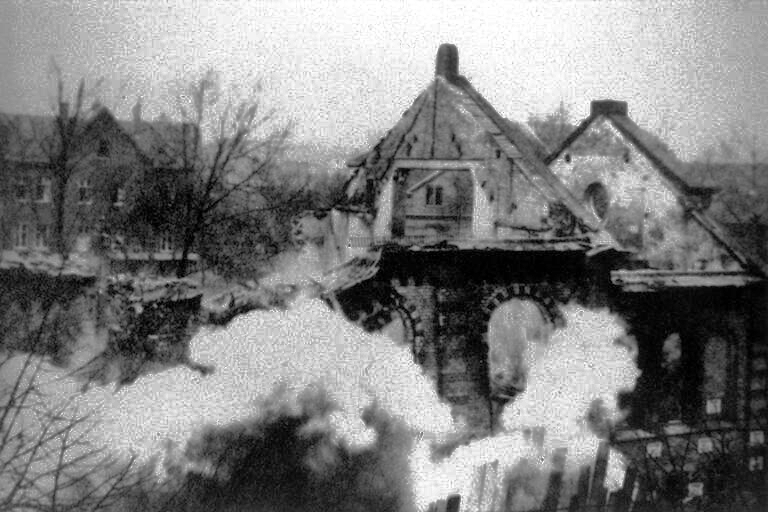
Eisenach synagogue in Germany — was destroyed by the Nazis during the two days of the military operation against Jewish properties and other religious buildings in November of 1938.
During these two days, every property related to jews was destroyed, whether it be a school, bakery, or house.
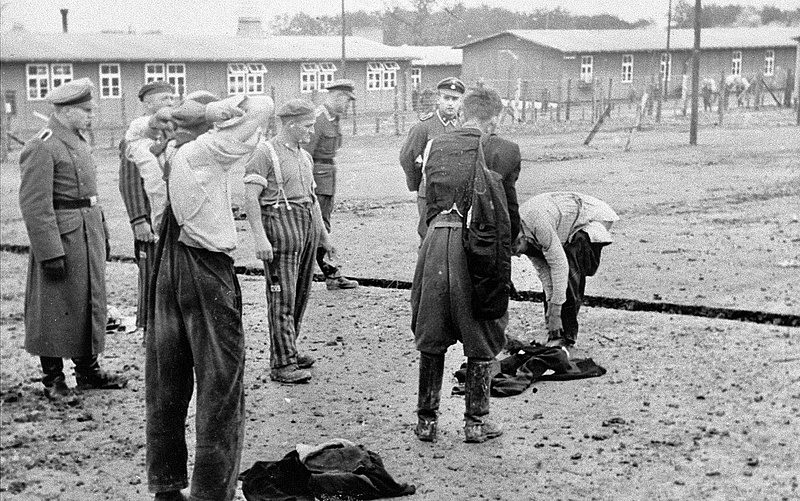
Newly arrived prisoners at the Buchenwald Concentration Camp were forced to undress before being shaved and washed in 1940.
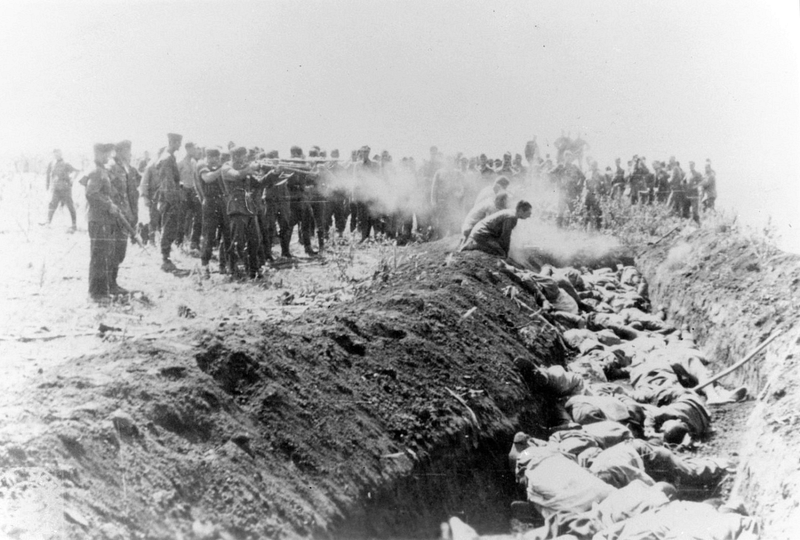
Massive graves were dug before Jew men were killed by bullets to the head — these men were often killed after they had performed forced labor for hours, 1941. (Image Source: Wikimedia Commons)
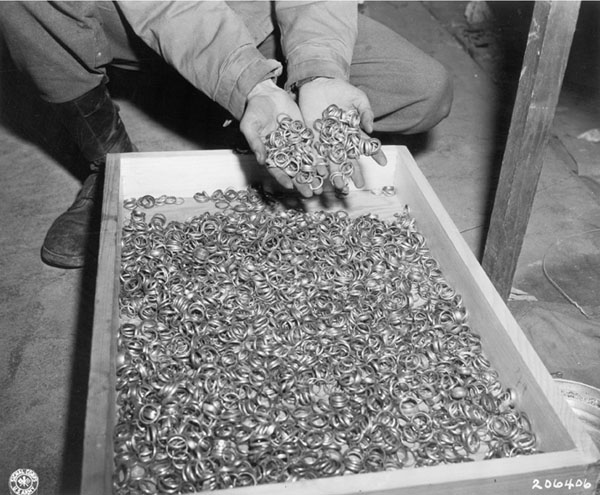
The image above shows a glimpse of the horror that took place in these extermination camps — thousands of rings were found at the Buchenwald camp after Allied forces liberated the camp.
Final Words
The magnitude of death that took place during the period of the Holocaust is unfathomable.
No words can do justice to describing what kind of oppression took place and what horrors were seen by the people going through these difficult times.
More from the author:


_1942_(Ko%C5%82o).jpg)
.jpg)


.jpg)


