
THE DEFINITIVE GUIDE TO PRICING
12 Pricing Strategies to Help Maximise Your Profitability
It's not easy to get your price right. But it's easy to get it wrong.
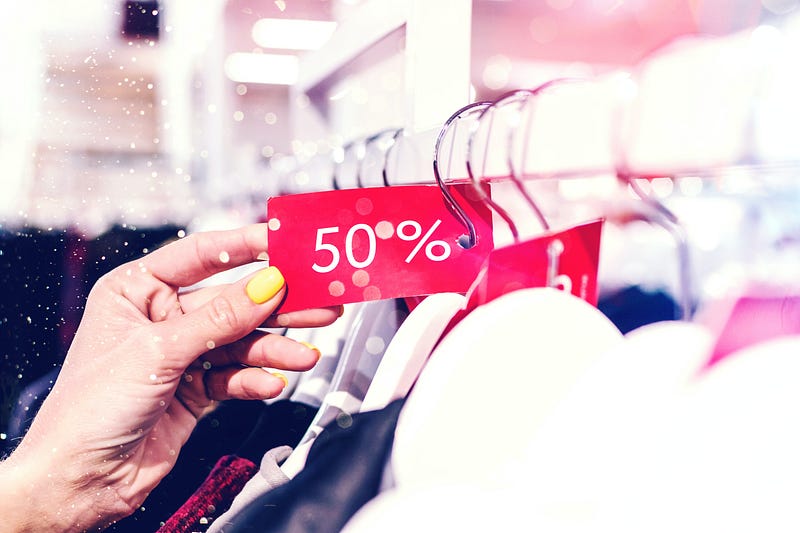
Price is perhaps the most crucial aspect of marketing a product or service that determines whether or not a customer makes the purchase.
If priced too low, you lose profitability.
Priced too high, customers will choose a competitor.
How can you get it, right?
It's not easy — but read on, and you'll increase your understanding of how pricing works and learn 12 pricing strategies to help make sure you don't get it wrong!
Pricing
Price is the value placed on a product or service to purchase it, based on research, experience, and an understanding of the marketplace. It is an educated calculation of the price needed to be profitable and sell enough volume to be sustainable.
Price also must stand its ground against alternative options from competitors.
Pricing is at the core of marketing strategy, one of the original '4Ps' of the Marketing Mix.
Changing other core marketing strategies, such as advertising or new product development, is expensive and time-consuming. Still, the price is very flexible, and businesses can change it according to their needs. Price is the most adjustable aspect of the marketing mix, allowing a company to respond to marketplace changes quickly.
For customers, price is often the most crucial factor in their purchase decision. Businesses use price as a differentiating factor to set them apart from competitors and target a segment of customers. Your price reflects your positioning in the market, and pricing helps create your brand identity.
“One of the more basic, yet critical decisions facing a business is what price to charge customers for products and services.” (Morris, 1987)
Factors that impact the price
There are several factors to consider with a pricing strategy.
The first factor to consider is cost. Or, what is your time worth? Cost Plus takes into consideration production costs, and then adds a certain percentage of profit to that total.
This tactic is an essential way to price a product, and often businesses use more than one pricing strategy in unison. There could also be other internal considerations within the business that can impact pricing, such as quality.
The perception of value in customers' minds is another essential factor a business must consider with its pricing.
What do consumers think a reasonable price to pay is?
Price and value will not always align with customers, and this perception of value will change over time. The more a business understands what its customers value, the easier it is to price its offering.
“This decision is particularly critical in what The Economist (2013) calls the “age of austerity” — an era characterized by sales stagnation, no reasonable possibility of cutting costs further, and price as the only remaining lever. In this competitive environment, more than ever, a sound pricing strategy is required to facilitate customer value creation, structure price decisions, and earn a profit. (Kienzler & Kowalkowski, 2017)
The competition, of course, must come into consideration.
- What are they doing?
- What are their prices?
- How does their product or service compare to yours?
If similar offerings are equally attractive but at lower prices, then you probably will not have many customers.
Economics is going to impact your market and, therefore, your price also.
- What is the economy doing?
- Are people willing to pay a premium?
- Is there a shortage of supply? How highly regulated is the market?
We have recently had the Covid-19 outbreak worldwide, forcing many businesses to close and change business environments. There are now many incentives to bring customers back to some industries with a demand reduction.
Demand will have increased for other services such as delivery services.
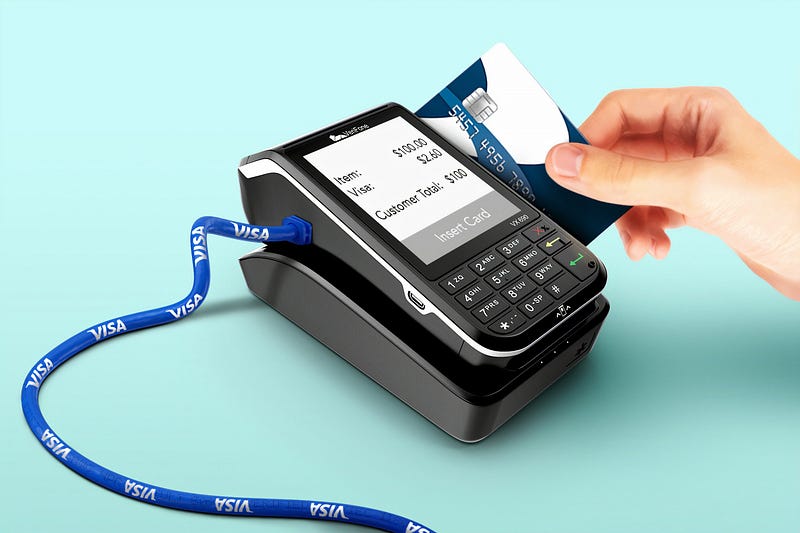
Getting the price right
Pricing your products precisely right to get the absolute maximum profitability is easier said than done. Getting the highest volume of sales must balance at a profitable price.
You could have the most brilliant math minds in the world looking at every single statistic possible to create a calculation for maximum profitability and still not get the price right. There are so many factors outside of your control.
Having said that, there are many things a business can do to ensure they are not getting it horribly wrong. Pricing decisions can have significant and disastrous consequences.
It is often the first and most important consideration for customers, and it determines your profitability and, ultimately, your success. It is the only marketing tool that provides the income — every other activity is an expense.
“Developing an appropriate pricing strategy is both crucial and highly complex. Prior research emphasizes its dependence on various factors, such as the environment, firm objectives, customer characteristics, and the pricing situation” (Kienzler & Kowalkowski, 2017)
Pricing Strategies
There are several methods and strategies a business can use to price its products. There are four basic pricing strategies at a basic level — premium, penetration, economy, and skimming. I will discuss these and several other methods that businesses can use in unison in their pricing strategy.
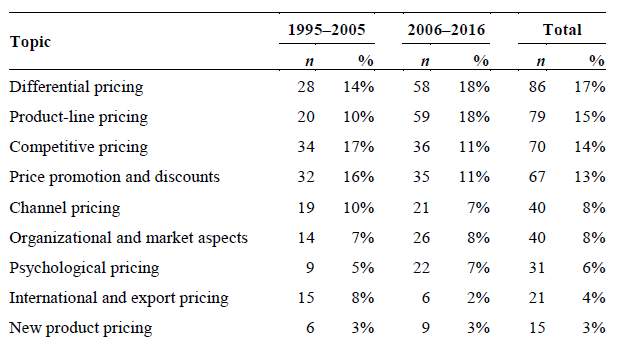
Kienzler and Kowalkowski (2017) identify pricing strategies most discussed in the marketing literature over the past 20 years.
The eight other strategies are Loss Leaders, Differential, Competitive, Price Promotion and discounts, Psychological, Everyday Low Price, Bundled and Captive.
Premium pricing
Using a price structure that is higher than many of your competitors is a premium pricing strategy. The premium price alludes to the fact that the product or service is of a much higher value, usually consisting of a particular competitive advantage or unique characteristic in customers' minds.
Like a Ferrari or Aston Martin. They have a specific look, high performance, and luxury level not found in a Toyota or Ford. Keeping the price high creates an impression of higher quality than alternatives. You are unlikely ever to see a stock clearance sale on a premium brand.
Penetration pricing
The strategy with penetration pricing is to initially under-price a new product or service to gain market share more quickly. It is shared with a product launch, increasing the price after this initial promotional period.
The aim is to penetrate the market and steal customers away from competitors if you can get customer loyalty and positive word of mouth during this period, which also helps marketing efforts.
Economy pricing
A no-frills brand or range of products has an economy pricing strategy based on a high sales volume. Margins are low, as are any overheads such as marketing costs.
Many supermarket brands have an economical pricing strategy, and the supermarket itself will have this strategy. Targeting is at the mass market to gain a significant market share, and there is little to differentiate any product besides the low price. The packaging is usually fundamental.
Low price often equates to low quality in customers' eyes, so there's little chance of ever-increasing prices as customers will be very price sensitive.
Skimming strategy
Initially charging a high price and then lowering it over time is called a skimming strategy.
This strategy is helpful until the market has become saturated with competitors and reduces the cost accordingly; usually only reserved for brands with a first-mover advantage or a robust competitive advantage such as a unique technological advancement—this strategy targets wealthy market segments.
When mobile phones first became popular, texting and call charges were too high, with just one or two providers. Similarly, with smartphones, the original series of the iPhones only had one expensive model when there were no alternative android models for much cheaper with similar capacity.
Loss leaders
Most of these pricing strategies are on a brand or product level; Loss Leaders is a store-level strategy. Individual retailers such as supermarkets sell high profile and high volume brands such as Coca-Cola at a low price, maybe at a slight loss depending on competition, intending to attract customers rather than a profitable product.
This strategy's basis is that these customers are highly likely to purchase other, more profitable products.
You want to get people into the store. Sales work the same way, a highly discounted TV because they might purchase the cabinet and home theatre that comes as a bundle. But often, this is a day to day pricing strategy. After all, who goes to the supermarket to grab some Coke, right?
You will probably grab some potato chips or a bag of nuts, maybe some bread, toilet paper or milk, some bread, perhaps some beer…
Differential pricing
Also known as discriminatory pricing or multiple pricing, differential pricing uses the law of demand as the fundamental principle. Recognising that specific customers are willing to pay extra for a product based on the market segment they belong to; selling the same product or service to different customers.
Think about going to an auction for a property. If there are ten bidders, they will also see value at a slightly different level. As the price goes up, the number of customers reduces.
Businesses can offer slightly different value propositions to different market segments with differential pricing.
Pricing at a sports game or a concert is an example of differential pricing. Kid's prices, family prices, corporate boxes, front row seats, VIP passes, season tickets… This strategy helps the businesses maximise their potential profit by focusing on their customers' individual valuations.
Brand Image in product segments such as clothing and cosmetics can also allow for different pricing in different markets, locations, and times such as early bird tickers are another variable.
Competitive pricing
Also known as reference pricing, Competitor pricing is set by the market, priced just below the competitor's product's price. The term reference explains the competitor's price as a reference for the price; they are willing to pay.
In New Zealand, multi-national companies often leave us alone in the past, leading to monopolistic and duopolistic markets because of our geographic isolation and low population. Telecommunications and Airlines in particular.
Air New Zealand has enjoyed a free market for extended periods, and occasionally a company like Jetstar or Virgin will come along to take a share of the market. Not often successfully. But when they do, they force Air New Zealand to lower prices to match the competitors, increasing sales volumes accordingly.
Going rate pricing is a by-product of highly competitive markets, where the companies have little to no control of the market price. E.g. Mobile phone rates are all similar and standardised across the market. The cost of a regular-sized coffee is usually $5 in New Zealand, regardless of what café you visit.
Price promotions and discounts
Using price as a tool for sales promotion is common marketing and sales tactic.
Usually, a product or service is temporarily discounted in price. We have all seen it, 40% off all Tupperware for three days only!
The value they perceive in a brand's product or service increases with a price reduction for many consumers. A short amount of time to purchase creates urgency around the transaction that the buyer might miss out on.
Discount coupons are another form of price promotion designed to promote brand awareness. The consumer must hold on to it physically, meaning brand recall should be higher, as people might notice the coupon when rummaging through a purse or draw.
Price discounts often are a strategy to clear obsolete inventory. Ailawadi, Lehmann and Neslin (2001) looked at data from P&G when they changed their pricing strategy to cut deals and coupons, and invest more into advertising, and found coupons and discounts help with market penetration but have little impact on customer retention and product usage.
Over time, the overuse of discounting pricing can be harmful to a brand image and reduce the brand equity — being the premium a customer is willing to pay over a competitor.
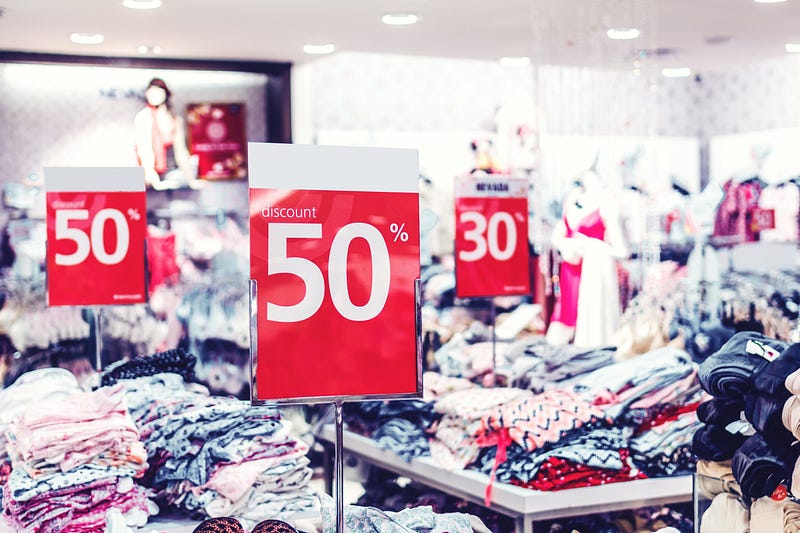
Trade and volume discounts are common pricing strategies in B2B, especially for wholesale buyers. This strategy also helps enhance loyalty as there are often many competitors in the market. Some products may have seasonal pricing; often, summer clothing is on sale in the middle of winter and vice-versa.
Psychological pricing
Businesses can design their pricing to have a psychological impact on purchasers. Marketers use Psychological pricing to "trick" the customer's brain into thinking the price is lower. It is a standard retail tactic — we have all seen pricing at $99.99 instead of $100.00.
The price rounds up to a hundred anyway, but the customer sees the 99. The lower number is more attractive to purchasers.
Everyday low price
Another store-level strategy, the Everyday Low-Price strategy, is popular with large format retailers. Margins are low, and therefore prices are low, selling in high volume.
Think Walmart in the USA. People shop there because they know prices will be low, and therefore the business does not need to spend money advertising their fees.
You do not have to offer discounts to get people through the door. This saving on advertising costs keeps prices low, and customer loyalty is often high, as people know what they will get, and there are no gimmicks.
The two largest home and hardware store chains in New Zealand, Mitre 10 Mega and Bunnings Warehouse use this strategy. It is more than just a pricing strategy; it is a business strategy.
Studies (See Montgomery, 1997) have shown that having micro-marketing pricing strategies instore — e.g. not promoting discounting options besides an aisle display that is low cost and low in labour, can improve profits by four to ten percent.
This tactic also allows organisations to maintain their consistent brand image and alter prices to adapt to local markets.
Bundled pricing
When more than one product is sold together at a lower price to buy the same items individually, this is a bundled pricing strategy. The products could be similar, e.g. shampoo and conditioner, or dissimilar but under the same brand. This tactic is an effective way for businesses to clear old stock. Buy one, get one free is an example of bundled pricing.
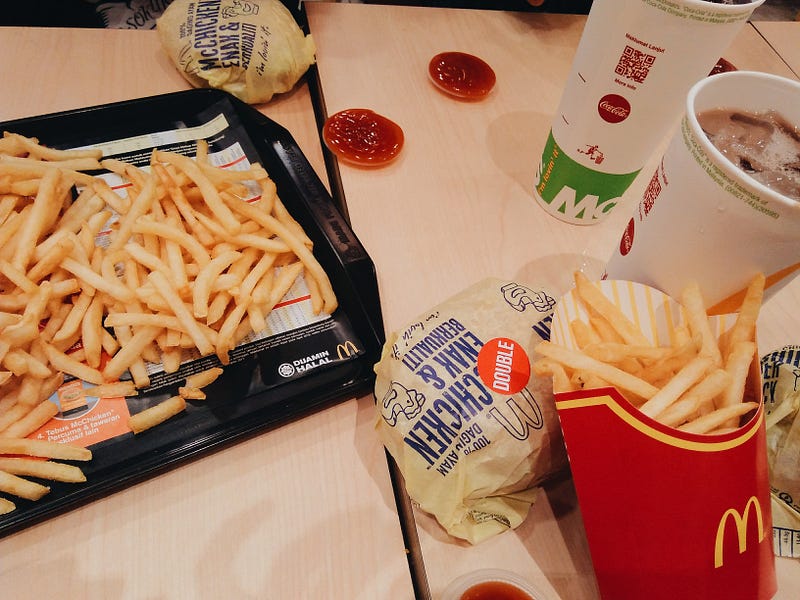
Other examples of bundled pricing are signing up for both power and broadband services from the same company and getting a discount. Or, a bundle deal at the local pizza store to get two large pizzas, garlic bread and a large drink for cheaper than purchasing individually—a Big Mac combo instead of a Big Mac.
This approach's strategy is to stop customers from dwelling on the price but instead on the bundle's benefits.
Captive pricing
Captive pricing is where a primary product has secondary consumables that customers must purchase to function.
Battery companies often manufacture torches, for example, or razor blades. The initial offering is cheap, but the consumables are not. This pricing strategy is popular when there are other complementary goods you can also sell to the consumer.
In Conclusion
Pricing can be key to the success of a product or service.
There are numerous strategies a business can use to base their pricing — hopefully, this makes it all a bit easier to understand.
The worst thing you can do is not have a strategy at all!
Thank you for reading.
I hope you learnt something new!
If you enjoyed the content, you might enjoy this article about product placement.
Read More Medium Articles
Non-Medium members can only read 3 articles a month — become a Medium Member for unlimited access.
If you would like to read more articles like this one, sign up to become a Medium member for only $5 a month.
Subscribe to be notified when I publish new content.