
Uganda | Travel | Volunteering
12 Months Living and Traveling In Uganda
An overview of our timeline.
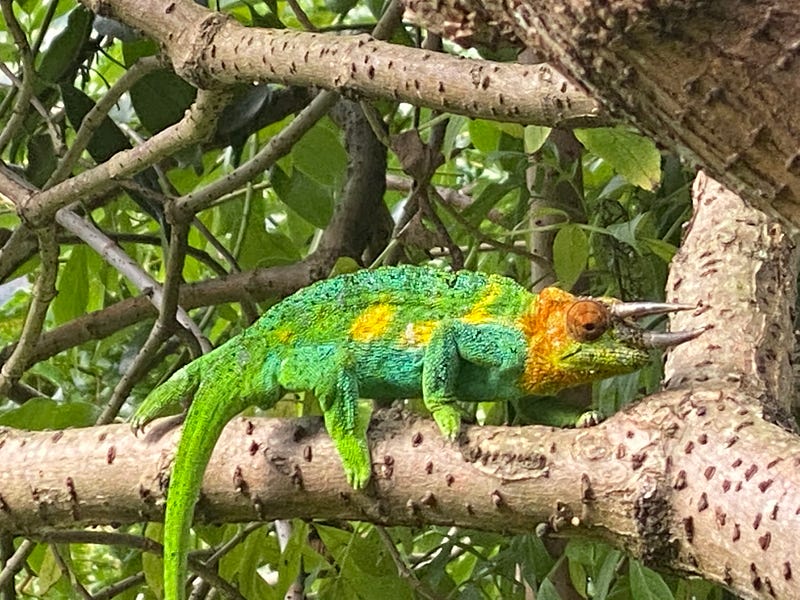
Over the last six years, my partner and I have been nomadic, living in fourteen countries and traveling through even more. We often paint murals for free in the various countries we live in, in exchange for accommodation. We have now painted over twenty murals in numerous locations. We lived in Uganda for over a year during two periods of time. The first stint was for seven months in 2021, and the second was for five months in 2022.
We lived in a few different places, the first was a village called Ruboni up in the foothills of the Rwenzori mountains. The next was in the low savannah lands, in a village called Kikorongo (pronounced chikorongo) right next to Queen Elizabeth National Park. We also lived in Entebbe near the capital city of Kampala, and the last place we lived was in a city called Fort Portal.
We were able to see the locals’ lives firsthand and had many experiences. It’s difficult to look anywhere in Uganda and not see beauty. The landscape, the wildlife, the people, it’s all beautiful.
Ugandans are also beautiful, and I will add reasons as to why throughout this article. Most of the Ugandans are welcoming, they are pleased to see that you’re in their country, and are gracious hosts. Also, in my opinion, the Ugandan people are some of the most gorgeous people I have ever seen. The majority of the women and the men are hot, so there is always eye candy.
We arrived in Entebbe but only stayed briefly this time around. We found an organization that was interested in having us do some mural painting. The first place they had us go was Ruboni. The landscape kept us captivated as we traveled through the lush jungle-covered foothills of the Rwenzori mountains. We also learned that the Rwenzoris still have a glacier. We didn’t hike to see the glacier and sadly it is predicted to disappear by 2025.
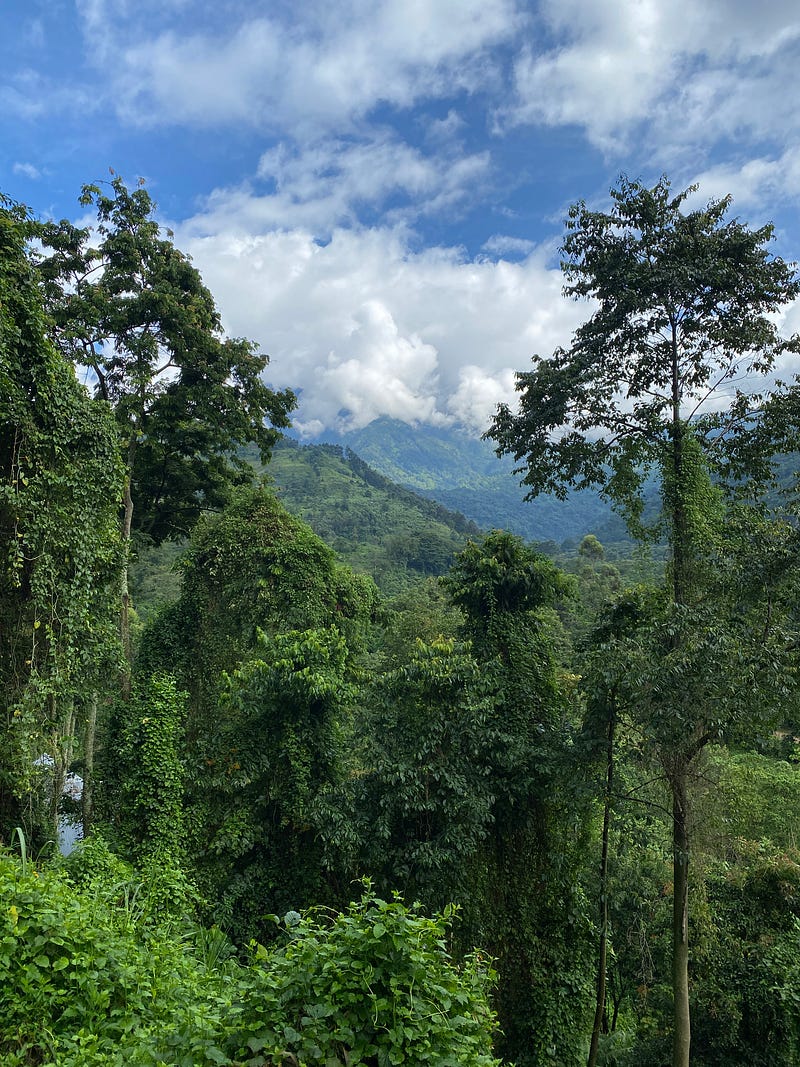
We stayed for about three weeks, painted our mural(s) and were off to the next spot to paint more artwork on the walls.
We then arrived in the savannah, at a property near Kikorongo. At this time the crops were growing and green. Slowly over the next month, we watched the crops die from lack of rain. We would see this progress almost every day, as we had to walk the kilometer into the village to get food and other amenities.
The property we stayed at didn’t have electricity, so we lived without a refrigerator. There was also no running water, though the manager did get large tanks filled so we were able to get water from taps and our shower.
There also wasn’t any running water in the town. There were rain collection barrels set up, but no rain to catch.
People would walk for kilometres each day just to get water.
Despite the troublesome things that happen in their lives, the Ugandan people retain a sense of happiness. Their smiles are radiant. They know they’re all in it together, so they usually take care of one another as best they can.
Because of Covid, the government initiated travel restrictions that stated: aside from essential goods and services vehicles, the only other vehicles allowed on the roads were boda-bodas (motorcycles Ugandans use as taxis). Normally Ugandans ride boda-bodas with up to four people, including the driver, and sometimes you can see families on them. However, during the travel restrictions, boda-boda drivers were only allowed one passenger. This made getting supplies even more difficult for the locals.
One day we walked to the village and found that there wasn’t anybody in the streets. There were no vendors or shops open, and every door was closed. The normally bustling village seemed empty. This was strange, it was a regular business day. Eventually, we found one vendor who was open and selling produce, so we bought what we needed and went back to the place we were staying at.
A couple of days passed and tourists showed up to stay at the guesthouse. Our host, Jason, took them on a village tour while we remained at the property, painting our mural.
When Jason returned we overheard the tourist asking what the greatest need for the village would be. They had a lengthy conversation and when they left, Jason came back inside the building. It was then that we asked him how the village was doing.
He informed us that the village was facing starvation.
He told us that nobody was outside because everyone was too tired from not eating, so they were sleeping the day away. We realized in an instant that it was why the village was so quiet when we had been there. My partner, Jill, immediately went onto Facebook and posted a video asking our friends to donate money so that we could try and help them.
Thanks to Canada’s online banking system, known as e-transfer, by morning we had three thousand dollars sent to us. The next day I (Chris) went into Kasese (the nearest city) with Cris, one of the locals we had befriended, along with Jason and another boda-boda driver, to purchase food.
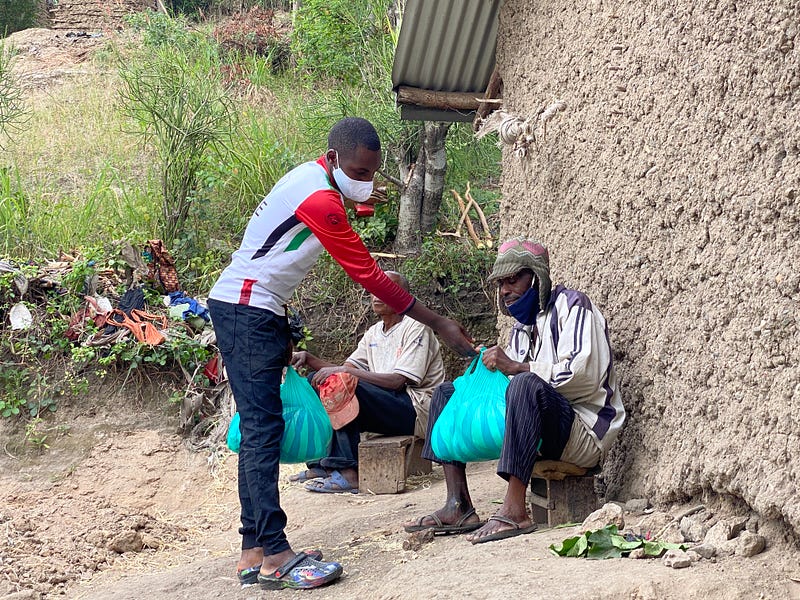
During the initial lockdown in 2020, Jason had an organization that brought food to Kikorongo in that time of need. So we got his advice on the volumes of food that we needed and we bought enough food to feed a village of two hundred and forty houses for a week. We also had fresh water trucked in that filled a bunch of the rain barrels in the village so that people could cook and wash.
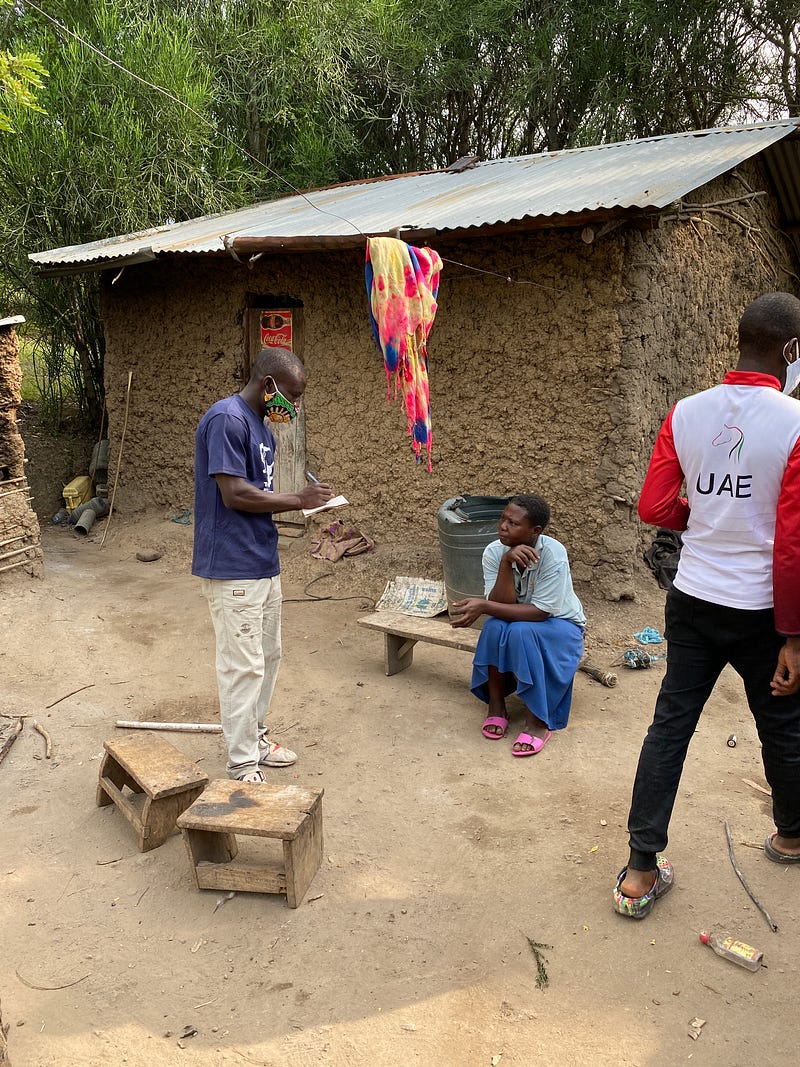
But we still had money left over and there was more continually coming in.
We asked which issues needed to be addressed and listened to the locals, we didn’t push any sort of agenda on anyone, we just helped by addressing what was asked of us. One way was by helping the local doctor stock up on medications needed. Another was showing some of them how to build nutrient-dense soil, a key element of permaculture.
During this time, while millions of people were on the brink of starvation in the country, the government announced that they were buying former governing ministers brand new vehicles, by plastering it on the front page of the newspapers. One of the men who worked on the property broke out in tears when Jason read him the news.
Jill kept fundraising and updating people via YouTube (you can see the process by clicking on this link here), and we fed Kikorongo for twelve weeks. This helped the locals get through to the rainy season and things began to grow again.
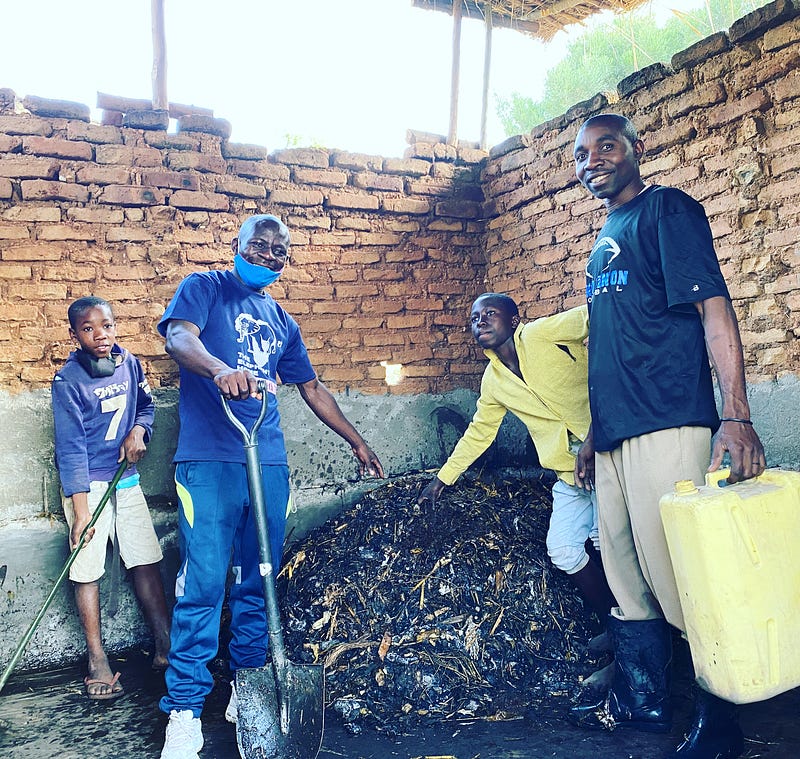
We were walking home from the village one day with gardening tools in a wheelbarrow, when Rona, who was keen on the permaculture work, was walking back to the village with his mother. She had a basket on her head, which is normal for the ladies to carry things, and took it off her head as we approached.
She began picking out and putting handfuls of freshly picked beans into our wheelbarrow. We didn’t really know what to make of it at that point, we figured she was just being generous because of what we had done for them. We thanked her and continued on.
A week later, we were invited to a farm back up in the hills near Kikorongo, the father of one of the local men wanted to talk with us. When we arrived, the man’s father had us sit in his living room, and he thanked us for giving his son food. His son had given him a portion of the dried beans each week when we brought food to Kikorongo, which he saved and planted. He then proceeded to give us a bushel of freshly picked beans (30 pounds or 13.6kg). He told us it was his way of repaying the kindness we had shown him.
This was an incredibly beautiful and unexpected experience, and it was touching that people had the foresight to do this.
Soon after this, we found a housesitting gig in Botswana over Christmas 2021. We left Uganda then but promised that we would return. We traveled by land down to Botswana and back up to Uganda in the spring of 2022.
The wildlife is amazing in Uganda, and it is home to species of animals that can’t be found anywhere else. Michael Burg, MD (Satire Sommelier) wrote an article on some of his experiences in Kenya, which helped me develop this article. Although we didn’t get quite the same sort of close-up experience that he did with the wildlife, we still had some wonderful moments with the animals of Uganda.
There are a lot of Ugandans who are doing things to take care of their environment. Beekeepers are in many places, and there are a number of organizations working on conserving wildlife.
Our friend, Cris, who was mentioned earlier, is a conservationist and had found a position at the Entebbe Zoo. The zoo isn’t exactly a zoo, they rescue animals that are the result of poaching, loss of habitat, and other such natural issues. Cris had mentioned that we paint murals to the outreach director, who became interested in having us do some artwork.
We painted a mural at the Entebbe Zoo and lived there for four weeks. The zoo has little hut-style cabins that they usually rent to tourists. Since there was no tourism at the time (another thing the pandemic brought us), the zoo gave us one of the huts for our time.
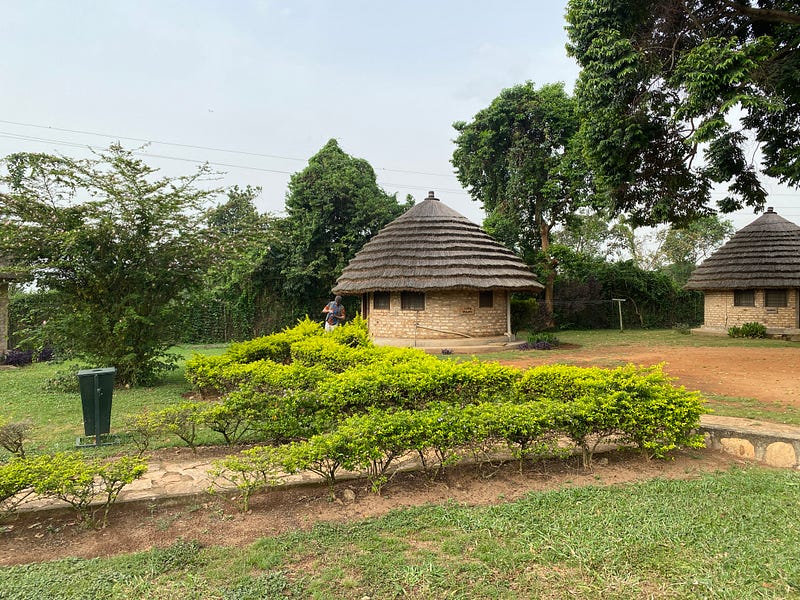
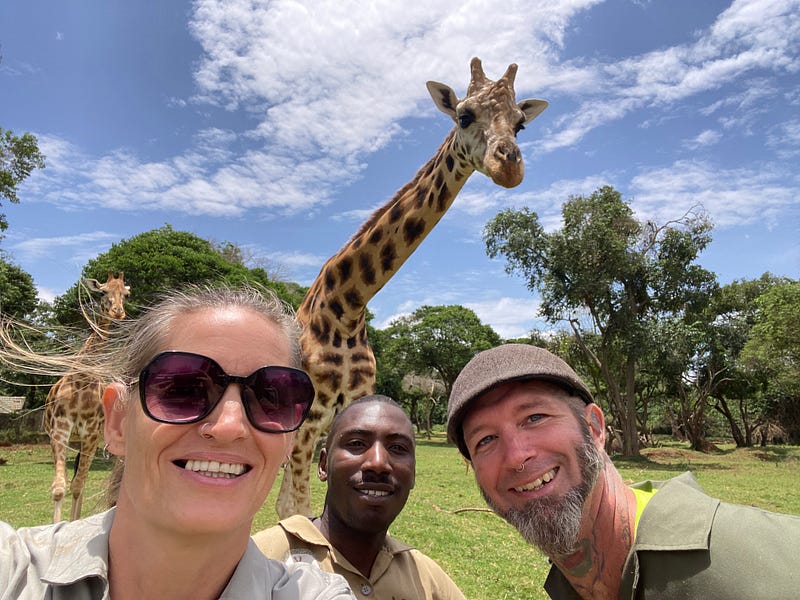
We arrived at the zoo after a shit-show of a travel experience and were taken to our new spot. We took a nap to get some energy back. After waking, I stepped out of our new tiny home and looked over to a nearby fence to see our neighbours. Giraffes, ostriches, zebras, and Ankole cattle (a local breed of domesticated cattle) were just on the other side of the fence looking back at me.
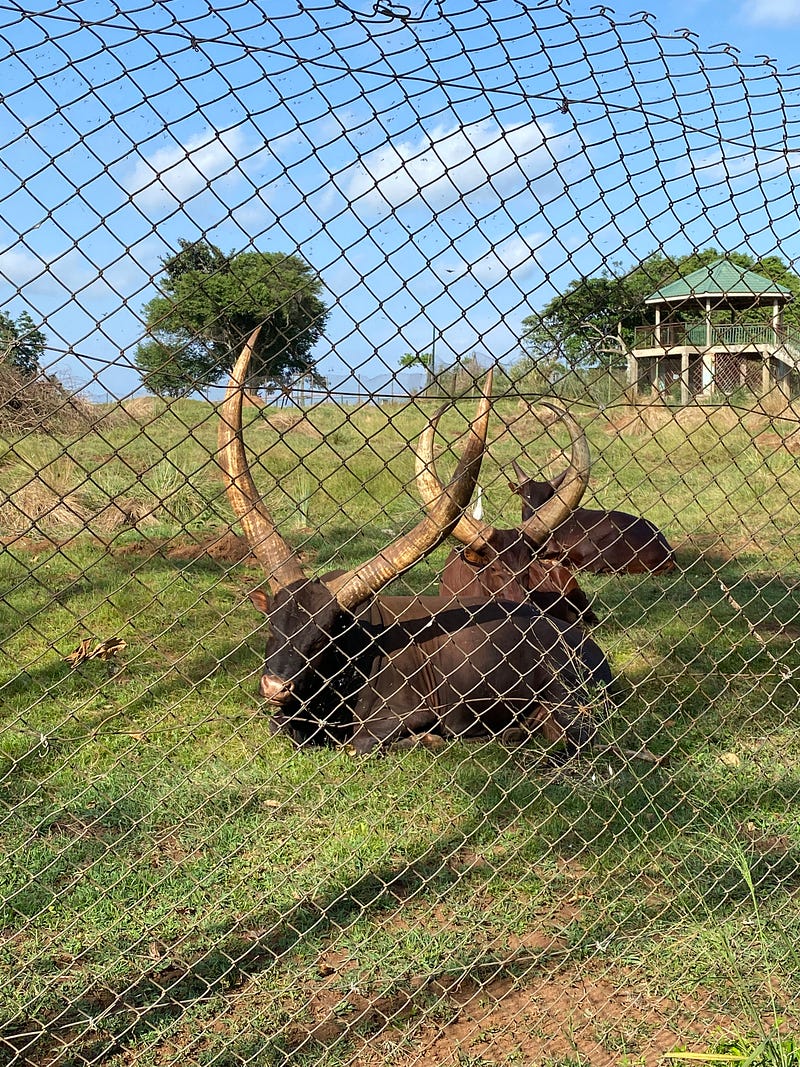
Every day, we would wake up, say hello to our neighbours, take numerous pictures of them, and make our way to the visitors center where we were painting the mural. On our way, there were a couple of route options, each with different exhibits. We became familiar with the animals as we saw them daily.
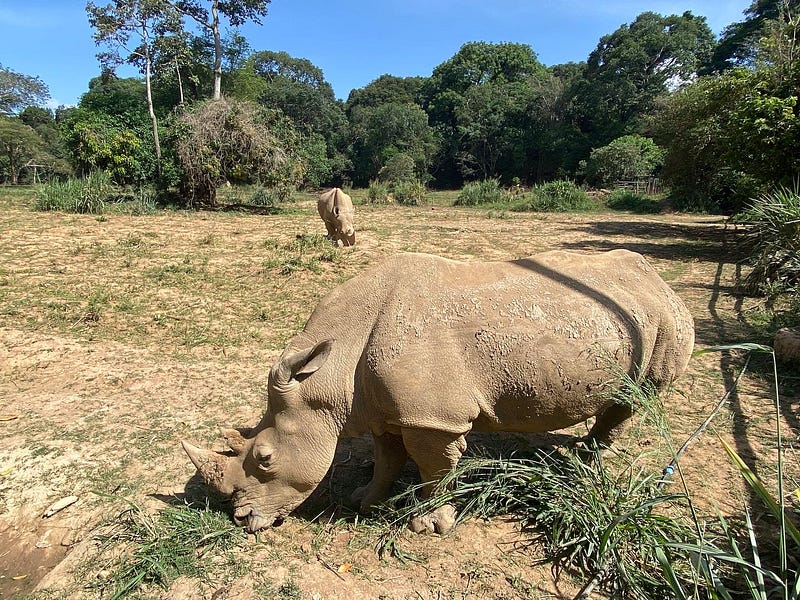
There were troops of wild monkeys that lived and roamed freely, some of whom we got to know quite well. My partner Jillian Amatt - Artistic Voyages wrote an article about some of the monkey (and other wild animal) experiences we had while there.
The tigers (obtained from a South African zoo that didn’t want them anymore) seemed to like us. Whenever they would see us, they would come over to us (ignoring other tourists who were trying to take their picture), and try to communicate with a sort of purring meowing sounds.
One day we were invited to tag along with the zoo staff to feed some of the animals. The first task was to clean the lion cages. They only allowed one pride at a time out in the exhibit area, so things remained peaceful between the two groups. We cleaned the empty cages while the other cages beside us still had lions and lionesses who watched us intently.
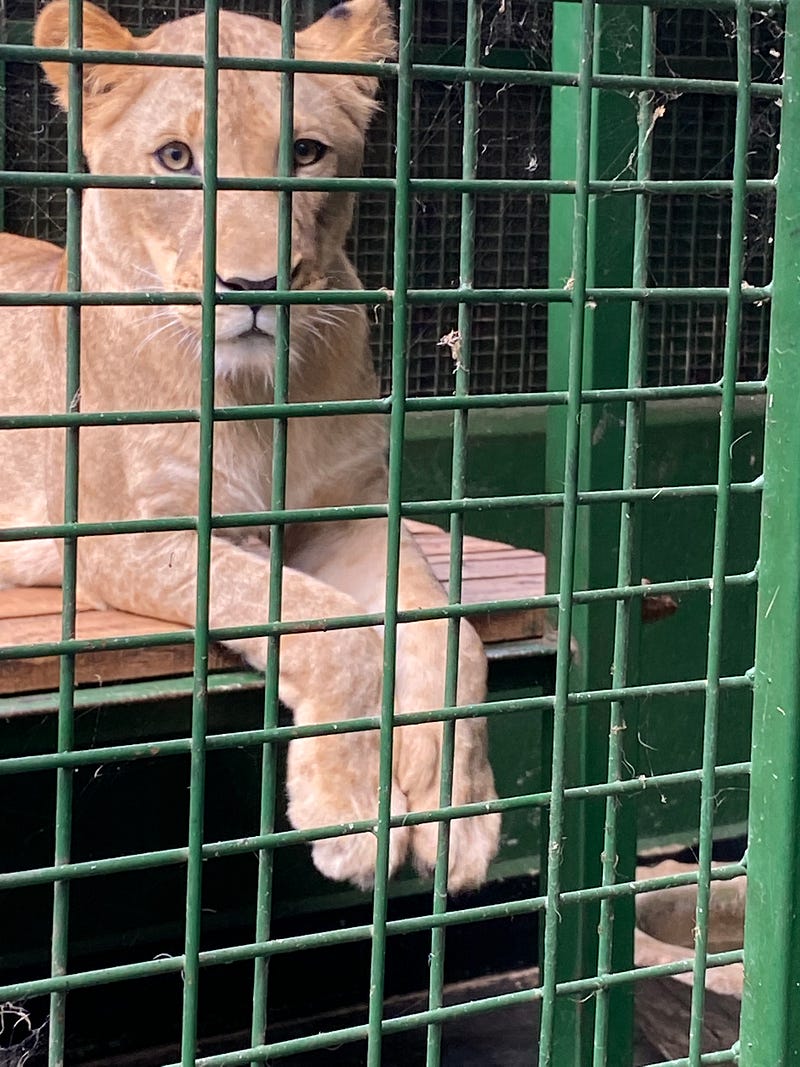
I had no idea that lions had spots until we saw them face to face. The lionesses’ eyes were so sweet and cute, and they looked at us with playful curiosity. Of course, they might have killed us given the chance.
One young male would pounce on the water spraying into his cage, just like a regular cat does with toys and other such things. Big kitties are still kitties and do silly kitty things.
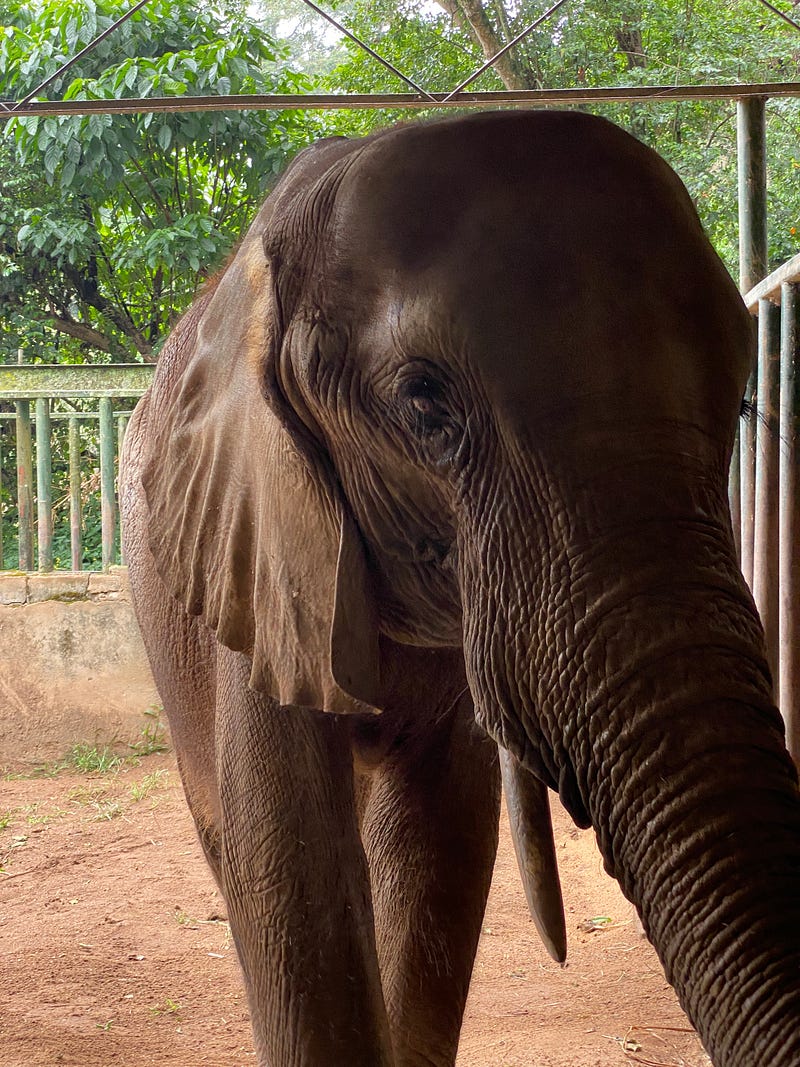
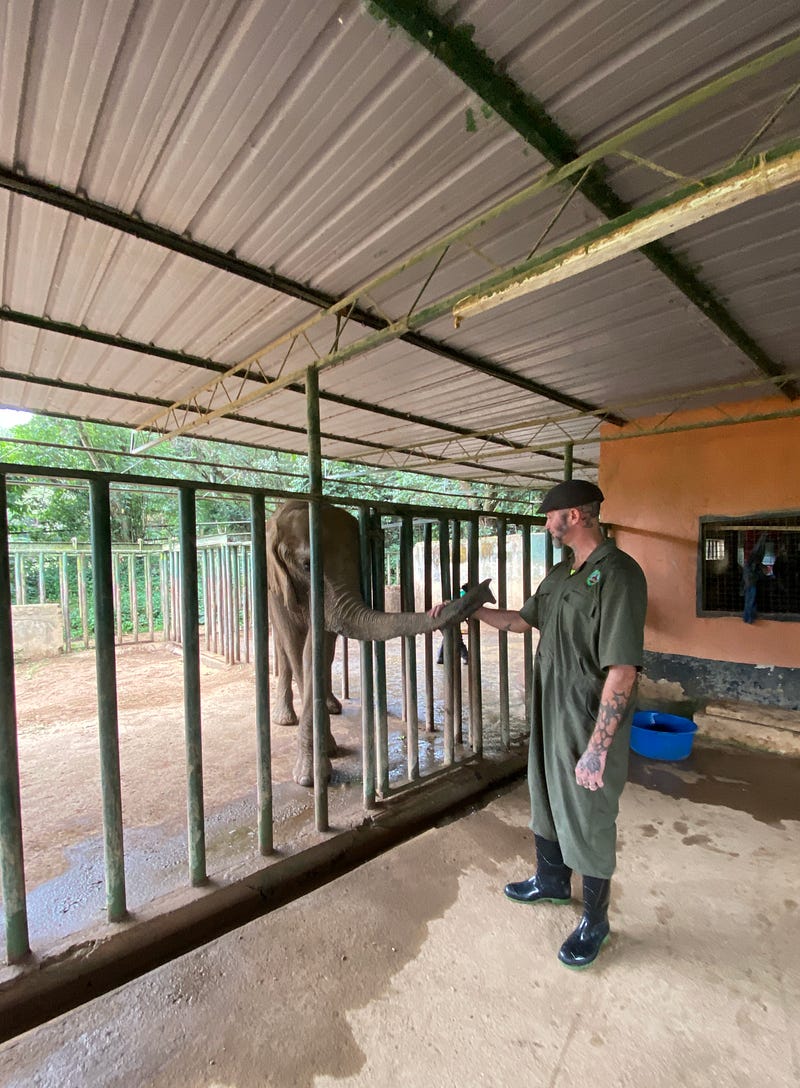
Then we met Charlie, the zoo’s only elephant. She was rescued at 2 months old from poachers who had killed her mother. She had lived her whole life in the zoo. Her exhibit was under renovation at the time, and she had escaped from one of the other exhibits they temporarily put her in. So they then had her behind the rhino exhibit, which was unfortunately away from the view of tourists. Charlie was a bit lonely to begin with, being the only elephant, and she was always happy to see people.
Charlie enjoyed our brief company and was playful. I learned that an elephant’s trunk sort of feels like the texture of a car tire when grabbing onto you.
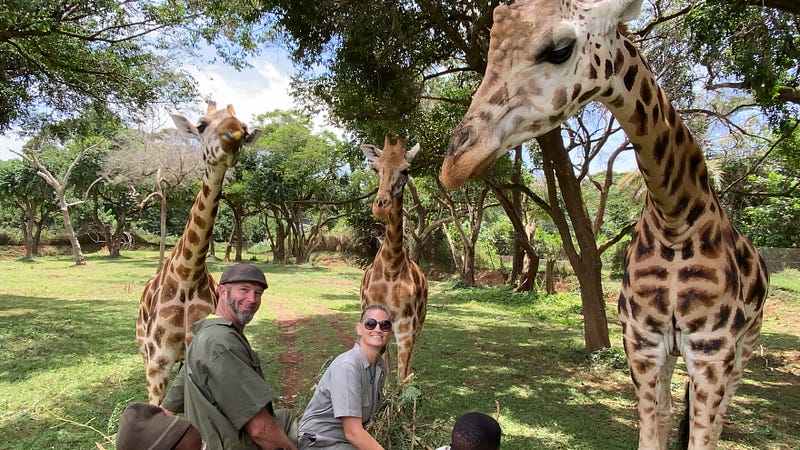
We also fed the giraffes, ostriches, zebras, and Ankole cattle, getting close enough to pet the giraffes. It really was the top experience we had in all of our travels.
After the zoo, we returned to Ruboni for another mural project. There we painted a mural on the village community center. Finally, after all that, we returned to Kikorongo to work on a mural we had left unfinished the previous year.
Finally, we lived in Fort Portal for the remaining two and a half months that we were in Uganda. We also painted a mural there and did numerous artistic projects around the property. We mostly enjoyed our time spent in Uganda and even considered that it would be a good place to settle down at some point, but there are also many dark sides to the country.
I initially wrote this article as one piece, but I realized it was too long and have now broken it up into two parts. Click this link to read part two.
Thank you for reading. If you like my writing, you can leave me a tip on my Ko-Fi, or you can subscribe to receive my articles via email right here.
You can also follow me on Twitter, and Instagram to check out my art.


