

11 Must-Read Books to Become a Better Investor in 2024
These books cost a few bucks, but what you’ll learn can be worth millions.
If later you find this article valuable, throw us some Medium love! 🥰 What you can do to support us: Clap up to 50, leave a message, highlight some text if you see fit & be sure to follow. 💌
Here are ten investing books that I read over the last 12 months and absolutely loved! Every single book in this list will take you closer to financial independence.
These books cover everything in the field of investing and money, from Finance, Angel Investing, Venture Capital, Stock Market Investing, Crypto Investing, Bitcoin, Financial Independence, and pretty much everything you need to be in the same shoes as billionaire investors.
Are you ready? Let’s go!
Check my top 8 books to become a better person (and a manipulator):
“The Intelligent Investor” by Benjamin Graham
“The Intelligent Investor” was written by Benjamin Graham in 1949, but it’s still 100% up-to-date.
“The Intelligent Investor” is considered the ultimate guide for investors to find underpriced by doing rational fundamental analysis. The book emphasizes the importance of investing with a margin of safety, a principle that suggests an investor should only buy a stock when their market price is significantly below their intrinsic value.
The book also distinguishes between defensive (passive) and enterprising (active) investors, providing strategies that are suited to the investment style and level of expertise of each.
This book is very influential for big investors like Warren Buffett, Charlie Munger, and myself.
You can get the updated version of “The Intelligent Investor”, which has updated data and recent stock market examples.

Amazon rating: 4.7
My rating: 4.7
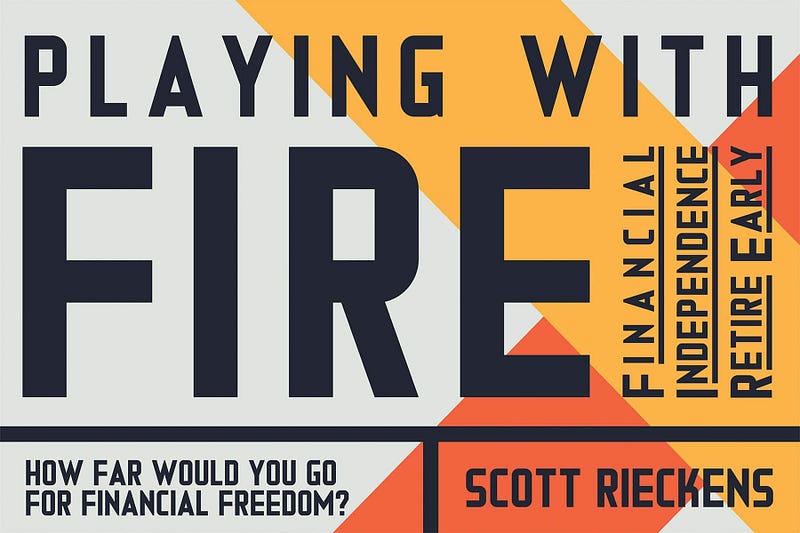
“Playing with FIRE” by Scott Rieckens
What an amazing book! The book is an awesome introduction to the FIRE movement — Financial Independence Retire Early — where Scott tells his FIRE journey in the first person.
In “Playing with FIRE (Financial Independence Retire Early): How Far Would You Go for Financial Freedom?”, the author shares his personal experiences, including the challenges and sacrifices he faced, as well as the rewards of pursuing financial independence. He explores the principles behind the FIRE movement, such as minimizing expenses, maximizing income, and investing the surplus to create a self-sustaining pool of funds that can support early retirement.
The book provides great insights into the FIRE philosophy, the dedication and mindset required to pursue FIRE, and the potential impact on relationships, work, and personal fulfillment. Totally recommend!
Amazon rating: 4.5
My rating: 4.8
“Market Wizards” by Jack Schwager
“Market Wizards: Interviews with Top Traders” is a book by Jack D. Schwager that was first published in 1989. The book is basically a compilation of interviews with traders from the 70’s and 80’s and gives insights into the mindset and strategies of these financial professionals.
The main highlights from the book are:
- The importance of finding a trading style that fits one’s personality.
- The necessity of risk management and having a disciplined approach to cutting losses.
- The value of perseverance and learning from one’s mistakes.
- The benefit of simplicity in trading strategy, rather than over-complicating analyses or systems.
Personally, I’ve enjoyed Market Wizards a bit less because I’m not a trader (but an investor), and the book sounds a bit outdated. But I’m sure you’ll find value in it if you’re a trader!

Amazon rating: 4.7
My rating: 4.0
“Lifecycle Investing” by Ian Ayres and Barry Nalebuff
What an absolutely amazing book! It was recommended by my friend Tony. I enjoyed it so much that I ended up reading it twice.
“Lifecycle Investing: A New, Safe, and Audacious Way to Improve the Performance of Your Retirement Portfolio” is a book that explains to reduce risk, you should use leverage. That’s right! Use leverage to reduce risk. It is very counterintuitive but also revolutionary and brilliant.
Lifecycle Investing proposes that younger investors should take on more leverage when they are young (for example, by buying stock on margin with a 2x leverage) and then gradually deleverage to a more conservative portfolio as they age.
Key concepts discussed in “Lifecycle Investing” include:
- Leveraging young: Young investors should consider investing more heavily in stocks, even using leverage to increase their equity exposure.
- Diversifying across time: By leveraging investments when young, investors can effectively spread their risk across more years, which can potentially lead to better outcomes.
- Reducing risk as you age: As investors get closer to retirement, they should scale back on risk by reducing leverage and shifting towards a more conservative asset allocation.

Amazon rating: 4.4
My rating: 4.9
“The Bitcoin Standard” by Saifedean Ammous
I postponed reading this book because I thought I knew everything about Bitcoin. However, this book is amazing for both Bitcoin beginners and Bitcoin OGs.
“The Bitcoin Standard: The Decentralized Alternative to Central Banking” is a book by Saifedean Ammous, and it examines how Bitcoin could play a pivotal role in the future of financial systems.
The key points of “The Bitcoin Standard” include:
- An analysis of the history of money and the rise and fall of different types of currencies.
- An argument that Bitcoin’s unique properties, such as its fixed supply and decentralized nature, make it a good store of value and a potential “standard” for global money.
- A critique of central banking and modern monetary policy, which Ammous believes leads to economic instability and inflation.
If you are into Bitcoin and crypto, you will love this book!

Amazon rating: 4.6
My rating: 4.9
“A Random Walk Down Wall Street” by Burton Malkiel
“A Random Walk Down Wall Street” central thesis is that asset prices typically exhibit signs of a “random walk,” meaning that the future price movements of stocks cannot be predicted based on past price movements.
The book explains that this unpredictability makes it extremely difficult for anyone — whether professional fund managers or individual investors — to outperform the market consistently through stock selection or market timing.
- The Efficient Market Hypothesis: The book shows that it is very hard or impossible to consistently achieve higher returns than the market average without assuming additional risk.
- Investment Strategies: It criticizes investment strategies, including technical analysis and fundamental analysis, and presents evidence that these strategies do not consistently outperform simple buy-and-hold strategies.
- Portfolio Construction: “A Random Walk” recommends a long-term buy-and-hold strategy and diversification through investing in low-cost index funds as a way for most investors to achieve solid returns that are commensurate with the level of risk they are willing to take on.

Amazon rating: 4.7
My rating: 4.7
“The Fiat Standard” by Saifedean Ammous
This book is the brother of “The Bitcoin Standard.” If you like one, I’m sure you will also like the other!
In “The Fiat Standard,” Ammous analyzes the workings of the fiat currency system, and its effects on economics, society, and politics and contrasts it with what he sees as the superior properties of Bitcoin. It discusses the history of fiat money, its problems, such as inflation and central control, and how a decentralized currency like Bitcoin could offer an alternative to the fiat system.
The book explains how monetary policy and central banking practices negatively impact everyone, from creating wars, unhealthy food, ugly art, bad architecture, and why people have such high time preferences.

Amazon rating: 4.7
My rating: 4.8
“Angel: How to Invest in Technology Startups” by Jason Calicanis
Angel investing is the “art” of investing in small startup companies to find very scalable businesses and, with that, multiply your invested capital by a lot.
These investments are risky, but hey, if it were a sure thing, it would not be called “angel investment.”
In the book Angel: How to Invest in Technology Startups, Jason Calicanis shows that you don’t need tens of thousands of dollars to be an angel investor. There are alternatives, such as investment syndicates and getting sweat equity.
The book also gives tips on how to build the proper network to get deal flow and find good investments.
Another important chapter is “invest in the founders, not the company,” and learn how to say no if the startup founder doesn’t make your eyes shiny.

Amazon Rating: 4.6
My rating: 4.9
“The Power Law” by Sebastian Mallaby
According to a venture capitalist who’s seen more pitches than a Major League catcher, trying to predict the future is like trying to nail jelly to a wall — a squishy, fruitless endeavor.
Instead, it’s the thrill of the hunt for the next big thing that counts, and when you find the lottery ticket, it’s like hitting a jackpot that covers everyone’s losses — and then some.
In the book The Power Law: Venture Capital and the Making of the New Future, award-winning financial historian Sebastian Mallaby tells the story of this strange tribe of financiers who have funded the world’s most successful companies, from Google to SpaceX to Alibaba. With a compelling blend of storytelling and analysis, “The Power Law” makes sense of the seeming randomness of success in venture capital, an industry that relies, for good and ill, on gut instinct and personality rather than spreadsheets and data.
We learn the unvarnished truth about some of the most iconic triumphs and infamous disasters in the history of tech, from the comedy of errors that was the birth of Apple to the venture funding that fostered hubris at WeWork and Uber to the industry’s notorious lack of women and ethnic minorities.

Amazon rating: 4.7
My rating: 4.8
“The Little Book of Valuation” by Aswath Damodaran
“The Little Book of Valuation: How to Value a Company, Pick a Stock and Profit” is a book by Aswath Damodaran, who is a well-known expert in valuation and a finance professor at the Stern School of Business at New York University. The book provides a solid foundation in the science of valuing companies and investment opportunities.
“The Little Book of Valuation” breaks down complex valuation concepts into more digestible parts, making it accessible to everyone.
It covers various valuation models, including DCF — Discounted Cash Flows, multiples/rations like the P/E, EV/EBITDA, Price to Book (P/B), and options pricing.
When I read the book, my goal was to find parallelism between traditional and crypto valuation methods for the Crypto Asset Valuation Framework I’m writing.

Amazon rating: 4.4
My rating: 4.0
“The Cryptopians” by Laura Shin
“Cryptopians: Idealism, Greed, Lies, and the Making of the First Big Cryptocurrency Craze” by Laura Shin gives you an in-depth view of the early days of Ethereum, who were the key players. their struggles, power laws, the dramatic events and key figures that shaped the crypto industry.
Laura Shin is a well-known crypto journalist, and she also has a very nice website, newsletter, and podcast called Unchained, which you should definitely follow if you are into crypto.
The book is not technical at all. Instead, it’s investigative journalism carried out by Laura, where she interviewed dozens of people in the crypto space to collect the stories of the early days of this industry.

Amazon rating: 4.3
My rating: 4.1
Which of these books have you read, and which is your favorite? What other finance books should I read next?
*This article contains Amazon affiliate links.
If you found this article valuable, throw us some Medium love!
🥰 What you can do to support us: Clap up to 50, leave a message, highlight some text if you see fit & be sure to follow. 💌
🌞 Stay in touch with us:


