
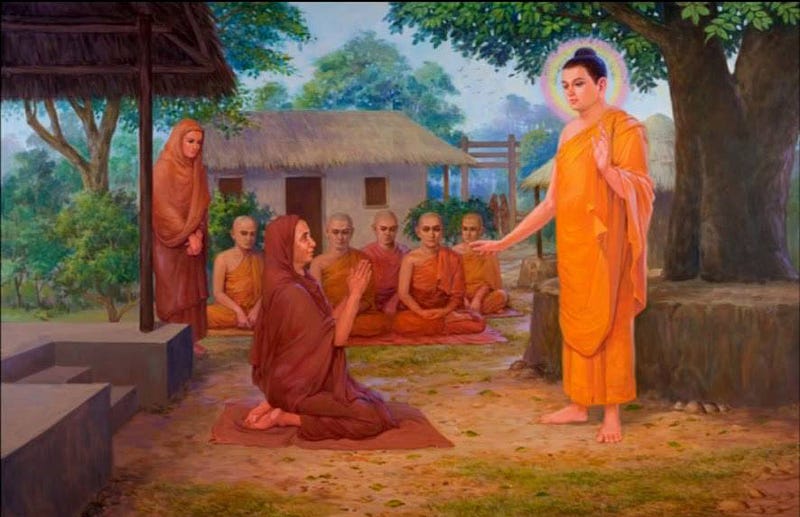
103. BUDDHA SPEAKS ABOUT DIRECTION
108 Buddhist Parables
“O Monks, there are these four types of persons found existing in the world. What are these four? The one heading from darkness to darkness, the one heading from darkness to light, the one heading from light to darkness, and the one heading from light to light.
“How is a person heading from darkness to darkness? This person has been reborn in a low family, one that is poor, with little food and drink, that subsists with difficulty; and he is unsightly and with much illness. And he engages in misconduct by body, speech, and mind. In consequence, after death he is reborn in the plane of misery, in a bad destination. It is in this way that a person is heading from darkness to darkness.
“How is a person heading from darkness to light? This person has been reborn in a low family, one that is poor, with little food and drink, that subsists with difficulty; and he is unsightly and with much illness. Yet he engages in good conduct by body, speech, and mind. In consequence, after death he is reborn in the plane of happiness, in a good destination. It is in this way that a person is heading from darkness to light.
“How is a person heading from light to darkness? This person has been reborn in a high affluent family, one that is rich, with great wealth and property; and he is handsome, attractive, graceful. Yet he engages in misconduct by body, speech, and mind. In consequence, after death he is reborn in the plane of misery, in a bad destination. It is in this way that a person is heading from light to darkness.
“How is a person heading from light to light? This person has been reborn in a high affluent family, one that is rich, with great wealth and property; and he is handsome, attractive, graceful. And he engages in good conduct by body, speech, and mind. In consequence, after death he is reborn in the plane of happiness, in a good destination. It is in this way that a person is heading from light to light.
“These are the four types of persons found existing in the world.”
— — — — — — — — — — — — — — —
Next Parable: 104. BUDDHA SPEAKS ABOUT VIOLENCE
Previous Parable: 102. BUDDHA SPEAKS ABOUT FRIENDSHIP
— — — — — — — — — — — — — —
All parables in printed book format: 108 Buddhist Parables and Stories and 108 Zen Parables and Stories


