
10 Years Later: The Legacy of Bea Arthur
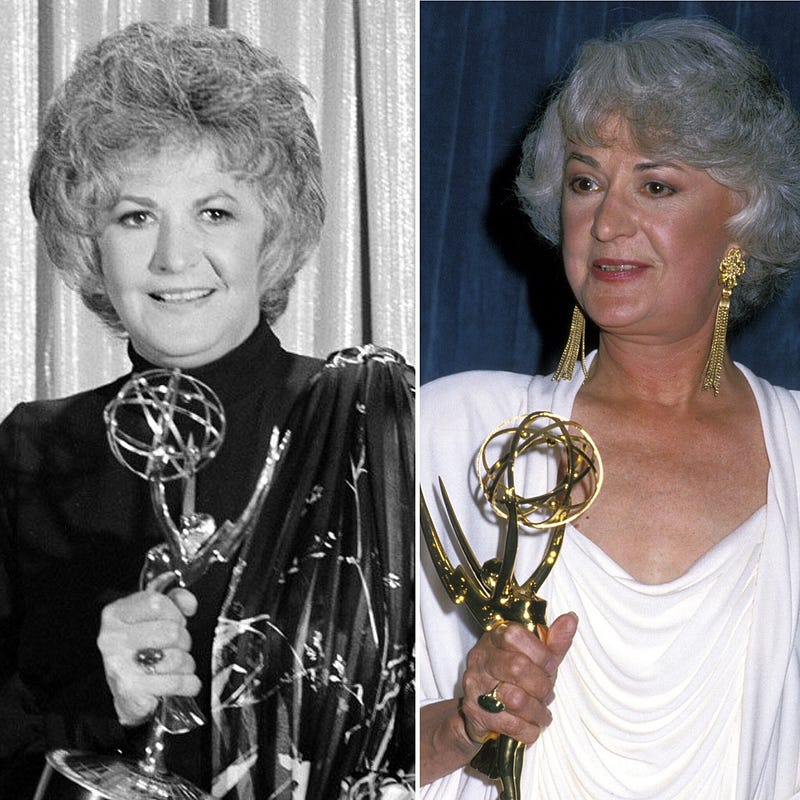
Ten years ago today, Bernice Frankel a.k.a. Beatrice “Bea” Arthur succumbed to cancer at her home in Brentwood at the age of 86. Despite the fact that public appearances were very rare in the final decade of her life, she was so deeply embedded in popular culture by the time of her death that millions who only knew her through her iconic television roles felt like they had lost a close friend when they heard the news of her passing.
Maude
Few actors have the unique combination of talent and luck to create one truly iconic television character throughout the course of their career. Only a handful can say they created two. Bea Arthur is on that very, very short list.
She first took up residence in America’s living rooms when Maude premiered on CBS in the fall of 1972. A spin-off of the long-running and controversial hit sitcom All in the Family, the series chronicled the adventures of Edith Bunker’s cousin Maude Findlay. Maude was an anomaly on television at the time — she was a thrice divorced, politically active, outspoken feminist. During the show’s run, Maude got plastic surgery, was diagnosed with bipolar disorder, cared for her out-of-wedlock grandchild, advocated for humane drug laws, and dealt with her husband’s alcoholism, bankruptcy, and heart attack. And most notably, she had an abortion during the show’s first season (if it sounds scandalous for the lead character of prime time network sitcom to have an abortion now, imagine it 47 years ago before Roe v. Wade was even decided.)
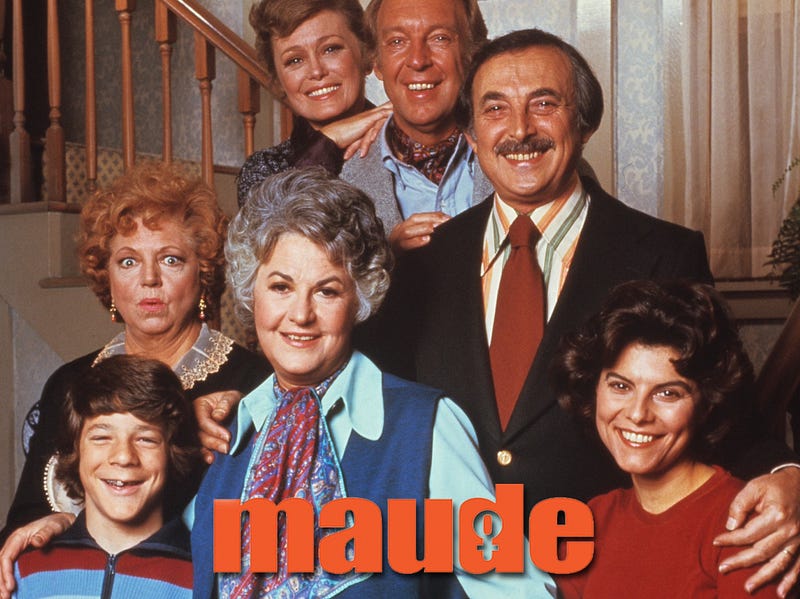
The show was an enormous hit during its 6-year run. It was ranked among television’s top 10 most watched shows for its first four seasons. Arthur was nominated for the Emmy for Outstanding Lead Actress in a Comedy four times and won once. Maude was the source of the hit spin-off Good Times (Esther Rolle’s Florida was originally Maude’s housekeeper). It introduced America to the wonders of Rue McClanahan (Arthur’s future costar on The Golden Girls had a supporting role as Maude’s neighbor, Vivian). And it spawned one of TV’s most memorable catchphrases — “God’ll get you for that, Walter.”
Click here to read my tribute to Maude in honor of its 50th Anniversary
The Golden Girls
Seven years after “Maude” ended its run in 1978, she began a 7-year stint as Dorothy Zbornak on the NBC sitcom The Golden Girls. It was through this series, perpetually shown on cable and in syndication as I grew up, that I developed my deep admiration for Bea.
As most people know, The Golden Girls was a sitcom centered on four “mature” women living in Miami, Florida. Blanche Devereaux (Arthur’s Maude co-star Rue McClanahan) was a former Southern belle whose appetite for the opposite sex had become voracious following the death of her husband. Looking for roommates to share in her living expenses, Blanche invited two women to move into her bungalow’s spare bedrooms. One was a fellow widow, the naive, sweet-natured, perpetually optimistic Minnesotan Rose Nylund (Betty White). The other was recently divorced, short-tempered, tough-as-nails Brooklyn native Dorothy Zbornak (Arthur.) Dorothy’s elderly mother Sophia moved in with them following a fire at her nursing home on the pilot episode. Sophia was a Sicilian spitfire who had reportedly experienced “a stroke that destroyed the tact cells in her brain.” Over the course of 180 episodes, the quartet went through countless paramours, bickered and teased each other ruthlessly, and confronted a stunning array of controversial social issues (including gay marriage, euthanasia, drug addiction, elder abuse, HIV stigma, sexual harassment, homelessness, polygamy, prostitution, artificial insemination, and teen pregnancy). And they did it in an utterly hilarious manner.
Click here to read my tribute to The Golden Girls in honor of its 35th anniversary
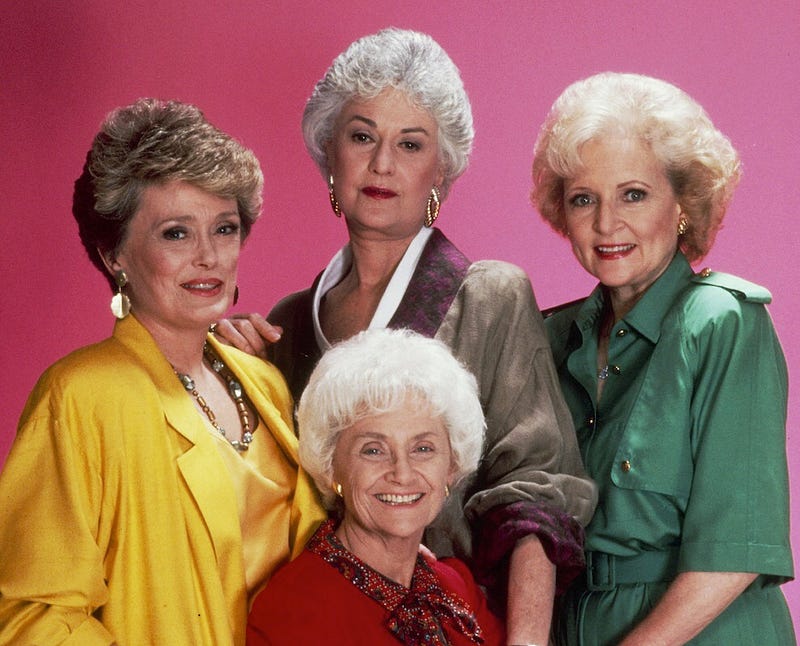
The show was a runaway hit when it first premiered and remained so for its seven-season run. It was one of the top 10 most watched shows on television for its first six seasons. It won 11 Primetime Emmy Awards from 58 nominations, including two for Outstanding Comedy Series and one for each of its four stars. (Only two other comedy series in history have managed to win an Emmy for each member of its ensemble — All in the Family and Will & Grace.) It also won four Golden Globes (including three for Best Television Series — Musical or Comedy), two Directors Guild of America Awards, one Writers Guild of America Award, two Viewers for Quality Television Awards, four American Comedy Awards, and a People’s Choice Award. It also prompted two direct spin-offs — the long-running Empty Nest and the short-lived follow-up series The Golden Palace (after Arthur decided to end her run as Dorothy, the other three women opened a hotel in Miami).
The Golden Girls was hardly a one-woman show. Rather, it was a flawless ensemble featuring four comic geniuses at the height of their powers. Nevertheless, to me the heart and soul of the show always belonged to Arthur’s Dorothy Zbornak. She was by far the show’s most relatable and nuanced character, with her intimidating stature, confident swagger, and razor sharp wit serving as a front for her deep well of insecurities. She had the lion’s share of the show’s most memorable comic and dramatic moments, many of which are chronicled in the list below. She also has the series’ most notable character development. We first see her abandoned by her philandering husband Stan, stuck in a dead-end job as a substitute teacher, endlessly teased by her friends for her lack of sex appeal, and struggling with the return of a mother very angry that Dorothy had her “locked up” in a nursing home. By the series’ end, she is confident, secure in her new family, in love with a man who is worthy of her, and ready to leave the nest.
As Dorothy, Arthur did more with an eyebrow raise, an intense stare, and a featherweight subplot than most actors could do during the entire run of their series. And her performance only gets better with age.
25 Essential Dorothy Zbornak Episodes*
“Guess Who’s Coming to the Wedding” (Season 1, Episode 2). Dorothy’s simmering rage when her daughter’s wedding forces her to reunite with her philandering ex-husband is an acting master class.
“The Operation” (Season 1, Episode 18). Dorothy is at her most vulnerable when she needs foot surgery and has to confront her fear of hospitals.
“Take Him, He’s Mine” (Season 2, Episode 3). Dorothy doesn’t want to deal with her ex so she pawns him off on Blanche, and then is enraged when they hit it off.
“My Brother, My Father” (Season 3, Episode 17). Dorothy has to pretend to still be married to her ex-husband when her uncle (a priest) comes for a visit. (Note: This won Arthur an Emmy in 1987).
“Mixed Blessings” (Season 3, Episode 23). Dorothy’s son arrives and announces that he is marrying a black woman twice his age.
“Sophia’s Wedding (Parts 1 and 2)” (Season 4, Episodes 6 and 7). Sophia impulsively decides to wed, sending Dorothy into a spiral of anxiety.
“The Auction” (Season 4, Episode 11). This episode makes the list simply for Dorothy’s eviscerating takedown of Blanche over a Cabana Club beach towel.
“Love Me Tender” (Season 4, Episode 14). Dorothy starts a passionate sexual relationship with a diminutive, mild mannered man, leading to one of Arthur’s zaniest comic performances.
“Valentine’s Day” (Season 4, Episode 15). Three words: Condoms! Condoms! Condoms!
“Till Death Do We Volley” (Season 4, Episode 19). Dorothy’s rivalry with her high school friend escalates to astonishing heights in this episode that is a great showcase for Arthur’s cunning delivery of insults.
“Sick and Tired (Parts One and Two)” (Season 5, Episodes 1 and 2). After months of suffering from an unexplained illness, Dorothy is diagnosed with Chronic Fatigue Syndrome and finds herself with an unexpected opportunity to give the doctor who condescendingly dismissed her a piece of her mind. This is undoubtedly one of Arthur’s finest hours on the show.
“An Illegitimate Concern” (Season 5, Episode 18). All you need to know is that Dorothy and Sophia participate in a mother/daughter beauty pageant that involves a rendition of “I Got You, Babe” as Sonny and Cher.
“Zborn Again” (Season 6, Episode 7). Dorothy finds herself falling for Stan again, bringing up a flood of complicated emotions.
“What a Difference a Date Makes” (Season 6, Episode 22). Dorothy is reunited with the man who stood her up for her senior prom and realizes that this painful, formative experience didn’t occur as she thought it did.
“The Case of the Libertine Bell” (Season 7, Episode 2). The girls participate in a murder mystery weekend and Dorothy takes it far too seriously.
“From Here to the Pharmacy” (Season 7, Episode 12). Dorothy finds out that her mother has been hoarding money and melts down in spectacular fashion.
“Goodbye Mr. Gordon” (Season 7, Episode 15). Dorothy reconnects with a high school teacher that she had a huge crush on and finds herself heartbroken all over again.
“Questions and Answers” (Season 7, Episode 17). In this utterly ridiculous episode, Dorothy dreams that she is a contestant on Jeopardy! and provides a scathing rebuke of Donald Trump decades before the rest of the world truly caught on.
“Journey to the Center of Attention” (Season 7, Episode 19). Blanche takes Dorothy to her favorite pick-up bar and to everyone’s surprise Dorothy steals attention from Blanche with her beautiful crooning and effortless wit.
“One Flew out of the Cuckoo’s Nest (Parts One and Two)” (Season 7, Episodes 25 and 26). Dorothy unexpectedly finds love with Blanche’s Uncle Lucas in the two-part series finale that features an award-worthy performance from Arthur.
Bonus: “Seems Like Old Times (Parts One and Two)” (Season 1, Episodes 7 and 8). Although, The Golden Girls’s short-lived follow-up series The Golden Palace suffered greatly from the absence of Dorothy, it did feature her back for a superb two-part episode in which Dorothy comes for a visit and tries to take Sophia back to Atlanta with her.
*Yes, I know 25 is a ridiculously large number of episodes for a highlight list. But, seriously, she’s that good.
Other Notable Works
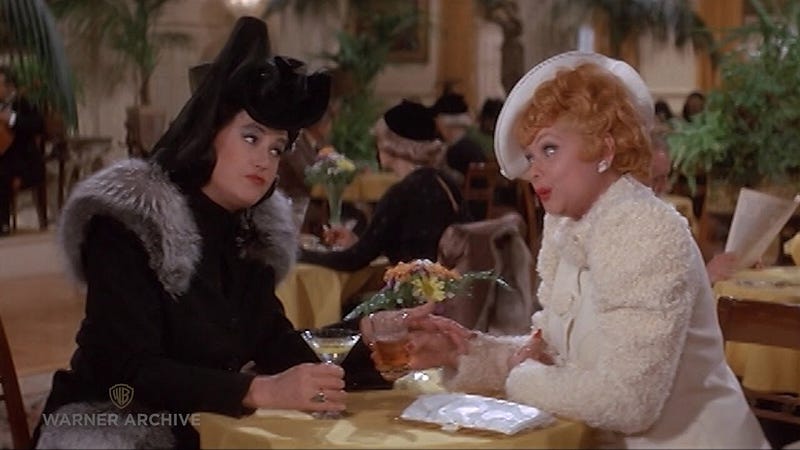
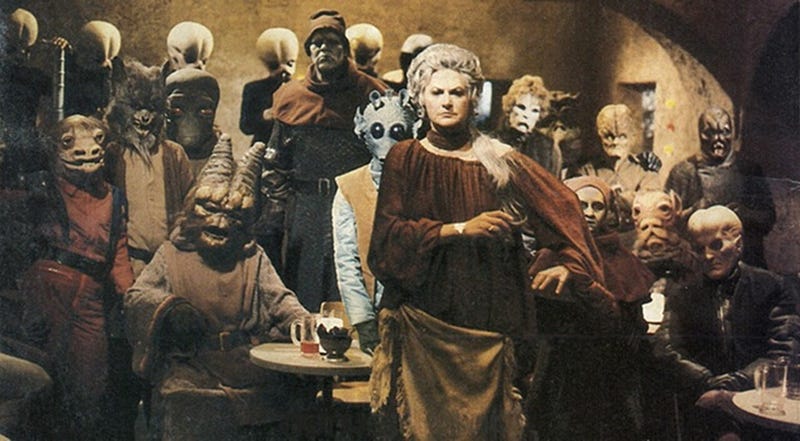
Bea Arthur’s success was hardly limited to these two sitcoms. In fact, she was only recruited for the small screen when All in the Family and Maude creator Norman Lear saw her on stage. Between 1954 and 1966, she appeared in three high profile stage roles — Lucy Brown in The Threepenny Opera, Yente the Matchmaker in Fiddler on the Roof, and Vera Charles in Mame. The latter role was responsible for her winning a Tony, starting a lifelong friendship with Angela Lansbury (the show’s star), and her most high profile film role (in the film adaptation in which Lucille Ball replaced Lansbury as the titular Auntie Mame). Other notable film roles included the Oscar-nominated 1970 comedy Lovers and Other Strangers and her memorable cameo in Mel Brooks’s History of the World, Part I. She also made numerous appearances on other TV series and specials, including The Sid Cesar Show, The Merv Griffin Show, Saturday Night Live, Soap, The Bob Hope Special, Ellen, The RuPaul Show, Malcolm in the Middle, Futurama, and Curb Your Enthusiasm (where she played Larry David’s tough mother in a memorable dream sequence). And no discussion of Arthur’s career is complete without addressing her appearance as Ackmena, the Mos Eisley cantina bartender who is seduced by an amorous alien and then does a musical number in the legendarily awful Star Wars Holiday Special.
The Private Life of Bea Arthur
Born into a family of working-class Jewish immigrants from Europe, Arthur battled considerable illness as a child. In her early twenties, she served as a staff sergeant in the Marines during World War II and upon her discharge worked as a medical technician before deciding to pursue acting. She was married twice, first to fellow Marine Robert Alan Arthur and then to director Gene Saks (with whom she adopted two sons). She was a liberal democrat who was an outspoken advocate for the ethical treatment of animals, LGBT rights, the Jewish community, and the elderly. Her will included $300,000 to the largest LGBT community center in New York City (the Ali Fortney Center). The money was used to open The Bea Arthur Residence for homeless LGBT Youth. Despite her wild success and the brazen characters she typically played, Arthur was described by friend as private, introverted, and shy when it came to her private life. Rather than make Arthur more inaccessible to her fans, it made her all the more relatable.
The Legacy of Bea Arthur
By the time she passed away in 2009, Bea Arthur had seen The Golden Girls have a resurgence in popularity as its reruns were discovered by a younger generation. But she likely would never have dreamed how the show’s popularity would continue to grow. The show continues to attract millions of viewers through its availability on the Hallmark Channel, TVLand, and Hulu. New Golden Girls merchandise is popping up all the time and memes and GIFs involving the show are pervasive on social media.
If Arthur had done nothing more than create the character of Dorothy Zbornak she would have carved a notable place out for her in pop culture history. But she did so much more, personally and professionally. She was a brilliant actress of stage and screen, a singular and dynamic Hollywood personality, and a true humanitarian.
It is one of my greatest regrets that I never got to see her in person at one of the handful of tributes she attended or the one woman shows she performed toward the end of her life (luckily, the latter was immortalized in the live recording Bea Arthur on Broadway: Just Between Friends). But thankfully, we have hundreds of episodes of her classic sitcom work available to revisit time and time again.
Click here to follow me on Medium and Twitter.
Check out other articles I have written about classic television stars:


