
10 Tips From Ray Bradbury to Help You Become a Better Writer
Lessons from Bradbury’s book “Zen in the Art of Writing”
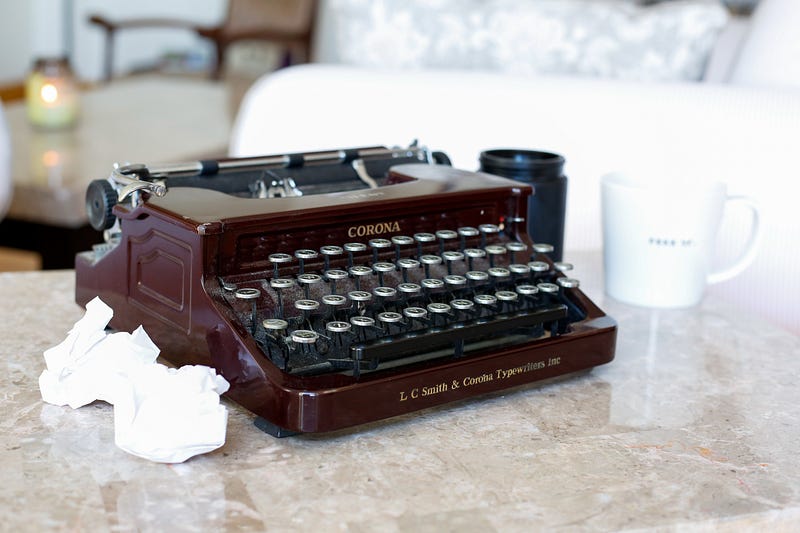
Every writer requires assistance from time to time, whether it is completing research, contacting a publisher, or, in this case, receiving writing tips from a well-known best-selling novelist.
Some authors are willing to share not only what inspired them to write their book, but also the methodology they used to create it. This is the case of Stephen King’s “On Writing: A Memoir of the Craft,” Anne Lamott’s “Bird by Bird,” and William Zinsser’s “On Writing Well.”
But this time, we’ll be able to delve deep into the mind and thoughts of Ray Bradbury, one of science fiction’s most prolific authors. We learn where he found the inspiration for some of his greatest stories and the methodology he used to create them by analyzing his work in “Zen in the Art of Writing.”
Here are ten of Bradbury’s writing tips to help you become a better and more prolific writer.
1. If you want to be a writer, then write
“Write a thousand words a day for ten or twenty years in order to try to give it shape, to learn enough about grammar and story construction so that these become part of the Subconscious.” — Ray Bradbury
No matter how many seminars or writing workshops you attend, the only way to become a writer is to sit down and write until you master the craft.
The best results in a gym come from long sessions working on different parts of the body, transforming your muscles by doing specific exercises for each part of the body.
Likewise, to become a successful writer, you must practice your writing skills and use your loud and passionate voice to raise conflict, create rivalry, and confront opinions, but also practice your soft and quiet voice to create a calm and passionate story to captivate all of your readers.
If you write about friendship and admiration, excitement and peacefulness, or love and hate, your creativity will stay by your side forever. Remember, we all have highs and lows; sometimes we feel as if we could touch the sky, and other times we feel as if we are trapped inside an abyss, struggling to get out.
Write stories about triumph and loss, glory and defeat, love and apathy, or hatred and vengeance. No matter what type of story you create, either a historic or a science fiction novel, a love or a detective play, in the end, you will become a writer. After all, isn’t that what you wanted in the first place?
2. Find your writing cave
“I was driven out of my garage (where I used to write) by my loving children, who insisted on coming around to the rear window and singing and tapping on the panes.” — Ray Bradbury
Humans have known the value of having a place to hide from the elements, sleep, eat, and gather around each other since the dawn of time. Now we search for a place to live, spend time with family, and, for most writers, a place to work.
We end up using some space at home as an office because most of us started this business as a side job or a second income. Clearing the breakfast table, using the bedroom dresser, or, in the most extreme case, sitting on the bed, on a folding table, and using a borrowed laptop.
Whether you have a special place at home, share some garage space, or have your own office. Make room for your dictionary and thesaurus, your computer, a motivational note or postcard, and your list. Then sit back, relax, and let your creativity flow.
3. Write as an animal
“Be a chameleon, ink-blend, chromosome change with the landscape. Be a pet rock, lie with the dust, rest in the rainwater” — Ray Bradbury
Unlike humans, animals act on instinct rather than overthinking. However, according to The American Institute of Biological Sciences, we share basic emotions such as joy, fear, love, despair, or grief, and in some primates, embarrassment, but not secondary emotions such as jealousy, or guilt.
Learn from a lizard the ability to stand still, observe your surroundings with a 360º view, adapt to everything, and remain ready to strike your prey. Or the speed at which a hummingbird sucks honey from a flower while beating its wings 10–15 times per second.
Stay as still as a rock, capturing everything, and then dash to your desk as quickly as a peregrine falcon to write your story. Allow the words to flow like a buffalo stampede, and then cut and edit your work with the patience and skill of a spider weaving its web.
Every writer must learn to adapt and react to nature. If you don’t take the time to observe the world, you might find yourself trying to replicate someone else’s accomplishments while missing out on an opportunity.
4. Write from your gut
Dickens, Twain, Wolfe, Peacock, Shaw, Molière, Jonson, … El Greco, Tintoretto... Mozart, Haydn, Ravel, Johann Strauss (!). Think of all these names and you think of big or little, but nonetheless important, zests, appetites, hungers. — Ray Bradbury
Ray Bradbury defines “ZEST” as the most important quality in writing in his book “Zen in the Art of Writing.” But what exactly does this mean? According to the Collins Dictionary, Zest is “anything added to impart flavor, enhancing someone’s appreciation, interest, or charm.” In other words, the sense of vitality, energy, or spirit that pervades your work.
You can see El Greco and Tintoretto’s love for their work in their paintings, and you can feel Mozart’s “Requiem” or Ravel’s “Bolero” passion in every chord. As a result, if you don’t write from the gut, with passion, love, or zest, you’re only a half-baked writer looking for profit or fame.
Find that image, piece of news, or article that moves you and use it to write about it from your heart, with every single emotion, hope, or burst of rage, and then type.
Sit in front of your old Remington, computer, or phone and frantically type 500, 1000, or 5000 words until you are exhausted and satisfied with the work done.
5. Look for the muse within you
Art will fly if held too lightly, Art will die if held too tightly, Lightly, tightly, how do I know Whether I’m holding or letting Art go? — Oscar Wilde
Every artist has sought their Muse for inspiration since the Greeks. Do you imagine yours as the Greek goddess, dressed in ferns and holding a harp, or as the angelical figure with a white robe and long wings whispering ideas into your ear?
Let’s face it. You can wait years for your Muse to assist you when it is our conscious and subconscious minds that transform every experience, image, and emotion into fuel for inspiration.
Don’t wait for some divine being to appear and gently whisper ideas into your ear. Consider all of your childhood’s sounds, smells, friends, and pets, and tell their stories.
Stop using your Muse as an excuse to procrastinate and waste time staring at an empty sheet of paper or scrolling through your phone. Instead, look inside and remember what made you happy, afraid, or sad, when you grew up, and as Bradbury based his stories “The Jar,” “The Dwarf,” or “The Small Assassin,” on his childhood experiences, bring your memories to life.
6. Make a list and cross some names
“I began to make lists of titles, to put down long lines of nouns. These lists were the provocations, finally, that caused my better stuff to surface.” — Ray Bradbury
Bradbury used to get out of bed every morning in his early twenties and jot down a series of words. THE LAKE, THE NIGHT, THE BABY, THE OLD WOMAN, THE CROWD, THE DOG, THE CARNIVAL, THE DWARF, and so on were on the list.
Some of his ideas became titles and the basis for his stories, such as “The Lake,” “The Night,” and “The Crowd.” Some items on the list as THE DOG inspired “The Emissary.” Others, like THE OLD WOMAN, evolved into “There Was an Old Woman” (a lady who refuses to die and demands her body back from the undertakers) and “Season of Disbelief” (where some children refuse to believe the very old woman was ever young).
So, start a list with whatever comes to mind, such as something interesting or funny you saw today, or a note in a newspaper that piqued your interest. Then choose an item to serve as the foundation or inspiration for your next article, and write.
7. Turn words into ideas, ideas into images, images into stories
“I am that special freak, the man with the child inside who remembers all. I remember the day and the hour I was born. I remember being circumcised on the fourth day after my birth. I remember suckling at my mother’s breast.” — Ray Bradbury
Bradbury possessed an extraordinary ability to transform a simple word into an idea, the idea into images, and the images into a story. The best example is how he remembered the day and hour he was born, as well as how his father took him to be circumcised four days later.
He imagined a baby based on these memories and the words “THE BABY.” creating a story about a baby who had developed all of its senses and resented its mother, father, and the doctor who evicted him from its mother’s womb, and wanted to kill all of them in retaliation. As a result, he created “The Small Assassin.”
This example can be found in many of his stories, such as “The Veldt,” in which he linked the words “PLAYROOM,” “AFRICA,” “TELEVISION,” and “LION” to create a story about a three-dimensional playroom in the future. Going even further, he wrote stories for his book “The Illustrated Man” by combining several words and memories from a carnival in his hometown.
It’s now up to you to master this technique and turn a simple word into an idea, an idea into images, and the images into stories, all while writing your next bestseller.
8. Fill your readers with emotions
“The final action is passed on from creator to reader-viewer whose job it is to finish off the laughter, the tears, the violence, the sexuality, or the sickness.” — Ray Bradbury
Nobody enjoys a bland sandwich, a tasteless meal, warm squishy fruit, or grabbing someone’s sticky hand. Similarly, no one likes reading emotionless articles, such as those found in your dentist’s waiting room medical magazines.
As writers, our job is to create tensions that lead to laughter, sorrow, violence, or love, and then to let the reader laugh, cry, hate, or fall in love with our stories. Hoping our audience bursts into tears, laughs, or sinks into his seat terrified. This should be the primary motivation for our work.
Bradbury scares the bejesus out of us with his work in “The October Game” and “Come Into My Cellar.” Other stories, such as those in “The Illustrated Man,” take us to the magical world of a carnival.
Use your emotions as a painter’s palette to mix colors and create a beautiful sunset in your work. Or, why not, a horror story so terrifying that you keep looking around the corner, certain that something is waiting to grab you from behind your seat?
9. Never take “No” for an answer, and always share your work
“What if I had never dined with the last editor I met, Walter I. Bradbury from Doubleday, who asked the old depressing question — ‘Is there a novel in you somewhere?’” — Ray Bradbury
Can you imagine life without Stephen King’s “Carrie,” Joseph Heller’s “Catch-22,” Frank Herbert’s “Dune,” John Grisham’s “A Time to Kill,” or Canfield and Hansen’s “Chicken Soup for the Soul”?
Such books would never have seen the light of day if it weren’t for the author’s tenacity. All the authors received dozens of rejection letters, with “Chicken Soup for the Soul” receiving 144.
Bradbury wasn’t the exception. Hundreds of times, his short stories were returned with a rejection note. But he didn’t give up; he kept pushing them until, one day, during a meeting with Doubleday’s Walter I. Bradbury, he sewed them together to create a tapestry that became “The Martian Chronicles.”
All of these authors, along with hundreds of others, decided to share their work and refuse to accept no for an answer. As a result, we can now have those masterpieces on our bookshelves.
Learn from all of them, share your work, and send it to publications, no matter how many rejection letters you receive. Simply make any necessary adjustments and try again.
For some of the best rejection notes, and how the authors reacted to them, check “Ten of the Best Rejection Quotes Made by Successful Writers” and “7 Famous Writers Share Stories That Help You Manage Rejection in Life.”
10. Believe in yourself
“Why is it that in a society with a Puritan heritage, we have such completely ambivalent feelings about Work?” — Ray Bradbury
You decided to devote your life to writing. To share all the images and stories in your head, and show the world how your teachings can improve their lives. But sometimes you can’t even persuade yourself. If you don’t believe in you, how can you expect others to believe in you?
Remove all limiting thoughts from your mind and follow Bradbury’s recipe for achieving “Zen in the Art of Writing”: WORK, RELAX, DON’T THINK.
Let’s start with WORK because it’s where your career will revolve for the rest of your life; become its partner, not its slave. Instead of writing for money or fame, connect with what is truly unique about you, your creativity. Seek fame and fortune as a reward for a job well done.
Don’t think about them while you’re typing; instead, work until you’re exhausted but satisfied. Consider the greatest reward a writer can receive: when someone rushes up to you and says, “Your latest story was really wonderful!” and only then, is writing worthwhile.
Later RELAX, take some time to read and edit your work, enjoy the satisfaction of a job well done, and then rest to recover from the marathon you just finished while preparing for the next one.
At the same time, DON’T THINK about what others may say; instead, let it sit for a few days and then read it again to see if you can spot any errors and correct them. When you have finished polishing your work and are ready to share it, do so.
Take away
There is always room for improvement, no matter how long you have been writing or how successful you are. Either by learning a technique or by comprehending how a specific story came to be.
Finally, learning one thing to improve your job, one idea for where to get inspiration, or a different perspective on what you’re doing now can help you become a better writer.
Maybe you’re thinking, what’s the point, I’ve already heard this. Keep in mind what André Gide said:
“Everything that needs to be said has already been said. But since no one was listening, everything must be said again.” — André Gide


