
7 Famous Writers Share Stories That Help You Manage Rejection in Life
Stop whining that some publication rejected your article. Get your shit together and start writing a new one.
On Facebook, a friend said he was sad since a publication rejected his article.
I tried to explain that it is better to be rejected from a publication than to have nothing to send.
Besides, he was in the company of talented writers.
Sometimes, the most remarkable writers get rejected after being famous.
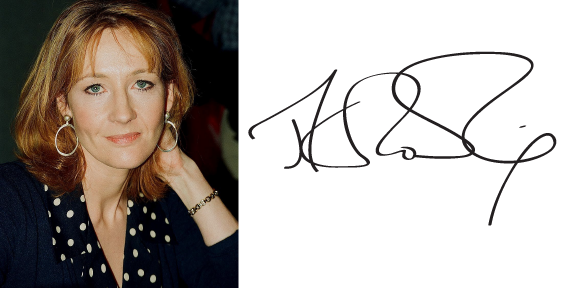
I wasn’t going to give up until every single publisher turned me down, but I often feared that would happen.
— J.K. Rowling
Twelve different publishing houses rejected “Harry Potter and the Sorcerer’s Stone.”
Bloomsbury published it and became the first in the best-selling book series of all time. With 500 million copies sold.
When Rawling sent “The Cuckoo’s Calling” under a pseudonym, many publishers rejected it.
Constable & Robinson, a publishing house, wrote, “they could not publish “The Cuckoo’s Calling” with commercial success.”
A letter from Creme de la Crime publishers said they became part of Severn House Publishers. They were “unable to accept new submissions at the moment” (remind you of something?).
She submitted her work t0 more publishing houses before Sphere Books published it and sold about 1,500 copies. When The Sunday Times newspaper divulged her name, they sold over 385,000 copies around the world.
So, if any publication rejected your article, try to ask why, make the changes, and re-submit again.
If you like Green Eggs and Ham
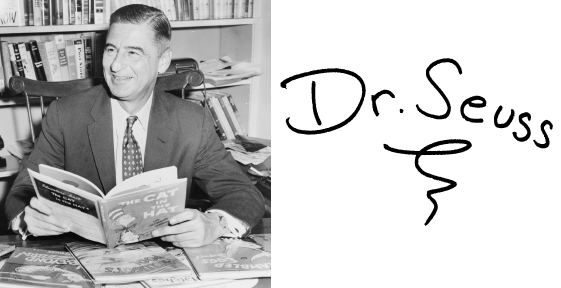
“You have to be odd to be number one.”
— Dr. Seuss
No matter how good your work is or how good you think you are, someone will reject your article.
Even if you feel down or insecure about it, keep sharing your work.
Theodor Geisel, a.k.a. Dr. Seuss, had his first book rejected many times.
He submitted it to twenty-seven publishers, and they all turned it down.
The principal reason they all gave was that there was nothing similar on the market, so of course, it wouldn’t sell.
After the last publisher turned him down, he went home to burn the book.
Walking back home, he found a friend who asked him to read the manuscript.
Later his friend read the manuscript and published the book.
“I believe in luck. If I’d been going down the other side of Madison Avenue, I would be in the dry-cleaning business today.”
Remember, never stop sharing your work. You’ll never know when you are going to find the publisher for your next best-seller.
It is not about big men or little women.
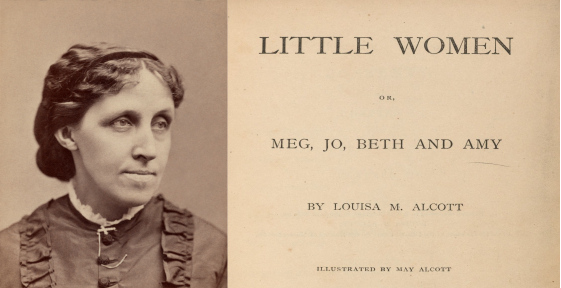
“I am not afraid of storms, for I am learning how to sail my ship.”
― Louisa May Alcott
Louisa May Alcott worked as a governess in Dedham, Mass., where she wrote her essay “How I Went Out to Service.”
She sent her work to Publisher James T. Fields, and when he rejected her work, he answered. “Stick to your teaching, Miss Alcott. You can’t write.”
She returned to Boston working as a governess, reading, and working to improve her writing. During the winter of 1862, Louisa worked as a nurse at the Union Hotel Hospital in Georgetown. Later she helped in Virginia as a Civil War nurse.
She worked in the Merry’s Museum children’s magazine and became the major contributor.
In 1867, Thomas Niles, the editor, asked her to write a book for girls that became “Little Women.”
If someone rejected your article, read more on how to improve your work, and learn how to sail your ship.
Don’t be afraid of rejection. Instead, use fear as inspiration.
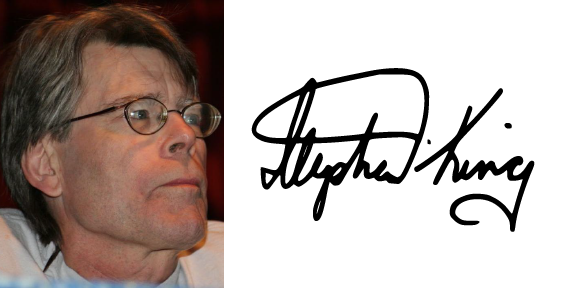
“If you want to be a writer, you must do two things above all others: read a lot and write a lot. There’s no way around those two things that I’m aware of, no shortcut.”
— Stephen King
Sometimes you’ll get frustrated with your work and want to throw your first draft into the garbage.
You are not alone. When Stephen King wrote the first draft of “Carrie,” he was the first to reject his story. Frustrated and feeling he was wasting time, he threw it out, thinking it would never sell.
The next day his wife pulled his work from the trash and told him to finish. He ended the draft and submitted it.
The publisher rejected the draft with a note that read: ‘We are not interested in science fiction which deals with negative utopias”.
Thirty publishers rejected his manuscript before Doubleday picked it.
“Carrie” sold over a million copies and become a successful film.
King has published over 54 novels and 200 short stories and won many awards for his literary contributions.
“Amateurs sit and wait for inspiration, the rest of us get up and got to work.”
— Stephen King
Improving your work by reading and writing is always the best advice.
Never drown in rejection.
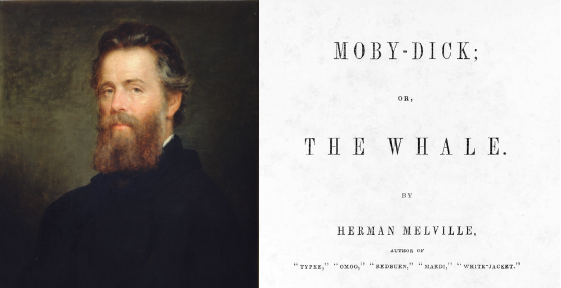
“I try all things, I achieve what I can.”
― Herman Melville
Many times, after making the suggested changes, the same publication might accept your work.
Many publishers rejected Herman Melville’s “Moby-Dick,” with creative suggestions.
Peter J. Bentley of Bentley & Son Publishing House wrote: “First, we must ask, does it have to be a whale?”
Melville got his book published — by none other than Richard Bentley, from Bentley & Son. Now it is one of the most read novels of all time.
Next time you feel like quitting, look in the mirror, take a deep breath, and say: “Call me Ishmael.”
Remember, the Sun rises every day.
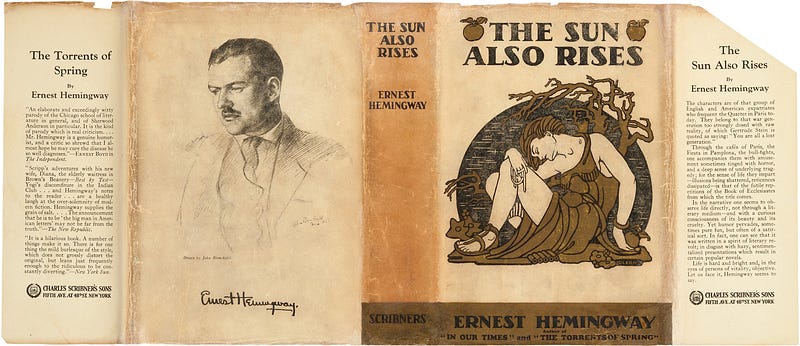
“It’s none of their business that you have to learn how to write. Let them think you were born that way.”
— ERNEST HEMINGWAY
Ernest Hemingway is one of the most-read authors. But in 1925, he sent his draft of “The Sun Also Rises” to Moberley Luger of Peacock & Peacock publishers.
When Luger returned his work, he wrote:
“If I may be frank, Mr. Hemingway — you certainly are in your prose — I found your efforts to be both tedious and offensive.
I wouldn’t be surprised to hear that you had penned this entire story locked up at the club, ink in one hand, brandy in the other.
Your bombastic, dipsomaniac, where-to-now characters had me reaching for my own glass of brandy.
What Peacock & Peacock is looking for in a manuscript is innovation and heart. I’m afraid that what you have produced here does not fit that description.”
Can you imagine what this letter of rejection could do to any 26-year-old author? But not to Hemingway. He saved the letter and sent his work to another publishing house. Scribner’s published it the following year.
Learn from rejection. And improve your work by reading Hemingway’s rules or by using the Grammarly or Hemingway app.
Never give up on your rejected work.
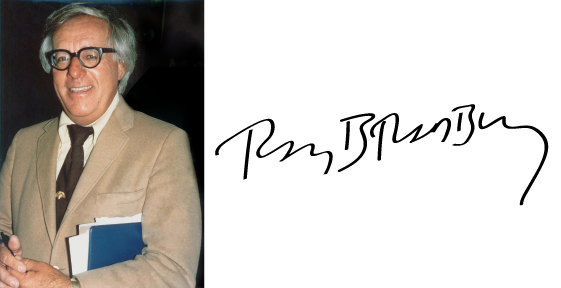
“You have to know how to accept rejection and reject acceptance.”
— Ray Bradbury
Ray Bradbury sent short stories to several magazines when he was fifteen years old. However, publishers sent them back.
He once said that he pinned all the rejection letters on several walls at his house.
I persevered and wrote a thousand more dreadful short stories, which were rejected in turn.
— Ray Bradbury
In his forties, he began to sell short stories. From then on, his books contain at least seven previously rejected.
So, dear Snoopy, take heart from this. The blizzard doesn’t last forever; it just seems so.”
— Ray Bradbury
Never discard an article that someone rejected. Instead, go back and read it from time to time, then give it another try in a new publication.
How many are too many?

“Most of the important things in the world have been accomplished by people who have kept on trying when there seemed to be no hope at all.”
— Dale Carnegie
Well, a publication rejected your article!
Tough luck, get your shit together and try again.
How many chances are you going to give your article until you give up?
Please think of the number you are willing to give it a try, 20, 30, 60, 100, or maybe more than that.
Before you quit, here are some of the most rejected books of all time:
- Richard Hooker, MASH (21).
- Joseph Heller, Catch-22 (22).
- Frank Herbert, Dune (23).
- John Grisham, A Time to Kill (28).
- James Patterson, The Thomas Berryman Number(31)
- Kathryn Stockett, The Help (60).
- Lisa Genova, Still Alice (100 rejections or non-replies).
But I think the winner is Chicken Soup for the Soul, rejected 144 times.
Can you imagine what Jack Canfield and Mark Victor Hansen felt? That means that publishers rejected their book 43 times more than the 101 stories inside.
How many chances would you give your story to be on the New York Times Best Seller list continuously for five years and to sell 500,000 copies?
I get by with a little help from my friends.

“Friendship is born at that moment when one person says to another, ‘What! You too? I thought I was the only one.”
– C.S. Lewis
The best way to overcome rejection is with a bit of help from your friends. Sometimes we need someone who understands us because they have been in the same place.
Here are some quotes from people who understand you because someone rejected their work.
“I love my rejection slips. They show me I try.” — Sylvia Plath
I wasn’t going to give up until every single publisher turned me down, but I often feared that would happen, J.K. Rowling
I got so many rejections for CHOCOLAT that I made a sculpture… :-)
“I am good at walking away. Rejection teaches you how to reject.” ― Jeanette Winterson
“When you give yourself permission to communicate what matters to you in every situation you will have peace despite rejection or disapproval. Putting a voice to your soul helps you to let go of the negative energy of fear and regret.”
― Shannon L. Alder
“Every time I thought I was being rejected from something good, I was actually being re-directed to something better.” ― Steve Maraboli
“I know that when a door closes, it can feel like all doors are closing. A rejection letter can feel like everyone will reject us. But a closed door leads to clarity. It’s really an arrow. Because we cannot go through that door, we will go somewhere else. That somewhere else is your true life.”
― Tama J. Kieves
“Rejection is a challenge.” ― Veronica Purcell
“Have you had a failure or rejection? You could get bitter. That’s one way to deal with it. Or…you could just get BETTER. What do you think?” ― Destiny Booze
“Rejection is more valuable than inaction. All that I have learned until now has been because of rejections. Inaction didn’t teach me a thing.” ― Neeraj Agnihotri
“So many people will tell you ”no”, and you need to find something you believe in so hard that you just smile and tell them ”watch me”. Learn to take rejection as motivation to prove people wrong. Be unstoppable. Refuse to give up, no matter what. It’s the best skill you can ever learn.”
― Charlotte Eriksson
“Being angry, resentful, or saddened by rejection can suck the sweetness out of acceptance.” ― Charles F. Glassman
“Perfecting and selling your writing is a lifelong task. If you are a persistent writer, you can expect your abilities to improve with time. Success is the ability to go from failure to failure without losing your enthusiasm.”
— Winston Churchill
“You must keep sending work out; you must never let a manuscript do nothing but eat its head off in a drawer. You send that work out again and again, while you’re working on another one. If you have talent, you will receive some measure of success — but only if you persist.”
— Isaac Asimov


