
Ten Questions About Home Education Answered
Following are some questions frequently asked about the resources, books, groups, style of home educating I use.
Many of these I will unpack further in future articles. For now, enjoy this snapshot peek into our home education journey.
Were you home educated?
No. I attended government schools (2 primary, 1 middle, and 2 senior high) across three states from 5 to 18 years old.
Parenting and child-rearing have changed since I was a child. It was much more relaxed. I had a lot more freedom, time of my own, and time with friends to play. Exploring, adventuring, and learning through my experiences were regular parts of my childhood.
Did you always know you were going to educate your children from home?
With the youngest, yes. My mom had known a home-educating family and introduced the idea to me when my oldest two were toddlers. I started considering home education then, but that marriage ended and I didn’t see a way to go forward with home education.
Fast forward 10 years, I was remarried and the seed of home education was still planted in me. When I brought it up to my partner, he was open to it. We began our deschooling (learning how learning happens naturally outside the classroom and shifting our mindset away from the classroom model of teaching) journey when our daughter was just an infant.
What are your three favourite books in your home library for home educating?
I take this to mean resources for myself and that list is easy:
- The Brave Learner by Julie Bogart In her book, Bogart shares her knowledge and experience of home educating her five children over the course of 30 or so years. She is honest in the joys and challenges home educating was and is, and shares how at one point, she enrolled them all in school for a year. She talks openly about how there is no one perfect style or curriculum. The magic comes from embracing each and every day for what it presents. Focus on joy and relationships. Learning will happen.
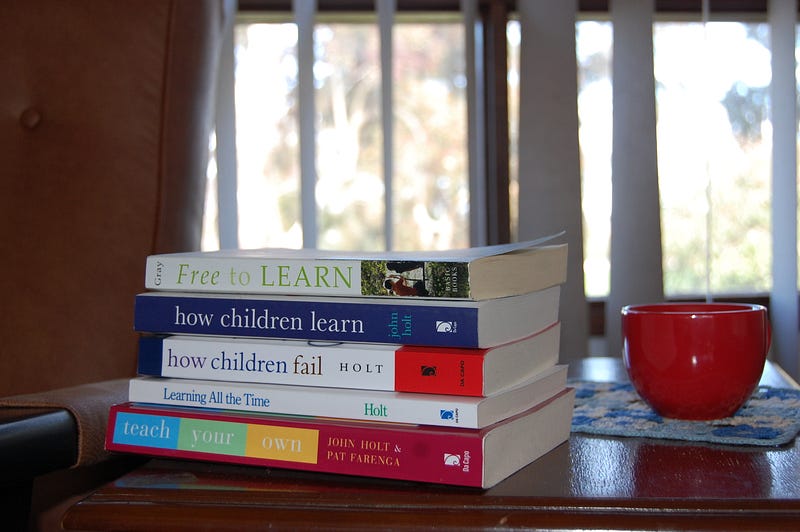
- Free to Learn by Peter Gray Gray paints a solid picture of the evolution of learning over time and in various cultures. He connects it to children’s development. Our modern, western government and private schools have snuffed our children’s freedom to learn with their hyper-focus on academia, by restricting movement and stealing away their autonomy and joy of learning. Learning is as natural as breathing and children need environments where they can explore, create their own stories, have adventures, and make their own choices, do experiments. Gray ends his book with calls to action which he has implemented side by side with Lenore Skenazy in their non-profit organisation called Let Grow.
- How Children Fail; How Children Learn; Learning all the Time: and Teach Your Own all by John Holt All of John Holt’s books I have read have had great value and influence on me and my parenting style. I am always a changed person as I close the cover. His powers of observation of children and himself were phenomenal. He was a lifelong learner which is obvious in the later publications of his earlier works where he notes how his own thoughts about what was happening have changed and evolved. Early on, Holt aimed to revolutionise change in the schools, but later he came to realize this was futile. He then shifted his focus to supporting and advocating on behalf of the home education community which was building up at that time in the USA. This was in the 60s and 70s. Holt died in 1985, but his books continue to be a cornerstone in home education communities around the world.
Are you the only teacher?
I’m unsure how to answer this question mostly because I don’t now, and never have, seen myself as the teacher. I am as much of a learner as my daughter is. My role in my daughter’s home education journey is facilitator, encourager, and administrator.
This question comes from a perception that children are empty vessels to be filled with knowledge passed from a teacher’s brain to the child’s. This is not the case. Children, in fact, all people, are learners. They learn through observation, interaction, and experiences.
So, yes, my daughter learns from me, often my worst habits as she observes them.
My daughter learns from everyone she crosses paths with. Some are lifelong lessons. Others only apply to the moment. Many we unpack when we get home and talk through for deeper understanding: how the librarian didn’t respond to her questions but talked to me (how rude). how the cashier at the grocery store did talk with her directly (lovely). how doctors (in general) don’t value the homeschooling path as a viable educational path (their own lack of knowledge and understanding), etc.
What is your favourite place to buy curriculum?
If and when I choose to purchase a curriculum, it is a curriculum created by home educators for home educators. These include:
- History Odyssey and Real Science Odyssey both by Pandia Press
- Brave Writer by Julie Bogart
I know there are others including Simply Homeschool that I have heard good reviews of, but I haven’t tried it.
A curriculum is not required for learning to happen. It is one of many tools which a learner can use, but it is not the only one.
Do you have a set budget for home education?
Yes, sort of. We have two lines in our budget related to home education. One is for supplies and curriculum types of purchases. The other is for outings and excursions.
Each of these categories is like a bucket of money sitting in our bank account for us to spend as needed. Once it is spent, it is quickly refilled, so it is ready for the next opportunity.
Our supplies and curriculum bucket have more in it than the outings and excursions bucket does, but we spend more on outings and excursions in a year than we do on supplies and curriculum. I will write a future article about our budgeting system.
What are your must-have home education supplies?
- library card
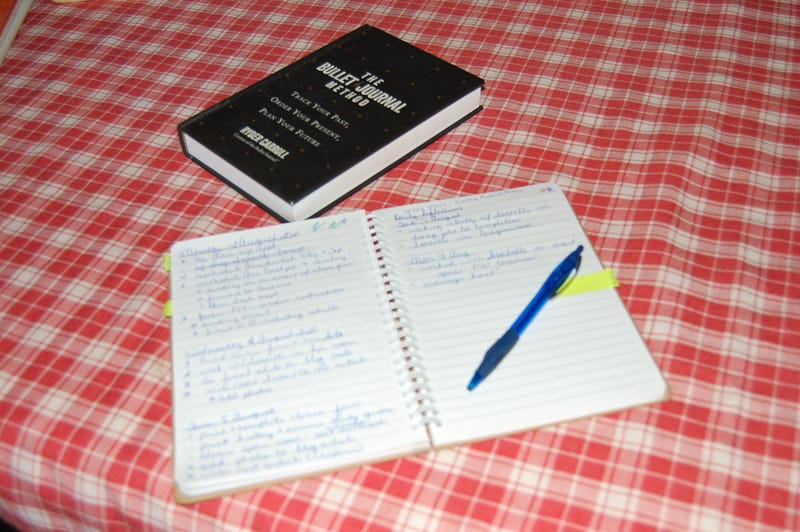
- bullet journal
- open mind
- open heart
- friends and community
What are your favourite and least favourite subjects to teach?
I love them all. Some are more interesting to me than others, but that is just life. Everyone has their preferences and strengths. It is best to outsource topics that interest me less because my lack of interest isn’t fair to my daughter. Co-operative learning is a great resource in home education communities.
Are you involved in co-ops and/or groups? What is it like?
We have been in co-ops although we aren’t in any right at this moment. Some co-ops are led by adults and for younger children, this is more true than as children get older and more independent in their learning. The adult role shifts from very much hands-on to more of an advisory or mentoring role.
Groups can be activity or interest-based. Some are purely social. Others are learning-focused. It just depends on what families are looking for and willing to organise.
What is your approach, style, philosophy to home education?
Eclectic. Because life is eclectic. There are many, many styles and philosophies that home educating families can choose from. And they all are great in their own ways. Some are similar to each other. There is a bit of overlap in some of them.
For us, if I choose one and say THIS is it. THIS is the style of home education we will do from now on, we are denied access to all the opportunities that may cross our path that don’t fit within that particular style. That would be a great disservice to my daughter. Tomorrow she may develop a new interest, she may developmentally be ahead of what a certain style offers at her age, she may need to take time off due to illness, and so on.
We just don’t know what tomorrow will bring and we enjoy the flexibility that home education allows us. It gives us freedom, so why would we box ourselves in?
What about you? If you are a home educating family, how do you answer these questions? What further questions do my answers bring to mind? Let’s talk about them in the comments.
When you make a purchase through any of these links, I will receive a small commission at no extra cost to you. Thank you for supporting our homeschool journey.
Previous article: I Want to Homeschool My Children, But . . .
Next article: Applying For vs Registering to — Homeschool My Children


