
10 Fascinating Facts You Should Know About the Byzantine Empire
The glorious Byzantine Empire is known for its wonders, but there are other things you should know about.
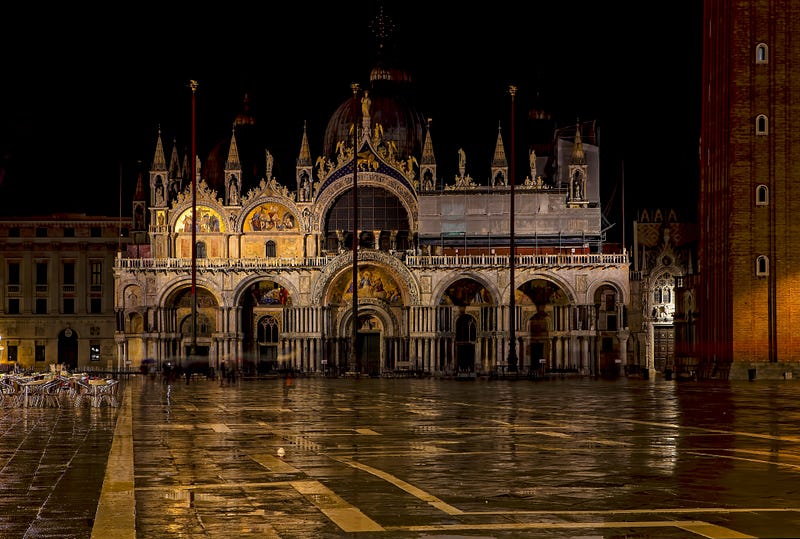
The great Roman Emperor, Constantine I, established the Byzantine Empire in 330 A.D. with its capital as Constantinople in Byzantium — an old Greek colony. The empire was built on the Eastern side of the Great Roman Empire and flourished to be the most powerful, rich, and influential till 1453 A.D. when it fell to Ottoman Sultan Mehmed II.
The Byzantine Empire was a site of great learning and was famous for its architectural designs and engineering, literature, and traditional arts. However, apart from these things, there are other things you should know about the Byzantine Empire.
Here are the 10 fascinating things you should know about the glorious kingdom of antiquity:
1# It wasn’t called the Byzantine Empire
It might sound strange to you, but back then, its inhabitants did not call it the empire Byzantine.
It was called so only in the 18th and 19th-century scholars and intellectuals by reminiscing the old memories of the Empire. The citizens of the empire always associated it with the Roman Empire, even after the fall of the Western Side. The citizens of the Byzantine Empire were predominantly Greek-speaking, but they adopted the Roman culture and assimilated it in every aspect of their life, such as games, laws, and rituals.
Even the Ottoman emperor Sultan Mehmed II adopted the title ‘Caesar of the Rome’ when he conquered Constantinople when he was only 21. But over the years, despite the strong influences of Roman culture, the distinctive features of Greek culture reemerged and were developed in Byzantine.
2# Byzantium’s most powerful emperor was of a humble origin
Justinian I was the most influential of the Roman Emperor who ruled from 527 to 565. His ruling was marked by recapturing the lost territories during successive wars with the barbarians.
He also built various glorious buildings of which the cathedral Hagia Sophia, an architectural wonder of antiquity, that still stands tall in the city of Istanbul, Turkey.
He also compiled the Corpus Juris Civilis, a remarkable codification of Roman Laws into a compendium. The modern jurists still look to Corpus Juris Civilis and regard it as the bedrock of the modern legal system.
However, you will be amazed to know that he came from a humble origin. He was the nephew of Justin I and was born to a peasant around 482 in the Balkans.
Justin I, his uncle, who was a soldier of the Byzantine Empire who later become emperor by outmaneuvering his rivals, took Justinian with himself. When Justin I died in 527 A.D., Justinian succeeded him as an emperor.
3# Constantinople was built to serve as a capital
Byzantium was an old and abandoned Greek colony located on Bosporus Strait that divides Europe and Asia.
When Constantine became the emperor, he didn’t want to set his court in the decaying city of Rome. Besides, he was fed up with the city and wanted to shift his court to a new place.
So, he chose Byzantium in 324 and built a magnificent city with public buildings and universities within six years. He also built defensive walls around the city that protect it from various attacks over 1000 years.
Did you know? Constantine named it ‘Nova Roma’ means new ‘New Rome’ in 330, but very soon it got the name of Constantinople and become famous for it throughout the world. The name was adopted from the name of its creator — Emperor Constantine.
4# During the Nika Riots rampaging sports fans almost destroyed the empire
Just as modern time has diehard fans of sports, Byzantine Empire too was famous for sports and had various teams and their fans.
Chariot racing was a famous sport that had two teams — the Blues and the Greens. The fans of each team would support it by wearing its color — either blue or green.
But these supporters were turned fanatic and violent when two of their leaders were executed by the government. The violence quickly turned into insurrection and for weeks, the Greens and the Blues rioted in Constantinople. These rioters burned buildings, openly challenged the emperor’s authority, and even tried to attack Emperor Justinian.
The emperor, notwithstanding, the rising power of the rioters, was trying to flee the city but was persuaded by his wife to fight against the instructors and claim back what is his.
Encouraged by his wife, Theodora, he sent mercenary troops to kill ambush the rioters in their headquarters and to kill all of them. The result was a mass killing and almost 30,000 people died that day.
5# Use of mysterious incendiary liquid to ward off the enemy
The Byzantine Empire was admired by other kings and powerful nations such as Russians and Arabs.
They tried many times to capture it but were unsuccessful in their attempts. Partly because of the defensive walls around the city that blocked the invaders as it was difficult to get through the three-layered defensive walls and partly because that the Roman Army used a mysterious incendiary liquid called Greek Fire and Napalm.
We don’t exactly know that what substance was used that could lit fire even to water or even to anything as the recipe is lost to the history, but they might have used a mixture of petroleum, sulfur, and saltpeter.
According to the historical accounts, it was a thick and sticky substance that was used by the Byzantine navy to burn the enemy’s ships in the sea. Once they would spray the substance on the surface of water or anything else and would set fire to it, it won’t be distinguished by water or anything else easily.
This substance saved Byzantium on many occasions from Russians and Arab invaders in the 7th, 8th, and 10th centuries.
6# A severe punishment for the enemy
The Byzantium politicians were not prone to killing their enemies or rivals. Instead, they liked to decapitate or mutilate them.
They would see that the dethroned emperor or rival had his nose, tongue, hand, or feet cut off instead of killing him. They would sometimes resort to blinding their enemies to render them useless to lead or strive for political superiority.
However, this didn’t work always, no matter how they despised a mutilated person. When Emperor Justinian II was dethroned, they cut his nose and sent him into exile. He came back after 10 years with a prosthetic golden nose and reclaimed his throne.
7# The Crusaders sacked the capital of the Byzantine
When the Crusaders were assembled in Venice in the 13th century to take Jerusalem from Turk Muslims, they sailed to the Middle East for the Fourth Crusade.
But during their voyage, they exhausted their cash and food; they sailed towards Byzantine territory. Their attack was also encouraged by the clash their Western Catholic Church had with the Orthodox Byzantines.
They were also persuaded to replace a dethroned emperor and their sail will be funded by the empire, but the agreement fell flat. Outraged by the failure of the agreement, they sack Constantinople, burned the buildings, looted the treasures, riches of art, and relics of religion as war booty.
They also installed a Latin empire there that almost shadowed the glory of the declining empire that wasn’t regained then.
8# The rise of the Orthodox Church
The Roman Empire was always a Christian but over time, the Western Side remained Catholic and the Eastern side developed their church along a different path.
They wanted to shed away the liturgy of the Catholic Latin Speaking church of the West, so the tassel grew when finally in 1054, the patriarch of Constantinople and the Papal delegate from Western and Eastern Churches excommunicated each other officially.
This created the first great split in Christianity: The Roman Catholic in Rome and Orthodox Church in Byzantine. However, in the 1960s, the Orthodox Patriarch Athenagoras I and the Roman Catholic Pope Paul VI revoked the order of ex-communication in a historic meeting.
9# The Byzantines preserved the wisdom of antiquity
If we know something of the ancient masters such as Plato, Galen, Aristotle, and Ptolemy, it is because that the Byzantines have preserved the writings of these great masters of antiquity.
Despite their hostility for the pagan beliefs, Byzantines has meticulously copied the aging and vanishing manuscripts of the ancient Greeks and Romans. The libraries of Constantinople safeguarded almost two-third of these ancient documents for hundreds of years and handed them down to this time safely.
10# The invention of the Cannon was lethal for the Empire
By the mid-15th century, the use of cannons was not a new thing in the battles. The great defensive walls around Constantinople saved the empire for almost 1000 years and repulsed all the attacks by Persians, Arabs, and Russians.
However, when the Ottoman young leader, Sultan Mehmed II, sacked the city in 1453 and bombarded it with cannon fires, for weeks, the walls finally gave way to the Islamic soldiers to breach the walls and enter the city.
Thousands of inhabitants and soldiers died in action along with the last Byzantine emperor — Constantine XI. The breach in the walls and the fall of Constantinople ended the glorious Byzantine Empire from which it never reemerged.
More Articles by Author
References
https://www.history.com/news/10-things-you-may-not-know-about-the-byzantine-empire