
10 Commenting Techniques That Helped Me Gain More Followers Than My Articles
Comment hustling 101

So, you’re a Medium specialist, churning out wonderful content on the regular but still not getting the attention you crave.
Maybe it’s time to put down the pen and start mastering the art of commenting.
That’s right, I said it — commenting.
Hear me out.
The Reason for Becoming an Expert Commentator
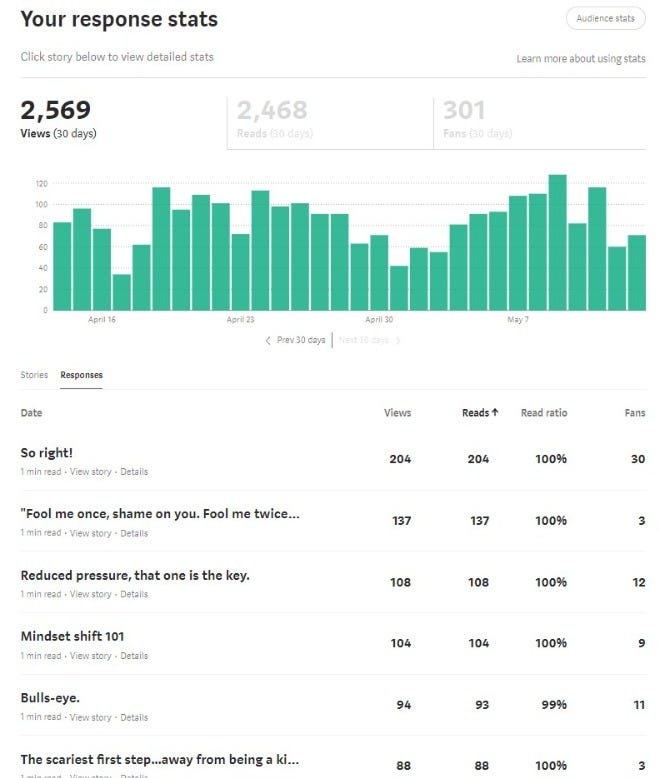
More than half of the people who leave comments on news stories spend as much or more time on the comments as with the actual story, according to a study from the Engaging News Project at the University of Texas at Austin.
Almost 20% cop to spending more time on the comment section than on the story.
And I’m not just talking about spamming random emojis and generic “Great post!” comments. Strategic commenting can help you gain more followers than your actual articles.
So here you have 10 commenting techniques that helped me do just that:
1. Add Free-of-Charge Value

One of the best ways to establish your credibility on Medium is by offering free-of-charge value in your comments. This means providing insights, offering suggestions and constructive criticism, or sharing resources that relate to the topic at hand.
It’s not about flattery or spamming emojis — it’s about providing meaningful contributions to the conversation.
They say there is a great new tool called ChatGPT you can use for this or an older one, Google, but I know nothing about them.
This is also a way to get the attention of a creator if you leave helpful comments on their posts for a prolonged period of time.
Adding value comes down to being genuine and helpful. It’s not about getting something in return, but about building a platform where everyone can share and learn from each other.
A tip here: Don’t rant or vent about an unrelated topic. Instead, share your thoughts, experiences, and resources that are relevant to the article.
2. Be The Devil’s Advocate

No one likes a yes-man, especially on Medium.
It’s easy to read an article and nod along in agreement, but being a devil’s advocate shows that you’re paying attention and are willing to engage.
Playing devil’s advocate doesn’t mean that you have to start a heated argument. It’s about offering a different perspective and sparking thoughtful conversations. Even if you agree with most of what the writer wrote, finding one point to respectfully disagree with can help you stand out from other commenters.
An easy way to be a devil’s advocate is to ask questions. This not only shows that you’re interested in the topic at hand, but it also encourages the writer to provide a well-thought-out response.
It’s a win-win situation, and all it takes is a little bit of curiosity.
3. Bring The Expertise

Commenting isn’t just about sharing your opinion — it’s also about showcasing your expertise.
If a post resonates with you, leave a comment that demonstrates your knowledge on the topic.
This means sharing real-life examples, connecting the post to current events, or offering additional resources that could be helpful to the reader. You not only add value to the conversation but also establish yourself as someone worth following.
Don’t be afraid to show off what you know. But don’t turn into the I-know-it-all kind of person (toxic alert!). Be the humble expert.
4. Use F*cking Power Words (Strategically)
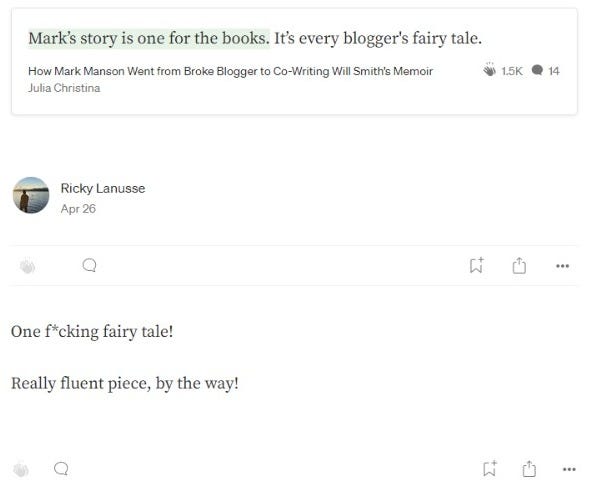
I know, I know — it seems a bit counterproductive to use profanity or shocking words when you’re trying to build a following.
But hear me out.
Harvard Business Review studies have shown that moderate swearing can help to convey emotion and sincerity, making your message more authentic — just don’t overdo it.
Just don’t swear for the sake of it.
Timing is key — use profanity or power words sparingly and only when it actually resonates with the piece you are commenting on. And don’t forget to add ***, don’t be f*cking gross.
5. A Culture of Radical Candor
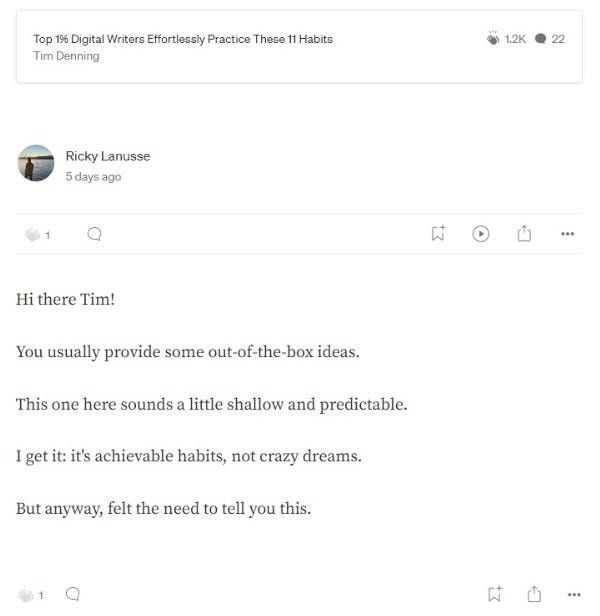
Creating a culture of candor on Medium is all about being honest, upfront, and supportive when giving feedback.
Criticism might be hard to swallow, but it’s actually an integral part of the writing process. It allows us to share our thoughts and ideas while also improving our craft.
When leaving feedback, make sure to focus on being constructive rather than critical. That means not just pointing out someone’s flaws but offering suggestions for how they can do better.
Be open-minded and willing to receive feedback on your own writing — after all, everyone has room for improvement.
This creates mutual respect and establishes a level of trust between you and your readers.
Keep in mind The 4A Feedback Guidelines (Aim to Assist, Actionable, Appreciate, Accept or Discard).
6. Provide Data, Not Just Compliments
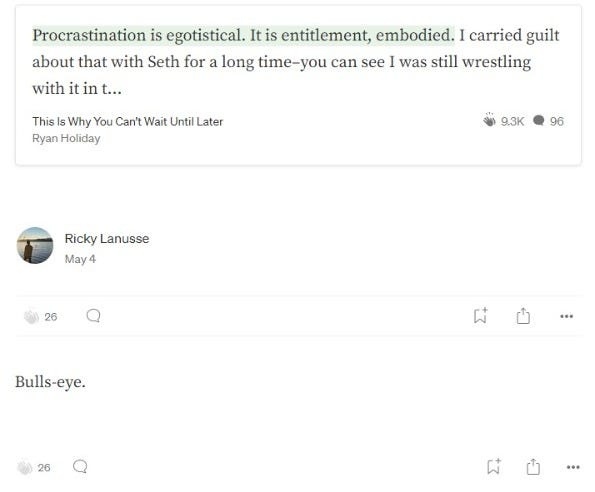
Everyone likes a compliment, but your comments should be more than simply flattery.
When you find specific parts of an article that resonate with you, highlight them in your comments.
This not only shows the writer that you’re paying attention, but it also provides critical data for the writer to analyze for upcoming articles.
Try to keep your compliments genuine and meaningful. Think about how the author’s words affected you and why you appreciated them. Even a two-word comment can spark the writer’s attention and provide sgnificant data.
This helps to create a positive and supportive feedback loop that can benefit everyone on the platform.
7. Don’t Be A Lurker
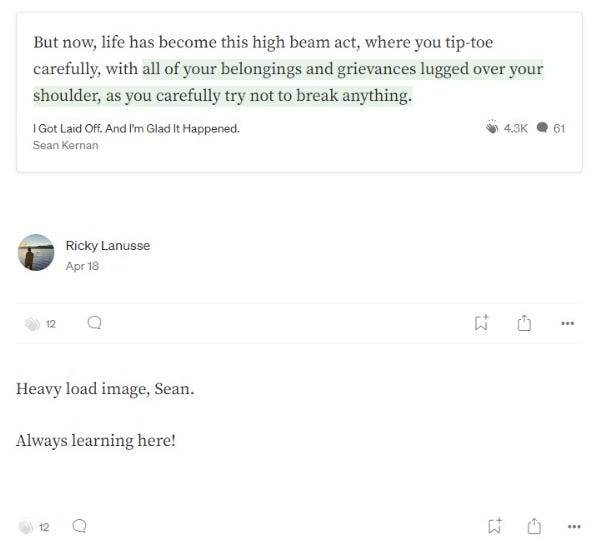
If you want to build a following on Medium, you can’t just read articles and move on.
You need to actively engage by leaving comments (even if they’re just a few words) and clapping when deserved. This helps to establish you as an active member of the community rather than a passive observer.
Rule of thumb:
If I’m reading, I’m commenting.
There’s only a win-win outcome.
Pinky promise.
8. Use Humor
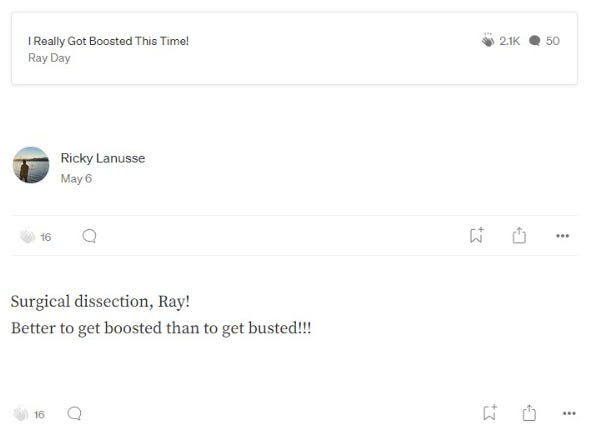
Unversal knowledge: People love to laugh.
So humor can go a long way in making your comments stand out.
Whether it’s a witty observation or a clever pun, incorporating humor can help to make your comments more memorable and engaging.
Just be sure that your humor is relevant and respectful to the writer.
Refrain from making jokes that might be taken the wrong way or come off as inappropriate.
If you’re not sure, it’s best to err on the side of caution.
9. Treat The Comment Section As a Mini-Post
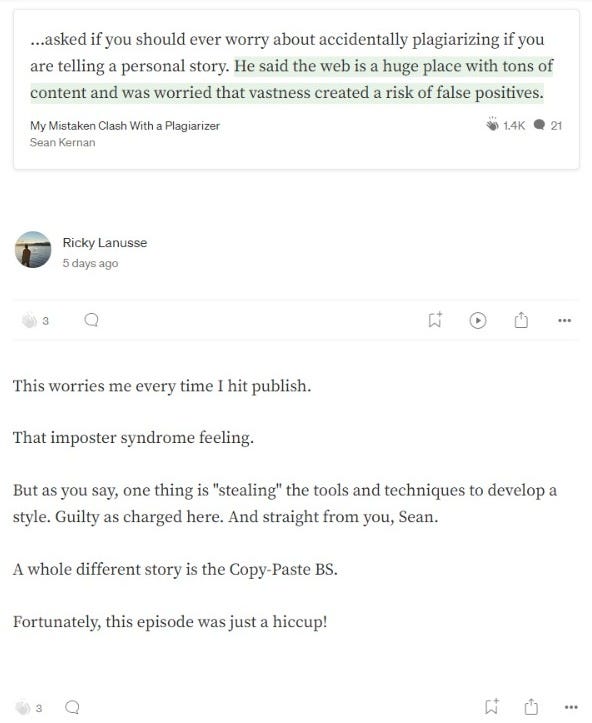
Your comments can be an extension of the post itself.
When doing so, be thorough, avoid those hugly typos, and show off your master of brevity skills: short, to the point, and clear.
Whenever my comments get yawningly long, I tell myself:
“Rewrite this in 2 Tweets ”
That is my limit.
10. The Droopy Effect: Being Always There
Persistency is key when it comes to building a following on Medium. Dedicate some time each day to reading and commenting on posts that resonate with you.
If you start to consistently appear, like Droopy did, people will start noticing you.
You will build recognition among other users and this will lead to more followers and engagement.
The equation is simple: the more you engage, the more visible you become to other members of the community.
One Last Comment
Commenting is a proven tool for building a following on Medium.
I have some groupie followers that get on a frenzy and clap for my every comment. E v e r y single o n e.
And it’s been redirecting some consistent traffic into my articles.
This shortcut is helping me grow my audience by 100 or so followers per month while learning a lot from what I read and comment on. At this stage of my Medium journey, that is a considerable number for me.
The bottom line is not being spammy or inauthentic but rather being strategic and thoughtful in the comments you leave.
Make the most of the comment section: you never know who might be reading.


