
修復哲學道德觀3 — — 提出修復影像的根據
課業批下來,有 70 分!有膽繼續分享我的功課了。嗯?不是很高分?在英國 70 分已經是 first hon 了啦,放過我吧……(而且老師都扣了 grammar 分,這真是已盡力而為、無可奈何。)
又一篇長文,希望有人能看到最後(笑)。
同一系列︰
這次分享一個使用「完全模仿技法」修復的案例。
背景
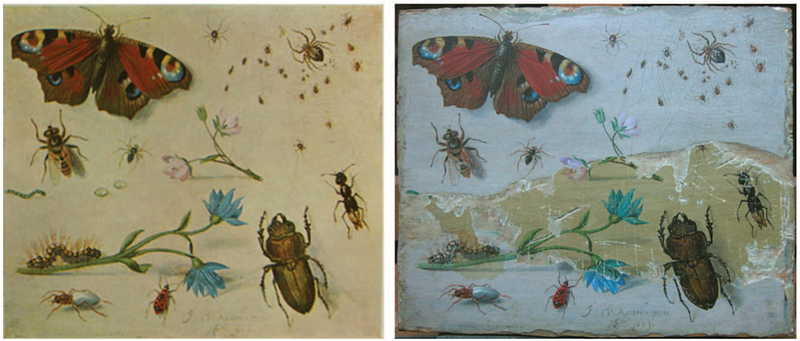
畫︰ 靜物習作 Still-life with Insects and Flowers
媒界︰木板油畫
年份︰1653
畫家︰ 揚范基索 Jan van Kessel 'the Elder'
私人收藏
這幅畫是流行於製成當時的一種靜物畫,尺寸不大。有別於平常掛在牆上的畫保持特定距離的畫,它是設計成是讓人拿在手上近距離欣賞的。
這幅畫原本屬於私人珍藏,擁有人拿去給私人修復師清潔時,修復師可能沒有檢查、或檢查不出原來中間有很大個修復了的破損部份,所以在清潔時已抹掉部分原來補筆(上圖右)。完成整個清潔程序後,修復師發現原來缺失部分竟佔全幅畫的四分一(下圖紅色部分)!
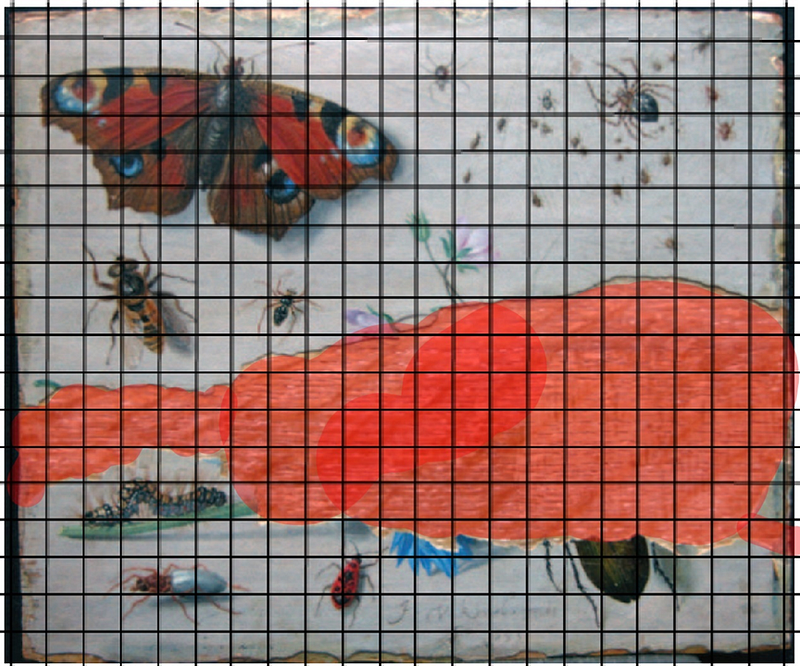
後來,這幅畫交由另一名修復師負責,而這名修復師衡量過後決定以完全模仿補筆法來為它重新修復。
完全模仿補筆法 Fully Mimetic Image Reintegration
之前說過,補筆時為了使復修師後加的部分與原畫區分,補筆時都會用特別的筆觸使之和原本部分不同,卻又不太兀突。而完全模仿的補筆方法,就是沒有和原畫部分作區分,使觀者即使近看亦難以分辨,因此英文又名 complete reintegration。
完全模仿的補筆可算是這麼多款補筆法裏最原始的做法。畢竟你看到有破損的地方,直接按原樣畫便行了,幹嗎想這麼多;另一邊廂,複雜的人類在持續發展油畫修復的倫理和哲學後終於也發現大家想怎麼補畫就怎麼補根本不行,沒有原本畫作的樣子,萬一破損了很大部分,補筆的部分就只能靠猜——也就是和原作無關的新畫了。
雖然這樣說,現今英國在大多情況仍以完全模仿的方法修補畫作——可能在筆觸上有些許分別,但分別的細微就只有專家或是靠UV燈才能分辨。下面的影片是倫敦 National Gallery 的示範,在 9:00 時展示了完成補筆的位置在UV電筒下會顯現出來。
不依原本補筆修復的原因
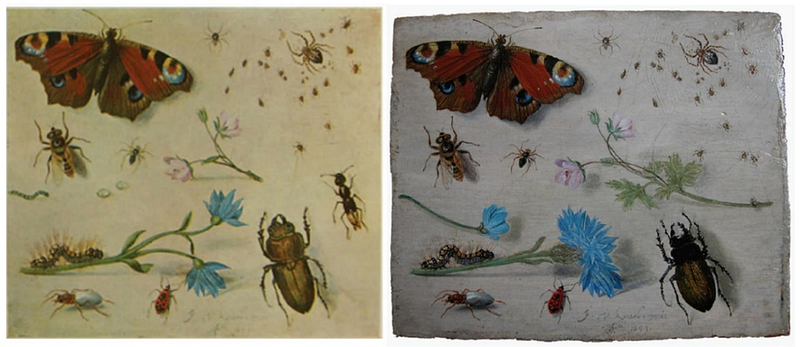
回到這次這幅高達 25% 缺失的案例。接手的修復師認為,原本的補筆應和原畫有很大出入。原因有二︰
- 補筆為了合理性居然遮蓋掉少部分原畫,而如果考慮了被遮蓋部分那修復的部分圖畫就會不連貫;
- 畫家揚范基索以觀察大自然仔細而準確聞名,但補筆部分的昆蟲和花朵都不能在現實中找到;
- 某些補筆元素根本沒有任何原畫根據,如中間的水滴或右邊的蟻。
因此,他決定案畫家其他畫作、科學觀察和美學角度重新在缺失位置畫上更「準確」的補筆。
修復根據 Evidence of the Original Image
修復師承認,沒有任何原圖的影像或文字記錄留下來,一個這麼龐大的缺失空間免不了要用想像力填補。於是,它找了該畫家其他的畫來分析,發現他只會畫兩款藍色的花;再按殘餘部分的角度推敲出應是哪一款花。但花朵擺放方面,有多少朵則只能案有限的殘餘部分和自身的美學批判來定奪。
同樣地,右下的大昆蟲他和生物學專家合作,找到最相似的昆蟲標本來觀察並補回於畫中。
右邊的螞蟻方面,他認為是上手因畫面太空而毫無證據才加的,他因此並沒有畫回去的想法。他亦認為粉紅花朵在原來的補筆花莖實在短得不合比例,加長了便一次解決了右邊畫面太空和不合比例的問題。雖然如此,他最後還是決定再增加三隻小蜘蛛來豐富右邊空間。
這些可以成為修復根據嗎?
雖然這位修復師盡了他所能做的提出完全模仿修復的根據,但我想讀者現在都會有疑問︰「那他現在畫的就是原本畫家畫的配置嗎?」
不太可能吧! 在他研究補筆配置時實在有太多猜測和個人美學想法,實在很難相信他補筆出來的就會和揚范基索想的一模一樣。即使是該修復師也認為雖然他未必能畫出和原畫百分百相同的影像出來,但若因此25%的缺失而放棄餘下部分,便會使一幅巨作散佚。
可是,即使不用完全模仿的補筆方法,用其他可區分的方法補筆可能更能保存原本掦范基索的畫。現在因個人美感和揣測的 25% 可能會大大影響了畫家原本的想法和畫的背後意義。雖然這幅畫看似只是任意擺放一些昆蟲和花朵,但畫家本身受象徵畫和基督教影響,經常會見到有象徵基督教義的事物。
下面兩幅是同畫家由倫敦 National Gallery 收藏的同類作品。揚范基索的畫裏常常會見到當時用於象徵靈魂重生的蝴蝶。以下方左圖為例,一條毛毛蟲爬過山楂枝後成為蝴蝶,毛毛蟲常喻表蝴蝶重生前的狀態,而山楂則因其刺鼻的味道常與死亡聯想起來。所有事物在畫都雖看似無序舖排,但實在或許暗藏繪者心思。如果還覺得是巧合,National Gallery的考究更發現最中間、在山楂枝下的小蟲在荷蘭文原文就是「十字蟲」,更加強了畫和基督教的關係。
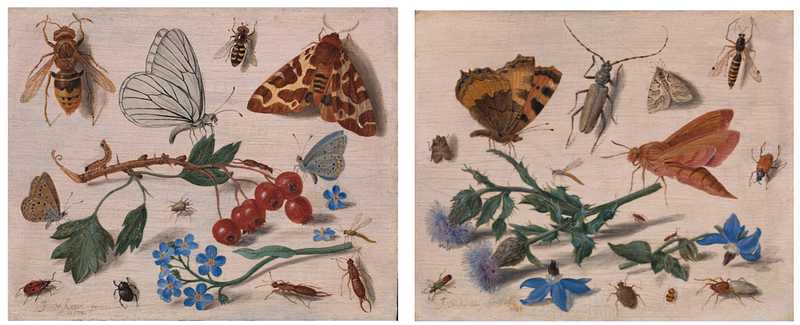
此外,雖然這幅靜物畫雖看似沒有天馬行空的想像,看似全幅畫能在現實重現——但看久一點你會發現,這些物件並不是全在同一平面當中︰昆蟲多數看上去似在畫布的水平平面上;植物卻更似擺放在向觀眾45度的位置。
說了這麼多,其實都只是想說藝術並不能完全推論。這位修復師修復的畫可能在科學上和在個人美學上是正確的,但這不代表他所畫就是揚范基索所想,這也就是為什麼我們需要除了完全摸仿原作以外的補筆手法。
其他原因?
既然這裏不是大學的論文,我也更方便放上更多我的憶測。
該位修復師選擇了用完全模仿的手法很可能畫面狀況以外的原因影響。就如文首說到,這是一幅私人收藏,而擁有人亦應該沒留意原來畫上有很大的位置是後人補筆的。站在收藏家的角度,他只是把畫拿去給人清潔一下而已,結果原本的修復師竟然沒有發現補筆的位置、進而破壞了畫面︰「那我只想要回一幅完整的畫啊!」如果是我的話會這麼想。雖然現在畫看起來不同了,但修復師說現在的畫更貼近原畫家的畫,而畫現在又變回完整的樣子,那就唯有是這個樣子了。
因此,大概畫的擁有人亦提出過是完全模仿的修復方法吧。
其他方法
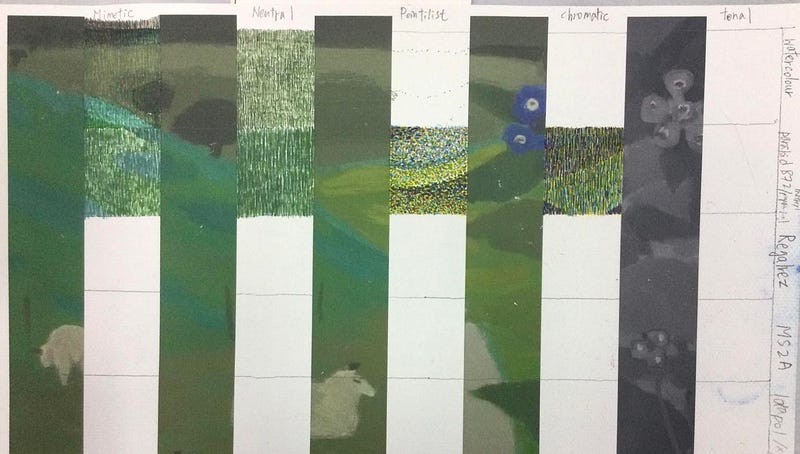
如果不用完全模仿的技法,有什麼更好的技法會更適合呢?由於這幅靜物畫是在一個一樣色塊的背景上創作,為了不私自創作一幅新畫來,這幅畫可能是少數適合中性色塊(neutral toning)的案例(見下圖)。雖然什麼是畫面的「中性色」在不同人眼裏有定義上的分歧,但目的是一樣的︰畫面破損過大,或者沒有任何圖案原樣的資料留下,不如把它「留白」。不過白色會比圖案更突出,用中性色去填補位置能使這些自成一塊塊的空白位退回去背景,而不是比畫面更先映入眼簾。
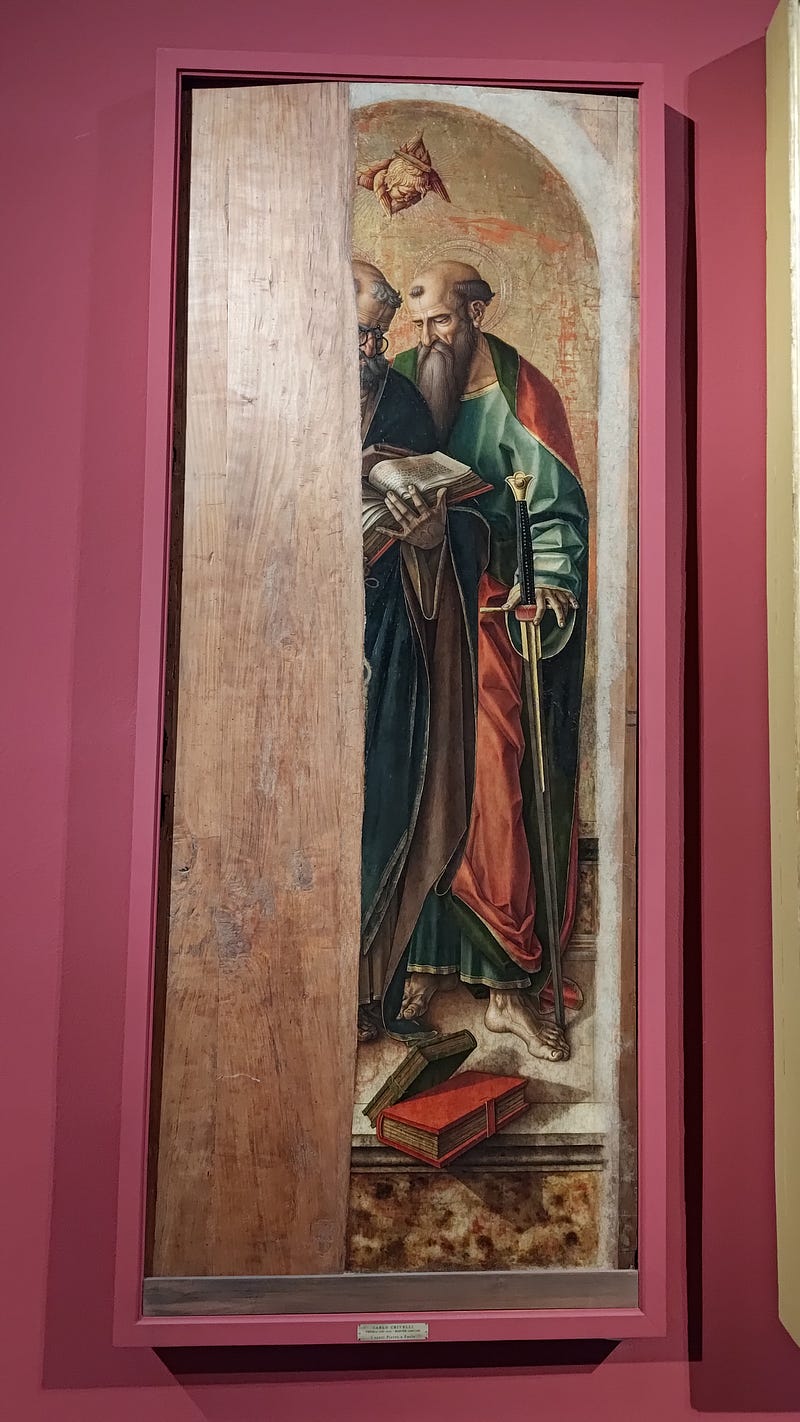
另一種可行但屬極端派的方法是什麼都不做。我不是開玩笑,把原本的背板直接露出來,在某些特定場合都未尚不是一種做法。好吧,它有一個更好聽的名字,叫「建築學方式」(archeological approach),因為考古的建築很多時都是以原樣呈現於觀眾眼前,即使是已經完全倒塌的廢墟都照辦不誤。不過對大多數畫來說美學上都是不太能接受——始終建築和畫在功能上的差別使它們的處理方法有所不同。
這種做法在英國很少見,在意大利、希臘等國家卻不時見到。早前去了米蘭的布雷拉畫廊裏有不少畫的缺失部分都是直接放出來,不加一點修飾。
結語
雖然我不同意這位修復師的選擇,但無疑文物修復並不是精準科學,從一開始便沒有所謂正確答案。所以,我相信他都是有衡量不同原因才最後作出完全修復式的補筆。修復理論日新月異,我們現在普遍認同的定式都只不過是上個世紀中才發展出來的理論。不難想像,一百年後我們現在弄的修復需要更新時,未來的修復師亦會有頗多不同意之處。在此容我引用在某二十世紀的修復會議中,一位修復師的話作為總結︰
‘The history of conservation is extremely important if we are to understand what we are doing today. We will be part of that history for the next generation; it will just be another brick in the changes of fashion of how to take care of these objects. The dialogue we are having here may lead us to a more common approach. But hopefully they will believe that we did it with the best intentions, as we believe that the eighteenth-century or nineteenth-century restorer did.’
…Jørgen Wadum, Personal Viewpoints Thoughts About Paintings Conservation, 2003
文物修復的歷史對我們極其重要,它使我們明白我們為什麼現在會這樣做(修復)。我們都會成為下一代的歷史,成為他們爭吵在新潮流中怎樣處理文物的推力。今天的討論或會領出未來公認的理論和方法。 希望下一代修復師能相信我們現在選擇了時下的最佳修復選項,就像我們相信十八、十九世紀的修復師一樣。
……Jørgen Wadum, 2003
亦正如我相信他一樣。
參考資料︰
Bouyer, E. (2017) “The bad Reputation of neutral Retouching,” Conference: Postprints Rech 4 | Croatia 4 The International Meeting on Retouching of Cultural Heritage, Academy of Arts, University of Split, pp. 30. Available at: https://doi.org/https://www.researchgate.net/publication/333017149_The_Bad_Reputation_of_Neural_Retouching.
Leonard, M. (ed.) (2003) Personal Viewpoints: Thoughts About Paintings Conservation. Los Angeles: Getty Publications. Available at: https://www.getty.edu/publications/resources/virtuallibrary/0892366982.pdf.
NGA Systematic Catalogue, Jan van Kessel the elder, Artist Info. National Gallery of Art, Washington DC, United State. Available at: https://www.nga.gov/collection/artist-info.5484.html (Accessed: December 31, 2022).
Sozzani, L. (2010) “Pushing the borders of retouching and reconstruction: can enough ever be too much?,” in P. Smithen, R. Turnbull, and R. Ellison (eds) Mixing and matching approaches to retouching paintings. London: Archetype, pp. 137–140
Van Kessel’s insect paintings in 10 minutes | National Gallery (2020) YouTube. The National Gallery. Available at: https://www.youtube.com/watch?v=AEf8RiEcn6g&t=19s (Accessed: January 1, 2023).
Medium 很容易就錯過最新文章發佈的訊息~不想錯過最新文章請subscribe!