
Zoom Jury Selection in these Covidic Times— Part II
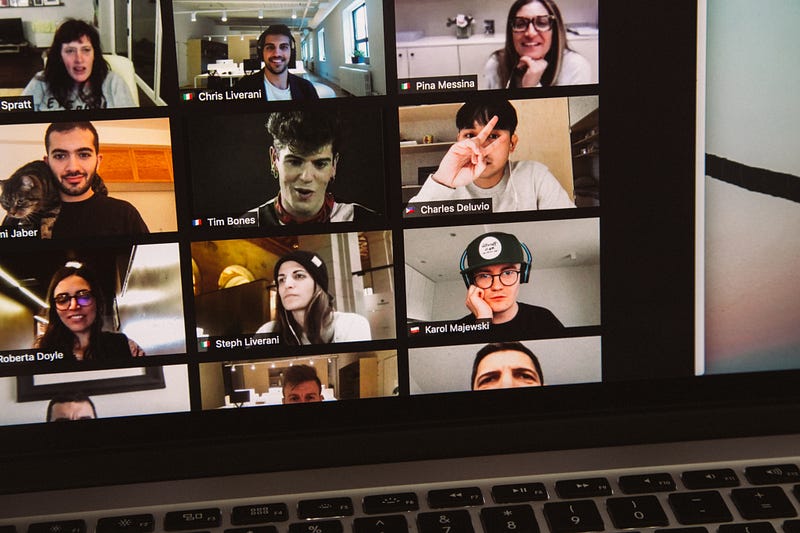
(Recap: After years of flimsy alibis and evasions, for reasons unclear to me, I accept the jury challenge — via Zoom. Now begins Day Two of the selection process).
I sign in to the Zoom account at 8:45 even though the jury session officially begins at nine, and while my phone charges in my bedroom, I run around downstairs, setting all my props in place on the kitchen table, knowing I’ll be stuck in one spot for a good while: books, snacks, vegetables, cutting knife, cutting board, a charged laptop, a Paleo lemon drink and tissues.
I’m contemplating adding an exercise band to the pile and an electric back massager, when at 8:55 am my husband comes into the kitchen with a spooked look on his face.
“There’s somebody looking at me on your phone,” he says.
I’m not sure what that even means. “Somebody called?” I venture.
He shakes his head. “This person is sitting and staring out at me from your cell phone. It’s uncomfortable.”
I’m looking at him warily, when suddenly an aha pings in my mind. I explain, with relief: It’s just another juror potential who signed in early like me.
Then he goes to his basement office to give remote therapy, and I stare at a computer screen in the kitchen. I would leave to go off and do fifteen errands — a wedding to plan, house renovations underfoot, ever present work — but since I have no idea when a clerk’s face and voice will crack through the Zoom gallery of faces and give instruction, I am glued to my kitchen seat. Every time I leap up to microwave hot water or do a jumping jack, I look furtively back at the screen. Big Brother is Watching You — is exactly how it feels.
So I wait. And wait. Which gives me time to think about the nature of Zoom jury duty. There’s no two ways to cut it. It’s odd. Sure, I love the convenience, but it does strike me as very vulnerable to being corrupted. I mean, how hard could it be for a juror to look up a defendant’s Facebook page while listening to testimony about him? Or worse, what if someone binges on a Netflix series, all while looking intently at the screen, as if recording every bit of evidence? A Zoom jury almost feels like a joke — a kangaroo court. Even if this option is the most feasible for our times, I feel some sorrow, as if the gravitas has been lost.

Well, I will reserve judgement until the whole process is explained. That is, if I get selected. I still want to be — why is another question — but this silly waiting…
Just then, the clerk call out various names then whisks the named person off to a selection process called voir dire — a kind of cross examination to figure out how fair-minded you are. Finally. Some action. One by one, the faces on the gallery disappear, but not mine. Have they forgotten me? I feel a pit of anxiety like when the stewardess on the airplane is giving out the kosher meals but keeps bypassing my seat. I really think, in those moments, that I won’t get my lousy Styrofoam kosher meal, that somehow, out of all the kosher food eating passengers, I will be overlooked.
Another name gets called. Not mine.
Now only four of us appear on the galley. And here I remain, unclaimed, like lost luggage at JFK.
Why haven’t I been called?
A panicked thought suddenly rushes through me. What if I accidentally deleted myself from the proceedings? (I am not Zoom savvy.)
Finally I muster the courage to ask the clerk if I’m really there, and she says that I am, and I will be speaking to the judge after the next person.
Before I know it, I’m clicked in. The judge says, “Thank you for being here.”
I reply, only half-insincerely, “It’s great to be here.”
This, for some reason, takes the judge’s breath away. “Well! That’s certainly refreshing!” (Or along those lines.) She has a grandmotherly voice, warm and no nonsense. I still can’t see her, though. I envision her as sixty-five.
They ask me the answers to the questions. I make it easy. One to thirty-five no. Thirty-six to forty yes. Forty to forty-five no.
The judge asks, I see you’re marked down that you know victims of aggravated assault.
Yes, I say, offering no details, but they ask me to provide some, and reluctantly, I do. Still, I leave out some details permanently lodged in my head: how my friend lay flat on her back in an abandoned field and stared at the moon and meditated to get through it, how the kidnapper/rapist said afterward, in surprise, “That was goooood.” Then he lifted his knife and stabbed her chest a couple of times.
Anybody else? the judge asks.
Isn’t one enough? I sigh quietly, then offer up another sexual assault, gruesome in a different way, because she was 14 and knew the man, a good friend of her father’s.
And you think you could be impartial about this case? Why? The judge’s voice rises with something close to incredulity.
It occurs to me. Here’s my chance to get out of this. Say something idiotic about global warming to discredit me, or enthusiastically share a conspiracy theory. Should I grab the opportunity? Some part of me would be relieved at being excused. I tried to do the responsible and honorable thing, but the choice was taken out of my hands. Or I could simply agree with the judge: You’re right. I can’t be impartial.
But it’s not true. Impartiality is my middle name. I wouldn’t be lunging toward this experience if I didn’t think so. Wait. Did I just say lunge? Well, it’s the truth. I really want in.
So I give the counsel my pitch about being a mother which gives you constant practice at separating truth from fiction. And for good measure, so they don’t dismiss me as a hausfrau, I throw in, I’m a writer. Hence, it’s easy for me to enter into different people’s points of view.
One of the lawyers asks: What kind of books?
Novels, I say. Also books for children. I also ghostwrite people’s memoirs.
Is there any reason you could imagine not being able to complete jury duty? the judge asks.
I feel a little squeamish to highlight my Jewishness, to again reference the Sabbath issue, even as I’m obviously happy to be a Sabbath observer. Maybe it’s an instinctual response, a kind of genetic residue from my Eastern European forebears. Caution around government officials lurks in my Polish and Russian blood, my Moroccan blood, too: Keep your distance from governments. They’re not your friends. The same governments set up to protect their citizens are not interested in protecting you, a Jew. The opposite.
But I’m just being schizoid. The America I know welcomed my Ashkenazi great-grandma Ita and my Sephardi Moroccan grandma Estrella with open arms.
So I swallow my squeamishness, and remind the judge how she had told me to remind her about my Sabbath time issues. Good thing I did because the judge seems to have forgotten. She now asks both lawyers: Do you think you can finish up on Fridays by 3:30? They nod yes.
The judge says, I don’t know 100 percent, but my educated guess is that you’ll be making the jury. Can you be available Wednesday morning?
Does snow melt? Do stars shine?
Of course, I say.
Of course!
How do I explain the tingly satisfaction, the glow I feel at being selected for round three? Honestly. This is nothing to celebrate. And yet, I feel a buoyancy like a kite rising in my rib cage. I dance around my house, feeling lifted into a higher atmosphere. Is it because they picked me, is it the primitive joy of being selected? Or the fact that grown-up status has finally been conferred on me. Third parties have deemed me impartial. It’s a puzzle to me. All I know is, I’m in. Hopefully, that is.
******
On this, my third day on Zoom jury duty, I see a lot of white older men, many younger women of color, a black young man, his head framed by a poster of a New York skyline, and one other middle-aged white woman like myself (oy — my self-description makes me cringe slightly). What’s going to happen is, our numbers will get further whittled down until 12 jurors are selected. Sort of like a Miss America pageant if anybody remembers that horror show.
I have moved my Zoom location from kitchen to bedroom. Some 80 yellow and red files — twenty-five plus years old — lay scattered across my bed, demanding to be sorted and organized. Even files need filing. That’s my jury project while waiting to be summoned.
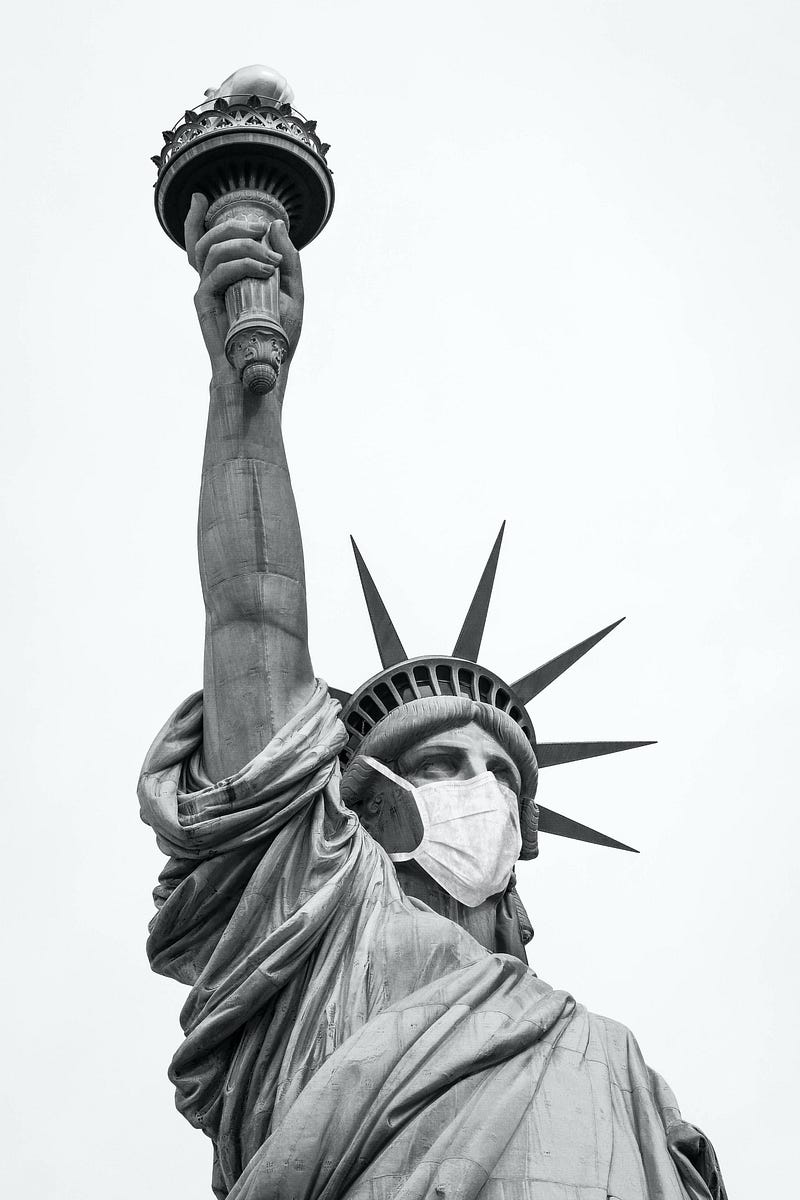
Oh. Another white woman just popped on to the gallery, but younger, and — -it’s hard to believe this — she’s wearing a Covid face mask. A face mask?? Is this some surreal joke?
While I ponder this, someone does roll call. The jury manager, a young square-jawed bloke, calls out my number: 519. We can’t find you, he says.
I’m here, I reply just a trifle snidely.
But you’re not in our records. Could you please tell us your Candidate ID so we can locate you?
I provide it.
“We still can’t find you,” he mutters.
Hmm. I offer, “Maybe put a hyphen between my two last names?”
That does the trick.
Another hour of waiting passes while I sift among my files and piles, copies of published articles, the book reviews and occasional award my novels garnered, medical records, writing workshops given, records of the book that was optioned to be made into a film, my financial doings, all the detritus of my past. Hey, I think. I used to be out there in the world. Visible. Now I pull people’s memoirs out of them or if necessary ghost-write the story of their lives.
A whiny voice suddenly breaks the silence. “Why can’t I get in here?” I love how sisterly and kvetchy her voice sounds. It just cuts through the officialness of jury selection, or maybe the cutting-edgeness of Zoom jury.
Then the judge lady from last time comes on.
Here’s what she said, or at least what I recall, obviously not word for word. This is a criminal case the court is trying, Special Victims Unit and not a civic case. (Law and Order anyone?) The difference is, in order to convict the defendant in a criminal case, there needs to be more certainty, more evidence than convicting someone in a civil case.
I never knew that.
The judge then launches into a passionate shpiel about the importance of participating in jury duty: Jury service is probably the most important service a citizen can do, aside from being in the military. We should weigh the inconvenience of it against all the people who have fought and died for the right to a jury throughout history. And even though these days America is chaotic and disturbing place, people from all over the world still clamor to come here. It’s still the greatest place in the world to be.
She ends with, “If a loved one of yours was a victim of a crime, you’d want them to have a fair trial. The only way to have a fair trial, is when people like yourself participate.” She also says that we’re making history by having jury selection on Zoom.
I like all of those reasons. Each one fills me with a sense of gravity and purpose and a kind of unity among my fellow Americans. No matter anyone’s political, social or environmental position, we all can get behind jury duty, can’t we?
One more thing. The judge says, “If you are excused from jury duty, do not take it personally. It’s just how the process work.”
This jolts me. I think I will take it personally. I never had Be a jurist on my bucket list, but somehow I see it’s crept onto there. Writing stories — both true and fiction — always consumed my mental energy. But suddenly I realize I want to be consumed in a different way, to marshal my intellect to figure out what is just and right in this very particular situation. I’m eager to take in the facts and information, and together with others, think it through, arrive at something. Is it the power aspect that motivates me? I hope not. All I know is, the last time I felt this absolutely necessary was when I nursed my babies. They needed me, and I want to be needed now, not for my body, but my mind.
Square Jaw jury bloke barges in to the Zoom room. “Is 519 here? Roxann?” That’s my absurd secular name given at birth. (I changed it, in my twenties, when I got sick and tired of people singing that 1970s “Police” song to me about walking the streets.)
Yes, it’s me.
“You don’t belong here.”
Again with this no-record-of-you-in-our-files? How much erasure can a juror wannabe take?
Before I can even sputter why, he says, “You were already selected as part of the jury. You don’t have to be here. Come back on Monday, at 8:30.”
You mean I was already selected? I can go “home”? I’m shocked. Delighted. A tad confused (what on earth did I say that made me sound so impartial?)
I get an email two days later. I’m requested to appear at such and such address on Monday at 8:30, for in person Jury Selection.
I gulp. In person? Oh. Well, that’s inconvenient. And they’re still selecting?
My joy was premature. But I’m not worried about getting selected. At the risk of sounding like a braggart, I think the judge has taken a shine to my mind.
I also feel relief that a trial, one of the cornerstones of justice, won’t be happening on distractible and easily corruptible Zoom. And now I’ll get to meet in person the America that I usually don’t.