avatarRandy Runtsch

Free AI web copilot to create summaries, insights and extended knowledge, download it at here

3551

Abstract

photographers for the expedition of 1871–1872. The journey retraced the original route. Crew members produced an accurate map, various papers, and photographs.</p><figure id="d380"><img src="https://cdn-images-1.readmedium.com/v2/resize:fit:800/1*egQcNgi21EVToSsht7dIPA.jpeg"><figcaption>Photographer John Karl Hillers works with his photo negatives in camp on the Aquarius Plateau, Utah Territory, in this self-portrait, ca 1872. Public domain photo courtesy of Wikimedia Commons.</figcaption></figure><p id="be92">The boat crews followed the Colorado River to its confluence with the Virgin River in Utah Territory. Then, they explored and photographed the Virgin River Valley, including Zion Canyon.</p><figure id="178f"><img src="https://cdn-images-1.readmedium.com/v2/resize:fit:800/1*WwZC6WqmO8oUXuQ5mpWFHQ.jpeg"><figcaption>The crew prepares to start its 1871–1872 expedition at Green River City, Wyoming. Photograph by E. O. Beaman. Public domain image from <a href="https://www.gutenberg.org/ebooks/20667">“A Canyon Voyage,” by F. S. Dellenbaugh</a>, G. Putnam and Sons, New York and London, 1908.</figcaption></figure><p id="89c2" type="7">“Major Powell was a man of prompt decision, with a cool, comprehensive, far-reaching mind. He was genial, kind, never despondent, always resolute, resourceful, masterful, determined to overcome every obstacle.” — Frederick S. Dellebaugh, “A Canyon Voyage”</p><figure id="1ce5"><img src="https://cdn-images-1.readmedium.com/v2/resize:fit:800/1*avNzKKgnrPqvpJlIr7Eifw.jpeg"><figcaption>Virgin River Valley, Utah, now within Zion National Park. Photo by J.K. Hillers, ca 1871. Public domain image courtesy of Wikimedia Commons.</figcaption></figure><p id="77e4">The walls of the 16-mile-long Zion Canyon rise to 3,000 feet at the Temple of Sinawava. Now located within Zion National Park, much of the gorge is accessible by road. But the park offers opportunities for day hikes and backpacking, too.</p><figure id="aae4"><img src="https://cdn-images-1.readmedium.com/v2/resize:fit:800/1*XWFW1DECBpen3D0hV7pn-A.jpeg"><figcaption>A pinyon pine grows from a hoodoo in Zion National Park. Copyright © 2023 Randy Runtsch.</figcaption></figure><p id="f5ff">I take self-propelled camping trips by bicycle, foot, or canoe every year. The adventures pale when compared to those Powell led. But they have met my criteria to balance excitement with risk. In all cases, I carry a camera.</p><figure id="091b"><img src="https://cdn-images-1.readmedium.com/v2/resize:fit:800/1*KDdlTK21NQDu7Q2744c8_Q.jpeg"><figcaption>Moonrise over a mountain in Zion National Park. Copyright © 2023 Randy Runtsch.</figcaption></figure><p id="9ef4">I have never used a large-format view camera like the one John Hiller and the other photographers employed on the second Powell expedition. Imagine the effort to transport his camera and gear on a wilderness expedition and the time and labor needed to process each photograph.</p><figure id="67bf"><img src="https://cdn-images-1.readmedium.com/v2/resize:fit:800/1*fEMSYQ-IjGctO5PGE08GzQ.jpeg"><figcaption>Autumn foliage in Zion Canyon. Copyright © 2023 Randy Runtsch.</figcaption></figure><p id="14c4">The Virgin River, assisted by wind, rain, and ice, has carved features into the sandstone of Zion over millennia. Casual tourists, hikers, nature lovers, and nature photographers feast their eyes on its visual buffet every day.</p><figure id="7ee5"><img src="https://cdn-images-1.readmedium.com/v2/resize:fit:800/1*D700i8CAIVstgyQvRu2Wug.jpeg"><figcaption>The Watchman, as photographe

Options

d by John Karl Hillers, ca 1871. The author hopes to photograph the Watchman from the same viewpoint. Public domain photo courtesy of Wikimedia Commons.</figcaption></figure><p id="0e71">The era of expeditions into unexplored terrestrial territories may have passed. But photography allows us to peer back to points in time.</p><figure id="5bbb"><img src="https://cdn-images-1.readmedium.com/v2/resize:fit:800/1*t_XiFB-9zMkKg-VwQFARHQ.jpeg"><figcaption>The Watchman stands near the entrance to Zion National Park at Springdale, Utah. Copyright © 2023 Randy Runtsch.</figcaption></figure><h2 id="23d8">Learn More About John Wesley Powell and the Colorado River Expeditions</h2><div id="4846" class="link-block"> <a href="https://www.gutenberg.org/ebooks/8082"> <div> <div> <h2>Canyons of the Colorado by John Wesley Powell</h2> <div><h3>Free kindle book and epub digitized and proofread by volunteers.</h3></div> <div><p>www.gutenberg.org</p></div> </div> <div> <div style="background-image: url(https://miro.readmedium.com/v2/resize:fit:320/0*r1vCT9hunleDhdVC)"></div> </div> </div> </a> </div><div id="1eaf" class="link-block"> <a href="https://www.gutenberg.org/ebooks/20667"> <div> <div> <h2>A Canyon Voyage by Frederick Samuel Dellenbaugh</h2> <div><h3>Title A Canyon Voyage The Narrative of the Second Powell Expedition down the Green-Colorado River from Wyoming, and the…</h3></div> <div><p>www.gutenberg.org</p></div> </div> <div> <div style="background-image: url(https://miro.readmedium.com/v2/resize:fit:320/0*VR4WaCLLgN-4PjMW)"></div> </div> </div> </a> </div><div id="299d" class="link-block"> <a href="https://www.pbs.org/wgbh/americanexperience/features/canyon-john-wesley-powell-chronology/"> <div> <div> <h2>John Wesley Powell: A Chronology | American Experience | PBS</h2> <div><h3>Lost in the Grand Canyon | Timeline 1834 John Wesley Powell is born on March 24 in Mount Morris, New York, the second…</h3></div> <div><p>www.pbs.org</p></div> </div> <div> <div style="background-image: url(https://miro.readmedium.com/v2/resize:fit:320/0*ypXu3jSJqBmd6tTn)"></div> </div> </div> </a> </div><div id="06b1" class="link-block"> <a href="https://en.wikipedia.org/wiki/John_Wesley_Powell"> <div> <div> <h2>John Wesley Powell - Wikipedia</h2> <div><h3>John Wesley Powell (March 24, 1834 - September 23, 1902) was an American geologist, U.S. Army soldier, explorer of the…</h3></div> <div><p>en.wikipedia.org</p></div> </div> <div> <div style="background-image: url(https://miro.readmedium.com/v2/resize:fit:320/0*W-0XpwmL_RXPjyEu)"></div> </div> </div> </a> </div><p id="afbc">Thank you to <a href="undefined">Rodrigo S-C</a>, <a href="undefined">Duvy McGirr</a>, and <a href="undefined">GE McKerrihan</a> for publishing Full Frame and for editing its writers’ works. I look forward to becoming a part of this photographic community.</p></article></body>

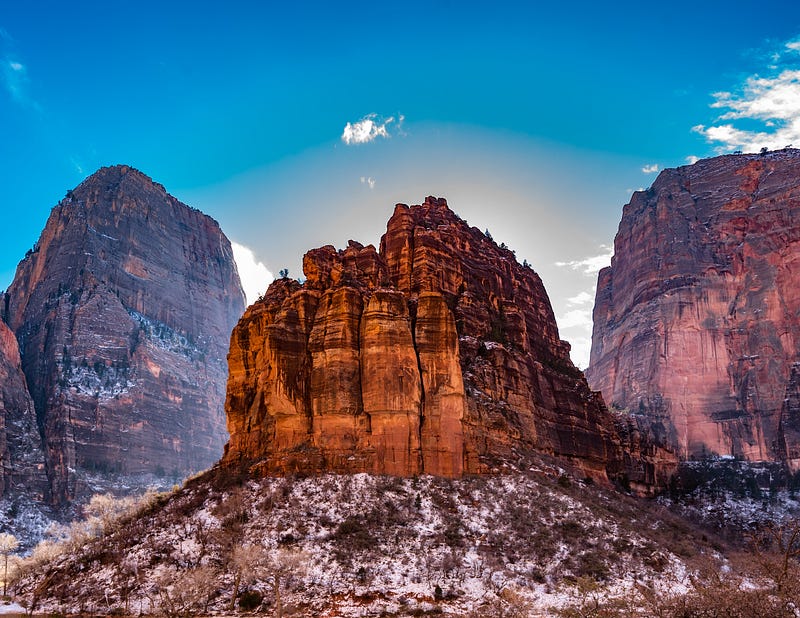
Organ Butte rises above the banks of the Virgin River in Zion National Park, Utah. Copyright © 2023 Randy Runtsch.

Photography, Adventure, and the American West

Zion Canyon — Landscapes of Light and Texture

A photographic tribute to leader and explorer Major John Wesley Powell and the crews of the Colorado River expeditions of 1869 and 1871–1872

In 1855, 21-year-old John Wesley Powell rowed 1,800 miles of the Mississippi River from St. Anthony Falls to the Gulf of Mexico. Before he joined the Union Army in 1861 to fight in the Civil War, he hiked across Wisconsin. He also rowed hundreds more miles of the Ohio, Illinois, Mississippi, and Des Moines rivers.
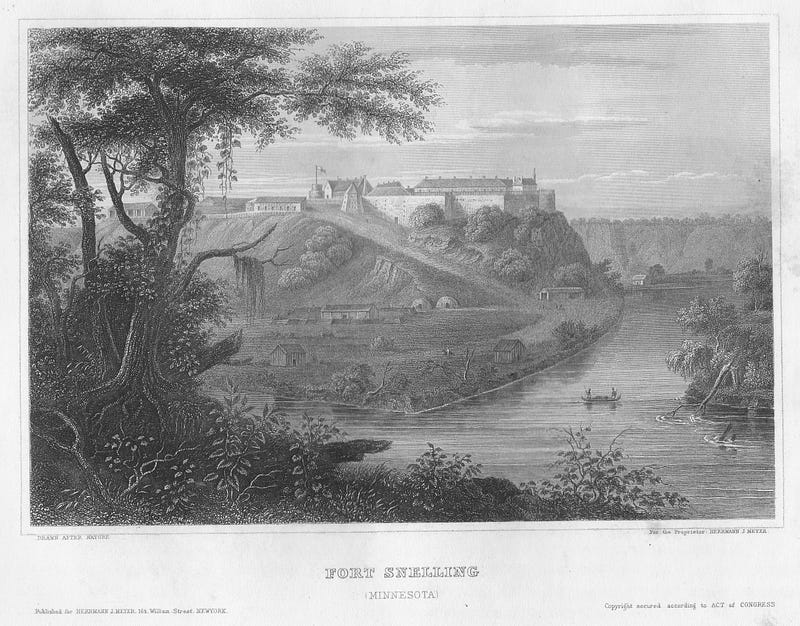
Fort Snelling, circa 1860. The fort was completed in 1820 on a bluff at the confluence of the Mississippi and Minnesota rivers. Powell would have passed by the fort as he rowed from St. Anthony Falls on the Mississippi River, about nine miles upstream from this point. The author lives 90 miles south of the fort and has visited and photographed it several times. Illustration by Herrmann Julius Meyer (1826–1909). Image courtesy of Wikimedia Commons.

While serving as a major in the Battle of Shilo, a Minié ball struck Powell’s right wrist. Doctors amputated his arm. He remained in the army and received permission for his wife, first cousin Emma Dean, to go with him. He was present at the siege of Vicksburg and the battles of Champion Hill and Big Black River Bridge.

As a voyager and geologist, Powell’s exploits prepared him for adventure. So, in 1869 he led the Powell Geographic Expedition. He and nine other men explored the Green and Colorado rivers in wooden boats. The rapids of the Grand Canyon must have frightened them, but the scenery should have amazed them.

Newspaper reports of the trip made Powell famous. Following in an excerpt from his book, “Canyons of the Colorado.”

“On my return from the first exploration of the canyons of the Colorado, I found that our journey had been the theme of much newspaper writing. A story of disaster had been circulated, with many particulars of hardship and tragedy, so that it was currently believed throughout the United States that all the members of the party were lost save one. A good friend of mine had gathered a great number of obituary notices, and it was interesting and rather flattering to me to discover the high esteem in which I had been held by the people of the United States. In my supposed death I had attained to a glory which I fear my continued life has not fully vindicated.” — J.W. Powell, Ph.D., L.L.D., in his book “Canyons of the Colorado,” first published in 1895
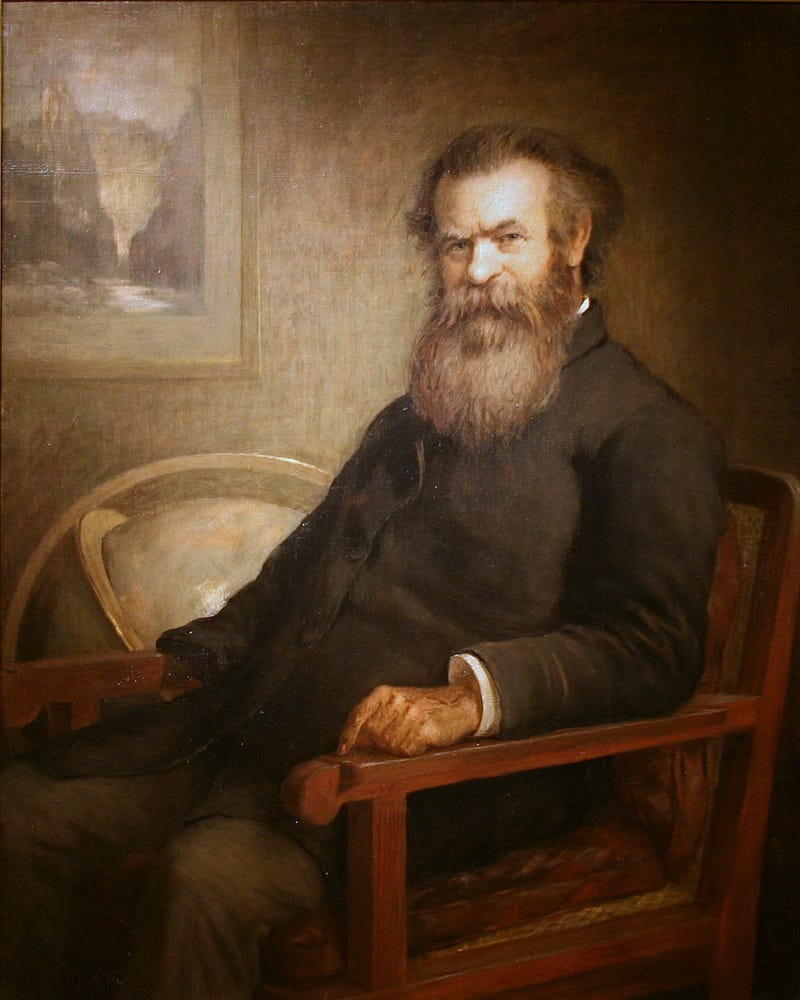
This portrait of John Wesley Powell hangs in the National Portrait Gallery in Washington, D.C. Painting by Edmund Clarence Messer (1842–1919). Public domain image courtesy of Wikimedia Commons.

Photography was not part of the 1869 expedition. But Powell hired three photographers for the expedition of 1871–1872. The journey retraced the original route. Crew members produced an accurate map, various papers, and photographs.
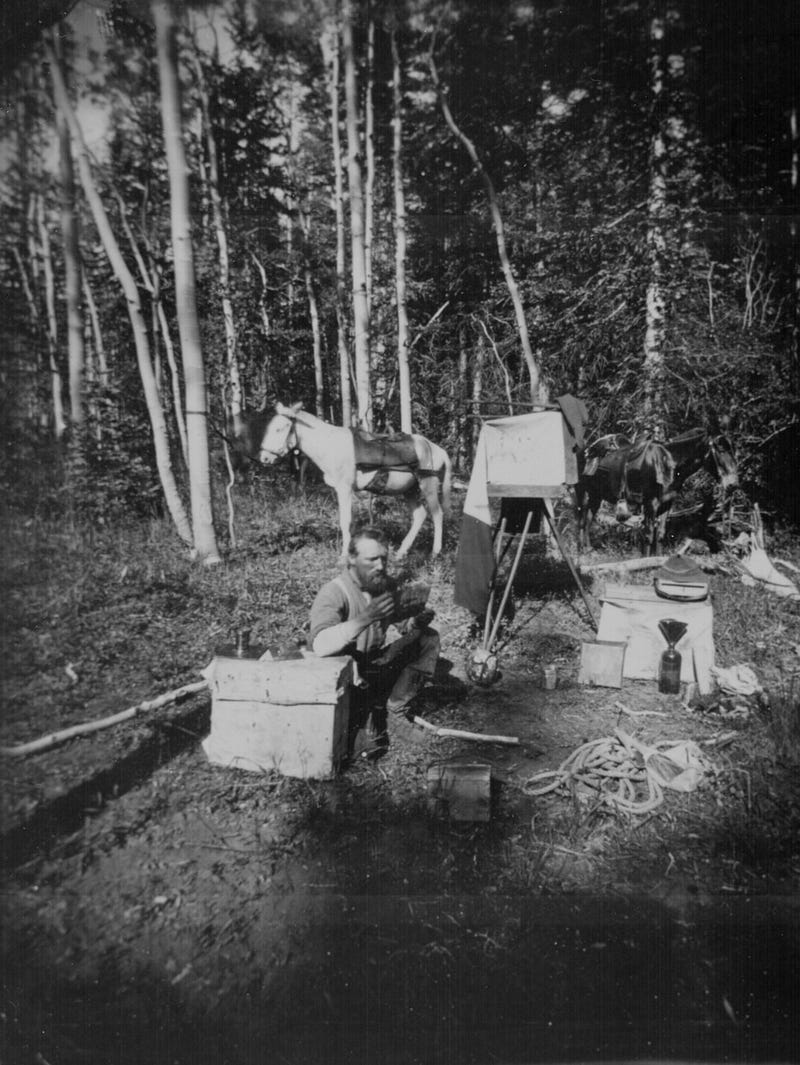
Photographer John Karl Hillers works with his photo negatives in camp on the Aquarius Plateau, Utah Territory, in this self-portrait, ca 1872. Public domain photo courtesy of Wikimedia Commons.

The boat crews followed the Colorado River to its confluence with the Virgin River in Utah Territory. Then, they explored and photographed the Virgin River Valley, including Zion Canyon.
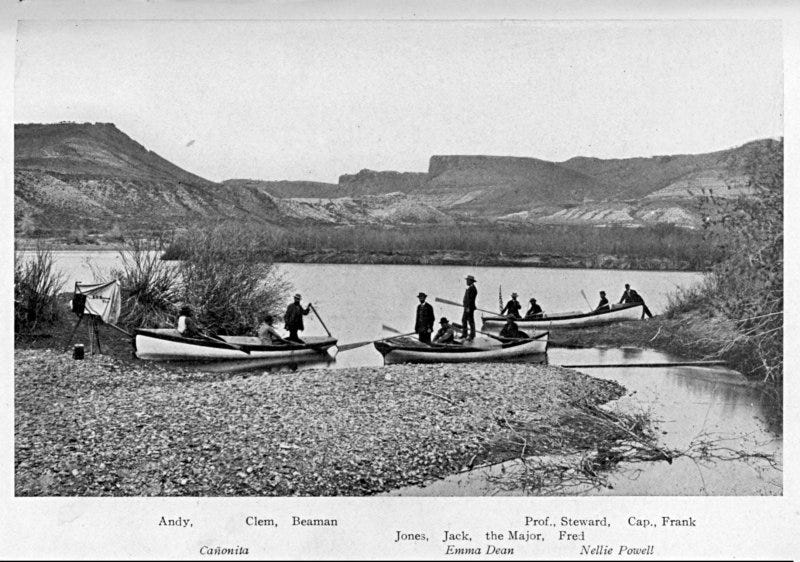
The crew prepares to start its 1871–1872 expedition at Green River City, Wyoming. Photograph by E. O. Beaman. Public domain image from “A Canyon Voyage,” by F. S. Dellenbaugh, G. Putnam and Sons, New York and London, 1908.

“Major Powell was a man of prompt decision, with a cool, comprehensive, far-reaching mind. He was genial, kind, never despondent, always resolute, resourceful, masterful, determined to overcome every obstacle.” — Frederick S. Dellebaugh, “A Canyon Voyage”
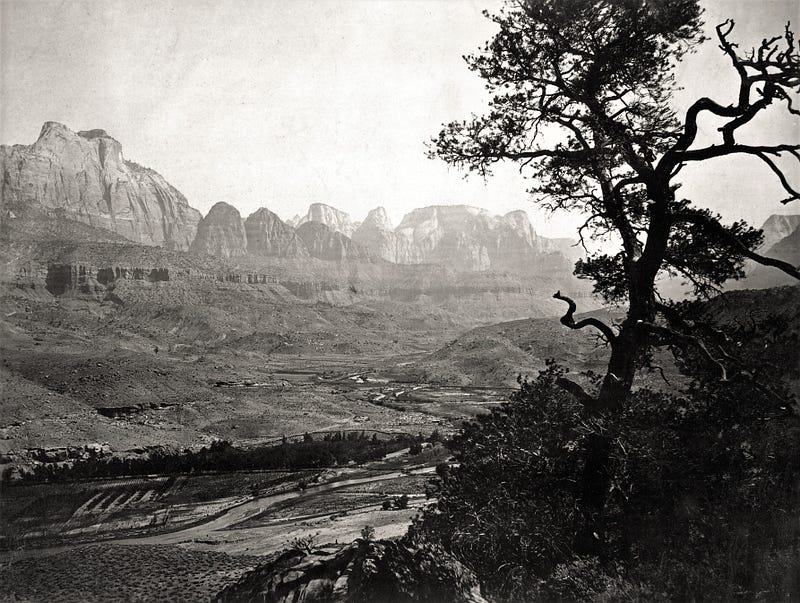
Virgin River Valley, Utah, now within Zion National Park. Photo by J.K. Hillers, ca 1871. Public domain image courtesy of Wikimedia Commons.

The walls of the 16-mile-long Zion Canyon rise to 3,000 feet at the Temple of Sinawava. Now located within Zion National Park, much of the gorge is accessible by road. But the park offers opportunities for day hikes and backpacking, too.
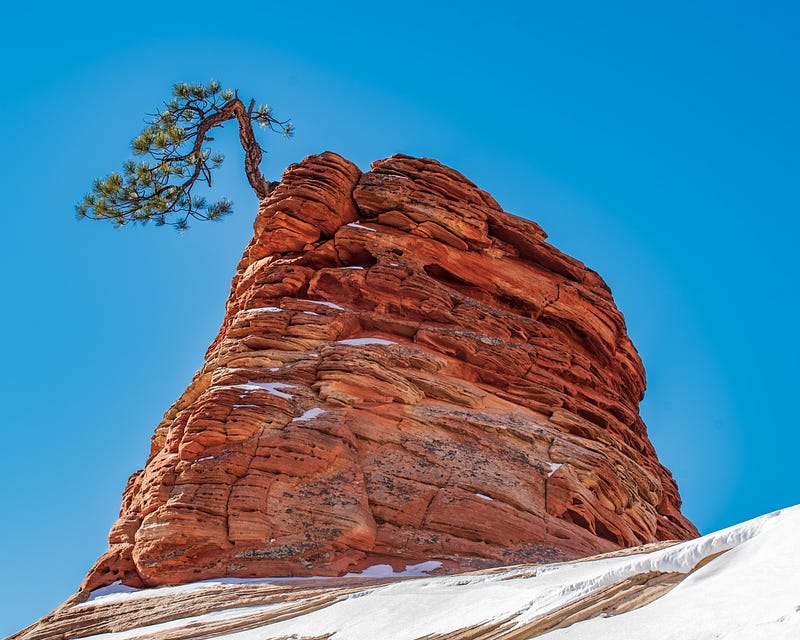
A pinyon pine grows from a hoodoo in Zion National Park. Copyright © 2023 Randy Runtsch.

I take self-propelled camping trips by bicycle, foot, or canoe every year. The adventures pale when compared to those Powell led. But they have met my criteria to balance excitement with risk. In all cases, I carry a camera.
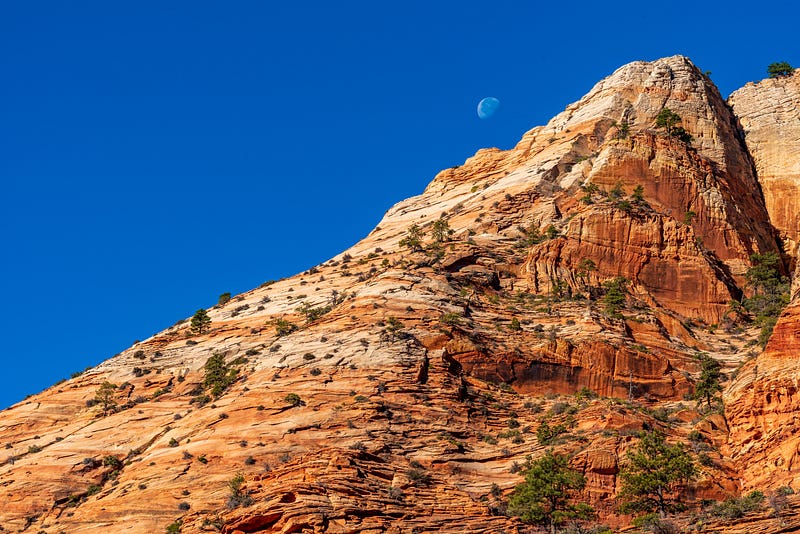
Moonrise over a mountain in Zion National Park. Copyright © 2023 Randy Runtsch.

I have never used a large-format view camera like the one John Hiller and the other photographers employed on the second Powell expedition. Imagine the effort to transport his camera and gear on a wilderness expedition and the time and labor needed to process each photograph.
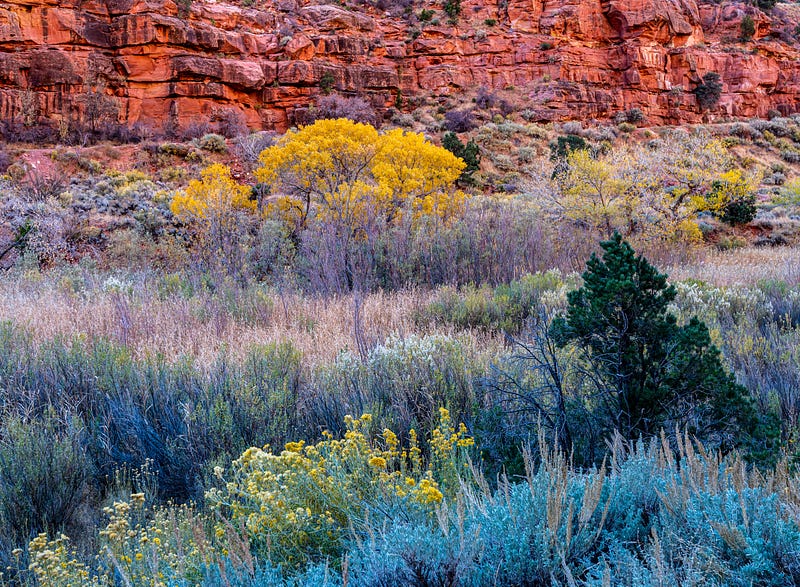
Autumn foliage in Zion Canyon. Copyright © 2023 Randy Runtsch.

The Virgin River, assisted by wind, rain, and ice, has carved features into the sandstone of Zion over millennia. Casual tourists, hikers, nature lovers, and nature photographers feast their eyes on its visual buffet every day.
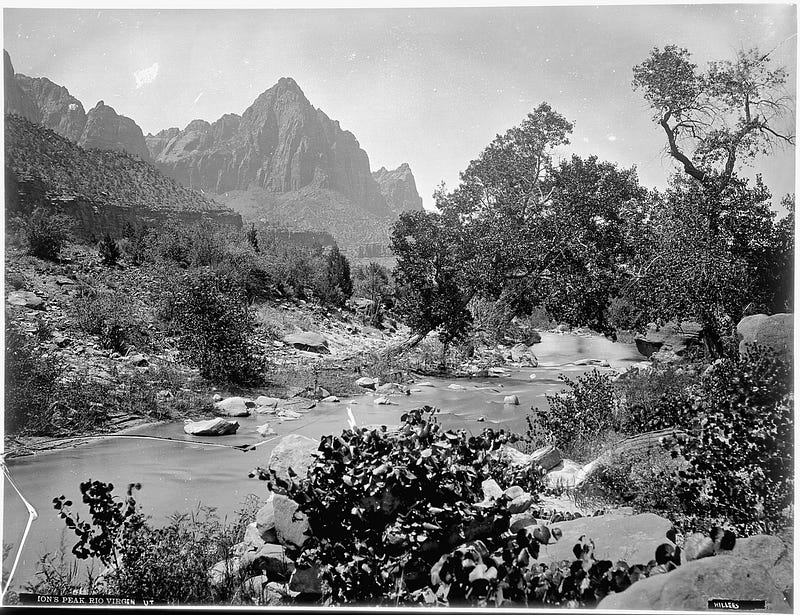
The Watchman, as photographed by John Karl Hillers, ca 1871. The author hopes to photograph the Watchman from the same viewpoint. Public domain photo courtesy of Wikimedia Commons.

The era of expeditions into unexplored terrestrial territories may have passed. But photography allows us to peer back to points in time.
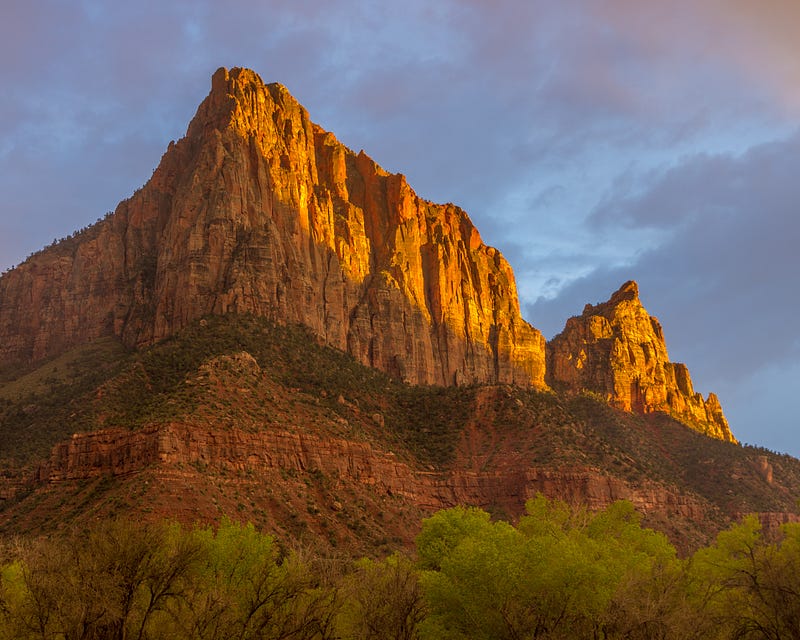
The Watchman stands near the entrance to Zion National Park at Springdale, Utah. Copyright © 2023 Randy Runtsch.

Learn More About John Wesley Powell and the Colorado River Expeditions

Thank you to Rodrigo S-C, Duvy McGirr, and GE McKerrihan for publishing Full Frame and for editing its writers’ works. I look forward to becoming a part of this photographic community.

Full Frame
Landscape Photography
Photography
Nature Photography
Adventure
Recommended from ReadMedium