
Zero to One II — “Madness is something rare in individuals — but in groups, parties, peoples, and ages, it is the rule.” F.N.
In this book “From Zero to One”, the author expressed in many parts of the book “What is the truth that so few people agree with you?” as an example answer to his question, the author sets out to describe the contrary truth, an imaginary popular understanding, and to examine the truth behind it.
Writer states that the “internet craze” in the 1990s was the biggest crisis since the 1929 World Economic Crisis, and that the lessons learned from there could create the form of technology that brings us to today. The concept of open thinking is explained. The first step to the concept of open thinking is undoubtedly to question what we know about the past. This is how we can see that many behaviors that we avoid leaving in our traditional comfort zones are futile. There are many good examples of these in the book.
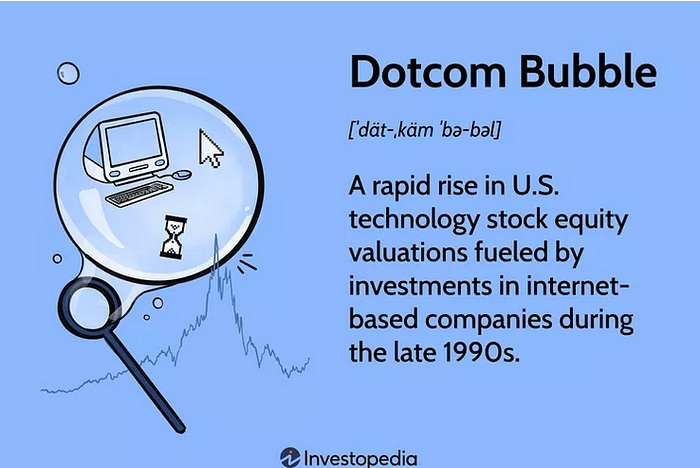
I would especially recommend you read the dot-com craze section, how it started and how it exploded beautifully illustrated and beautifully narrated. In such a way as to be called reasoning, it describes people’s irrational approaches to the event during this period.
Nowadays, people resort to unreasonably high-paying jobs as a way to earn more money, and there are numerous instances to prove this claim.
September 1998-March 2000 is the whole dot-com craze. There are examples of the dot-com era in the book. From these examples, a 40-year-old doctoral student known to the author leads six different companies during this period. This is complete madness and everyone knows that this period is not sustainable. But since it is a crazy period in which the start-ups who add .com to their name double their values overnight, the irrationality is rational …
This great post-crisis tech world has learned four great dogma lessons:
Progressive forward
To be lean and flexible
To develop the competition
Focus on the product is not on sale.
Taking small and determined steps is necessary to achieve sustainable progress. All companies should be lean, that is, unplanned. This place was surprising to me. It is said that you should not know how your business will progress. In other words, planning is an arrogant attitude and is not flexible. :)
That’s exactly how he wrote it. I said to myself, did the author write it wrong? Then I read it again. Instead of planning, it says, choose to try something, let it be repeatable, entrepreneurship is an agnostic experience initiative. It is said that you should not try to create a market before it is time for competition :)
The idea of focusing on the product is explained in a very entertaining way :) If you need advertising and a salesperson to sell the product, the author says “get well soon”. It means the product is not good. Technology focuses on product development, not distribution. I think this point is very important. The philosophy that emerged after the dot-com bubble has been accepted as dogma in the start-up world.
I think the author is someone who believes in the topic of thesis-antithesis-synthesis:). Opposing the dogma in the world of technology emerged in the following periods. These are summarized as follows:
Bold risks should be taken rather than doing insignificant work.( What doesn’t kill you makes you stronger:) I think.)
A Worst plan is better than unplanned.
A competitive market destroys earnings. (Monopoly is sweet:)).
Selling is as important as the product at least.
According to these items that I love, things in terms of competition in the technology world are getting hot at this point:)
In fact, we should all ask ourselves, can you be protected from the rapidly developing market conditions by taking refuge in the first four items of dogma?
How long will the comfort areas of the enterprise companies you take shelter in be enough for you?
How much of what you know about the business was determined by your erroneous responses to past mistakes?
Is it the most contrary to stand against the crowd or to think for yourself and display your own stance ?
These are some of the crazy questions that come to mind when you read the book:)
I’m also sharing the song I listened to while taking notes. Have a nice reading and listening :)
Link:


