
Zen of Life and Writing
Work, relax, don’t think
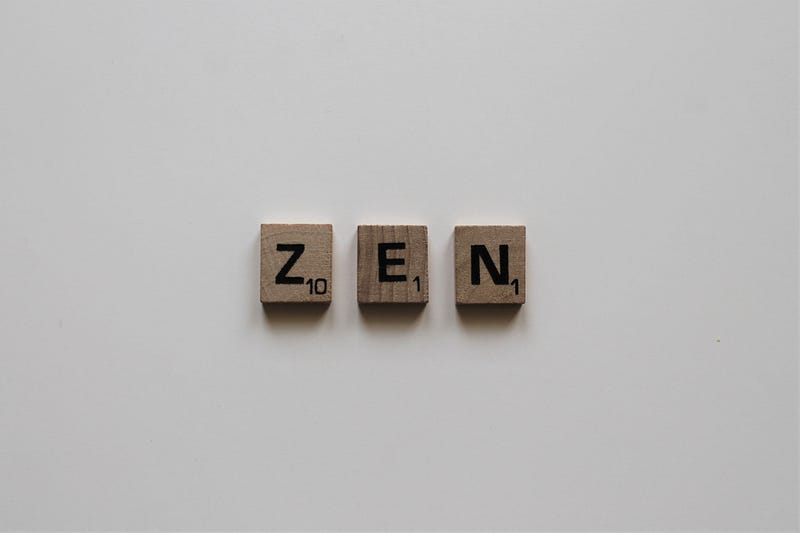
Zen.
What a lovely word.
Its initial power lies in the shortness of the word — ZEN. It’s easy to remember and spell. Then the vowel sound adds a touch of mystery, and the rarely used ‘z’ sound adds exoticism. Onomatopoeia plays a part as well. It sounds like what it represents — calm, peaceful, no-mind.
Intrigued by the growing popularity of the word, I read Zen in the Art of Archery by Eugen Herrigel. I’d been a proficient darts player in my younger years, so because darts and archery are similar skills in that they involve sharp objects hopefully hitting a target, I thought I’d understand what he was writing about. Perhaps his experience would provide me with a doorway into the Zen state, and help me reach enlightenment, which is what Zen has come to represent.
While teaching philosophy in Japan for six years, Herrigel chose to learn archery under a Master who was also a Zen practitioner. What I gleaned from the book is that reaching the Zen state can take a frustratingly long time. You need to be focussed and conscientious. You need the support of a patient Zen Master. And you may or may not reach enlightenment.
Herrigel attempts throughout the book to define the state of Zen. For example, page 37:
This state, in which nothing definite is thought, planned, striven for, desired or expected, which aims in no particular direction and yet knows itself capable alike of the possible and the impossible . . . which is at bottom purposeless and egoless . . .
It took Herrigel six years to perfect the art of archery by becoming purposeless and egoless. I’m old enough that I might not have six years left to me. But I’m an optimist, so, after reading the book and taking notes I headed out to the shed and rehung the darts board. After some halfhearted attempts to revive my skill using Zen techniques, I gave up. I put my failure down to the lack of a local Zen Master, and bought Ray Bradbury’s book Zen in the Art of Writing.
I write every day, so perhaps writing the Zen way would bring me to enlightenment.
Bradbury hit me over the head with four key words he put in giant capitals:
WORK. RELAX. DON’T THINK!
These words reminded me of Herrigel as he struggled to reach a Zen state through archery.
Herrigel had to practise the movements of archery over and over again until he was so familiar with the process that his body performed it automatically. This is WORK.
Then Herrigel was instructed not to focus on the target. In other words, RELAX.
Then he had to stop thinking, experience no mind. DON’T THINK!
So, Herrigel and Bradbury gave me the same advice. I have to write, write, write, write, write. While doing all this writing I have to relax — be purposeless and egoless, in other words forget about fame and fortune. And I have to write so much and relax so much that I enter a state of not thinking.
Bradbury wrote:
Every wood-turner, every sculptor worth his marble, every ballerina, practices what Zen preaches without having heard the word in all their lives.
Wood-turners, sculptors, ballerinas — and writers — work, relax and don’t think as they practise their crafts. It’s a creative cycle that leads to enlightenment — the Zen way.
Many words are used to describe the state of enlightenment: mindfulness, inner being, presence, in the zone, oneness, universal consciousness . . .
It’s wonderful to know that whatever word you use, you don’t have to find a holy mountain to reach it. It’s attainable through sinking deeply into consistent, daily effort.
A final, encouraging quote from Bradbury’s book:
What we are trying to do is find a way to release the truth that lies in all of us.
Working, relaxing and not thinking is the way to release the truth that lies in all of us. It can’t help but spill out onto the page.
And that’s also the Zen way to enlightenment.
With love, Marlane
Another way to release the truth that lies in you is to take the FREE 7-Day Mindfulness Challenge!


