avatarJames Marinero, MSc, MBA

Free AI web copilot to create summaries, insights and extended knowledge, download it at here

5391

Abstract

ptions. The trenches are shown in blue-green. The volcanic island arcs, although not labelled, are parallel to, and always landward of, the trenches. For example, the island arc associated with the Aleutian Trench is represented by the long chain of volcanoes that make up the Aleutian Islands. (SVG version of <a href="https://commons.wikimedia.org/wiki/File:Pacific_Ring_of_Fire.png">File:Pacific_Ring_of_Fire.png</a>, recreated by Gringer using WDB vector data using code mentioned in <a href="https://commons.wikimedia.org/wiki/File:Worldmap_wdb_combined.svg">File:Worldmap_wdb_combined.svg</a>.)</figcaption></figure><blockquote id="2687"><p><i>Earthquakes occur frequently in New Zealand as the country is situated in the collision zone between the Indo-Australian and Pacific tectonic plates, part of the Pacific Basin Ring of Fire, where many earthquakes and volcanoes occur. Most events occur along the main ranges running from Fiordland in the southwest to East Cape in the northeast. (<a href="https://en.wikipedia.org/wiki/List_of_earthquakes_in_New_Zealand">Wikipedia</a>)</i></p></blockquote><h1 id="638c">The discovery of Zealandia</h1><blockquote id="3b87"><p><i>The first real clues of Zealandia’s existence were gathered by the Scottish naturalist Sir James Hector, who attended a voyage to survey a series of islands off the southern coast of New Zealand in 1895. After studying their geology, he concluded that New Zealand is “the <a href="https://paperspast.natlib.govt.nz/periodicals/TPRSNZ1895-28.2.7.1.10">remnant of a mountain-chain</a> that formed the crest of a great continental area that stretched far to the south and east, and which is now submerged…”. (<a href="https://www.bbc.com/future/article/20210205-the-last-secrets-of-the-worlds-lost-continent">BBC</a>)</i></p></blockquote><p id="e1e8">In 2017, a group of geologists announced their discovery of Zealandia — <i>Te Riu-a-Māui</i> — in the Māori language. A continent of 1.89 million sq miles (4.9 million sq km), it is around 60% of the size of Australia.</p><h2 id="154b">How they found it, physically</h2><p id="50be">Researchers used bathymetry — mapping the depth of water — to analyse the region. The ocean above what we now call Zealandia is significantly shallower than that surrounding it, as you can see in the image below., although some parts are very deep.</p><figure id="3dba"><img src="https://cdn-images-1.readmedium.com/v2/resize:fit:800/1*7J1uz2oxcB9ANZ3pLkxlkg.png"><figcaption>NOAA screenshot of Tasman Sea Bathymetry. Source: <a href="https://www.ncei.noaa.gov/maps/bathymetry/">https://www.ncei.noaa.gov/maps/bathymetry/</a></figcaption></figure><p id="255b">The bathymetry suggested that the area was not atop an oceanic tectonic plate (as are most of the world’s oceans). This was unusual.</p><p id="ee0b">By deep dredging for rock samples over a large area in the Tasman and Coral Seas, they were able to classify the dredge samples and prove that the rocks, stones and pebbles were distinct from Australian geology. Classification was done using a variety of techniques including physical rock typing, chemical analysis and paleomagnetism (magnetic field locked in to rock and lava samples).</p><p id="5c23">Also, satellite data of gravity was used. These satellites detect very small variations in gravity and that data provided additional mapping input.</p><p id="3fdc">All this data ultimately led to the first map of the ‘new’ continent.</p><p id="20d1">Mapping North Zealandia in 2022 was the final part of the research and completed the picture. South Zealandia had been mapped some years earlier.</p><p id="586f">It was a challenging survey, because some parts of Zealandia’ shelf lie at depths of more than 2,000 metres.</p><h1 id="1ea5">Formation</h1><p id="0c40">It is believed that about 420 million years ago, there was a huge landmass which we now call Gondwana.</p><figure id="c669"><img src="https://cdn-images-1.readmedium.com/v2/resize:fit:800/1*VRPB-gvNxvs2rCf2DB9AsQ.png"><figcaption>Gondwana circa 420 million years ago. Tectonic plates are marked with coloured lines. Credit: By Fama Clamosa — Own work, CC BY-SA 4.0, <a href="https://commons.wikimedia.org/w/index.php?curid=67001070">https://commons.wikimedia.org/w/index.php?curid=67001070</a></figcaption></figure><p id="68bd">The survey results suggest that there were two stages to the formation of the eighth continent. The first began around 89–100 million years ago, leading to a split which is now the Tasman Sea between Australia and New Zealand. The second stage started soon after and led to Zealandia breaking from West Antarctica and creating the Pacific Ocean.</p><p id="a2b9">This is the latest map of Zealandia:</p><figure id="ea32"><img src="https://cdn-images-1.readmedium.com/v2/resize:fit:800/1*5Zifu9lk2tL7Yfw-T3OrbQ.jpeg"><figcaption>Zealandia ‘Map’, credit: By World Data Center for Geophysics & Marine Geology (Boulder, CO), National Geophysical Data Center, NOAA — Ultimate source: ETOPO2v2, a digital database of seafloor and land elevations. Actually cropped from Image:Pacific_elevation.jpg., Public Domain, <a href="https://commons.wikimedia.org/w/index.php?curid=1779323">https://commons.wikimedia.org/w/index.php?curid=1779323</a></figcaption></figure><h1 id="c662">Why is it important?</h1><p id="b971">The research is important because of its economic implications.</p

Options

<p id="4bc8">New Zealand has signed a United Nations treaty called the Convention on the Law of the Sea (UNCLOS). This was part of an effort to extend the country’s control over natural resources.</p><p id="d391">Typically, a country has control over an Exclusive Economic Zone which extends 200 miles from its shores. But, importantly, UNCLOS now defines five maritime zones — one of which hinges on a “continental” definition.</p><p id="3a33">The recognition of Zealandia would give New Zealand control over a vast swathe of continental shelf and its natural resources.</p><h1 id="1e42">The future</h1><p id="0ca4">No doubt there will be extensive legal arguments about this because the shelf of Zealandia is much deeper than most continental shelves.</p><p id="96d4">For me, another crossing of the Tasman Sea is a prospect for 2024, once the southern hemisphere cyclone season has ended. Next time I’ll definitely have a better understanding of what is beneath me, particularly as I round Cape Reinga where the tides of the Tasman meet those of the Pacific. I’ll stay well offshore!</p><p id="bd3f">And yes, a few reference works and school curricula will have to be changed to include the eighth continent.</p><figure id="1ff6"><img src="https://cdn-images-1.readmedium.com/v2/resize:fit:800/1*S1sCqDVlGf-wDK9BVWiyEA.jpeg"><figcaption>Author pic at Cape Reinga, Far North, New Zealand</figcaption></figure><p id="25fa">References and further reading:</p><p id="682a">Source paper: <a href="https://agupubs.onlinelibrary.wiley.com/doi/epdf/10.1029/2023TC007961">https://agupubs.onlinelibrary.wiley.com/doi/epdf/10.1029/2023TC007961</a></p><div id="3e8c" class="link-block">
      <a href="https://www.sciencenews.org/article/newly-identified-continent-zealandia-faces-battle-recognition">
        <div>
          <div>
            <h2>Newly identified continent Zealandia faces a battle for recognition</h2>
            <div><h3>Geologists make the case for a new continent, dubbed Zealandia, found largely submerged beneath the southwestern…</h3></div>
            <div><p>www.sciencenews.org</p></div>
          </div>
          <div>
            <div style="background-image: url(https://miro.readmedium.com/v2/resize:fit:320/0*BEDMO7ZiNy_loXze)"></div>
          </div>
        </div>
      </a>
    </div><div id="7762" class="link-block">
      <a href="https://www.bbc.com/future/article/20210205-the-last-secrets-of-the-worlds-lost-continent">
        <div>
          <div>
            <h2>The missing continent that took 375 years to find</h2>
            <div><h3>It took scientists 375 years to discover the eighth continent of the world, which had been hiding in plain sight all…</h3></div>
            <div><p>www.bbc.com</p></div>
          </div>
          <div>
            <div style="background-image: url(https://miro.readmedium.com/v2/resize:fit:320/0*fjWpmNvhKyZP29Wf)"></div>
          </div>
        </div>
      </a>
    </div><div id="8c73" class="link-block">
      <a href="https://finance.yahoo.com/news/earths-newest-continent-zealandia-found-224639778.html">
        <div>
          <div>
            <h2>Earth's newest continent 'Zealandia' was found thanks to a giant underwater land grab</h2>
            <div><h3>Zealandia is a new and mostly submerged continent off the coast of New Zealand. The discovery...</h3></div>
            <div><p>finance.yahoo.com</p></div>
          </div>
          <div>
            <div style="background-image: url(https://miro.readmedium.com/v2/resize:fit:320/0*EJsf0eDdYQd9M_mu)"></div>
          </div>
        </div>
      </a>
    </div><div id="269d" class="link-block">
      <a href="https://www.bbc.com/future/article/20230928-the-mysteries-of-the-worlds-eighth-continent">
        <div>
          <div>
            <h2>The latest maps of the world's eighth continent</h2>
            <div><h3>New research on the geology of Zealandia is revealing how it formed - and why it sank</h3></div>
            <div><p>www.bbc.com</p></div>
          </div>
          <div>
            <div style="background-image: url(https://miro.readmedium.com/v2/resize:fit:320/0*uzu17V4WCTfE38is)"></div>
          </div>
        </div>
      </a>
    </div><p id="d986"><i>Follow me and I guarantee variety in your inbox with some unusual perspectives! I write on a wide range of topics that interest me including humour, tech, space, geopolitics and travel, together with daily news events and the minutiae of my daily life living on a boat. I also write about…</i></p><p id="226e"><b>…the earth beneath us</b></p><figure id="15b4"><img src="https://cdn-images-1.readmedium.com/v2/resize:fit:800/1*QeQr0J6dshTDJHUZ_MtLdw.png"><figcaption></figcaption></figure><p id="0af7"><i>My novels are available at my <a href="https://jamesmarinero.gumroad.com/">Gumroad</a> bookstore. Also at <a href="https://www.amazon.com/stores/James-Marinero/author/B0055RWF6U">Amazon</a> and <a href="https://books.apple.com/us/author/james-marinero/id490200686">Apple</a></i></p><p id="138a"><i>Or maybe just <a href="https://ko-fi.com/jamesmarinero">buy me a coffee?</a> and tell me what you liked reading (or not)…</i></p></article></body>

Science

Zealandia Discovered and Seven Continents Becomes Eight

Beneath the sea off Eastern Australia, an intriguing discovery is resetting our thinking about the Earth’s continental history
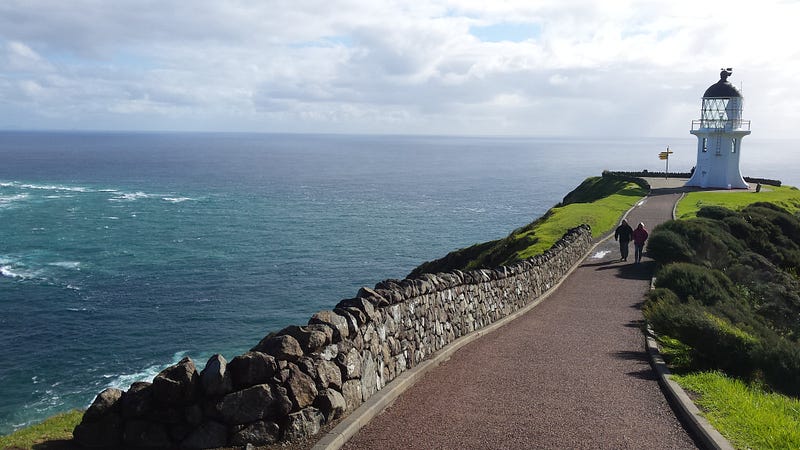
Cape Reinga, New Zealand’s Far North on a new continent, where the tides of the Tasman Sea meets those of the Pacific Ocean. Author picture.

Recent research has proven the existence of an eighth continent off the east coast of Australia. For several years earth scientists had postulated its existence and now, finally, it has been physically discovered. It has been called Zealandia

It’s like something out of Jules Verne, a new continent. But most of it is under the sea, and at the very top is New Zealand. It’s in an area generally called Oceania. This is what Wikipedia says about the region today:

Outside of the English-speaking world, Oceania is generally considered a continent, while Australia is regarded as an island or a continental landmass contained inside of the larger continent of Oceania.

The English-speaking world regards Australia as a continent.
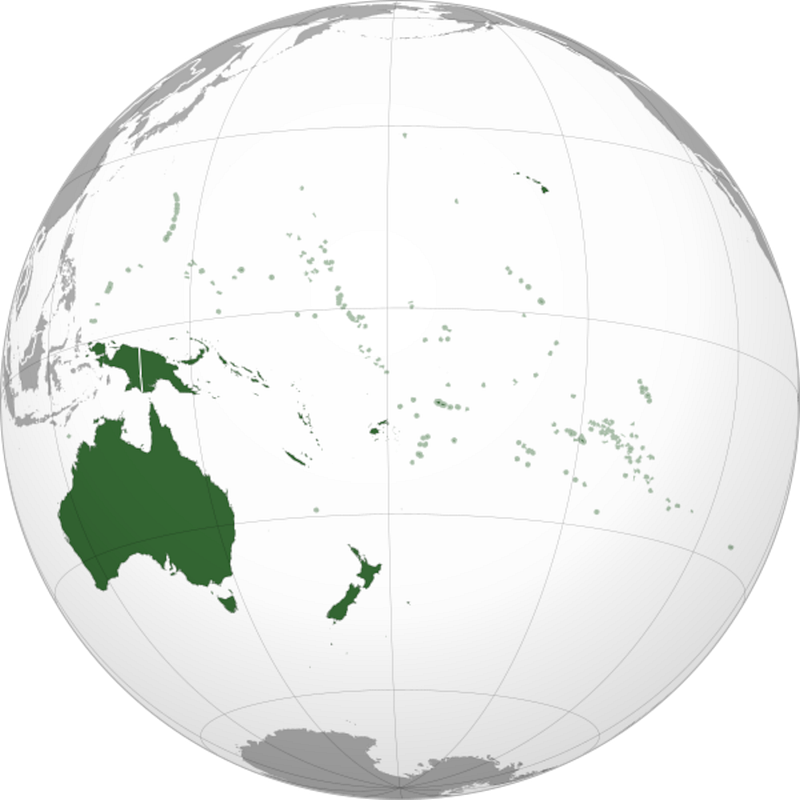
Credit: By M.Bitton — Own work, CC BY-SA 3.0, https://commons.wikimedia.org/w/index.php?curid=129531330

This will have to be re-written.

Let’s take a look at the news about the discovery and some of my experiences in the area.

Background

During the Covid crisis I spent 2 years locked down in New Zealand on my boat, but I’m now back in Australia again after a trip of several months to Indonesia and New Guinea. I prefer Australia to New Zealand because of its vast vistas; I feel that it’s more ‘edgy’ than New Zealand.

The geology of Australia is very old relative to New Zealand which is still emerging violently from the ocean. New Zealand experiences on average 14,000 earth tremors every year, and the peak year recorded 34,000 tremors. When on the boat we experienced a couple of Tsunami warnings and a nearby harbour (Tutukaka) was trashed during one episode. We felt nothing.

One thousand miles apart, Australia and New Zealand are very different landmasses, separated by the Tasman Sea. I’ve sailed across the Tasman twice in my boat, and both occasions have delivered hair-raising experiences with three gales, one storm and the loss of a couple of sails (‘blown out’).

The flora and fauna of the countries are substantially different. There are no animals or insects dangerous to humans in New Zealand, while Australia has its crocodiles, dangerous snakes and poisonous spiders.

Although Australia has huge open deserts and plains it also has mountain ranges, even snow, New Zealand is much smaller, much more rugged and feels claustrophobic to me. Needless to say, my wife prefers New Zealand.

The indigenous people are also quite different. The Maoris have a warrior history, much more so than Australia’s Aborigines.

Plate tectonics

It’s many years since I studied geophysics as part of my undergraduate degree and at that time plate tectonics was a new and exciting concept, still thought to be nonsense by many Earth scientists of the time.

Now it’s a well established and proven theory. The continents are just ‘land’ on crustal plates ‘floating’ on the earth’s mantle and moving slowly under the complex influence of several forces including mantle convection, plate drag and mid ocean ridge push.

The plate movement of a few centimetres per year causes some plates to move under others (subduction) and where plates move apart hot material rises from the earth’s core with volcanoes being the most visible outpouring.
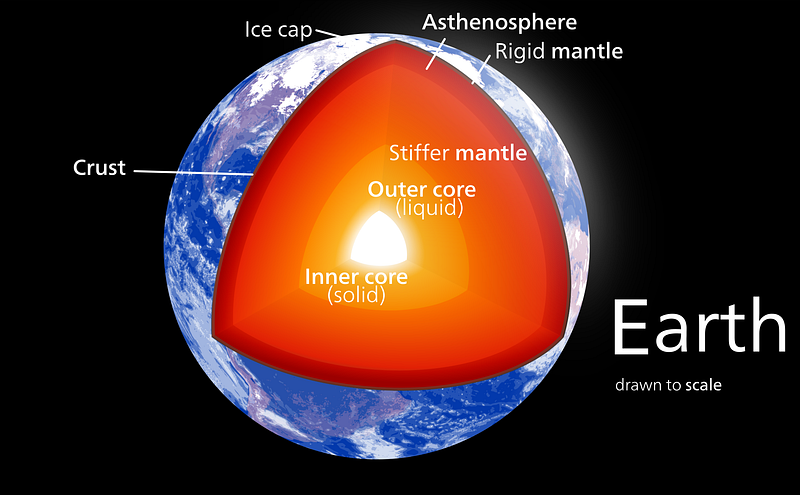
Credit: By Kelvinsong — Own work, CC BY-SA 3.0, https://commons.wikimedia.org/w/index.php?curid=23966175

Earthquakes generally occur in areas of subduction (e.g. Japan) and of plate shear (e.g. the San Andreas fault which runs through California).

Continental crust thickness is usually around 40km — significantly thicker than oceanic crust, which is around 10km thick.

Back in ‘Oceania’, New Zealand sits on the ‘Pacific Ring of Fire’:
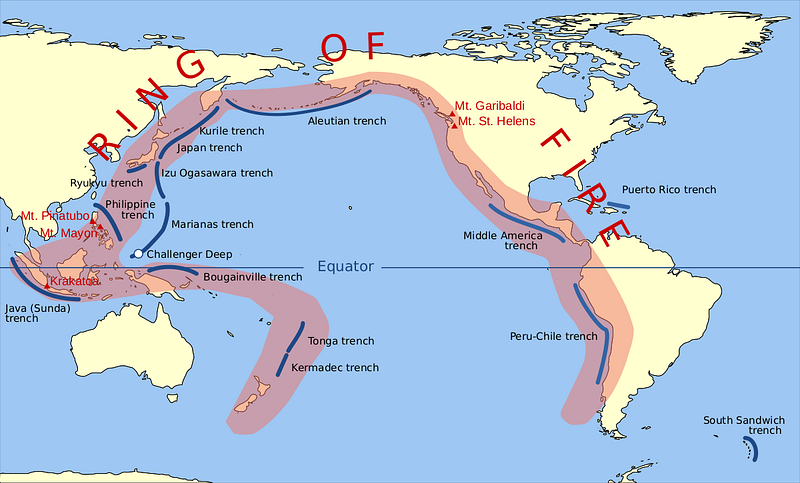
Volcanic arcs and oceanic trenches partly encircling the Pacific Basin form the so-called Pacific Ring of fire, a zone of frequent earthquakes and volcanic eruptions. The trenches are shown in blue-green. The volcanic island arcs, although not labelled, are parallel to, and always landward of, the trenches. For example, the island arc associated with the Aleutian Trench is represented by the long chain of volcanoes that make up the Aleutian Islands. (SVG version of File:Pacific_Ring_of_Fire.png, recreated by Gringer using WDB vector data using code mentioned in File:Worldmap_wdb_combined.svg.)

Earthquakes occur frequently in New Zealand as the country is situated in the collision zone between the Indo-Australian and Pacific tectonic plates, part of the Pacific Basin Ring of Fire, where many earthquakes and volcanoes occur. Most events occur along the main ranges running from Fiordland in the southwest to East Cape in the northeast. (Wikipedia)

The discovery of Zealandia

The first real clues of Zealandia’s existence were gathered by the Scottish naturalist Sir James Hector, who attended a voyage to survey a series of islands off the southern coast of New Zealand in 1895. After studying their geology, he concluded that New Zealand is “the remnant of a mountain-chain that formed the crest of a great continental area that stretched far to the south and east, and which is now submerged…”. (BBC)

In 2017, a group of geologists announced their discovery of Zealandia — Te Riu-a-Māui — in the Māori language. A continent of 1.89 million sq miles (4.9 million sq km), it is around 60% of the size of Australia.

How they found it, physically

Researchers used bathymetry — mapping the depth of water — to analyse the region. The ocean above what we now call Zealandia is significantly shallower than that surrounding it, as you can see in the image below., although some parts are very deep.
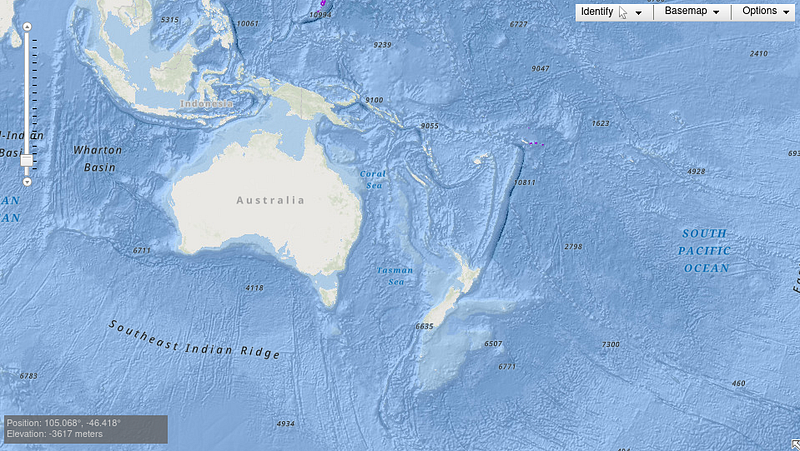
NOAA screenshot of Tasman Sea Bathymetry. Source: https://www.ncei.noaa.gov/maps/bathymetry/

The bathymetry suggested that the area was not atop an oceanic tectonic plate (as are most of the world’s oceans). This was unusual.

By deep dredging for rock samples over a large area in the Tasman and Coral Seas, they were able to classify the dredge samples and prove that the rocks, stones and pebbles were distinct from Australian geology. Classification was done using a variety of techniques including physical rock typing, chemical analysis and paleomagnetism (magnetic field locked in to rock and lava samples).

Also, satellite data of gravity was used. These satellites detect very small variations in gravity and that data provided additional mapping input.

All this data ultimately led to the first map of the ‘new’ continent.

Mapping North Zealandia in 2022 was the final part of the research and completed the picture. South Zealandia had been mapped some years earlier.

It was a challenging survey, because some parts of Zealandia’ shelf lie at depths of more than 2,000 metres.

Formation

It is believed that about 420 million years ago, there was a huge landmass which we now call Gondwana.
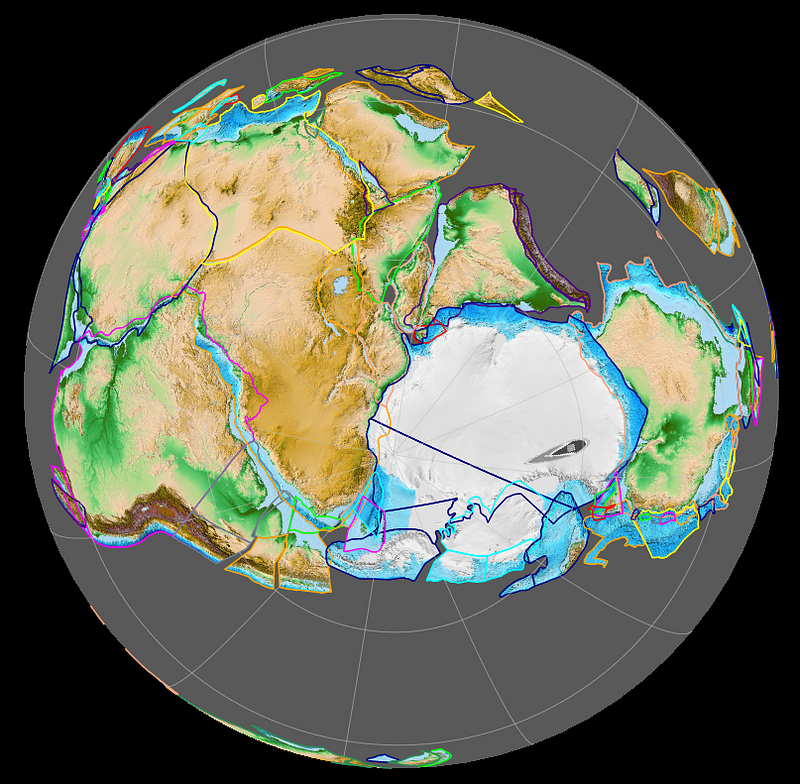
Gondwana circa 420 million years ago. Tectonic plates are marked with coloured lines. Credit: By Fama Clamosa — Own work, CC BY-SA 4.0, https://commons.wikimedia.org/w/index.php?curid=67001070

The survey results suggest that there were two stages to the formation of the eighth continent. The first began around 89–100 million years ago, leading to a split which is now the Tasman Sea between Australia and New Zealand. The second stage started soon after and led to Zealandia breaking from West Antarctica and creating the Pacific Ocean.

This is the latest map of Zealandia:
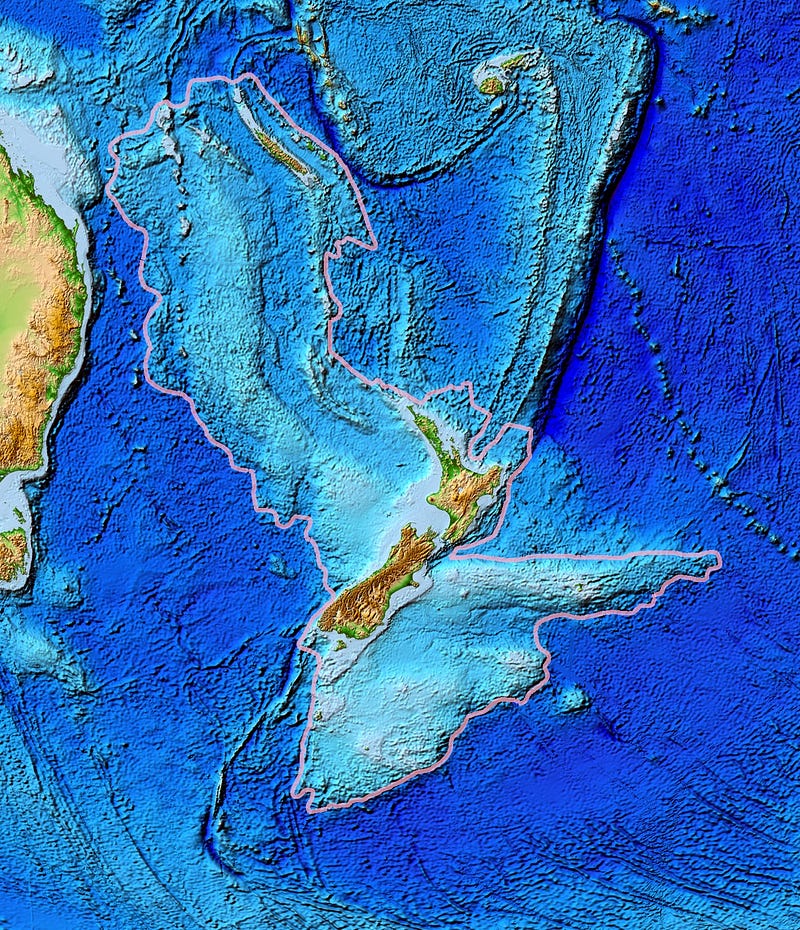
Zealandia ‘Map’, credit: By World Data Center for Geophysics & Marine Geology (Boulder, CO), National Geophysical Data Center, NOAA — Ultimate source: ETOPO2v2, a digital database of seafloor and land elevations. Actually cropped from Image:Pacific_elevation.jpg., Public Domain, https://commons.wikimedia.org/w/index.php?curid=1779323

Why is it important?

The research is important because of its economic implications.

New Zealand has signed a United Nations treaty called the Convention on the Law of the Sea (UNCLOS). This was part of an effort to extend the country’s control over natural resources.

Typically, a country has control over an Exclusive Economic Zone which extends 200 miles from its shores. But, importantly, UNCLOS now defines five maritime zones — one of which hinges on a “continental” definition.

The recognition of Zealandia would give New Zealand control over a vast swathe of continental shelf and its natural resources.

The future

No doubt there will be extensive legal arguments about this because the shelf of Zealandia is much deeper than most continental shelves.

For me, another crossing of the Tasman Sea is a prospect for 2024, once the southern hemisphere cyclone season has ended. Next time I’ll definitely have a better understanding of what is beneath me, particularly as I round Cape Reinga where the tides of the Tasman meet those of the Pacific. I’ll stay well offshore!

And yes, a few reference works and school curricula will have to be changed to include the eighth continent.
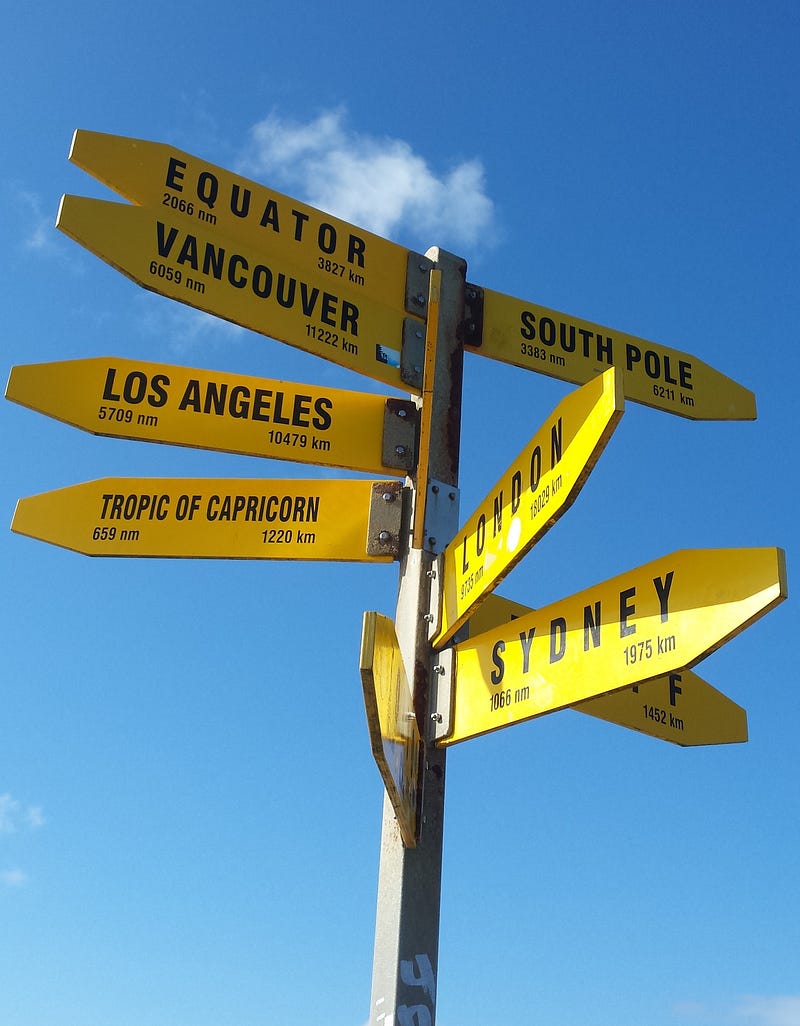
Author pic at Cape Reinga, Far North, New Zealand

References and further reading:

Source paper: https://agupubs.onlinelibrary.wiley.com/doi/epdf/10.1029/2023TC007961

Follow me and I guarantee variety in your inbox with some unusual perspectives! I write on a wide range of topics that interest me including humour, tech, space, geopolitics and travel, together with daily news events and the minutiae of my daily life living on a boat. I also write about…

…the earth beneath us

My novels are available at my Gumroad bookstore. Also at Amazon and Apple

Or maybe just buy me a coffee? and tell me what you liked reading (or not)…

Science
Geophysics
Nature
Earth Science
Tasman Sea
Recommended from ReadMedium