
Zack Snyder and Warner Bros.: What Went Wrong?
An overview of the increasingly deteriorating relationship between Zack Snyder and the studio he used to call his home.
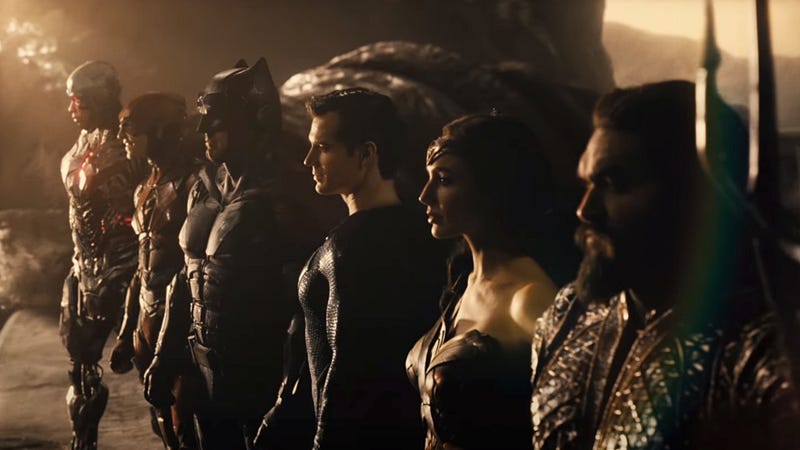
As he promotes the release of Army of the Dead (out in theaters now and then on Netflix on the 21st), Zack Snyder is continuing the press tour that began earlier this year thanks to the long-awaited unveiling of his version of Justice League. One such interview was the one he gave the Sunday Times, where he said, in as many words, he’s unlikely to ever work on another project where the studio gets final say, effectively signaling the end of his relationship with Warner Bros. after almost two decades (he was hired to direct 300 in June 2004).
It’s a relationship that produced seven films (eight if, as per Directors Guild rules, you count the theatrical version of Justice League), the last few of which marred by studio interference and behind-the-scenes issues. But when exactly did the relationship break down? What led to the crisis? And who’s to blame? It’s a long, complex story, that actually begins way before Snyder was hired to direct Man of Steel.
The Early Years
Hot off the success of his debut Dawn of the Dead (distributed by Universal), Zack Snyder landed the 300 gig in 2004, and the resulting film was an undisputed success: while some critics expressed concern over the presumed political implications of the script (an issue that might have more to do with Frank Miller), audiences flocked to see the movie, which grossed 456 million dollars worldwide on a budget between 60 and 65 million.
Impressed with what they had seen, Warner Bros. approached him to tackle Watchmen, an ambitious project that had defeated the likes of Terry Gilliam, Darren Aronofsky and Paul Greengrass, among others. The film was developed in partnership with Paramount Pictures, as the studio had previously developed the aborted Aronofsky/Greengrass version, with Warners handling domestic distribution and Paramount international (they also split the ownership 75–25).
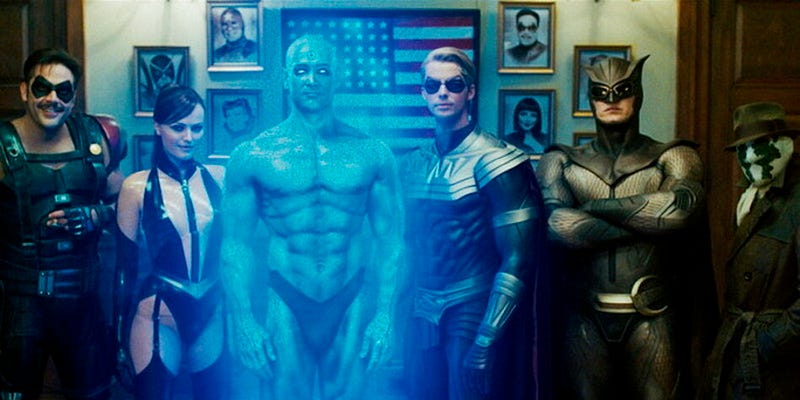
The film was not a commercial success, grossing a mere 185 million dollars worldwide on a 130-million-dollar budget (the conventional rule of thumb is a film’s theatrical gross has to be at least double the production budget before it starts turning a profit). Reviews were also split down the middle, with some applauding the effort of finally managing to bring the celebrated graphic novel to the screen while others criticized the film’s tone and aesthetic. Additionally, there are fans of the source material who, to this day, maintain the movie fundamentally misunderstands the text it was adapting (Alan Moore, who wrote the graphic novel, has famously never seen the film and managed to have his name removed from the credits).
Still, the studio clearly liked working with Snyder, as he was handed his next project, Legend of the Guardians: The Owls of Ga’Hoole, while still in post-production on Watchmen. While working on the animated film he also secured a deal to make Sucker Punch, based on an original idea of his. And then, in late 2010, Christopher Nolan approached him for what became Man of Steel, with Snyder officially announced as the director on October 4, ten days after Legend of the Guardians opened in US theaters.
Dawn of Injustice
Man of Steel opened in June 2013, and proved popular with audiences, grossing more than Superman Returns. Critics were more divided, taking issue primarily with the film’s darker tone and controversial third act. Still, it proved popular enough to justify a sequel, with Snyder still attached as director and Superman set to share screen time with both Batman and Wonder Woman (the latter making her long awaited motion picture debut).
Batman v Superman: Dawn of Justice premiered in March 2016, and proved every bit as polarizing as its predecessor. Crucially, it also made less of an impression with general audiences, grossing 50% of its domestic box office money on opening weekend (typically, a blockbuster with “legs” — i.e., enduring commercial appeal in theaters — ends its run in cinemas with 3–4 times the initial weekend gross).
Snyder fans were also annoyed upon discovering roughly 30 minutes had been cut, although that was at least partly with the director’s consent: Snyder famously shoots on film, meaning IMAX prints cannot exceed a 165-minute running time. This is also the cut-off point after which the number of daily showings decreases, so it’s reasonable to assume a 3-hour version was never on the cards for wide release. Whether Snyder had any real input as to what was cut (besides a few seconds of footage that were removed to secure a PG-13 rating) is another matter.
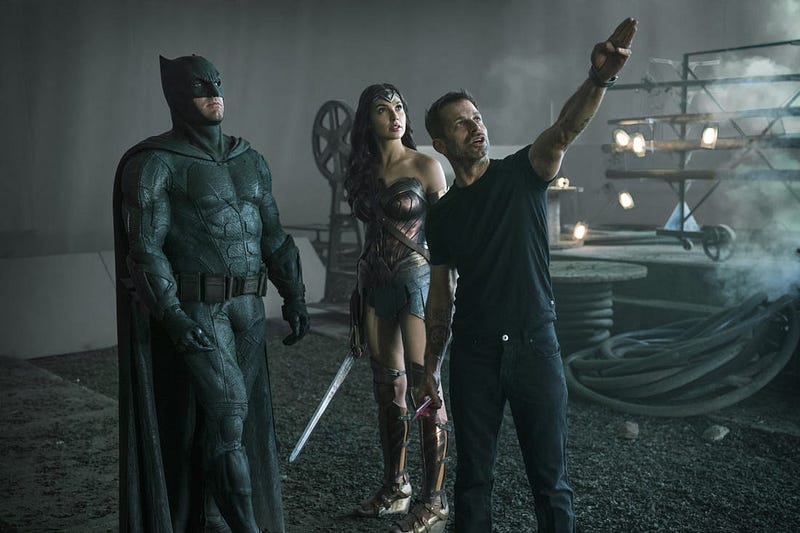
Still, that was nothing compared to what was coming next: confident that the film would break box office records (after all, Batman’s previous cinematic appearance had grossed a billion dollars), the studio had already given Snyder the go-ahead for Justice League, principal photography for which began in April 2016, mere days after the theatrical debut of Batman v Superman.
Additionally, in between Snyder first taking on the Man of Steel assignment and the filming of Justice League, there had been a regime change at the studio: Alan Horn, who was in charge when the director first began working with Warners, was forced to retire in 2011 (he subsequently joined Disney), and his successor was presumably less than impressed with the leeway granted to a filmmaker whose box office track record was inconsistent (Watchmen, Legend of the Guardiansand Sucker Punch had all lost money in theaters).
Furthermore, at some point the higher-ups at Warner Bros. realized their plans didn’t line up with Snyder’s. Specifically, he wanted his take on the DC characters to have a precise end point, like how Nolan had handled the Dark Knight trilogy, while the studio was interested in a more open-ended endeavor, not unlike the Marvel Cinematic Universe, rather than having to reboot everything again after a few years. And that’s when the real trouble began.
A Tale of Two Cuts
Justice League completed principal photography without any major hitches, with Snyder agreeing to lighten the mood somewhat. Slightly more contentious was the studio’s mandate of a two-hour runtime, given the project’s scope: for reference, the first Avengers movie is 143 minutes long, and Snyder claims to have submitted cuts ranging between 140 and 160 minutes. Additionally, Joss Whedon was brought in to write additional material, a choice the director didn’t object to even though it wasn’t his idea.
Then, in early 2017, tragedy struck: Snyder’s daughter Autumn took her own life, and the filmmaker tried to process his grief by continuing to work on the movie, before realizing it was not worth fighting the studio while his family needed him. And so, in May 2017, he officially stepped down, with Whedon taking over for the remainder of post-production, including reshoots. On paper, this was a mere matter of making sure the film was delivered on time, with Snyder’s vision preserved. The cast was also told this, only to discover it was far from true.
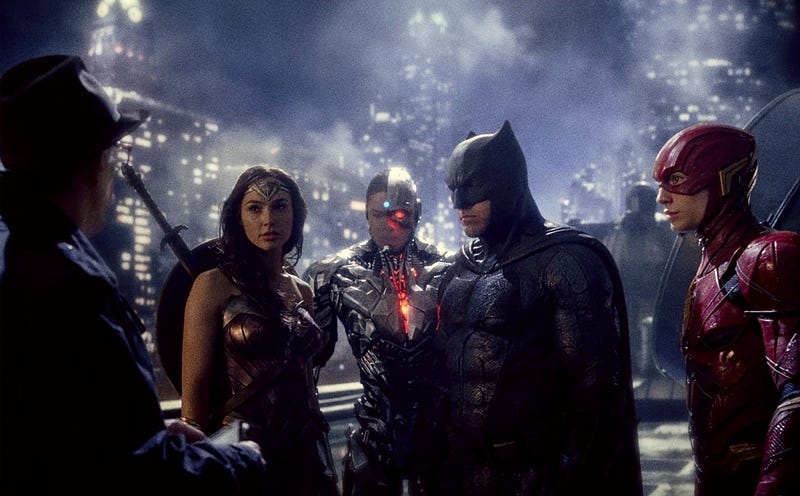
Whedon’s retooling was so extensive one could clearly tell which sections of the theatrical cut of Justice League were his (primarily all the scenes involving Superman, since the rushed schedule meant the VFX didn’t have enough time to properly remove the mustache Henry Cavill had grown for another project and was contractually barred from shaving). And yet, Snyder retained sole director credit, due to union rules: he had completed 100% of principal photography and was therefore the project’s official director regardless of subsequent changes.
Fans were unhappy, and promptly began the #ReleaseTheSnyderCut campaign, which eventually gained support from the film’s cast and crew and convinced WarnerMedia to provide the funds to complete Zack Snyder’s Justice League, with the intention of using the title to add buzzy original content to HBO Max’s slate.
That version ends on a cliffhanger, but there has been no indication anyone on the studio side wants to continue that story. Presumably, part of it has to with not wanting to be perceived as giving in to the demands on a fandom whose good deeds have been overshadowed by online toxicity (to the extent that both Snyder and Ray Porter, who plays Darkseid, have had to publicly disavow such behavior).
On top of that, it’s fairly obvious their relationship with the director is irreparably broken, for multiple reasons (from the studio’s point of view, since they have famously refused to acknowledge any wrongdoing on their part): chiefly, his association with certain parties who regularly undermine the studio and its collaborators (he has granted multiple interviews to YouTuber Grace Randolph, whose penchant for inaccurate reporting has been called out by James Wan, James Gunn and Cathy Yan, among others), as well as his desire to make things his way, which is incompatible with Warner’s reported desire to avoid granting final cut to directors (outside of established successful partnerships like Clint Eastwood and Christopher Nolan).
What Lies Ahead
It’s safe to assume that, until late 2022 at the earliest, little will change between the two parties (that’s when Toby Emmerich’s contract as chairman of the WB motion pictures group expires). And even then, it’s unlikely Snyder would be granted carte blanche by any of the traditional studios, given the money involved for projects this big (although it bears repeating that even by major studio standards, what happened with Justice League was an aberration). This is something the man himself has acknowledged, saying he’d love to make a Star Wars movie but would probably not survive the creative process.
As it stands, he’s better off developing his own original projects, with a partner like Netflix who has no issue granting total creative freedom. That way, there will be no more behind-the-scenes drama. Or if there is, for whatever reason, it won’t be as colossal as what went down in 2017.


