
You’ve Been Thinking About Enlightenment All Wrong
It’s a skill you can learn in a matter of weeks.
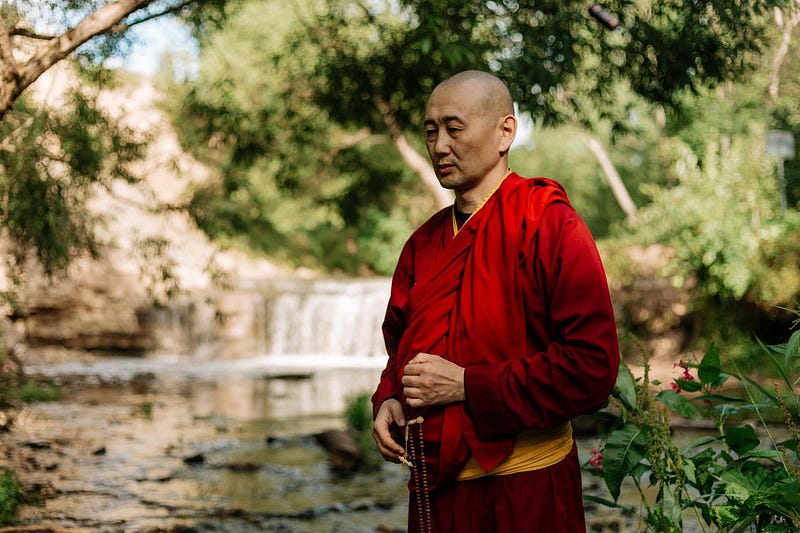
Enlightenment is not a 10,000 hours thing that only happens to Buddhist monks who spend decades meditating in the Tibetan mountains.
Enlightenment, according to Dr. Jeffery Martin’s research, is a skill you can master, and around 65% of people who are motivated to achieve enlightenment can do it in as little as 45 days.
A common myth is that enlightened people experience only positive emotions; they live in a state of perpetual calm.
Another is that it’s only available to a few people who seclude themselves away and spend thousands of hours in prayer or meditation.
The truth is that it’s pretty accessible, and enlightened people are all around us, shopping the same stores we do, working in the same offices, and driving on the same roads.
Part of the reason we miss this is that we don’t actually understand what it means to be enlightened, so let’s take a look.
Defining Terms — What is Enlightenment?
Dr. Jeffery Martin, an entrepreneur and social scientist has spent over a decade studying thousands of enlightened people through in-depth interviews. His technical term for enlightenment is a persistent non-symbolic experience (PNSE).
Here’s a breakdown of what that means:
- Persistent — rather than being a fleeting moment of awakening, it lasts over months and years.
- Non-symbolic — This is the most difficult aspect to grasp, unless you’ve experienced it (which you did as a young baby). Another word for this is “unmediated”. Rather than putting mental labels onto everything, such as “cat” or “book”, you just see colors and shapes. You don’t filter the world through symbols or words, you’re just right there in your sensory experience, fully present.
- Experience — it’s not a eureka moment, or a new way of thinking. Rather it’s a way that you experience and sense the world.
“Enlightenment” is just one popular term for PNSE, rooted within the Buddhist tradition. Other terms for it include:
- non-dual awareness
- mystical experience
- peak experience (this is Abraham Maslow’s term, more on this in a moment)
- fundamental wellbeing
- transcendental experience
- the peace that passeth understanding
- unity consciousness
- union with God
PNSE is experienced by atheists, agnostics and religious believers alike, which is one of the reasons there’s such a wide range of terms for what it means.
The point is, there are people around us who experience the world persistently in this way, and the rest of us (myself included) don’t even notice.
At this point, I should say that Jeffery Martin’s research is not peer-reviewed. Personally, I think there’s value in research outside the scientific mainstream, and it’s still interesting to think about. If that’s not your bag, then I hope you’ll enjoy the next section, looking at one of the titans of academic and practical psychology.
Abraham Maslow Answers: “What’s so Good About Being Enlightened?”
Abraham Maslow’s hierarchy of needs is one of the most famous tropes in psychology, with five levels of needs, culminating in self-actualization:
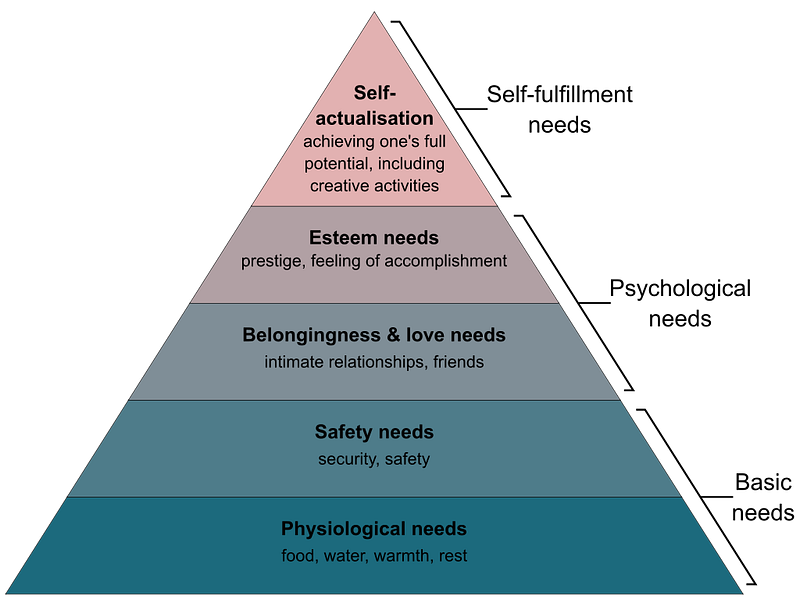

What’s less well-known is that in later life, Maslow created a sixth level to his pyramid: self-transcendence. Self-transcendence is about seeking out peak experiences, or you could say living in a state of enlightenment.
Here’s what self-transcendence meant for Maslow:
- losing a sense of time and space
- being harmonious, free of inner conflict
- using all your capabilities to their highest potential
- functioning effortlessly without a sense of strain or struggle
- feeling completely responsible for your own perceptions and behavior; you feel like you have real choices day-to-day, moment-to-moment
- being without inhibition, fear, doubt, or self-criticism
- being spontaneous and moving through life in a way that’s naturally flowing
- openness to creative thoughts and ideas
- mindfulness of the present moment without the interference of past memories or dreams for the future
- a physical feeling of warmth and a sensation of pleasant vibrations — this emanates from the heart area outwards
In short, you transcend your personal concerns and worries, and start to see life from a higher perspective. I don’t know about you, but that sounds pretty good to me. And it’s very similar to how Dr. Martin defines PNSE.
But Enlightenment Doesn’t Make You a Saint — It’s More Like Being a Duck
As I mentioned in my introduction, a common myth is that enlightened people experience only positive emotions and live in a state of perpetual calm.
‘Mike’, a university professor who claims to live in a state of enlightenment, told Scientific American: “You’re still neurotic, and you still hate your mother, or you want to get laid, or whatever the thing is. It’s the same stuff; it doesn’t shift that.”
Dr. Martin’s research reflects what Mike states. Dr. Martin found that most enlightened people have a full emotional range. While self-transcendence does bring about positive emotions such as joy and peace, that’s not the full story. Many enlightened people still feel strong negative emotions, such as anger when they’re cut up in traffic. The difference is that instead of obsessing over what happened, they more quickly return to a baseline state of equanimity.
I find an insight from spiritual teacher Eckhart Tolle helpful in understanding this. Tolle says he often uses ducks as a spiritual example, he learns from them in his own spirituality.
Tolle recognizes that ducks bicker and get into fights. However, like the enlightened person who gets cut off in traffic and feels an instant of road rage, ducks quickly return to a state of calm. As Tolle puts it, they “continue to swim on peacefully as if the fight had never happened.” Ducks fuhgeddaboudit and move on.
According to Tolle — and Dr. Martin — that’s what it’s like for enlightened people too. When the waves of emotion are stirred up inside, enlightened people quickly return to inner stillness.
How to Pursue Self-Transcendence and Peak Experiences
So what can you do if you want to get enlightened, seek out self-transcendence, or just have more peak experiences?
I wouldn’t consider myself as living in a state of PNSE. I do proactively seek out peak experiences, and I’ve found the following techniques helpful in that.
Martin’s research has found that the most effective way to reach spiritual enlightenment is to take a deep dive into a range of spiritual techniques. He advises that you become a spiritual explorer. He recommends trying a technique for a week or two, spending an hour a day with it, before moving on to another technique. That’s a big commitment, one of the reasons I’ve not yet fully explored Martin’s methods.
A reddit thread details the meditation and awareness techniques that Dr. Martin’s course guides you through:
- Meditation focused on the breath
- Body scanning meditation
- Mantra meditation
- Becoming aware of your own awareness
- Enjoying the present moment
- Self-inquiry
- Mindfulness meditation
Speaking for myself, I’ve found the following helpful in reaching peak experiences:
- Get out in nature — I recommend taking an awe walk and spending time noticing the world around you.
- Spend time in silence — I spend 10 minutes each day just sitting, allow my thoughts to be what they are. This is my foundation for living a life where I’m open to peak experiences. A longer time in silence — for example silent retreats of a few days — push me immediately into extended peak experiences.
- Entering Wide Focus. This is about learning to experience the world directly, through your senses, rather than through the ‘narrow’ focus of your thoughts.
In the early part of the 20th century, the British psychoanalyst Marion Milner did a series of self-experiments over a seven-year period in an attempt to find lasting happiness.
As soon as I began to study my perception, to look at my own experience, I found that there were different ways of perceiving and that the different ways provided me with different facts. There was a narrow focus which meant seeing life as if from blinkers and with the centre of awareness in my head; and there was a wide focus which meant knowing with the whole of my body, a way of looking which quite altered my perception of whatever I saw.
Milner found that narrow focus reduced her feelings of happiness, while wide focus increased life’s “width and depth and height”. Milner adds: “It was the wide focus way that made me happy.”
In a state of wide focus, I find it easier to live in a state of mindfulness. I’m better able to step back from the feelings, observe them, accept them, and let them pass without judgment.
To experience wide focus for yourself, I recommend the guided thought experiments available here as a free download.
Enlightenment is a Skill that Anyone Can Learn
There’s a widespread myth in our culture that enlightenment — or living from a place of self-transcendence — is only for a select few, who devote their lives to decades of spiritual practice.
Abraham Maslow and Dr. Jeffery Martin have both found that enlightenment is relatively easy to achieve. Living in a routine state of peak experience takes effort and devotion — but it can be achieved in weeks rather than years.
What we’ve been taught about enlightenment is wrong. It’s not a spiritual awakening as such, but rather a shift in perception. It’s a skill that anyone can learn, and it’s much more accessible than most people think.
Mind Cafe’s Reset Your Mind: A Free 10-Day Email Course
We’re offering a free course to all of our new subscribers as a thank you for your continued support. When you sign up using this link, we’ll send you tips on how to boost mental clarity and focus every two days.