YouTube vs. Adblock : Futility Evolved

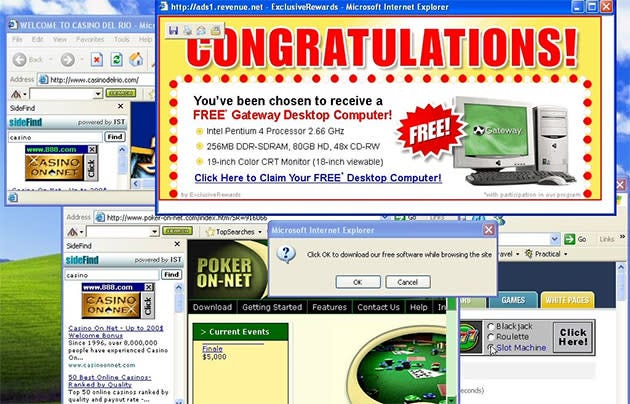
After my little hit piece on Intel’s derpy marketing, I’ve had a number of folks asking me what I think of YouTube’s current attempts at anti-adblock . Now, I’m an adblock advocate because I trust advertisers about as far as I can throw the USS Iowa. I’m old enough a user to remember the days of popup hell, every single ad service being riddled with malware, and the endless stream of “in your face” scam artist bullshit that made up the web in the late ‘90’s and first half of the noughties!
In my freelance work as an accessibility and efficiency consultant my low opinion of marketers and advertisers has only been further degraded. Deplorable, dishonest, incompetent, and more oft than not aware they’re basically working bullshit jobs… peddling every single lie about the efficacy of their work just to avoid getting fired and rape the wallets of the gullible.
Simply put adblock is important because advertisers have made it so. Through everything they touch being sleazy, disreputable, and untrustworthy. Though I’m sure some of them are fine people.
So first off the most important thing to happen?
It’s Been Very Good for uBlock Origin!

uBlock has managed to keep up with every attempt on Google and YouTube’s part to try and block ad blockers. This has driven their userbase up past 39 million when to be frank? Due to their kind of crappy UI it was always a serious “also ran” behind others like Adblock Plus. Now they are winning on one simple thing that’s far more important than how pretty the user interface is.
FUNCTIONALITY!
It’s almost comical multiple times the past two months I’ve been watching a video, get to the end, go to watch another one and get the adblock message. Only to go into uBlock’s control panel, flush its cache, update the filter lists, and boom back to watching. Meaning that uBlock is literally cracking YouTube’s anti-adblock within three to four minutes of every update!
Don’t know about you folks, but that impresses the hell out of me.
uBlock’s uptick in users is an indicator that Google’s attempt to block adblockers, has only resulted in more interest in the topic. You know what that’s called?
The Streisand Effect
There are lots of articles talking about how well this fits. For those unfamiliar with it back a decade or more ago Barbara Streisand got pissed off a photojournalist put out a picture of her palatial home. A place that looks like Jarvis would be running it. She went so far as to sue the photographer because she didn’t want attention drawn to it.
And by making a stink about it, she drew attention to it. The photo was plastered all over the news. Over something that if Babs had just let slide, nobody would have paid the least bit of attention to.
This is happening to ad blockers. As I just said, it’s been GOOD for uBlock; but more so has made people who didn’t know ad blockers were even a thing look into it. By fighting it, they’re popularizing it.
Made all the more comical by the simple fact it’s all been:

A Game Of Whac-A-Mole
Every time they’ve tried to introduce a new block, they’ve been beaten. EVERY SINGLE TIME! In the case of some like uBlock Origin, within MINUTES! This shouldn’t surprise anyone.
You know what it’s like? It’s like prisoners vs. guards. There is one guard for dozens of prisoners. The guards are there for 40 to 50 hours a week, then go home to a normal life and don’t generally think about work. The prisoners are there 24/7 and have nothing but time to think about breaking out, doing things against the rules, and how to harm the guards and others.
The number of coders in the wild outnumber how many even Google can afford to hire. Putting what they can afford to hire to a task that will ALWAYS be beaten is nothing more than lighting money on fire.
Now, I hear it already. “No business would waste money like that”. Ever heard of the book “Bullshit Jobs”? Big companies will often make irrational money wasting decisions out of spite, ignorance, or simply being lied to.
Look at DRM. The only model that actually works is an always online one where you need to connect to the server. It is thus online multiplayer games aren’t JUST about phishing for whales to drain their wallets. It’s also about building and getting people used to the only DRM that’s actually viable.
Look at other copy protections like Denuvo or Securom. Sometimes the games were cracked before they’re even officially released!
And that’s before we talk:
Harm To Users And Content Creators
This is common in DRM, where oft times really good games get performance neutered, gameplay shart upon, and the ability to do popular things like mods are taken away. I’ve lost count the number of games I own where I run cracked versions to turn them back into good games. The Marvel Avengers game that reviewers constantly badmouth is a great example of this. I own it. I also run the cracked/unlocked version where it’s a pretty good game. It is an unplayable mess in its default greedy microtransaction laden state.
And it’s not just blocked content, microtransactions, and price gouging. That performance issue I mentioned is very much real. A lot of the big off the shelf DRM “solutions” (air quotes, extreme sarcasm) do so much damage they’re basically malware. As proven by the history of how many of them are basically rootkits. Which is why when Windows Defender was introduced, it broke a number of DRM schemes!
Adblock is much the same. Online advertising— IMABO (In my arrogant biased opinion)— is mostly untrustworthy and oft more akin to malware than legitimate advertising.
And the laugh is consumers are winning. It’s what Cracked — of all places — hit upon a decade or so ago.
And it all begs one question:
Why Are Your Customers Sick Of Advertising
I grew up with broadcast TV only. Before cable. The VCR didn’t even enter the picture in my home until my late teens. For you children out there, a VCR — Video Cassette Recorder — was a device that could store video on magnetic tapes. Being 2024 I felt I might need to explain that for people under the age of 20.
To that end if you wanted to watch a TV show, you watched ads. Just like your VHF stations that somehow manage to hang on existing today. But there were two major differences.
- We didn’t have a choice if we wanted to watch shows
- There were less ads with shorter runtimes
That latter part is what I want to focus on. To quote for truthiness:
In the 1960s a typical hour-long American show would run for 51 minutes excluding advertisements. In 2013, a similar program would only be 42 minutes long; a typical 30-minute block of time now includes 22 minutes of programming and eight minutes of advertisements — six minutes for national advertising and two minutes for local.
Think about that, 18 minutes of advertising per hour of broadcast. DOUBLE what it was in the ‘60’s, and honestly nearly double what it was by 1990 since I don’t remember old shows in syndication getting cut down to fit. Today large swaths of old shows when rebroadcast on regular TV have sections of them cut out to make room for the advertising.
A friend of mine who works as a TV exec joked that at the rate the advertising runtime is increasing, in ten years older half hour evening sitcoms will take an hour to be shown on regular TV!
More than that, it FEELS like an assault because they’re hitting us hard and fast for 18 minutes with 30 second ads. Operating off of memory here, but when I was a teen in the ‘80’s in a one hour show there would be three commercial breaks, of about three minutes each, with two to three advertisers using 30 second ads. Today it’s four to five breaks of four minutes each, but in that span you get eight to ten ads!
That might not seem relevant to YouTube, but it is. You watch a five minute video and you WILL get hit with two ad breaks that can be as long as the actual content of the video itself. Over the span of 30 minutes of watching YouTube without an adblock, at minimum a quarter of that time is advertising right now, and I’ve seen it go as high as half!
There is a term for this.
Oversaturation
And it’s more a sign that advertising IS NOT generating a return on investment. Because they’re hitting us harder, louder, and more frequently. It is turning off consumers, and it’s why things like “ad blindness” has become commonplace. It’s like the studies that show 60% of all banner ad clicks are accidental; How a decade ago E-Bay actually saved money when they realized Google keyword ads were actually costing them money since their organic results were #1 in the SERP’s anyways; How Ford laughably and pathetically dropped an average of 2 billion dollars every year on ads the past decade, and is being outsold now in the US by Tesla.
Why is that last one laughably pathetic? Tesla doesn’t even spend money on advertising! No joke, Have you ever seen a TV ad, print ad, or product placement online for Tesla? Say what you want about Muskie the apartheid trust fund baby’s dumpster fire mishandling of xitter, but Tesla focusing on product, innovation, and customer experience? Means they don’t need throw money at the scam artists advertisers.
Much less that we all know who Ford are, and their new products have little if any innovation, style, flair, or anything to actually get consumers excited. Their customer experience is in the toilet, and they are blowing billions on advertising that would be better spent elsewhere! Like product quality, development, and customer service.

There just aren’t enough wealthy rednecks to keep buying those jacked up extended-cab F450’s so they can roll coal on anyone they label “libtards” to keep Ford’s current product lines afloat. READ THE ROOM.
The takeaway lesson is that advertising is destroying itself through oversaturation… and worse still the return on investment has declined to the point in many cases it’s costing more to advertise than any sales difference it generates. It’s a total case of “try hard” where as revenues and return on investment declines, the people selling ads rather than putting in the work of — to borrow from that Cracked video — leveraging “meme to money” they just keep throwing more and more ads at us.
Much like the SCAM society has perpetrated on itself that “a home is an investment that’s worth more every time it changes hands” this is NOT sustainable. Thus the US housing market crisis. Again boomers took everything for themselves and slammed the door in younger generation’s faces. We are operating under a bubble much akin to the constant cycle of real estate bubbles, or the original “dotcom” bubble that bankrupted so many investors at the turn of the century. Did we learn NOTHING from Netzero, Net2Phone, BlueLight, AllAdvantage, and every other failed business that thought “advertising would pay for everything forever!”
Side note, it feels weird to say turn of the century and not mean 1900. Damn I’m getting old.
Of Course, YouTube Doesn’t Care About Advertisers Or Content Creators
That might sound weird, but YouTube and Google are advertising agencies FIRST. They are first and foremost looking at making as much money as possible and if that means crappy ROI for the companies lighting money on fire advertising with them, and it means paying out less to the people actually making content? Well, it’s not hard to see which way the wind blows on that one.
They are a publicly traded company, which means their first duty is always to the board and shareholders. I don’t know if you’ve paid attention the past 30 or so years, but investors have figured out ways to get immediate payouts today by throwing the future of companies they buy into under the bus. If an investor or group of investors can get one more extra shiny penny today by screwing over a company, its employees, and its customers? They’ll do it.
As I’m always saying on that topic:
Don’t believe me? What’s the status of K-Mart, Sears, and Toys-Were-Us?
Investors bought their way into those companies, cut corners on maintenance, pay, the number of staff doing actual work, and bled them dry for “maximizing profit”, then left the battered broken desecrated corpses in bankruptcy and liquidation.
A LOT of advertising agencies seem to be running similar scams. They fake ROI reports, make empty promises of results, lie about their results, lie about what they can actually provide, and take advantage of both the companies they sucker with garbage ads, and the media sources they put them into. In fact it’s gotten so easy to sucker people with bullshit manufactured data and statistical manipulation, that places like Facebook can try to take credit for every sales to every user their “impression” advertising hits, even when the ad is delivered post purchase. Yes, they actually pulled that stunt.
Then these big companies wonder why people don’t trust advertisers and are going out of their way to block adverts.
“But It’s Theft!”
That’s the number one excuse you hear, and much like piracy you have to ask… is it really? The products themselves — the videos — are an intangeable, the cost of making it doesn’t change. The question is, would the people “stealing” content by running an ad-block actually watch / use that same content if they were forced to have ads?
I don’t know about you folks, but if I was to try and watch YouTube in its current state with advertisements, I wouldn’t use the site at all. Period. The content whilst handy for me on some tech topics, and entertaining, is not some magical thing I would pay money for much less put up with the endless horde of adverts they throw at users.
BUT… a lot of that attitude is how in a 10 minute video with their ads enabled, it can be as much as 4 minutes before the damned content starts. If they were limiting to say… 30 seconds at the start, maybe a second break if it goes over five minutes, a third for 15 minutes? If the industry itself wasn’t so scummy? If they did something about filtering ads for outright scams?
MAYBE I’d consider it.
I swear the “but it’s theft” line is as dumbass as the narcissistic sociopaths screaming “me, me, me, screw everyone else” saying the same about taxes.
Bottom Line?
The problems are obvious: dishonest business practices; a continually growing assault on end users; oversaturation of the market; and advertising in general slowly imploding on itself becoming increasingly ineffective at “moving the needle” enough to create a return on investment? Well, hardly a shock users push back.
You figure in the endless cycle of pathetic attempts at blocking ad-blockers and the ad-blockers kicking those efforts in the teeth often within minutes of deployment?
I would not be surprised if the efforts to block ad-blockers actually cost Google / YouTube more both financially and in terms of wasted manpower over the past half year than they were “losing” in actual revenue. Just like DRM in games where every last penny handed to scams like Suckurom or Denuvo was nothing more than a waste of time and money for everyone involved.
Well except for the snake oil peddlers who created those systems.
I’m not saying I have any easy answers, but a good start would be to ask why users are so desparate to block ads in the first place. The mere existence and popularity of ad-block speaks volumes that advertising middle-men — like Google and YouTube — are ignoring.
It’s often easier to fight the “why” than the “how”


