
Youth Hold the Power to Change the Future; However, They Don’t Know It
Turn Apathy into Empathy

During a conversation with my father who is 85, he asserted the issues teens face today are no worse than when he was a kid. I disagreed.
In the end, we found consensus that problems have existed for every generation. The dialogue required me to question my premise. Youth hear the mantra encouraging them to make a difference and many seize opportunities to change the world. They inspire and remind me of the power of optimism.
Unfortunately, based on 34 years of employment in public education, the passion to create a positive impact declines annually. I fear teens live in apathy, leaving them lethargic and indifferent because they believe the future is spiraling downward out of control.
Examine the past
At eleven, Dad’s father died leaving his mom with five children, a mortgage, and few resources to navigate the depression. His narrative portrays him walking to school wearing hand-me downs, shoes wrapped in plastic bags to protect against the weather while he carried two slices of homemade bread for lunch until he dropped out of school to earn a wage to bolster the family income.
When I examine my time as a child, it became quickly apparent by comparison, my parents provided a rich lifestyle even when money was elusive.
To gain perspective of youth today, examine the issues and their impact by exploring your personal experiences and knowledge. Complete the questionnaire below by simply placing a number 0–3 in each column rating the impact of societal issue on the youth of each generation. This is not science but reveals your perspective at a moment in time. When completed, the total at the bottom of each column provides insight.
0 = No impact 1 = Limited impact 2 = Some impact 3 = Significant impact

Overwhelmingly the accumulated data to the above survey reflects an increase in perceived struggles confronting teens today.
The numbers associated with technology, social media and the ever-present news sources, contributed most significantly. Youth today are surrounded by problems that may not be new to their generation but are enhanced by the 24/7 broadcasting of news and social media. The issues they face shock their lives daily, and to survive they live in a state of apathy.
Unified voices provide hope
In her One Voice Special (1986) Barbra Streisand pointed to the past as inspiration to impact the future.
“. . . But I have great faith in people. I believe if they’re told, if they know what’s at stake, they will make a change. They always have. Whether it was the civil rights movement, the woman’s movement, or the Vietnam War. When the clear voice of the people is heard, it has always changed the course of history . . . Sometimes we forget the importance of one voice, of each of our voices.”
Our faith in the future is at stake. Now is the time for a youth movement. If adults combine our voices to advance healthy practices, optimism can replace apathy.
“Everything that is done in this world is done by hope.” — Martin Luther
Examine the present
Public education is mandatory. A teacher enters a room excited to teach children. They encounter youth with diverse abilities: some in need of remediation, others who crave enrichment, children with low self-esteem, physical handicaps, and emotional problems, not to mention kids from supportive homes who may be experiencing momentary trials. A teacher exits a class feeling overwhelmed; I did.
If the adult in the room leaves dazed, imagine how a child internalizes the stress of the environment.
My granddaughter, an academically advanced seventh grade student, shared her anxiety during overstimulating, overcrowded school experiences. We discussed incidents from the last year where her hands started to shake, her stomach churned, and her head ached. Once, she made an excuse to go to the bathroom where she cried in the stall. During normal everyday situations she felt out of control; there were no immediate dangers or threats simply uncertainty and apprehension.
Strategies to orchestrate voices of change
Coretta Scott King sounded a warning bell reminding the community to support youth.
“The failure to invest in youth reflects a lack of compassion and a colossal failure of common sense.”
Stakeholders: legislatures, voters, school boards, boards of education
Overwhelmingly research confirms positive learning environments impact students’ development. It’s time for all stakeholders to invest in education.

Parents
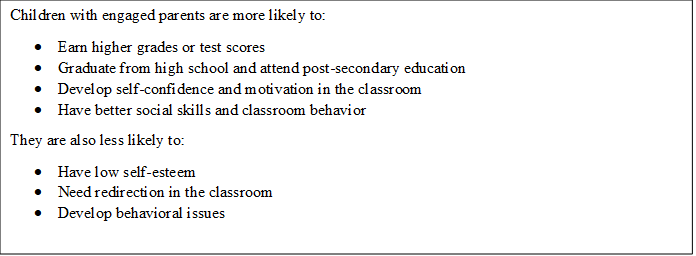
Research affirms that parents are the most influential factor impacting students’ success in education.
Teachers
Best practices encourage parents and teachers to work as a team to students students. However, it can not be ignored that a significant portion of a child’s life is spent in the classroom.

School Support Staff
Typically, during a discussion of school staff, the focus is on the teachers. However, often up to half the people in schools are not classroom teachers but significantly influence students: counselors, resource officers, psychologists, social workers, speech therapists, teacher assistants, and administrator only begin the list.

If one voice can accomplish so much, think of the possibilities if the nation chimes together. Youth are America’s most valuable commodity. The time is appropriate to revisit an old axiom, “Many hands make light work.” Or to apply a more modern cliché, “It takes a village to raise a child.”
So, the first step is to pool the resources that exist.
Examining the problem from different lenses suggests the complexity of the problem
Guardians feel uncomfortable entering the school. Their feelings are based on negative interactions from past experiences, limited knowledge about school procedures, and doubts about their academic skills, not to mention, most children do not want parents to invade their space.
Teachers welcome extra help but raise questions about how to find time to train volunteers, address child privacy laws, security, and logistically how to add additional bodies to an already overcrowded environment.
No absolute, clear answers appear. Instead of one grand choir small fractions plan in isolation: teachers, students, administrator, legislatures, counselors. Seldom, if ever, do we set aside our agendas to compose a harmonious, melodious, congruous plan of action.
The teachers who dedicate hours beyond the regular workday, the parents who struggle to manage time, the legislatures who strive to address the concern of constituents, everybody and every group has honest intentions.
Nobody ever said change is easy! And maybe getting all the stakeholders in the same room is a pie in the sky idea so let’s put that on the back burner — for a moment.
Consider what unites individuals in a common goal
Think about the events that garner audience attention: the Superbowl, World Series, Academy Awards . . . Doesn’t the education of our children rank as high as sporting events and entertainment?
Individuals from all backgrounds attempt to create a world where children can flourish and meet their potential without negative societal effects. However, there is no quick answer, but we can impact positive change by modeling positive life skills.
Everyone who comes in contact with youth has the opportunity (I assert) the responsibility to model positive live behaviors that build empathy and eliminate apathy.
“I think the biggest problem in the world is that we have a generation of young people, and maybe two, who don’t think it’s going to get any better.” - John Denver
Five values shape responsible, empathetic youth
My youth, like everyone’s, had difficulties. Life is not perfect. However, my parents lived according to five values that shaped who I am today. Daily five values were modeled in every aspect, every environment I encountered. They are the same five values I attempt to model for students in the classroom and with my family at home: security, work ethic, discipline, respect, and education.
Security
I recognize my fortune growing up in a middle-class home in the 70’s. I lived in a two-parent home, one male and one female, both white and Christian. Each maintained a full-time job. An adult greeted us when we walked into the house after school. We ate together at the dinner table and talked about our day. Security may not look the same in each home but exists when a child knows what to expect. Stability provided a life of faith, consistency and trust.
Don’t get me wrong, we were certainly not a family of perfection. My parents argued but hurled only words, never fists and in society divorces seldom materialized (at least to my knowledge).
Kids played outside during all seasons without concerns about global warming. In the spring, irrigation ditches became the public swimming pools, and nobody feared pesticides. There was no need to watch for strangers who might abduct children. When it was time to go in for the night, dad’s whistle echoed around the block.
Summers produced red cherries, green apples, scraped knees and opportunities to sleep outside. I question if sunscreen or mosquito spray existed; I know West Nile did not. Fall brought cooler weather and Halloween. Dressed in costumes sewn by mom, we trick-or-treated. At home, we devoured candy and handmade treats without even thinking about having them x-rayed. Nobody warned us not to approach darkened homes because they housed sexual predators.
We didn’t have continual news that fed us information. We read facts in the newspaper, absent the rumors and slept feeling secure.
Work Ethic
Children accept what they witness. My parents accepted work as mandatory to survival. They never expected others to support our family. They demonstrated the correlation between work and success.
With money a limited resource, we built stilts out of extra 2 X 6 boards, and dad made us wooden guns that shot rubber strips cut from old bike tubes. We knew not to aim at anyone, and nobody ever lost an eye.
We played with our neighbors and getting together meant gathering in the backyard. As a teen when I wanted money to go to a movie, I gathered aluminum cans to recycle, babysat, or pulled weeds. Work provided money. I never saw anyone sitting outside the grocery store with a sign asking for money.
Discipline
When a problem arose in our neighborhood, parents met and shared concerns on the front doorstep. A resolution developed with input from all parties without placing blame or shirking responsibility.
Adults actively participated in children’s lives. The options to keep secrets were limited because a cord attached phones to the wall and conversations occurred in the kitchen within hearing range of the family. We lived life in the open.
Respect
Respect ruled the land. We were normal kids but not perfect who made mistakes and accepted consequences. Insolence was not tolerated, especially towards mom. “Wait until your father gets home,” produced repentance.
In return, adults respected our ideas. We had family night once a week where we played games and discussed family issues. TV shows presented families like ours. Now, in retrospect, I call them wholesome. Our lives were reality, not something to measure against reality TV.
Individuals maintained personal viewpoints, disagreements occurred, but people listened and shook hands when they parted. Citizens addressed the president with civility; audiences stood for the Pledge of Allegiance, and the American flag represented honor.
In the winter, when it snowed, we built forts, launched sleds, and a day ended with hot chocolate topped with marshmallows. We said Merry Christmas and accepted both Santa and Christ into our homes.
When the new neighbors moved in next door, my parents explained to my brother and I that skin color made them no different than us. They became our best friends.
Education
All our friends attended public school. The curriculum consisted of reading, writing, math, science, and values. (Oh, by the way, church preached creationism while science teachers explained evolution. Nobody complained.)
If we got in trouble at school, we understood the punishment at home would be twice as harsh. Nobody (to my knowledge) ever brought drugs or alcohol to school, nobody vaped, no girls got pregnant in high school, and school shootings didn’t exist.
When I graduated, I enrolled in college because I desired a higher education and paid tuition by working — a lot. The responsibility to choose the direction of my life rested with me but was supported by important adults.
A solution for consideration
Arguments will forever rage about whether or not times are worse than or now; disagreements about the causes of societal problems may never be resolved; in fact, whether or not a problem exists is still up for debate. However, the perception is real: increase in anxiety, depression, violence, suicide, and bullying.
So, let’s return to the problem of how to create change in our world. What if every member of society sang the same tune? What if the refrain consisted of five themes: security, work ethic, conflict management, respect, and education.
If everyone models these five values, as a society, we can build a stable world for youth to grow and mature, a place where we an all sing in unity to produce hope.
Turning apathy to empathy
The responsibility rests neither with us to pass a perfect world on to the next generation nor to expect them to solve all the world’s problems. Instead it is our civic responsibility to build and model a lifestyle that teaches youth skills to make change, establishes a vision of a productive society, encourages them to invent and create solutions, and demands they work to build a world where they can exist and define their existence.
Youth can still change the world, but that they do not know it. It is time we demonstrate the power they hold in their hands and model a path to build a prosperous future.
If all stakeholders modeled five values, youth can visualize hope for the future; overcome apathy and learn to respond with empathy and a can-do spirit.