
You’re Wasting Your Time Trying to Build an Audience
There’s a better way to get everything you want

Writing coach Philip Charter compares LinkedIn to a Ponzi scheme:
“Most of these ‘top voices’ blend into one. It all seems so insular, and all those likes and shares get kicked up the chain […] It’s not dissimilar to how a pyramid scheme operates […]”
I agree — and not just about LinkedIn.
The whole creator economy is like this.
Hundreds of people are selling courses about Twitter, Medium, YouTube, TikTok, etc. The original clients learn “the secrets” and find other ambitious people.
“After several levels of resale, the buck stops with those who want to target clients in other industries who are less driven by the ‘earn a six-figure income in 30 days’ type headlines.”
Personally, I have nothing against these creators. How could I? I sell online courses too. People are providing a service that others want to pay for.
All power to them.
What pains me the most is seeing ambitious folks spend $100s on coaching or sprints — and then give up. They feel like they’re making progress towards their goals, only to “take a break” a few weeks later when they burn out.
Sharing random brain farts might feel like you’re building an audience — and maybe you are. But let me ask you this: Why do you want an audience in the first place?
My guess is it’s for one (or all) of these things:
- To make money online — preferably passively
- To have a positive impact
- To be subtly famous
- To travel more
The good news is you can have all of these things without building an audience.
My writing business is on track to make six figures this year. I get to work from anywhere, anytime, and I feel like I’m having a positive impact.
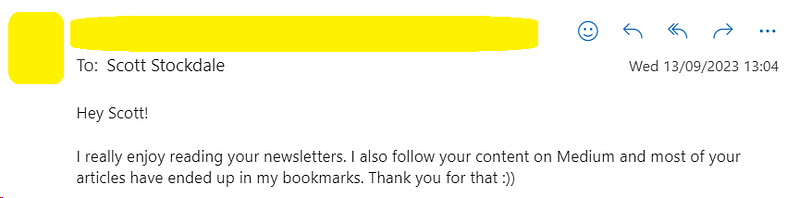
I also get dopamine hits from being subtly famous:
Let me show you how.
Step #1: Choose your path
Let’s say you want to make $5K a month.
You’ve got four buckets to choose from:
- Location-bound employee (e.g., an NHS doctor)
- Location-bound entrepreneur (e.g., a theme park owner)
- Location-independent employee (e.g., a software developer for a tech start-up)
- Location-independent entrepreneur (e.g., a freelance writer)
You could choose location-independent employee. However, you’ll likely have less schedule freedom, so this might impact your ability to travel.
I recommend choosing location-independent entrepreneur.
What’s next?
You’ve got three paths to choose from.
PATH 1: The Creator Path
👉 TL;DR: Put out content (written, video, or audio) → Build an audience → Sell products.
Remember: you don’t need an audience to make money online, travel the world, have a positive impact, and be subtly famous.
Next.
PATH 2: The Entrepreneur Path
👉 TL;DR: Build a thriving online business with the help of a team you’ve put together.
This path is HARDCORE, and there are easier ways to get everything you want.
Sure, people like Justin Welsh have built seven-figure businesses with zero employees. But a lot of these digital businesses are a variation of The Creator Path.
PATH 3: The Freelancer Path
👉 TL;DR: Market your skills to potential clients.
I’ll be the first to admit that freelancing isn’t easy. You’re also trading your time for money.
However — and this is crucial — there will be opportunities for you to make passive income down the road. My online products make me around $1,000 a month.
Step #2: Choose your skill
You can’t “complete” writing. There’s always more to learn. More honing to do.
That’s why I love it.
Stacking writing on top of my four years in SEO is a powerful combo.
If you’re not sure what skill to choose, ask yourself these questions: What are you good at? Do your friends agree? And what can you become obsessed with?
Just choose something.
You can change your mind later.
Then, start putting in the work. Share content on the internet. Produce videos for friends. Join a free challenge. Do whatever you’ve got to do to put the reps in.
There are no shortcuts.
“The people who succeed are irrationally passionate about something.”
— Naval Ravikant
Step #3: Start charging for your skill
Most people stop here.
Don’t do this.
You have to get comfortable accepting payments sooner or later. It might as well be today.
So how do you get that first client?
I recommend my client outreach method. It’s best explained with an example.
Earlier this year, I wrote an article about Louise Henry. She’s an inspiring entrepreneur, and I love her content. So I shared how she grew her online business.
After the article received positive comments, I emailed Louise:
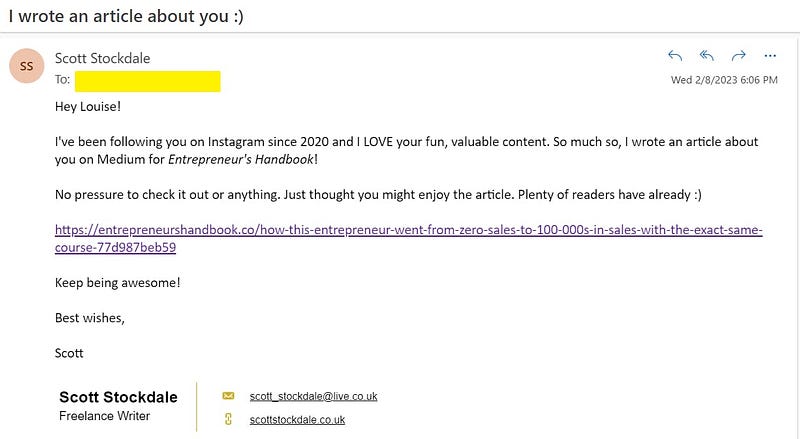
And that was that.
I wasn’t expecting anything. I wasn’t asking for anything. I just thought she’d like to know.
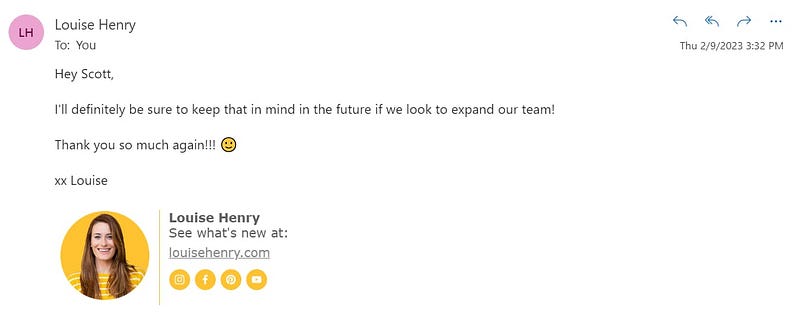
The next day, she sent this wonderful response:
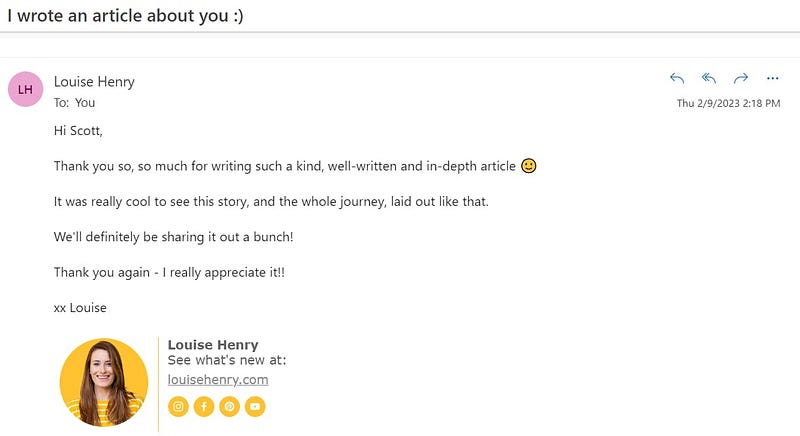
She did indeed “share it out a bunch”!
Over the next two weeks, she posted on Instagram, and her posts led to inbound opportunities. (She has over 30K followers.)

This itself is a win — but there’s more!
Over email, I floated the idea of us working together. I didn’t push it, and we’ve since built a genuine friendship through my involvement in Tim’s Club:
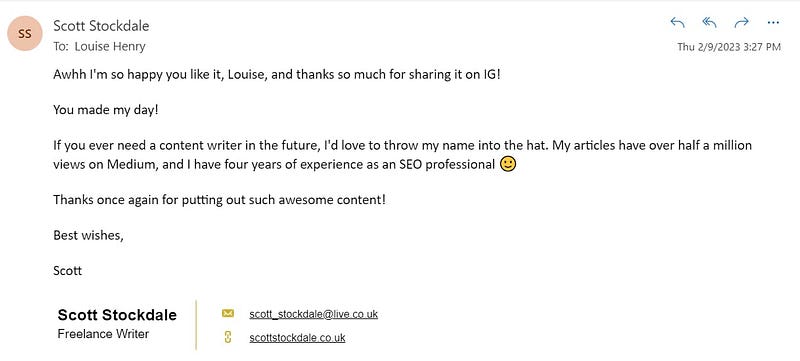
And that was that.
Until…
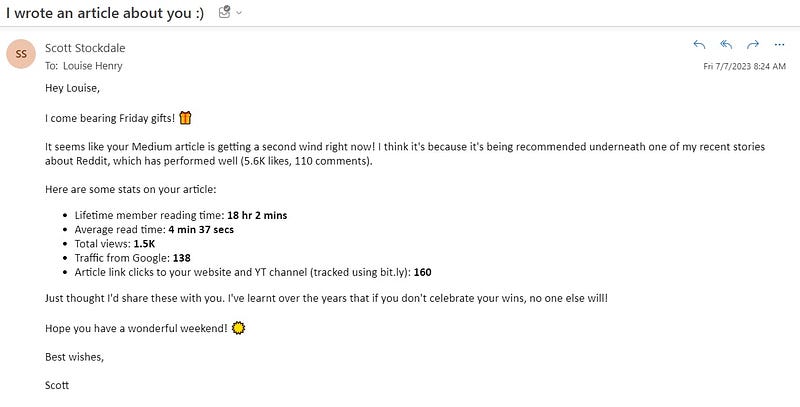
A few months ago, I noticed Louise’s article was getting picked up again by Medium. So I shared the good news with her in the same email thread (about 5 months after the original email):
Again, she was extremely gracious and kind — and she floated the idea of working together:
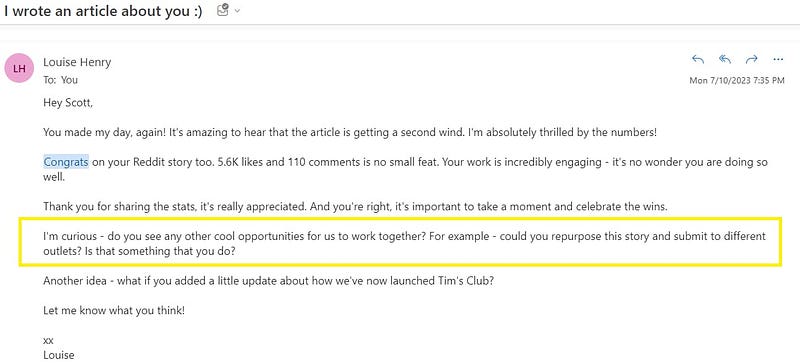
It’s worth stressing that I didn’t write this article with the intention of working with Louise. I’m just a big fan of her work and wanted to share her story.
However, as long as your intent is positive and you’re providing value, you can reverse-engineer this process using the steps above.
The cherry on top? You’ll be building your portfolio!
Step #4: Put your head down for two years & watch what happens
An audience is a byproduct of helpful content.
It shouldn’t be the goal.
The problem is that 99% of people stop after two weeks — let alone the two-plus years that are necessary for this to work.
But once you show up consistently and put out quality content, opportunities will present themselves.
Here’s an example.
Last month, one of my subscribers emailed me about my course. He then pitched the idea of reviewing his articles — and how he’d be happy to pay:
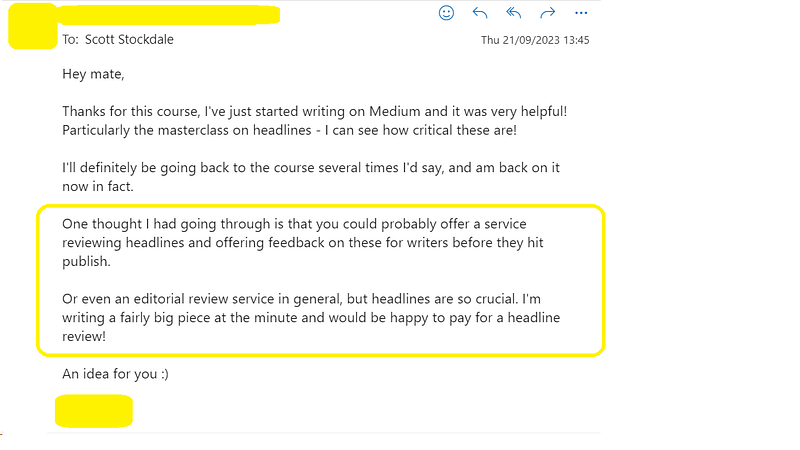
“[…] you could probably offer a service reviewing headlines and offering feedback on these for writers before they hit publish.”
I thought it was a great idea!
So I messaged him back and clarified a few things:
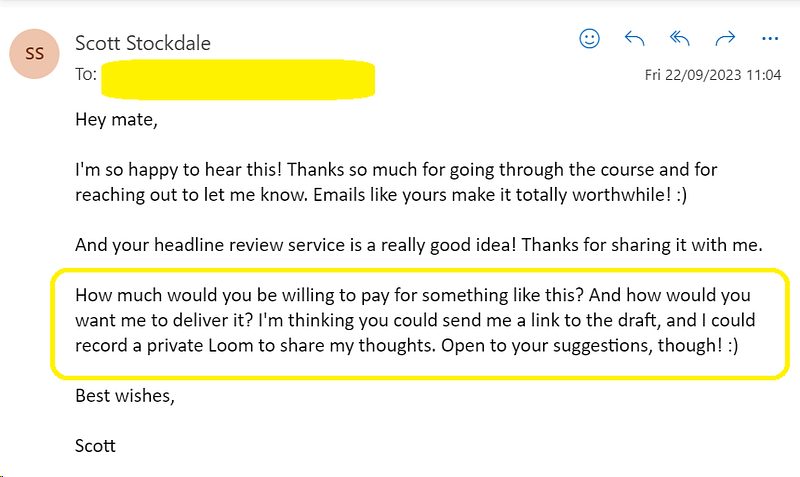
Once we agreed on a price, he PayPalled the money, and I reviewed his article:
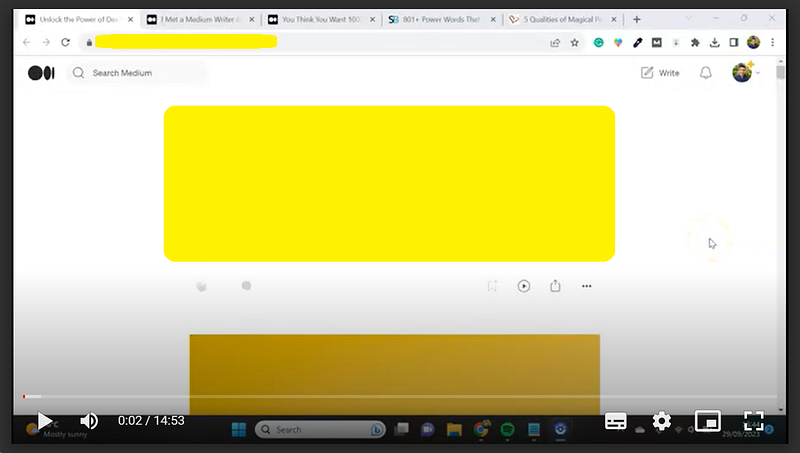
People will happily pay for your expertise — but you’ve got to have credibility.
No one listens to a nobody.
So let your portfolio speak for itself, and opportunities will find you.
Step #5: Create digital products
If you execute steps 1–4, you’ll make money online, have a positive impact, and taste subtle fame.
Step #5 is just a bonus.
However, get it right, and you can start making money passively.
Don’t let passive income deceive you. You’ve got to put in the work. Instead, think of it as “front-loaded labour”. You do all the work in the beginning and reap the rewards later.
This article goes into how I make $1,000 a month from digital products:
Takeaways
Building an audience is great — but it shouldn’t be the end goal.
It’s a byproduct of putting out great content.
Instead, focus on doing these things and you’ll soon have everything you want:
- Step #1: Choose your path — You could choose The Entrepreneur Path, but I recommend The Freelance Path. It’s the fastest route to getting everything you want.
- Step #2: Choose your skill — What are you good at? Do your friends agree? And what can you become obsessed with?
- Step #3: Start charging for your skill — And attract your first paying client using my outreach strategy.
- Step #4: Put your head down for two years & watch what happens — Opportunities will find you.
- Step #5: Create digital products — This is just a bonus.
Want to ditch the 9–5? Get my free 19-page guide: Everything I Did to Quit My 9–5 Job & Transition Into Profitable, Sustainable Solopreneuring :)


