
There Are Two Kinds of People
Which are you?
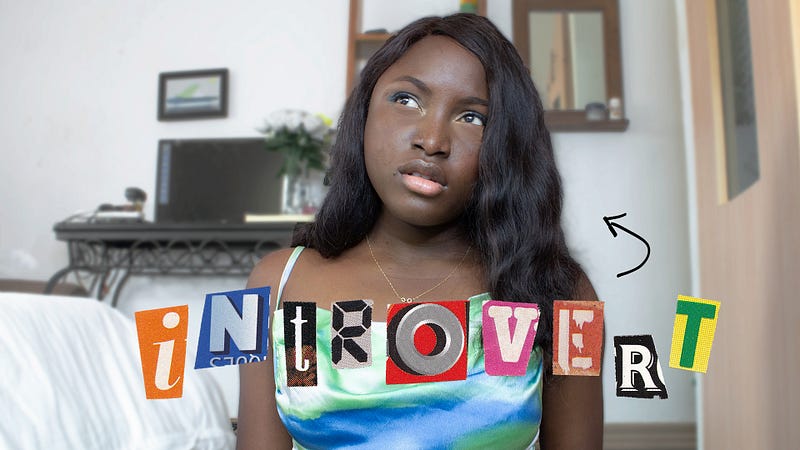
Hi, I don’t like people.
I need about 5 working days to recover after > 2hrs of social interaction.
Oh and also, I actually do want to leave the party before the clock strikes midnight, unlike Cinderella.
You see, I’m an introvert.
INFJ, to be specific.
Nice to meet you.
Okay, I’m kidding about that first sentence.
But these are some of the narratives surrounding this “quieter” personality type. (Or maybe everyone else is simply loud?)
Growing up, I used to wonder if there was something wrong with me. Why did I want to stay back at home and curl up with a book? Why was I was more intrigued by abstract concepts? Why did I (do I, still) dislike phone calls?
Things changed when I discovered what a personality type was actually about.
The psychology behind personality types
“Personality refers to a person’s distinctive patterns of thinking, feeling, and behaving, over a stable time-frame.”
From the 4 basic temperaments proposed by the Ancient Greeks to the more recent HEXACO model, personality types and tests abound. For good reason.
Personality types are important.
They determine our physical and mental health, dating compatibility, and even overall success in life (whatever your definition of that is).
The MBTI is particularly popular. It was developed because there was probably no way there were only two kinds of people (introvert/extrovert).
I once had a friend take the test, live, while we were on a video call and he screamed at the results. They were accurate even up to his current profession (as suggested was right for him, by the test).
However, the most widely accepted by psychologists today is the Big 5. These include the traits: openness (the tendency to welcome new ideas or experiences), conscientiousness (the tendency to be careful and rule-abiding), extraversion (the tendency to be talkative and more social), agreeableness (the tendency to go along with others) and neuroticism (the tendency to experience emotions such as sadness or anxiety).
But while personality tests can reveal a lot about a person, they’re not the full picture of the human experience.
I remember reading through my test results and shaking my head at some of the weaknesses I was supposed to have. I didn’t have them. At least not anymore.
I was supposed to be overly sensitive to criticism but I don’t care that much anymore. I was supposed to be reluctant to open up. To be overly perfectionistic.
I couldn’t have been the type of person to create and share online, let alone make YouTube videos.
What I realised was that there was a place for self-awareness and acceptance. But there was also a place for growth and determination. To play up our strengths as we work on perceived weaknesses.
Personality is on a spectrum, subject to tweaks throughout our lives.
Behavioural therapy is a treatment modality in Psychiatry for the management of personality disorders, such as the narcissistic and antisocial types.
I find these tests interesting especially because reading Laurie Helgoe’s Introvert Power changed my life a few years ago. It was the first time I felt understood.
But I’ve also had to ask myself this…
Where does a personality come from?
“The chicken or the egg? The person first or the personality?”
I mean, are we simply a bundle of personality letters pre-installed, like the alphabets within our DNA? Can we altogether switch from one personality to the other? Or at least, alter it?
Well, yes. To all three. Although not exactly.
In her 2017 article in Psychological Review, Professor Dweck proposed that although our personality is initially brought on by heredity, it develops around our motivations (needs and goals). For example, if a child is naturally more prone to fear, there might be a need for the predictability found in a stable routine.
The research also suggested that there were invisible and visible aspects of personality types. The invisible consists of the beliefs, emotions and action tendencies (BEATs) and needs. The visible is what we do, which is not always in agreement with the BEATs.
However, the consensus is that our core personality will always remain because genetics play a role. But that can’t be changed.
At least not yet.
And so, I’ve learnt to become comfortable in my skin. It feels like the moment I realised and actively learnt about my personality type, my confidence shot up by 66.6%.
Arbitrary figures aside, I’ve become more self-assured without losing sight of the flip side of the coin — my weaknesses. That, I can do something about that.
But at least, I no longer have to apologise for one of the factors that contribute to who I am.
P.S. “I’m one of the 10 people who’ve never watched *insert popular T.V show*” is not a personality type.