
You’re More Capable Than You Think
Lesson #3 I learned from scuba diving: what we fear isn’t always as bad as we think.
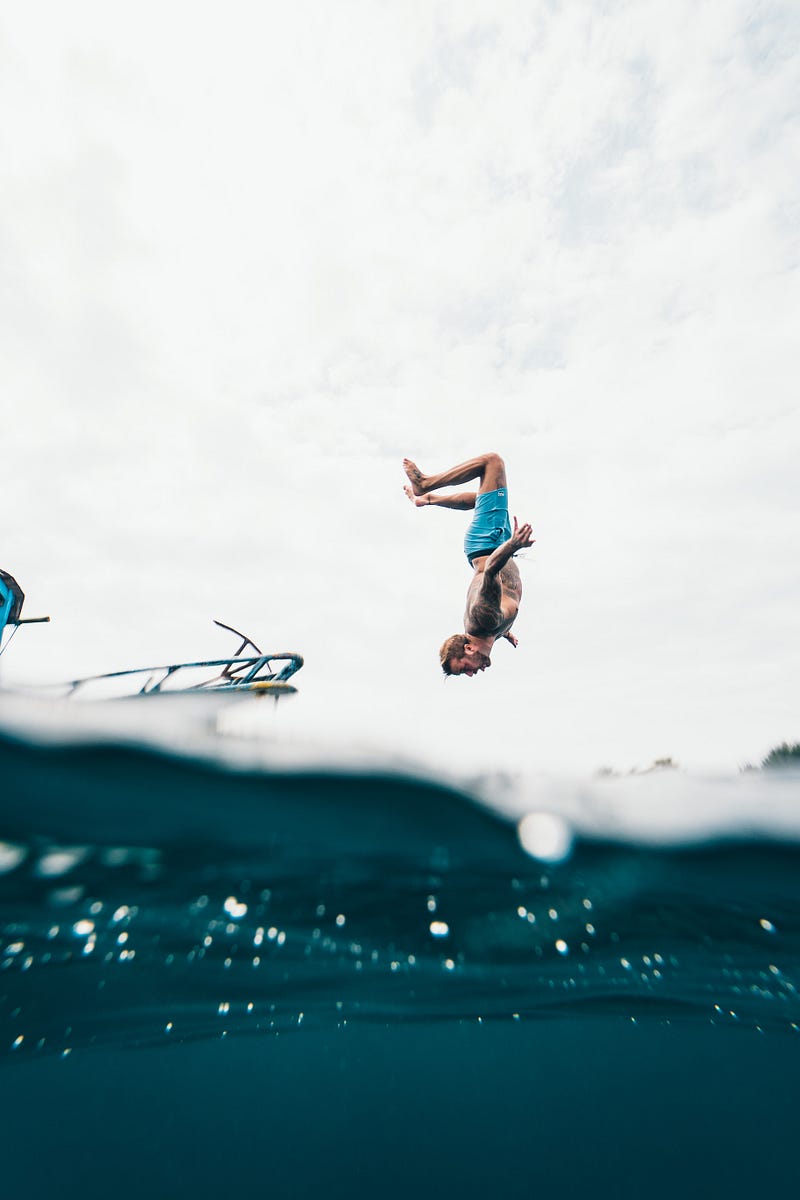
On a sunny, humid July morning in Krabi, Thailand, I carefully stepped from the wooden longtail onto the deck of the large dive boat. A local at the dock had taxied me out since the bay was too shallow for a boat of this size.
After the crew’s briefing, I assembled my gear and tossed my dry bag underneath the bench. We were going to a few dive sites around the Phi Phi islands which were about 90 minutes from Krabi. I had time to chill before needed to get suited up. So, I climbed the ladder to the upper deck and proceeded to lay in the sun while watching the passing waves for the rest of the ride.
The ride out was uneventful. It consisted of a few large waves, a little bit of motion sickness, and a few nervous first-time divers chatting next to me, but nothing of significant note. Eventually, the boat came to a stop and the crew tethered to the mooring line, which would keep us parked above the dive site without an anchor wrecking the reef.
The first-time divers were summoned by their instructor to “go over some skills” and “be briefed about the site’s conditions”. I was the only one diving recreationally, which meant I got a private dive tour from the divemaster. I went to the lower deck and met my guide who was named Jake. Jake told me about the site, the conditions, and the bottom time we would aim for. I nodded. I had gone out with this shop the day before and was familiar with both the site and the conditions.
“Any questions?” Jake asked.
I shook my head.
“Cool. Let’s get ready, then,” he said while smacking his hands together and walking over to his gear.
I sat down in front of my tank, slipped my feet into my fins, and pushed my arms through my BCD. I buckled my vest, tested my regulator, checked my gauge, and turned on my dive watch. Next, I pulled my mask off my neck, spit in it to keep it from fogging over, and positioned it on my face. While I did this, the new divers sat across from me, nervously eyeing my movements.
“You are all going to have a great time,” I tried to reassure them.
They nodded and smiled back. I knew how uneasy it can feel before you jump into the ocean for the first time. Even the most seasoned divers were once new.
“Ready?” Jake called from the back of the stern.
“Yep!” I called back as I rocketed up with enough force to release my tank from its holder.
I waddled to the back of the boat. Walking in fins was always awkward. As I walked, I filled my BCD with air and tightened my weight belt. I lined up behind Jake at the end of the boat, waiting for my turn to take that giant stride into the ocean. Jake jumped in and gave the signal that he was okay, which meant I was up. I took a brief pause to notice the surrounding rocky cliffs and crystal clear, blue waters. I took in a breath and stepped off the boat, landing in the water with a splash.
“All good?” Jake asked.
“All good,” I told him.
“Let’s go diving.”
I deflated my BCD and began to slowly descend below the surface. Everything was fine. Normal. My breath was deepening, my focus was homing in on my surroundings, and my mind was clearing — all the typical things that signal, for me, the beginning of a dive. Then, around twenty, twenty-five feet something happened.
I heard this massive, echoing pop ricochet through the water followed by this deafening buzzing sound. My nerves were jolted awake. I looked right and left, up and down, trying to figure out what was happening. Then, I caught a glimpse of Jake. His eyes were wide with fear, and he was swimming quickly towards me. I looked around once more before I noticed I couldn’t get any air out of my regulator. I sucked in again, but nothing. No air. That’s when I realized that the loud pop and buzzing were coming from me. It was my tank. Something was wrong with my equipment.
Jake grabbed my BCD and gave me the signal for surfacing. Then, together we made an emergency ascent. The minute we broke through the water, my lungs instinctually started coughing. As I coughed, Jake pulled me towards the ladder. My BCD wouldn’t inflate without any air and if I didn’t hold onto the ladder, I’d drop below the surface again.
The entire dive boat rushed to the stern and peered over the side.
“What happened?” the dive instructor on board asked.
“I don’t know. I think her O-ring exploded. All the air rushed out within a few seconds,” Jake explained as I held onto the ladder and settled myself.
“Morgan, are you okay?” the dive instructor asked.
I nodded. “Yes, I’m fine. Really.”
The captain leaned over and took my fins from me so that I could climb the ladder. I sat on the bench and disassembled my gear. Jake took my tank away to inspect it while the group of new divers congregated together in a nervous huddle.
“I’m fine. Really,” I told them. “Don’t let this deter you from getting in the water. I have dove so many times and never had something like this happen. And, now that it did, I feel even more comfortable diving. My divemaster conducted a seamless emergency ascent. You should feel confident that those safety measures work.”
A few minutes passed before Jake re-approached me and asked if I wanted to stay on the boat.
“No, I want to switch tanks and get back in the water,” I told him.
So, that’s what we did. And, while we were underwater, we spotted the group of new divers swimming by, marveling at a large turtle that decided to make an appearance.
When we were back on the boat, driving towards Krabi, Jake came and sat by me. He told me that he had just become a divemaster two weeks ago and that I was his first dive emergency. I told him he handled the situation beautifully. He thanked me for being so calm and collected. I shrugged, not knowing what else to say. And that was it. A significant moment handled seamlessly. A moment that has stuck with me as an important life lesson.
Take Away
This could be an assumption, but it seems like one of the biggest fears that inhibit people from scuba diving is the lack of air. I’ve heard dive instructors say, that once students realize they can breathe normally with the regulator their nerves calm, and the game changes. Suddenly, they see how diving can be enjoyable. If one of the biggest fears is not being able to breathe, then one of the most damning emergencies would be a lost air supply.
I don’t know that I ever sat down and thought about losing my air while diving. I genuinely didn’t have much, if any, anxiety when I started diving. The water has always felt like my home and, therefore, I never had a list of fears for what could go wrong. Either way, I think it’s safe to say that any diver who abruptly loses their entire air supply would experience a spike in emotion — fear, anxiety confusion, disorientation. I felt a mix of confusion and derealization — or the disconnection from reality. And yet, I feel weirdly grateful for this experience because it taught me two things.
1. The worst fear in scuba diving (losing your air source) was manageable.
2. I was more capable of managing this scary situation than I thought.
Sure, the divemaster initiated the emergency protocol and took me quickly to the surface, but I was also able to remain calm, follow directions, and jump back in the water only minutes after the entire situation took place. Now, I have an inner knowledge that I carry with me into every dive. A knowledge that says, even if there is a mishap, I know I can handle the stress.
This lesson can also be applied to life. Many times, we are more equipped to handle scary situations than we realize. All it takes is a little trust in our intuition and training to drive us back to the surface.
Did you like this article? If so, spread the love and share it with others!
Click here to subscribe to my blog and stay updated on each new story:
https://medium.com/subscribe/@artbymorganblair
Become a Medium Member and you’ll get full access to every story I write. I’ll receive a portion of your monthly membership and you will be supporting other writers you read on Medium. Everyone wins! Click on the link below to sign up:


