
You're Doing Brainstorming Wrong
Is it a brainy storm, storms in a brain, or a brain in a storm?

Inspiration might come when you least expect it, but if you’re not looking for it persistently, it might just never arrive. Everyone can spend hours daydreaming for ‘deep meaningful ideas’, but only well-trained minds know what to do with them.
I don’t agree with Gene Fowler’s saying: “Writing is staring at a blank page until drops of blood form on your forehead”. No, you write until you sweat-bleed.
Brainstorming is how we hunt for inspiration and creativity. Rather than a relaxed approach to problem-solving, it is a hunger game. For me, real brainstorming starts after the 15th idea when I proactively squeeze my brain until it is left dry.
Similar to writing, brainstorming is a loner’s job. Rushing to consult our ideas with others and waiting for external validation will wear us out and build a fragile confidence.
Brainstorming by yourself is more empowering. If you have to run your ideas through other people first, it means YOU don’t fully approve of it. So dig deeper until you find words, ideas, visions that excite you enough to follow them.
Throw your brain in a storm.
As freelancers, we have to deal with many business aspects: content creating, marketing, crafting our writing, finding new clients, etc. Brainstorming can be of use for small things like better headlines, or unique angles, but also for improving our creative thinking and bringing new perspectives on board.
When I come across a problem, when I procrastinate, or feel the urge to switch things up, the first thing I do is throw my brain in a storm. I sit down, completely disconnected from the world, and ‘brainwrite’ words.
Brainstorming starts at a time of discomfort: with that headline, phrase, structure, or angle, that doesn’t click with you. Sometimes during the creative process, even the simple question of what the piece is about can get ridiculously confusing.
“What do I want to say with this?” “What do I even…!”
Let the storm begin.
I start by explaining it to a child, which in that situation is often me. I explain it to her with simple words, using verbs or nouns, then I add adjectives and adverbs that later become phrases. I often go with a word association chain where I write a single word and follow it with others that cross my mind.
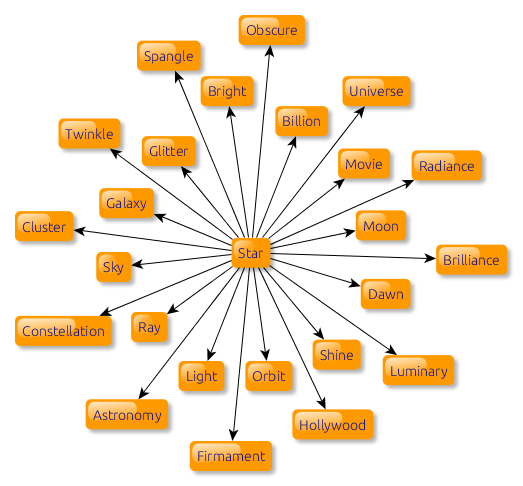
New ideas don’t have to make sense right away, so I completely shut down the urge to evaluate or order. When we try to systematize or chose to not write down words, we condition our brain. By fostering an environment of full acceptance, our brains create in a safer space.
Sometimes we put too much emphasis on what we know might work, disadvantaging novelty and experimental ideas. Give the benefit of the doubt to unusual ideas by discriminating your ‘big’ ideas first.
In how many ways can you say the same thing? I can twist any phrase, with a noun, a verb, and an adjective or an adverb at least 15 times, that’s my starting point. Do this exercise and find your record. Online dictionaries, especially Thesaurus and Word Association, might come in handy.
While trying to edit a paragraph, angrier every time, I repeatedly asked: “What do I even want to say?”. I began mocking myself, creating a new practice called ‘worst idea exercise’ where instead I ask “what I DON’T want to say”. By discarding what we do not want to say, we can find clearer wording for our ideas.
If you trust the process, bad ideas can often lead to several good ones.
Likewise, I love playing around with boundaries when creating. Yes, at the end of the session I must have accomplished my objectives, generated new relevant ideas that I approve. But while in the storm, I only remember my name and the clock ticking or word count filling.
As much as offline brainwriting gets my creative juices flowing, engaging with other content is productive as well, but with a special twist. I often watch videos, listen to podcasts, or read without any interest in the actual text, speaker, or writer. I stay in a dialogue with my mind and try to figure out what these external stimuli bring to me.
Being around content all the time, we forget to tune-up with our way of thinking, and unique angles. If we stop at the shallowness of our creativity, we won’t enable our brains to explore our full potential.
As an introverted freelancer, I like standing on my own feet and not rely on others. But, when brainstorming, I include special personas: with age, gender, status, education level, or profession. I think of their language and words they would use or engage with.
Among these personas should always be the critic, the one that finds the ‘needle in the rye’ and always has something to say. It’s fun interacting with that guy. Brainstorming is finding that idea that this know-it-all person would be quiet about, or at best embarrassingly like it.
Don’t get lost in the storm.
Brainstorming should primarily be about the storm itself: throwing words, writing them, generating your phrases, finding new ways of expression: diverging. My focus is primarily on quantity. Magic happens when you push your brain to empty itself from all it has recorded.
You have to bring as many words aboard as you can, but put a limit to it; be it time, or a number of words.
The storm ends, and you’re left with a brain that gave it all for you. Now it’s time to clean the mess and put everything into place. Here you can involve actual people and your SEO or writing experience. Mind you, you will know if you can do better. In that case, you can rest and do another session later.
Next, you can focus on building ideas on what you have gathered. Go online and research how other people express similar ideas or find relevant power words you can add.
Be grateful for what that storm brought. Often, ashore, material for new pieces emerges. That creative fire you feel can get fiercer each time you challenge it.