
Your Writing Was Probably Put On The Refrigerator Door Wasn’t It
In Those Days We Definitely Weren’t NYT Bestsellers
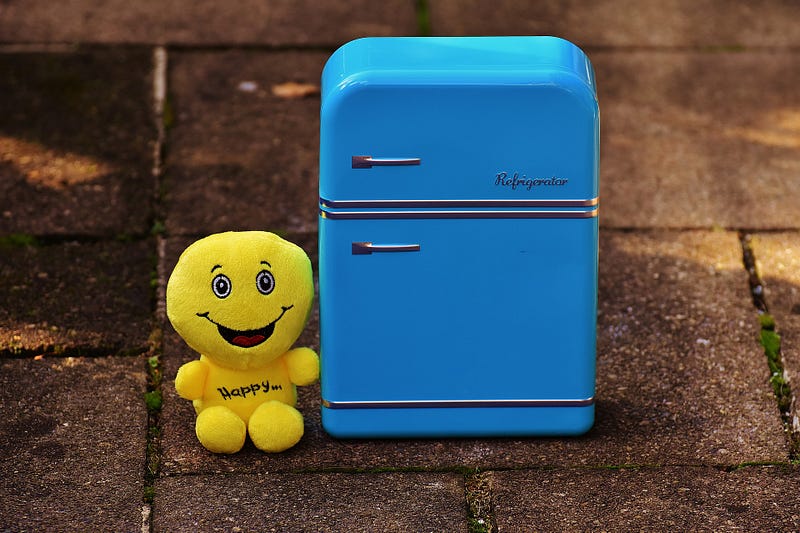
As a kid growing up in the south and writing stories, I remember spending hours (a child’s eternity) getting my story just right, and then I’d share it with my family, beaming with pride.
No matter how ugly the work was (it was usually fugly) or how many misspelled words or numbers of and-then(s) the story had, my latest masterpiece was typically affixed to the refrigerator door hall of fame for all to view.
It was a child’s version of making it to the New York Times bestseller list.
Isn’t that special?
Music to my ears. The problem was, at the time, I didn’t understand the unique set of code phrases my parents and grandparents used to communicate their praise of my beautiful creations. Every time I heard those words, I smiled and mentally began to count the billions of dollars, I was going to make when my creations sold.
Frequently, I would listen to my family discussing my most recent work among themselves, praising me with the more emotional but just as satisfying comment.
Bless his heart.
Again, those words gave me a euphoric sense of empowerment. To me, it meant my latest creation was not only special, but it had touched their souls. Imagine my excitement when a family member used both phrases in the same sentence!
I could see my fortune growing before my eyes. I was a child prodigy headed for fame and riches, and how did I know this? My work had to be great, right? After all, they put it on the refrigerator door for all to see.
Years later, married with a family of my own, I learned the true meaning of the code phrases my parents and grandparents had used, often uttering them aloud when my own children submitted their prized handiwork for approval and posting to our refrigerator door.
I’d like to share them with you. If you’re country folk or from the south, I’m willing to bet you’ve used them a time or two.
Isn’t that special?
Translation — This is the worst thing I’ve ever read in my life. Does this child not know what a dictionary is? What is he doing in English and literature classes, sleeping? These participles aren’t just dangling; they have fallen off the cliff. Does he not realize irregardless is one of the most clunky, seldom-used words in the English language?
Bless your heart.
Translation — This is the worst thing I’ve ever read in my life. She just doesn’t get it, does she? Oh, dear Lord. Does she actually think this crap is good? Poor thing, somebody needs to tell her that her writing stinks, and she needs to focus on getting an education and a real profession.
Keep in mind y’all, friends and family will often attempt to soften the blow as much as possible. Letting them read your work is one thing, but choosing to accept their accolades as validation of your status as a writer is sheer folly.
To quote a famous line from Star Wars, “these are not the droids you’re looking for.”
It should be noted friends hang around because they like you — well, most of them do — and your family supports you because they love you — well, most of the time.
They, of course, want the very best for you, but they are not the right audience when you need credible validation as a writer. Instead of having your family or friends critique your next work, be it novel, short story, or poem, how about using a set of beta readers?
Most of these beta readers are writers themselves. They’re writers who’ve had their work critiqued as well and have been on the receiving end of some pretty harsh observations.
They’ve taken as much as they often dole out.
What’s even more important is quality beta readers don’t know you, aren’t part of your family and have no qualms about pointing out areas where your latest work is suffering serious maladies.
They will tell you because you ask them, and sometimes even pay them, to read your work and tell you the good, the bad, and yes, even the ugly. That’s how you learn, how you grow the creative spark, and, most importantly, how you succeed as a writer.
But if you’d really rather not submit your work to a beta reader for fear of taking a beating, you can certainly continue to have only your friends and family read your work.
They’ll more than likely offer praise and adoration as they post another of your masterpieces on the refrigerator door.
Isn’t that special? Bless your heart.
Thank You So Much For Reading
Let’s keep in touch: [email protected]
© P.G. Barnett, 2020. All Rights Reserved.


