
Your Thinking Errors and The Tree that Explains Everything!
The tricks that are changing my thinking (and my life).
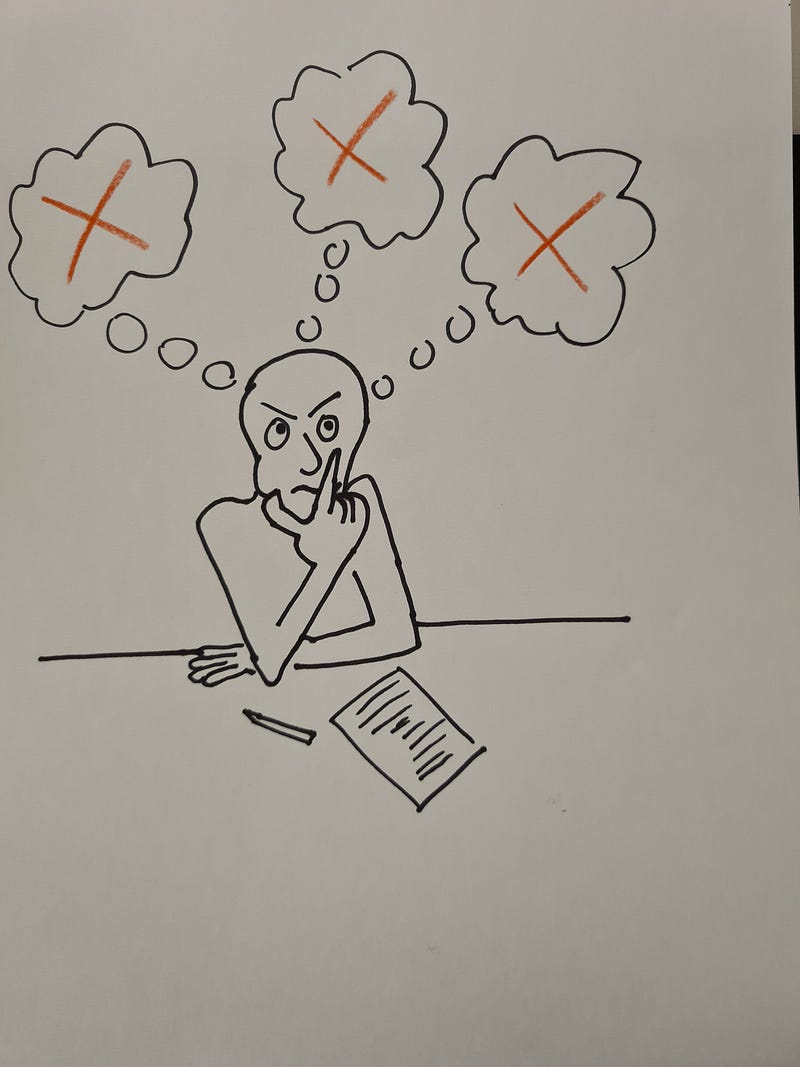
Change your thinking, change your life. You’ve heard that one before, right? So had I, but it never made a difference to me. I hadn’t really stopped to think about my thinking for a long time, and the consequences came to bear heavily just before Christmas. I was sitting in my bedroom wishing I could just stop breathing; it was that bad.
Fortunately, I have an amazing family, and after a chat with one of them, I booked myself in for therapy. Fast forward exactly two months, and I’m really enjoying breathing! In fact, I think I’m enjoying the best outlook on life that I’ve had in years. All of this change is possible because of some very simple tools that my therapist has given me.
You don’t have to be depressed, suicidal, or down in the dumps to benefit from these tools. They are both an enhancer and a prophylactic. If your life is already good, they can make it better, and having them on hand can help you realise when you start going in the wrong direction and steer you back on course.
Your habits are your life! You’ve heard that one as well, haven’t you? Good, because it’s true. If you habitually eat a little too much, you’re going to be fat. If you habitually spend more than you earn, you’re going to be broke. And so on. It’s true and we all know it. A lesser-known truth is that your thinking habits dictate how you experience your life, however, removed from reality your perception may be. It doesn’t matter what your life is actually like; if you think it sucks, it will suck. And if you’re coming from a place where everything sucks, you will stop trying and your life will get worse on the outside as well. It’s a vicious cycle.
A picture of a tree can clearly explain all of this. I call it…
The tree that explains everything!
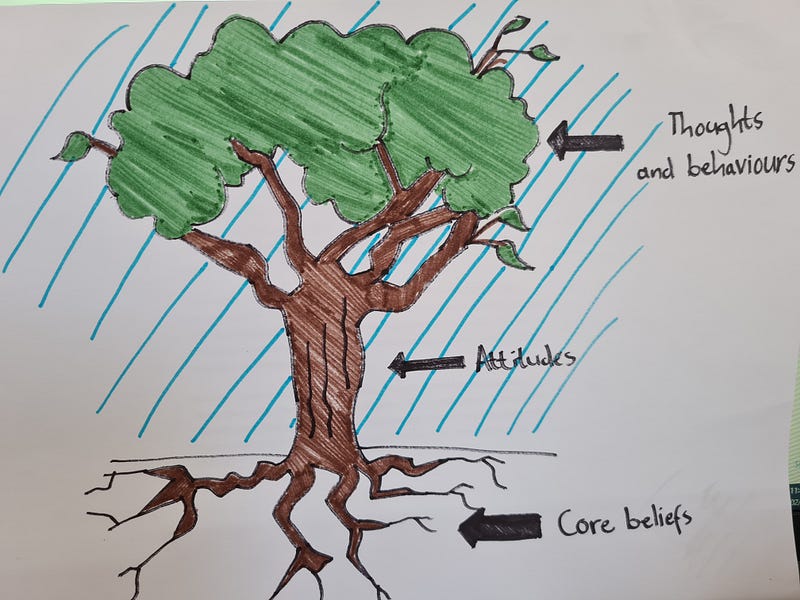
Behold! This magnificent creation is The Tree That explains everything. I know I’m no artist, but seriously, take a look at this tree. Here’s the gist of it; your thoughts and behaviours arise from your attitudes, and your attitudes arise from your core beliefs. The beliefs that matter most in your experience of life, and in your willingness and motivation to take on life, are the beliefs you have about yourself. If you think you are not good enough, your attitude will suck, and your thoughts and behaviours will be negative. The negative behaviours will reinforce the negative thoughts, and at best you will not enjoy life or do particularly well at it, at worst you will become suicidal.
Now you have seen the magical tree and you understand that everything about your life is down to your core beliefs, let's look at an incredibly simple tool you can use to change core beliefs that are false, inaccurate or harmful.
Are you as much of an arsehole as Donald Trump?
There is one core belief at the root of depression, and the antithesis of that belief is a prerequisite for a happy and successful life. You either think you are good enough, or you don’t. If you think you’re not good enough, you are going to have problems; self-loathing, lack of confidence, lack of self-esteem and many other destructive thought patterns.
Like most people, I already knew about self-esteem and its importance for good mental health and successful living. Knowledge is not power though, it's just baggage. Many people know things without really feeling them, and without acting on them. That was me and my self-esteem; well informed and blissfully ignorant at the same time. That all changed when my therapist drew a diagram in one of our sessions that made the latent knowledge real and useful. It looked like this.
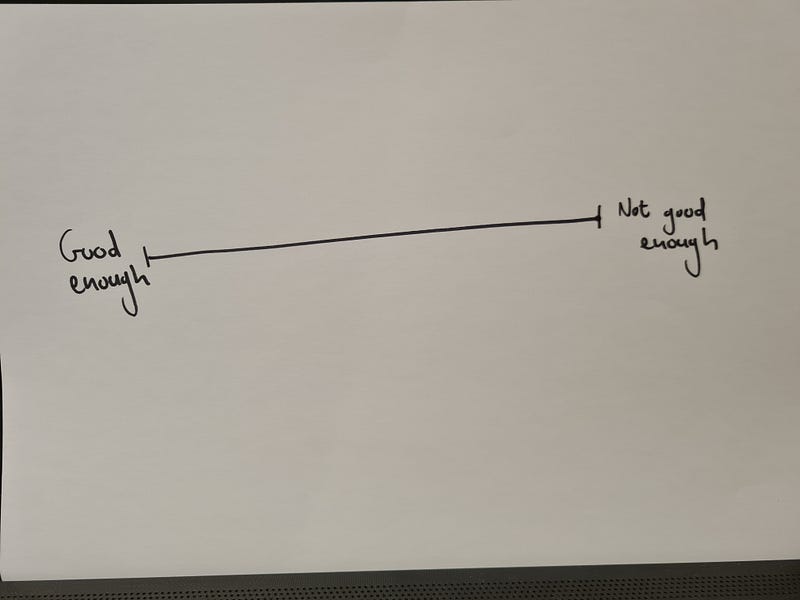
Initially, I was not that impressed, but after a simple question and brief exchange of ideas, I realized the diagrams profundity.

First of all, my therapist asked for examples of people who are not good enough. When I didn’t come up with anything, he suggested Donald Trump, a common choice with his patients, apparently. I countered by suggesting we add Nigel Farage to the category, so we did (Fig. 1). Next, we discussed what makes Trump and Farage ‘not good enough.’ That got the ball rolling; they are both mercenaries with nothing in mind but their own financial gain and self-glorification, men who don’t give a damn about their countries or their people, duplicitous liars, con men, racists, etc.
I told my therapist that I had initially wanted to put myself in the ‘not good enough’ category. But compared to Trump and Farage, I’m a saint. Already I was feeling better about myself.
The next step was to put people in the ‘good enough’ category, and for the exercise, we stuck with celebrities. I chose Slash and Arnold Schwarzenegger. Once again, the therapist asked me why I had made those choices. “They’re both hard-working, they’re both consistent, they both create something and inspire people, they’re both well-read, they both make other people feel good and maintain a positive attitude.”
By using celebrities as an example, the therapist allowed me to define the traits I admire in other people, and which make people good enough and those that make people not good enough. He then explained that people who have developed erroneous thought processes and low self-esteem or feelings of depression are usually ignoring all the things which prove that they are in fact good enough. The trick, he told me, is to keep an evidence log. I started my evidence log that evening, and it worked.
An evidence log is a journal or diary in which you enter all the things you have done in a day, which are an expression of the traits which make people good enough. I was actually surprised at the number of things I had done which demonstrated hard work, consistency, a positive mental attitude, and some other traits I identified in people I admire.
The evidence log changed my core beliefs about myself, which is changing my attitude and ultimately my thoughts and behaviours. That triumvirate, if you remember, is the tree that changes everything. This little trick I got from my therapist is the best method I have ever found for reliably changing core beliefs. The good-enough vs not good enough diagram will help you identify false or otherwise harmful beliefs, and the evidence log will help you alter them. Change your core beliefs, attitudes, behaviours and thoughts, and you can mould yourself and your life in any form you wish.
Try it. Even if you think your life is great already, the exercise will help you make it better. If you think your life sucks, or you think you suck, then you should definitely give this a try.
Bonus Section!! Your thinking errors.
As a reward for reading this far, I’m going to list three common thinking errors that my therapist has helped me uncover. Familiarise yourself with these so you can catch yourself when you engage in them, then eliminate them.
Critical clairvoyance. The idea that you can tell what other people are thinking is ridiculous. Nonetheless, people regularly think that they can tell what other people are thinking about them, or events involving them, or even ideas. In most cases, people imagine that others are thinking negatively about them. If you find yourself believing you know what other people think, remind yourself that you have no evidence. Critical clairvoyance will do nothing but shackle you and make you feel bad about yourself. It could also ruin your relationship with others.
Nostradamus error. The Nostradamus error is the belief that you can predict the future. This can manifest as thinking you know that if you do A, B will occur. In most cases, B is a negative consequence. People committing the Nostradamus error can create all sorts of anxieties and fears with nothing but their imagination. You might find yourself afraid or unable to act because you believe that doing anything will mean something terrible is going to happen. For example, I mustn’t stand up for myself because nobody will ever like me. Or, I mustn’t disagree with anybody because that will lead to arguments. Those are both mild examples. Nostradamus errors can be far greater. They tend to snowball and can have awful consequences. If you find yourself committing the Nostradamus error, just remind yourself that you can’t predict the future. Doing so will make your life more enjoyable and open up a whole host of opportunities, experiences and possibilities that you would otherwise be excluding yourself from.
Internal nemesis. You can develop an inner voice that seems hell-bent on tearing you down. The voice will tell you you’re ugly, stupid, worthless, incompetent and generally undesirable. The voice will blame you for all of your misfortunes, even the ones that are not your responsibility. For example, ‘your mother’s an alcoholic because you were an awful child!’ The internal nemesis must be challenged. Tell it it’s wrong, laugh at what it says, bring to mind examples that prove it wrong (your evidence log will help with this). As soon as your internal nemesis shows up, face it, challenge it and expel it from your mental space. It is nothing but a mental error, so do not entertain it.


